
- Elevated reverse T3 acts as a brake on your metabolism at the cellular level. If your body is in chronic stress from illness, infections, or emotional trauma, it creates this anti-thyroid metabolite to conserve energy.
- Calculate your free T3 to reverse T3 ratio using your lab results. A ratio below 0.20 means too much reverse T3 is blocking thyroid function, and this is the most sensitive way to catch early thyroid problems.
- You can lower reverse T3 fastest by taking T3-containing medications like Cytomel or liothyronine, which directly suppress the T4 your body converts into reverse T3.
- Insulin and leptin resistance drive T4 to reverse T3 conversion. Treating these hormone imbalances is essential for keeping reverse T3 down long term, not just temporarily with T3 medications.
- Sleep 7-8 hours, manage your stress, exercise regularly, and eat whole foods. These four foundations matter more than supplements when it comes to lowering reverse T3 and restoring thyroid function.
Reverse T3 could be the missing link to finally explain why you still have hypothyroid symptoms despite taking thyroid medication.
The crazy part is that most doctors don’t even order reverse T3 and, even if they do, most aren’t sure what to do with the results.
This means it’s up to you as a thyroid patient to understand what this lab test is, how to interpret your results, and how to manage high levels (if present).
High reverse T3 has the potential to slow down your metabolism, reduce thyroid function at the cellular level, and result in full-blown symptoms of hypothyroidism.
It may seem like a daunting task to learn all of this information but don’t worry, it’s not as hard as you think, and learning about it now can pay dividends to your future self.
Today you are going to learn…
- How to tell if you have too much reverse T3 in your body
- The name of the blood tests you need to have ordered
- How to calculate your free t3:reverse T3 ratio (and why this is important)
- What causes elevated reverse T3
- And how to “flush” out or lower high levels of reverse T3 and how I treat patients with Thyroid resistance and high levels of reverse T3 in my office
Let’s jump in.
What Is Reverse T3?
What it boils down to is this:
Reverse T3 is a hormone metabolite that is created from the T4 thyroid hormone [1].
T4 thyroid hormone, of course, is the primary thyroid hormone that your body produces directly from the thyroid gland.
Your body then takes T4 thyroid hormone and eventually breaks it down into T3, T2, T1, and sometimes reverse T3 through something called thyroid conversion.
A simplified version of that conversion process can be seen below:
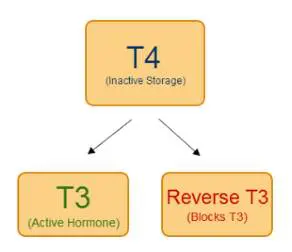
This conversion process is incredibly important to the body because it allows fine-tuning of thyroid hormone function throughout all of your cells.
And this is something you definitely want to happen, at least when it’s working correctly.
When it isn’t working correctly, the conversion process can slide down the wrong path which leaves you with the wrong types of thyroid hormone metabolites, namely reverse T3.
Unlike T4, T3, T2, and T1, which all have pro-thyroid effects, reverse T3 can be thought of as an anti-thyroid metabolite.
While T4, T3, T2, and T1 promote thyroid function, reverse T3 antagonizes thyroid function at the cellular level.
For people without thyroid disease, this conversion process works perfectly.
But if you have thyroid disease, especially for those taking thyroid medications, you can inadvertently alter this conversion process and lead to the creation of anti-thyroid metabolites which can act to make your thyroid function less efficiently.
Easy so far, right?
Why Does the Body Produce Reverse T3?
That’s a great question and answering it will help you understand why, in certain situations, your body creates it.
The fact is we aren’t 100% sure why reverse T3 exists in the body but we can make some general assumptions about why it exists.
The prevailing thought, and one that I am in agreement with, is that reverse T3 is meant to act as a brake on your metabolism [2] during times of extreme stress.
Let’s look at chronic illness as an example:
When your body is recovering from an illness (like pneumonia or a bloodstream infection) does it make sense for your body to increase its metabolism and provide energy to your muscles?
Of course not!
It makes far more sense to conserve your energy and metabolism by slowing down energy production and providing energy to vital organs and your immune system to take care of the immediate threat.
This is a protective mechanism designed by the body to ensure that it can weather illnesses.
What may surprise you is that it has a name and is well-documented in medicine.
It’s known as euthyroid sick syndrome [22].
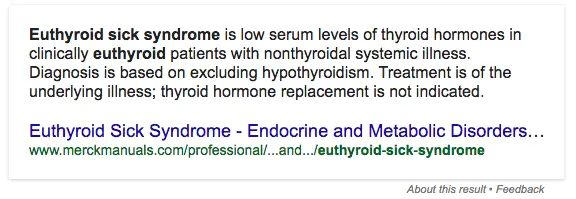
Patients who are under stress develop this condition by altering thyroid hormone metabolism through the conversion process I mentioned above.
Stress results in a typical change in thyroid lab tests manifested as low free T3, high reverse T3, and normal T4 and TSH levels.
I want you to take another glance at those lab tests mentioned above and even compare them to your results.
Do you see any similarities between your lab tests and the lab pattern typically seen in euthyroid sick syndrome?
If you are like many thyroid patients reading this then there’s a good chance you do.
But how can this be? Wouldn’t your doctor notice it?
You would think so but that isn’t the case!
Even though every doctor should have learned about euthyroid sick syndrome in medical school they believe that it’s a condition that only exists in extremely sick patients seen in the hospital or ICU.
Unfortunately, we are seeing more and more patients with multiple chronic medical conditions present with the same thyroid lab tests as those who are hospitalized which leads me to one important conclusion:
Maybe doctors are missing something about our current lifestyle, the increasing rates of illness and chronic medical conditions, and the impact that these have on reverse T3 and thyroid lab tests.
There are studies like this one [3] which can shed light on this very issue.
They show that other situations aside from being hospitalized can lower free T3 levels, increase reverse T3 levels, and cause changes in thyroid function that resemble “sick euthyroid syndrome“.
And it’s small things like this that may explain why so many thyroid patients walk around with hypothyroid symptoms despite being told they are “normal”.
What High Reverse T3 Levels Mean
Now that you better understand why you want reverse T3 levels to be as low as possible the next thing you need to understand is what causes them to be elevated.
Before we jump into the causes, though, let’s briefly go through some of the symptoms associated with an elevated reverse T3.
As you might suspect, the higher your reverse T3 the more hypothyroid you will feel.
Patients with high levels of reverse T3 tend to have one or more of the following symptoms:
- Decreased metabolism
- Lower than normal body temperature
- Cold intolerance
- Weight gain without changing eating habits
- Fatigue or low-energy
- Pain in the joints, muscles, or tendons
- Depression, anxiety, or bipolar disorder
- Other symptoms of hypothyroidism
These are the most common symptoms but realize that each person will present in a different way from the next.
For instance, I’ve seen people with high levels of reverse T3 present with a complete inability to lose weight and with severe depression without manifesting the other symptoms mentioned.
Others may experience issues primarily with their body temperature and even others still may have a mix of all of those symptoms.
There’s obviously a significant overlap between the symptoms I mentioned above and other medical conditions which is why reverse T3 testing is very important (we will discuss this topic soon).
But first:
What causes elevated reverse T3 levels, and what should you look out for?
- Calorie-restricted dieting – Especially HCG-based diets or VLCD (very low-calorie diets). These diets [3] have been shown to reduce metabolism and increase reverse T3.
- Chronic illness and infections – This includes viral infections like infectious mononucleosis [4], bacterial overgrowth syndromes like SIBO, and even chronic illnesses like cancer, cardiac/heart disease, arthritis, diabetes, and even obesity.
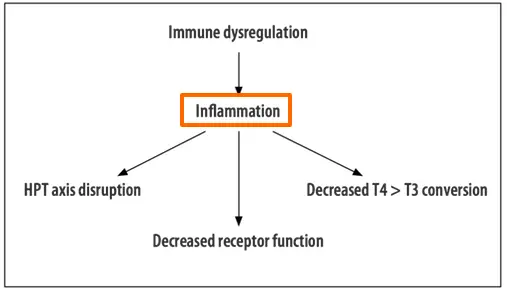
- Chronic Inflammation – Any cause of inflammation can result in decreased T4 to T3 conversion [5] and higher levels of reverse T3.
- Chronic untreated Gut infections – Up to 20% of T4 [6] is converted to T3 in the gut, which means if you have gut issues you may be missing out on up to 1/5th of your conversion power. Gut imbalances that thyroid patients deal with include SIBO, dysbiosis, reflux/GERD, yeast overgrowth, history of chronic antibiotic use, and inflammatory bowel disease.
- Emotional and physiological stressors [7] – This includes social issues like the death of a loved one, family problems, divorce, etc. It also includes psychological (PTSD) and physical trauma (motor vehicle accidents, TBI, or otherwise) [7].
- Some Prescription Medications – The most common medications causing elevated reverse T3 include blood pressure medications, diabetic medications, anti-seizure medications, narcotics, and antidepressants. A common example is the use of beta blockers which can be used to treat the symptoms of hyperthyroidism [8] in addition to elevated blood pressure [9].
Reverse T3 Testing
Reverse T3 testing is actually pretty straightforward.
There is a serum marker for reverse T3 that most standard lab companies can run.
What isn’t always straightforward is interpreting your results, but even that is not as difficult as it may sound.
Before we talk about interpreting your results, it’s important to understand how reverse T3 testing fits into a complete thyroid lab panel.
There are no fewer than 4 standard lab tests that need to be run to adequately assess thyroid function and each of these lab tests provides you with different information.
You never want to just order one lab test without the others because you won’t get the information you are looking for.
This applies to reverse T3 just as much as it applies to TSH testing.
This means if you are planning to really understand your thyroid, you will need to get the following thyroid lab tests: TSH, free T3, free T4, reverse T3, and thyroid antibody levels.
Obtaining these other lab tests will help you put your reverse T3 level into context, especially when combined with your symptoms.
One of the most powerful use cases for reverse T3 is in catching early thyroid disease.
Take a look at this image to see what I mean:
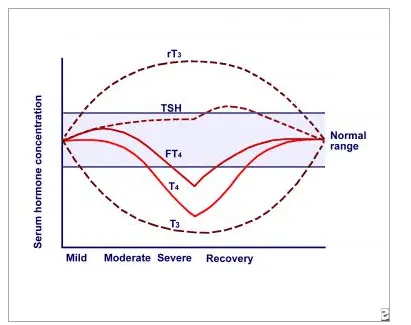
This image demonstrates the severity of the disease state on the X-axis and the concentration of thyroid hormones on the Y-axis.
Basically, it shows what happens to thyroid lab tests and when they become abnormal in relation to the severity of your disease.
What should stand out to you is the fact that reverse T3 (abbreviated as rT3) and T3 (abbreviated as T3) are the earliest markers of thyroid dysfunction.
They become abnormal much sooner than the other thyroid lab tests which makes these lab tests sensitive for diagnosing early thyroid problems.
What’s more, is that the difference between these two lab tests is more dramatic and pronounced than any other thyroid lab test.
For this reason, these two lab tests are critical in evaluating thyroid function.
You can determine the spread between these two values with a simple calculation which will give you the ratio of reverse T3 to free T3.
This ratio is called the free T3:reverse T3 ratio and is something that every thyroid patient should calculate using their own thyroid lab tests.
In an ideal world, you want your free T3 levels to be as high as possible (generally upper 1/2 to 1/3 of the “normal” reference range) and you want your reverse T3 levels to be as low as possible.
To calculate your free T3: reverse T3 ratio simply divide the numbers.
Your ratio should be > 0.20.
Any ratio < 0.20 indicates too much reverse T3 to free T3 and means that you should focus on either increasing your free T3 or reducing your reverse T3.
In order for this calculation to work, your units must be the same.
The units used in the United States for free T3 are pg/mL and the units used for reverse T3 are ng/dL.


Using the example above, if you divide 2.8 by 14.4 you are given a value of 0.19 which is less than that <0.20 level mentioned above.
If your free T3 and reverse T3 lab tests are not in these units, you can easily convert them and then make the calculation with some simple tools available online.
If you want a down-and-dirty way to assess your reverse T3 then you can also just look at the absolute value.
In most patients, a reverse T3 level of less than 15 ng/dL is ideal.
Values higher than this tend to start causing problems, especially if associated with a low free T3.
Options for Lowering High Reverse T3
So you’ve found out that your reverse T3 level is elevated, what now?
Your next step should be to try and drive that level as low as possible.
This is sometimes referred to as lowering reverse T3, treating reverse T3 pooling, or flushing reverse T3 out of your system.
These are all different names used to describe the treatment of high reverse T3.
What I want you to be aware of is that treatment should focus on
What you need to be aware of is that the treatment will focus primarily on the underlying cause [10].
Because of this, there really isn’t a one-size-fits-all treatment program that I can recommend.
I can and will give you recommendations for common causes, but you will still need to tailor that to your specific situation.
With this in mind, let’s talk about 5 different ways that you can lower reverse T3:
1. Medications That Contain T3
The fastest and easiest way to get rid of excess reverse T3 is with bioidentical hormone formulations that contain pure T3 thyroid hormone.
This would include medications like liothyronine, Cytomel, or sustained-release T3.
The reason this approach works so well is that when you give your body T3 hormone directly it automatically suppresses T4, which reduces the substrate that your body uses to create reverse T3.
In essence, you’re starving out the ‘food’ source your body uses to make reverse T3.
Naturally what will happen with T3 medication use is that your T4 levels will decrease, your free T3 levels will increase, and your TSH will decrease.
While on T3 thyroid medication it’s important to monitor reverse T3 closely, at least once every 6 to 8 weeks.
Typically within 2 months (and assuming your dose of T3 is high enough), your reverse T3 should drop to less than 10.0.
This is definitely the fastest way to reverse T3, but it doesn’t take into account the underlying cause.
So if you use T3 to reduce your reverse T3 without making any other changes, it’s likely that your reverse T3 will just jump back up once you stop taking T3 medication.
Is NDT Helpful for Reducing Reverse T3?
It certainly can help but there are a few things to realize if you want to use this class of medications to treat reverse T3:
- Each grain of NDT has about 38 mcg of T4 and 9 mcg of T3, which means that NDT still primarily consists of T4.
- In order to flush out the reverse T3, you must lower the substrate of T4 which generally means lowering your total dose of T4. In some cases, you may have to drop your NDT dose in favor of pure T3 medications.
- NDT dosing is static meaning you can’t individually alter the concentration of T4 and T3 unless you add additional thyroid medications.
You can still treat elevated reverse T3 with the use of Natural Desiccated Thyroid, but it’s generally not considered the best option.
2. Nutrients That Support T4-to-T3 Conversion
In addition to medications, every thyroid patient should also consider utilizing nutritional supplements.
The reason is simple:
The hypothyroid state sets the body up for certain nutrient deficiencies and since most thyroid patients are under-treated, most also have these deficiencies.
This is for 2 main reasons:
The first is that low thyroid states lead to low stomach acid which leads to decreased absorption of nutrients across the board.
The second is that low thyroid states also increase your risk of developing gastrointestinal imbalances which may further impair the absorption of minerals and nutrients.
You can check out this post here for more info about which supplements you should consider using and how to check to see what your body needs.
If you are trying to support the conversion of T4 to T3 with the use of supplements then there are a few you should pay special attention to.
The two primary supplements that you should focus on are zinc and selenium. Both of these supplements have been shown in some clinical studies [11] to increase T4 to T3 conversion, thereby potentially decreasing reverse T3.
In addition to zinc and selenium, I’ve also seen great success with guggulsterone or guggul extract.
We aren’t as concerned about supplements that promote thyroid hormone production (such as iodine and L-tyrosine), but they can still be helpful in some cases.
In addition to these supplements, you can also check out some natural therapies that have some good data behind their use as effective tools for naturally improving T3 levels and reducing reverse T3 levels.
3. Addressing Other Hormone Imbalances
As you are probably aware your hormones all work in tandem with one another.
This means that as one system slows down it may drag down other systems or cause an increase in other hormones to make up for the deficit.
This relationship holds true for thyroid hormones and their impact on leptin and insulin levels.
The link between these hormones is clear:
This is very important because hypothyroidism leads to a state where developing both insulin and leptin resistance becomes much easier.
Why do we care?
Because insulin and leptin resistance both cause inflammatory states which contribute to T4 to reverse T3 conversion.
Not only do they contribute to high reverse T3 levels but they also make weight loss very difficult.
Patients with high reverse T3 levels almost always have high fasting insulin and high fasting leptin levels.
In fact, I don’t think I have ever seen a patient with a reverse T3 greater than 25 with a normal insulin or leptin level.

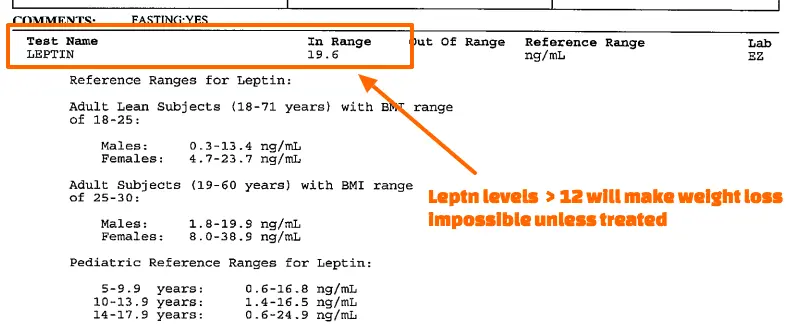

You can see examples from several patients above showing abnormal reverse T3 levels, high fasting leptin, and high fasting insulin levels.
These values may fall within the “normal” range but they are far from normal and will lead to symptoms of hypothyroidism, weight gain, and weight loss resistance.
Another big reason I want to talk about these hormone imbalances is that doctors don’t frequently run tests to check for either of them.
Doctors will routinely check hemoglobin A1c but rarely order fasting insulin and fasting leptin levels.
This means that if you have known thyroid conversion problems, it’s probably going to be up to you to request these additional hormone tests.
Treating and reversing both insulin and leptin resistance is very important for not only lowering reverse T3 but maintaining low levels over time.
To learn more about how to address these hormone imbalances please see the following case studies below:
- Victoza weight loss: 40 pounds lost with Victoza + LDN
- Byetta weight loss: 42 pounds lost over 3 months
- Hashimoto’s weight loss: 55+ pounds lost over 9 months with before/after pictures
These case studies provide a step-by-step walkthrough of how to approach leptin and insulin resistance including which medications, hormones, and supplements are most effective.
If you know you have insulin resistance then you can consider using these supplements to help lower your levels:
- Berberine: Helps reduce cholesterol, improve fasting glucose, and may help with weight loss.
- Alpha Lipoic acid: Helps sensitize the body to insulin and may help to reduce nerve damage in certain patients
- Chromium: Helps improve insulin sensitivity to cells and may help reduce cardiovascular disease in certain patients.
If you prefer the natural approach to treating leptin levels you can find more information here.
4. Addressing Inflammation
Everyone knows inflammation is bad for the body [14], but very few people understand how it makes things worse and, more importantly, how to address it.
Part of the reason for this is that the markers we use for inflammation are non-specific.
That means most of the time we know inflammation is present, we just don’t necessarily know what’s causing it.
Sure, in the presence of other abnormalities we might be able to take a guess, but we will rarely ever know with 100% certainty.
And this is a problem because inflammation is a known contributor to thyroid conversion problems.
We know that inflammation directly promotes the production of reverse T3 [15] by pushing your body down the T4 to reverse T3 conversion pathway.
So if you have high reverse T3 levels you need to be actively searching for sources of inflammation and treating the underlying cause.
You can easily test for inflammation by ordering these lab tests:
- CRP: You want this to be as low as possible but definitely < 1.0 for optimal thyroid function.
- ESR: Another non-specific marker of inflammation [16], for optimal thyroid function this should be < 10.
- Ferritin: Both a marker for iron stores and an acute phase reactant [17], this marker can be used in certain instances to help isolate non-specific inflammation in the body.
If you know that you have both high levels of inflammation and high levels of reverse T3 then you can safely assume that the inflammation is likely worsening your thyroid function.
The next step is to find where it’s coming from.
In hypothyroid patients it’s usually in these three places:
- Hormone imbalances (especially insulin and leptin resistance)- Please refer to the section above to understand how to both diagnose and treat these conditions.
- Undiagnosed gut imbalances like SIBO and SIFO – Both of these gut issues promote inflammation [18] in the GI tract and lead to increased intestinal permeability. You can find more about both here.
- Undiagnosed food sensitivities – These sensitivities promote inflammation [19] and further food sensitivities unless treated.
Bottom line?
If you have both high reverse T3 and elevated serum markers for inflammation you should be looking at the 3 main causes above and treating those if applicable.
If you don’t know where the inflammation is coming from you can still do some good by taking supplements designed to help reduce inflammatory levels and promote the “clean up” of breakdown products in the liver:
- Milk thistle + MSM: Designed to help improve liver function and promote proper phase 1 and phase 2 elimination of medications, supplements, and other products that need elimination in the liver. This combination may also help reduce AST and ALT levels [20] (if you have fatty liver).
- Omega 3 Fatty Acids: Omega 3 fatty acids can help reduce inflammation by reducing inflammatory cytokines.
- Curcumin: This well-studied herb activates PPAR-gamma levels [21] helping to reduce inflammation in the body.
- Quercetin & Bromelain: Particularly helpful in patients with digestive issues and those with chronic sinus/upper respiratory illness-like symptoms (post nasal drip and chronic stuffy nose).
This approach isn’t ideal but it’s better than simply ignoring it.
5. Lifestyle Changes That Support Thyroid Function
Never underestimate the power of these 4 major areas when it comes to improving your thyroid:
- Getting 7-8 hours of quality sleep per night
- Reducing and managing your stress
- Daily low-intensity exercise and episodes of high-intensity exercise 1-3x per week
- A well-balanced diet full of real, whole foods
If you don’t practice these 4 basic things it doesn’t matter what you do, you won’t get better.
These are particularly important for those with high reverse T3 levels.
Remember that your body is a network of systems and hormones that all interact with one another.
When one system isn’t working properly, it will bring other systems down.
These areas are so important that many thyroid patients can see significant improvement in their thyroid symptoms by optimizing them without the need for additional treatments or medications.
The only problem is that most thyroid patients take them for granted and would prefer to take a supplement and call it a day.
Don’t fall into this trap!
Take that supplement if you want, but make sure you are also paying attention to your diet, exercise routine, sleep schedule, and stress levels.
Your Next Steps for High Reverse T3
Elevated reverse T3 is a serious issue for many thyroid patients and it’s a problem that is often ignored by many conventional doctors and endocrinologists.
The best way to evaluate your reverse T3 is by testing for it along with free T3 and free T4 levels.
To get a better idea of how reverse T3 is impacting your body, you can measure your free T3:reverse T3 ratio.
If your free T3/reverse T3 ratio is < 0.2 you have too much reverse T3 in your body.
The fastest most effective method for optimizing reverse T3 is with the use of pure T3 thyroid medication.
Now I want to hear from you:
Is this the first time you’ve heard about reverse T3?
Have you had your levels checked? If so, was it high or low?
What type of treatments have you tried to lower your reverse T3?
Have you tried medications that contain T3 like Cytomel or liothyronine? Did they work for you?
Leave your questions or comments below!
Scientific References
1. Kabadi UM, et al. (1987). Lowering of T3 and rise in reverse T3 induced by hyperglucagonemia: altered thyroid hormone metabolism, not altered release of thyroid hormones. Hormone and metabolic research = Hormon- und Stoffwechselforschung = Hormones et metabolisme. doi:10.1055/s-2007-1011859.
2. Schlienger JL, et al. (1980). [Thyrotoxicosis with low T3 and high reverse T3 levels. 9 cases (author’s transl)]. La Nouvelle presse medicale.
3. Douyon L, et al. (2002). Effect of obesity and starvation on thyroid hormone, growth hormone, and cortisol secretion. Endocrinology and metabolism clinics of North America. doi:10.1016/s0889-8529(01)00023-8.
4. MedlinePlus. Infectious Mononucleosis.
5. Molnár I, et al. (2002). Inhibition of type 2,5′-deiodinase by tumor necrosis factor alpha, interleukin-6 and interferon gamma in human thyroid tissue. Immunology letters. doi:10.1016/s0165-2478(01)00301-7.
6. Hays MT (1988). Thyroid hormone and the gut. Endocrine research. doi:10.3109/07435808809032986.
7. Stephen Nussey, Saffron Whitehead (2001). The thyroid gland. Endocrinology: An Integrated Approach.
8. Carroll R, et al. (2010). Endocrine and metabolic emergencies: thyroid storm. Therapeutic advances in endocrinology and metabolism. doi:10.1177/2042018810382481.
9. Wiysonge CS, et al. (2017). Beta-blockers for hypertension. The Cochrane database of systematic reviews. doi:10.1002/14651858.CD002003.pub5.
10. De Groot LJ (2006). Non-thyroidal illness syndrome is a manifestation of hypothalamic-pituitary dysfunction, and in view of current evidence, should be treated with appropriate replacement therapies. Critical care clinics. doi:10.1016/j.ccc.2005.10.001.
11. Nishiyama S, et al. (1994). Zinc supplementation alters thyroid hormone metabolism in disabled patients with zinc deficiency. Journal of the American College of Nutrition. doi:10.1080/07315724.1994.10718373.
12. Longhi S, et al. (2013). Thyroid function and obesity. Journal of clinical research in pediatric endocrinology. doi:10.4274/jcrpe.856.
13. Kapadia KB, et al. (2012). Association between altered thyroid state and insulin resistance. Journal of pharmacology & pharmacotherapeutics. doi:10.4103/0976-500x.95517.
14. Hunter P (2012). The inflammation theory of disease. The growing realization that chronic inflammation is crucial in many diseases opens new avenues for treatment. EMBO reports. doi:10.1038/embor.2012.142.
15. Straub RH (2014). Interaction of the endocrine system with inflammation: a function of energy and volume regulation. Arthritis research & therapy. doi:10.1186/ar4484.
16. Harrison M (2015). Erythrocyte sedimentation rate and C-reactive protein. Australian prescriber. doi:10.18773/austprescr.2015.034.
17. Kell DB, et al. (2014). Serum ferritin is an important inflammatory disease marker, as it is mainly a leakage product from damaged cells. Metallomics : integrated biometal science. doi:10.1039/c3mt00347g.
18. Dukowicz AC, et al. (2007). Small intestinal bacterial overgrowth: a comprehensive review. Gastroenterology & hepatology.
19. Isolauri E, et al. (2004). Food allergy in irritable bowel syndrome: new facts and old fallacies. Gut. doi:10.1136/gut.2004.044990.
20. Post-White J, et al. (2007). Advances in the use of milk thistle (Silybum marianum). Integrative cancer therapies. doi:10.1177/1534735407301632.
21. Jacob A, et al. (2007). Mechanism of the Anti-inflammatory Effect of Curcumin: PPAR-gamma Activation. PPAR research. doi:10.1155/2007/89369.
22. Golombek SG (2008). Nonthyroidal illness syndrome and euthyroid sick syndrome in intensive care patients. Seminars in perinatology. doi:10.1053/j.semperi.2008.09.010.



My daughter has a mTBI for almost 4 years. She has a headache 24/7 for almost 4 years. Out of the blue about 8 months ago she lost a lot of weight- close to 25 pounds over a 2-3 month period. Her hair is also getting thin. She has had a lot of bloodwork run and nothing conclusive. She followed up with a rheumatologist and endocrinologist. We are getting blood work done. I don’t think either of them are ordering a revers t3. I am having her cortisol levels tested. Just looking for answers. The only other thing she changed was she stopped eating meat and chicken.
I have a reverse t3 of 17. I feel very fatigued and want to stop ndt and start t3. My question is i have heard that i need to start at 5mcg and raise 5 every week. If i was on 150mg of ndt how much t3 do i want to titrate up too? When i take ndt again my reverse t3 always rises. I think i have low morning cortisol and higher afternoon evenings.
Hi Caren,
You can find more about converting between NDT and T3 in this article: https://www.restartmed.com/thyroid-medication-dosage-chart/
You don’t necessarily have to be that slow during your titration.
I am on 100 mcg Synthyroid a day and 25 mcg cytomel once a day. My T3 levels have been around 9 and every doctor I see immediately once to cut the dosing down saying it is too high but I feel fine. When that happens within weeks I develop spasms, muscle stiffness & weakness, joint pain and am unable to sleep. I also get bouts of being overwhelmed, am unable to think clearly, little to no energy and weight gain. I go back on the 25 mcg of cytomel and once my levels go up then the symptoms eventually go away except the weight. The new doctor I am seeing asked me why am I even on this med. In July of 2019 I cut my synthroid to 50 and was taking the 25 mcg of the cytomel as well. I was working outside and doing other activities and by October I had already lost 10 lbs. My doctor then cut my dose to 15 mcg and the symptoms came back and I gained back the weight I lose over the summer. My doctor thought it was a good idea for me to see an endo. After reading about the RT3 I am thinking I should stop the synthroid for a while and just take the cytomel, what are your thoughts? The only thing I can think of that might of caused the imbalance is 5 yrs ago I lost my daughter to cancer, my three dogs to cancer and then her dog to a brain tumor within months of her passing. There was so much I had to deal with to get her estate settled and last April we lost my mother in law and that is still ongoing. I would appreciate any advice you could give me, I am tired of living this way.
Greetings, I am wondering if you can provide any guidance. I suffer from either chronic fatigue or fibromyalgia and have had symptoms for at least 3-5 years. I have worked with a functional medicine doctor and have done lots of testing to look for stealth infections. Several have been found, including scrub typhus. However, none of the treatments or antibiotics I’ve tried have cured my daily fatigue and generally poor health and various symptoms.
In addition, I have gained about 40 pounds over the last several years. My thyroid is sluggish (I take thyroid medicine) and my reverse t3 is elevated. (I also have a very high Cortisol Awakening Response).
Do you have any suggestions for me? I have gone back and forth to the doctors again and again and had many tests but so far no one has the answers.
Hi,
I have been on Synthyroid for 6 months. My TSH level is lowered now(was 6.73 in September now 1.48), I do feel some what better but brain fog does not want to leave me and of course putting weight on constantly continues. My RT3 is high now (was 23.8 and now 24.3) I had DVT last April. I wonder if blood cloth has anything to do with my TSH lelel or TSH level has anything to do with blood cloth? I stopped using blood thinner med 3 months ago. I just do not feel good as I used to 2 years ago. Brain fog is really a big deal for me.
What shall I do as a next step?
Hello, I was doing good, but I quite smoking Dec 3rd, and now everything when hay wire, I gained weight, constipated, moody, and hot flashes night sweats I just switch to levothyroxin 88mcg, but was on 75mcg and liothyronine, 10mcg per day, but since i quite smoking, i really felt bad, now i have no idea whats going on a year ago my
my rev. t3 was 23.3 labs this month are
tsh – 1.9
free t3 – 2.6
free t4 – 1.8
my antibody are 637.4 they went up since last year. i have seen 4 funtional med. docs, and they just dont seem to get this right, i have been eating the best for the last year and a half. please help,, i just want to feel good again, and not go back to smoking.
Dr. Childs,
Wow, this article is sooo informative! I was just recently tested for hypothyroidism and Hashimotos, and I couldn’t make sense out of the reverse T3 results. You mentioned about people having high reverse T3, really low free T3, low T4, and high TSH. But my results are high reverse T3 at 30, semi-low in range free T3, high upper range T4, and really low in range TSH. Yet, I have every symptom of hypothyroidism. So do I have hypothyroidism, or hyperthyroidism? Can a person have both at the same time?
Hi Rachel,
No, it’s impossible for the same tissue to be both hyperthyroid and hypothyroid at the same time. It’s either one or the other.
Hi could you please tell me is there a difference in amounts of T4 in levothyroxine and compounded T4 capsules. I feel the compounded without fillers may be stronger .
Hi Desley,
Yes, the dose depends on how your doctor wrote the prescription.
Dr Childs,
Thank you so much . I find this fascinating.
I had a TT 20 years ago and have major weight gain and weight loss resistance. I also have a very bloated stomach .
My Rt3 is 29
I also have High Ft3 and very Hight Ft4. What is the best way to deal with these high levels. I think I take too much T4
.175 sytnroid and 1 grain of armour
Hi Donna,
I would probably agree with you based on this information 🙂
Dr. Childs,
I’m at least one of the exceptions to your clinical observation:
“In fact, I have never seen a patient with a reverse T3 > 25 with a normal insulin/leptin level”.
My RT3 in my most recent labs was 25.6, while my fasting insulin was only 9.2. I’m working with my doctor and trying Armour Thyroid, but my expectation is that sustained release T3-only therapy will be needed due to a genetic anomaly I have (a “deiodinaase polymorphism”) that somehow interrupts T4-T3 conversion. A lot of people have these polymorphisms, and its common enough that people should be alerted to this possibility as a cause, in addition to those you highlight so comprehensively.
Thanks, Jim
Hi Jim,
Indeed! It’s in about 20% of people as outlined here: https://www.restartmed.com/thyroid-deiodinase/
I found Dr Childs’ Reverse T3 Blog to be true for me. I have high reverse T3 from inadvertent calorie restriction since childhood and repeat physical injuries. The only advantage to long term calorie restriction is looking young without having to work at it. Luckily, my hypothyroidism didn’t cause weight gain. My hair did start graying after I tried to reduce my thyroid medication and replaced that reduced dose with thyroid support supplements.
My integrative medicine physician ordered a full thyroid lab panel in 2012 when I wasn’t on thyroid medication. My internal medicine physician ordered it on my request in 2019 and 2020 a couple of years after I started natural dessicated thyroid. Both lab tests showed increased D3 activity per Dr Child’s Thyroid Deiodinase blog (reverse T3 25 – 33 and the other results low-normal to normal).
My integrative medicine physician convinced me to take supplements and change my diet from veganism until that my nutrient panels showed normal to good results. I had just suffered from a physical injury.
My joint pain improved after increasing my thyroid medication dose. Manual massage and myofascial release worked to temporarily relieve symptoms but the pain came back ,through much improved after the treatments. I greatly appreciate Dr Child’s blog about The Connection Between Chronic Pain and Fibromyalgia & How to Treat it. I just found it and hope that the recommendation to add T3 only medication works out.
I started having symptoms of a painful eye disease that intermittently affected my vision and disrupted my sleep from night eye pain. Another reader commented on having euthyroid eye disease, so I now know that I’m not the only one. The ophthamology field doesn’t show much interest in it and most of their research is in retinas. I was already taking the supplements in Dr Child’s T3 Conversion Booster and Dr Axe’s Thyroid Support System and increased my thyroid medication to a full grain of NDT. My eye condition significantly improved – enough to stop my prescription steroid eye drops.
I wish Dr Childs would write a blog about the connection between thyroid and eye disease and what to do about it.
Hi Dr Childs.
I have had my t3, RT3 tested after almost four years of CFS.
My ratio between the two was 0.009 (5.3t3-545rt3)
I have been using iodine, vit C, selenium, b complex and EPA/DHA, adaptogens with acupuncture and pyschotherapy to improve thyroid function and also cortisol levels.
I am looking to start t3 medication later this month after seeing an endocrinologist, how long do you think these levels will take to recover? and do you believe the CFS is solely caused due to these levels?
I have been feeling unwell (fatigue, gaining weight, hair loss, sudden constipation) after switching to liothyronine (5mcg) and 13 mcg TIROSINT after stopping NP Thyroid 1/2 gr. about 6 months ago. I’m 5’8″ and 122 lbs., age 61. Today I got my lab results:
TSH dropped to 0.87; FT3 2.6; FT4 1.01 and… RT3 22.1! All very much worse than my usual, but not optimal, thyroid labs. So Naturopath increased liothyronine to 10mcg, while maintaining TIROSINT for now. I’m going to check adrenals with cortisol test + DHEA-S to see if there are issues there. What do you think? Do I need to be off TIROSINT?
First of all, i found this very helpful for I have been suffering from hypo thyrod for 8 years now. I have been taking Armour thyroid 180 mg for the past 3 years daily. My test just recently changed and my symptoms are worse. Fatigue continuously, skin tone changed, constantly itching, hair is shedding bad, depression, anxiety, ……. I have every symptom. Got the test results back and they have changed. My T3 levels were always low now:
TSH =.07
Rt3= 69
T3= 6.3
T4=.8
Work out daily, healthy eating and I am going out of my mind until I realized this was not my imagination.
Will any of your plans work for me and which one?
So thankful for this article. I’m from Belgium, so my English is not that good. I was searching for a cause of my high rT3 and bumped into this article. My story: I am a 47 year old woman. I was on Erfa for the past 5 years, I took 90 to 120 mg. In 2020 I was starting to getting bad hypersymptoms and was hospitalized. The endrocrinologist in the hospital forced me to stop with the NDT and I had to do a reset. After a few months she put me on T4 meds (levothyroxine). After begging she put in T3 for me. But after one month I was starting to feel worse, I lost 5kg in 4 weeks, had severe stomach problems, could barely eat. I had a total check up, gastro-intestinal, pancreas, liver (MRI, colonscopy, endoscopy). Everything turned out normal, the only thing they could see was that my T3 was too high. So again stopped with the thyroid meds. Now I don’t take anything. My TSH is ok, free T4 within range but low, free T3 slightly lower then minimum, but rT3 is 41. My ratio T3/rT3 is 0,14. I’ve tried taking T3 only but the same symptoms of stomache ache and not been able to eat returned after a few days. It seems like I can’t tolerate the T3 meds. I don’t have a lot of stress in my life at the moment. My symptoms are fatigue, pain in muscles and bones, can’t lose any weight (I eat very healthy), always cold (especially hand and feet), a sadness that is always on the background for the past six months. But my hairloss is better now than I was on thyroid-medication. I don’t have any at the moment. It is very confusing. What can I do if I don’t tolerate T3? How can I find the real cause of the high rt3? Thank you very much for your help.
Hi Anne,
You can take advantage of natural therapies to help increase T3 levels 🙂 You do NOT have to use T3 medications necessarily.
Without getting too far into my medical condition(s) I have Hashimotos, a nearly total thyroidectomy, and was just recently diagnosed with CKD (interstial nephritis). My ferritin and CRP levels are at or above the testing limits. I am on NDT as well as berberine, ALA, milk thistle, and a food based vitamin that provides selenium, iodine and zinc at the levels my doctor prescribed. My T4, fT4, T3 T3up and TPO are all in the “normal” range after reducing my NDT. My TSH is basically non-existent (<0.005). My thyroglobulin antibodies (10.1 down from 17.4) and rT3 (33.8 down from 61.4) are still well above the lab ranges. My question is, how much of the high rT3 is due to CKD? My nephrologist is following my T4 and T3, but not my rT3. My thyroid dr. (whose specialty is sports medicine) is happy with my numbers dropping after lowering my NDT and is recommending standard follow up. I do not feel the doctors are working “against” each other, but after reading this article, I am wondering if their apparent “unconcern” with my rT3 is due to the CKD. Thank you in advance
This was the best, most-comprehensive article on thyroid issues that I’ve ever read. Thank you for that and for also writing the other articles that you referenced in this particular one. Please keep up the great work!
Hi Jackie,
Glad you found it helpful!
Hello I had my thyroid removed at 23 in 2019. I am now 26 and it’s 2021 I used to weigh 130 before thyroidectomy now I weigh 180 and it seems like I gain like 5 pounds a month. They have me on 125 mcg of synthroid and say my levels are normal. Idk what to do. I can’t stand the way I look and feel. I wish they would have told me all these side effects after the removal because I would have never chose that option to have it removed. I have Graves disease that’s why they removed it.
Hi Anna,
There’s always a way to feel better, even with RAI! It will take a lot of energy and effort but it’s definitely possible. I have loads of resources to help do just that on my website and youtube channel.
Hello, I’ve been struggling with Thyroid symptoms for over 10 years now and have been diagnosed with Hashimoto’s. I keep alternating between hyper and hypo symptoms. I’m currently taking 50 mcg of levothyroxine a day. My last lab results showed a THS level of 1.27, T3 is 2.5, rT3 is 20 and free T4 is 1.3. I’m currently experiencing hypo and hyper thyroid symptoms. Muscle pain, bone pain, bone loss in my mouth even though my dental hygiene is very good. My doctor wants to start me on 5mcg Liothyronine. It seems to be the right thing to do but the last time I tried it my hyper thyroid symptoms went through the roof after 4 weeks: Heart palpitations, insomnia, weight loss, joint pain, bone pain and rapid bone loss in my mouth. I don’t want to loose my teeth over this and I suspect my bone density is suffering as well. Should I take the Liothyronine and continue the Levothyroxine as well?
Hi Cheryl,
I would highly recommend checking out this blog post so you can figure out what you need to do with your medication: https://www.restartmed.com/hyperthyroid-and-hypothyroid-at-the-same-time/
Hey Dr.
I’ve been hypothyroid for 38 years. Complete autoimmune loss of thyroid gland. Ive been on thy merry go round for far too long and only in recent years using Synthroid after the NDT DISASTER lost my Naturthroid. I’ve had every bad thing reslt from low thyroid and beat dying several times. I’ve got my back to wall now with stage 3 CKD (39 gfr) , Diabetes (6.4 a1c) HTN that’s just not responding well to meds. (Clonidine, Verapimil, etc..) my t3 is low and t4 is very suboptimal on 300mcg. Ive started having mineral issues with very low magnesium.
Andc I’m on my third crappy Endo that like thy previous only wants to prescribe Insulin and not dig into my thyroid and hormone problems. I need a new doctor in Lake County Illinois and I’m sure you already suspect I running out of time seriously bad. I need to supplement but that CKD and Diabetes complicates things. I’m using D, B complex, SLOW MAG, 2K mg Fish oil, zinc, Insulin, BP meds, Carbamazepine, opiates, and oral diabetes meds. Any advice? Craig
Hi Craig
So sorry to hear what you are going through. I had thyroid surgery as a teen that was not followed up and have suffered for decades because of the medical profession’s lack of knowledge when it comes to thyroid disorders. I was doing poorly for years on Levothyroxine, which is the same as Synthroid. I finally found a doctor that treats with T3. He put me on a form of liothyronine and it made a huge difference. I felt normal again, although I still have my ups and downs because in Australia there is only one dose available that is hard to adjust. When I was on Levothyroxine my reverse T3 was the highest my doctor had seen in his entire career (he is around 60). He put me on a lot of supplements too. My advice is, keep searching for the right doctor/practitioner that has the necessary knowledge. Have you tried the American Thyroid Association for support? A bit far from you but I find Thyroid Patients Canada a great resource too. I hope you have people that can support you and help you do so.
Hola Dr. Westin,
So I hope question is relatively easy. My T4 and T3 are within range and my RT3 is high. I take 100 mcg’s of Tirosint, 30 mcg’s of liothyronine and 4.5 LDN. Any suggestions for bringing down RT3?
I also take supplements (vit D, berberine, tudca, probiotic, NAC, vit C)
Hi SM Stocking,
Yes, please see this article: https://www.restartmed.com/increase-free-t3-naturally/
Increasing your free t3 will decrease reverse T3 levels.
Hello Dr. Childs, I already asked this question but didn’t see my comment or a reply so hoping you see it this time. I had Graves disease and in 2017 had RAI much to my regret as it’s been awful since then. My PCP has listened and kept my TSH at .02, but I’m still having “hypo” symptoms with a lot of weight gain and inability to lose. I’m on Tirosint, take selenium and zinc every day. My FT4 is at 1.4, FT3 at 3.3 (I stopped zinc and selenium 2 days before my test since Dr wanted to lower my Tirosint as FT3 was too high last time), My RT3 however is at 26. My PCP didn’t and doesn’t interpret RT3 and what to do so I asked my Naturopath Dr and she said to reduce my T4 since that is driving my RT3 so high. From your articles, this does not make sense to me! Sounds like I need to increase my T3 correct? Please help if you can. I’m on Ashwaghanda as well for stress as I feel that is what’s increased my RT3. I’m lost and I don’t think any Dr’s around Burlington, VT have enough knowledge of the thyroid and validate any symptoms. Thanks and I hope to hear. Also, is there an easy way to check for responses? Seems like dates on this blog are all mixed so tons of scrolling. Thanks.
Hi Erika,
Unfortunately, I am not able to provide medical advice regarding what kind of changes you should or shouldn’t make to your thyroid medication. I believe you should get an email notification when someone responds to your comment.
Such an informative article!! Thank you Dr. Child’s! What’s the marker and number that warrants T3 only treatment to fix a reverse t3 issue? Mine is at 16 and have all the symptoms of reverse t3 conversion issue. Is it safe to say anything above a 15 + symptoms of hypo would benefit from t3 only? Essentially, I’m wanting to understand the specific labs that tell me I need t3 only to flush the reverse issue out.
Thanks
Hi Shelley,
I don’t really use a marker or number when determining if someone needs pure T3. I usually go based on a number of factors such as the severity of thyroid disease, presence of other comorbidities, their response to other thyroid medications, and an overall feel of the patient and their health.
Dr. Is it possible to have TSH, free T3, free T4 in normal range but R t3 688pmol/l High. Why it is so? M having 50mcg levothyroxine with thyroid support supplement. Can u please answer?
Hi Vinny,
Yes, that is certainly possible. Please see this article which explains some of the causes of high reverse T3: https://www.restartmed.com/high-reverse-t3/
Hi Dr. Childs,
I have a question that I will generalize instead of pointing it towards myself.
Hypothetically speaking, if a person has really high RT3 but borderline hypo FT3 and FT4, and that person is taking NDT, could that person lower his NDT and take cytomel instead to flush the RT3 out but simultaneously risking going into hypo range with his FT4. Would that hypothetically speaking be ok to do temporarily to flush the RT3 out?
Hope you can answer my question. This is no way me seeking medical advice.
Hi, lm so very grateful to have found you, thanks for doing what you do.
Okay i’m your odd person out, my unsulin fasting is 3.3
SHBG 199
Ferritin 38
TSH 0.01
T4 16
T3 3.6
RT3 very high, will be retested at the end of Aug.
I take eltroxin 200mg a day
20 mg x2 times a day tertroxin
I truely believe inflammation is in the gut. i’ve spent a lifetime trying to control it and not there yet. very inflammed right now. ive had a hysterectomy and BRCA1 positive so been thru many preventative surgeries. DO you think adding the Quercetin and Bromelain will help?
Also do you think it’s worth trying the Tirosint?
I’m very very sensitive to change. The last time i changed medication it left me in a very bad hypo for 10 weeks on the couch unable to function…….. I feel like your are my last resort and will understand my unique situation. I very much look forward to hearing back from you. I’m a very fit active mother of 2 from australia who desires to live my best and most healthiest life. Lisa
Hi Lisa,
It’s always worth trying new thyroid medications because the upside far outweighs the downside if you aren’t feeling 100%. As for the quercetin/bromelain, it would also be worth a shot but I wouldn’t expect too much from it. You can find additional supplements to help reduce inflammation here: https://www.restartmed.com/anti-inflammatory-supplements/
Hi,
Thank you for this article, it isn’t easy getting information and advise on this subject. I wanted to check if rT3 is what is causing thyroid symptoms. I have a Multi nodule Goitre which the endocrinologist told me is not a problem (no more further information) will check again in a year. I had my labs done separately which I have listed below, from what I can work out I do believe that my rT3 is high and also the ratio to fT3. I would be grateful if you could confirm this for me.
TSH 1,725 uIU/ml
FT4 0.87 ng/dl
FT3 3.31 pg/ml
rT3 0.30 ng/ml
Any information will be greatly appreciated
Hi Lisa,
Please see these articles where you can compare your values to the optimal reference ranges provided: https://www.restartmed.com/normal-thyroid-levels/
You can also find more information on how to calculate the free T3:reverse T3 ratio here: https://www.restartmed.com/free-t3-reverse-t3-ratio/
Thank you Dr. Childs,
I can now see from reference range that rT3 is defiantly high. I have been struggling with the math and conversions for the last few hours for the ratio
fT3 3.31 pg/ml
rT3 0.30 ng/ml
I converted the ng/ml ~ pg/ml = 300 pg/ml
This gave me a ratio of 1.1, your article says Your ratio should be > 0.20. Is this correct as i don’t know what unit you are referencing.
I’m just getting confused, as very time i covert the values into a different units and do the sum i’m getting different results.
Lisa
Hi Lisa,
There’s a free PDF you can download on this page which walks you through how to calculate the free T3:reverse T3 ratio: https://www.restartmed.com/start-here/
If you match the units in that document then the ratio will come out correctly and you should be able to interpret your results.
Dr. Childs,
Thank you so much, the PDF is a great explanation.
Great information. My doctor and I are trying to figure out why after 130 pound weight loss in 2017-2018 and 4.5 years strict keto (not one cheat at all), I gain 40 pounds without change in nutrition or exercise. I have exercised every day since 2017 and many days over 1 hour exercise, my reverse T3 is high (28)and leptin is below low at 3.7. I am fatigued and body fat percentage has increased. I asked her to put me on T3 along with Synthroid that I have been on since 1990. I have been on T3 for 3 month now. Sleep could be huge factor as I sleep, however, only about 6 hours a night as I wake up at 330 am each day to exercise. Going to ask her to reduce Synthroid from 200 mg to 175 mg and T3 is 75mg- 3 times per week and increase that to daily. I also need to get 8 hours of sleep-even if it means going to bed at 730 each night. I know leptin could be low due to carb restriction for 4.5 years. Appreciate any words of wisdom you may have!
Hi Carey,
Both low leptin and high reverse T3 could be from the carbohydrate restriction. I’ve discussed some of the potential downsides to the keto diet here that I would recommend checking out: https://www.restartmed.com/ketogenic-diet-thyroid/
Morning,
This information is so useful. I was born without a thyroid and have been on levothyroxine since I was born.
I have been feeling lethargic and tired for a long time and after meeting my doctor my results were coming back fine but I still felt the same way, no periods, tired, dry hair.
I knew it was normal as when I was young I was full of energy almost the opposite high metabolism hyper but after uni I was slow sluggish putting on weight. I was referred to a encroligist to carry out further tests on my hormones he noticed my testosterone was marked high he explained I had PCOS and I needed to take metformin him now on 2000mg my periods have come back. I think he was so focused on fertility that everything else went away but I still feel the same and I’ve dropped of his Radar and list since covid.
I think I need a full panel of bloods and I think my body is so out of whack. After reading this I’m not getting enough T3 causing insulin resistance causing high testosterone not the other way around.
I definitely need to check my reverse T3 and Free T3 as I’m on 200mg of levothyroxine a day and my symptoms don’t change.
I also suffer with gut problems and have gone dairy free but I’m pretty sure there is inflammation there to what tests would be good to get to check gut health? Is it worth getting a panel on intolerances?
It’s a bit all over the place but this page has really highlighted areas which match exactly how I’m feeling and given me direction on what to ask for. What’s hard is taking metformin for insulin resistance but then this is causing gut issues and inflammation? It makes sense how they all knock into each other though.
Thank you
April
Hi April,
There are loads of tests that exist to help determine gut health but they are not all equally accurate or helpful. The same is true for food intolerances as well. Unless you know what you are specifically looking for, testing your gut health randomly is not always helpful and it can be very expensive. In the hands of a knowledgeable practitioner, your symptoms can guide you to the correct tests.
i was diagnosed with high reverse T3 this summer and put on liothryonine, which in week 3 stopped my hair loss in it’s track, YEAH!!! but sadly week 4 i started developing serious side effects to where week 5 they became dangerous/life threatening and i had to stop taking it. i’m now almost 2 months post taking it and my hair is falling out by the handfulls… HELP!!! i’ve only taken prescription medications a couple times in my life and each and every time i’ve had to stop as i have very serious side effects.
Hi Cindi,
Thyroid-related hair loss can be complex but I’ve created this resource that can help you find the cause and reverse it: https://www.restartmed.com/thyroid-hair-loss/
I would recommend reading that article for more information.
Hi, I have had free T4 in low end of range for years and free T3 in high end of range or over, and low TSH .07. I’m on desiccated thyroid. 30 mg isn’t enough so tried 60 and too much, then 45 and T3 dropped low and tsh so have been on 60 one day and 45 the next. Am in low end of range for free t4 and high end for free t3 and 0.7 tsh. I feel cold all the time and tired on the days I take 45 and when I take 60 feel reved and can’t sleep with either. Had 50 mg compounded but seriously do I have reverse t3? How come t4 is so low and t3 so high?
You mentioned that naturally what will happen with T3 supplementation is that your T4 levels will decrease, your free T3 levels will increase, and your TSH will drop. What does it mean if you are supplementing with T3 and my T4 drops but my TSH is increasing instead of decreasing?
Hi Melissa,
Every change that I mention is dose-dependent. If you take a very small dose of T3 then you won’t see these changes occur until your dose reaches some threshold. That threshold is different for each person but generally starts to occur around 25mcg/day. If your TSH is increasing while taking T3 then it means your dose is very small or you aren’t absorbing it.
For the first time ever my TSH is actually low at 0.474. Reverse t3 high at 27.2, my ratio to free T3 is 0.12 which I know after reading this is definitely not good. Pero abs at 29 and thyroglobulin abs at 19 both say normal. I feel good knowing I wasn’t crazy about all the symptoms I’ve been having for so long. However, I wonder what could have caused the TSH to drop below normal and does this matter with whatever treatment plan I opt to do?
Hi Tia,
I would recommend reading these articles for more information regarding the causes of low TSH:
https://www.restartmed.com/low-tsh-symptoms/
https://www.restartmed.com/low-tsh/
Hello,
I’m taking compound T4/T3 28.5:6.75MCG. I would like to know if I can stop and do a natural approach instead?
Blow is my lab test:
THYROID STUDIES
TSH, 3rd Gen. 0.971 uIU/mL 0.270-4.200
T3, Free 2.3 pg/mL 2.0-4.4
T4, Free 0.93 ng/dL 0.93-1.70
T3, Total 0.70 L ng/mL 0.80-2.00
T4, Total 5.42 ug/dL 0.41 24.86
T3, Uptake 1.1 TBI 0.8-1.3
Free Thyr. Index 6.0 H Index 1.1-4.2
Thank you,
Laurence
Hi Laurence,
Whether or not natural treatments will work for you isn’t really based on your lab tests. The best thing you can do is just give them a try and see what kind of improvement you can get: https://www.restartmed.com/natural-thyroid-remedies/
Well you have now ‘met’ your first thyroid patient with LOW fasting insulin (2) and high reverse T3 (26). Not enough is known about the diodinases which are responsible for which hormone T4 is converted to. I have read that the thyroid gland itself produces some of these diodinases so those who have no working thyroid gland are at a complete disadvantage. It would be phenomenal if you figured out a supplement to help the diodinase enzyme conversion process and the transport carrier proteins needed to take thyroid hormones in and out of the cells. Thanks
Hi Deb,
I’ve definitely seen situations in which fasting insulin levels do not correspond directly with other metrics including thyroid lab studies and glucose levels. My assumption in these cases is that it was genetics playing a role.
I’ve written about deiodinase enzymes in this blog post and you can learn more about the genetics involved here: https://www.restartmed.com/thyroid-deiodinase/
Fat-soluble vitamins like A, D, K, E as well as zinc can sometimes help thyroid hormone receptor problems. Those can be found in my Thyro ADK supplement blend here: https://www.restartmed.com/product/thyro-adk/
I have never heard of any of these:
reverse T3?
Have you had your levels checked? If so, was it high or low?
Have you tried medications that contain T3 like Cytomel or liothyronine?
Hi Willie,
Reverse T3 is a lab test of an anti-thyroid metabolite. You can get tested for it but you will most likely have to ask for it as most physicians will not automatically order it. Cytomel and liothyronine are T3 thyroid medications that are available via prescription medications: https://www.restartmed.com/thyroid-medication-names/
I do not seem to respond to synthetic T4. I have been on NatureThroid for about 8-10 yrs. Recently my doctor added Levothyroxine despite my feelings about it and my recent rT3 was 24. Am I correct in thinking that the added T4 is the cause?
Hi Jeanne,
Additional T4 likely didn’t help the situation but it’s hard to say if the T4 is the actual cause or if there are underlying conditions like inflammation present as well.
For 30 years I was subclinical with slightly elevated TSH At 76 iTSh started rising into 6 range periodically never over 10. I started T4 and dropped TSH and other markers in normal range but O wasn’t feeling great. My doc worked with me and we started T3. I feel
Much better, weight loss slowly coming down 220 now 209. Goal 198. RT3 = 19. Free T3 =4 Ratio 0.21 I am taking most of the supplements you recommend in this article. Fasting glucose always 100-109. I feel i am a bit insulin resistant.
Diet is more on Keto side.
T4 – Levo 50mcg 2 times
T3 – Lio 5 mcg 2 times
So I take 1 of each am and 1 of each pm.
No other meds
Your thoughts
Hi Titus,
If you have a specific question I’d be happy to help answer it.
As always, brilliant info here! As someone 10 yrs post thyroidectomy, who’s suffered all the things since then, I can also attest from personal experience that everything mentioned is so true! If only I’d learned it back then…but better late than never!
My question is how to note inflammation from ferritin levels or where to find more info about that. I’m chronically anemic and get lots of iron labs regularly.
Also wondering if there’s recommendations somewhere on dosing the anti inflammatory supplements or just starting with whatever the supplements themselves indicate?
Thank you for your tireless work & dedication to the troubled thyroid community!!
Hi Mari,
Ferritin is one of those things that becomes less accurate when iron dysregulation is involved but you can learn more about it here: https://www.restartmed.com/how-to-test-for-inflammation/
You can also find more information on anti-inflammatory supplements and which I recommend here: https://www.restartmed.com/anti-inflammatory-supplements/
Hi Dr Childs, thank you so much for the information you provide.
In 2017, at the age of 50, I had a total thyroidectomy and RAI as a result of thyroid cancer. After that I was put on Eltroxin (T4) but after two years of that I was in the grip of depression and despair as I had no energy, no memory and all the hypothyroid symptoms. When my endo increased thedose I felt worse because then I had hyper and hypo effects. The bad memory was the worst for me because at school I could memorize textbooks so I have always had a great memory.
Anyway weighing by now 134 kgs, I’m 172 centimeters tall, I came across one of your reverse T3 articles. I went for the lab tests and my ratio of reverse T3 was 0.11. Even the reverse T3 test alone showed that my reverse T3 was outside the normal range of the high side of the range. I acted on the information and switched gradually over a period of about 5 weeks from Eltroxin(T4) to Tertroxin(T3). This was in May 2019. Since then I’ve been on Tertroxin exclusively. I take one 20 microgram Tertroxin tablet every 8 hours. That’s three a day (60 micrograms).
The result is that I feel again like I did as a child and a teenager. You know when your body is just there and it works. You just take it for granted. I no longer feel like I’m dragging myself around. My memory is excellent. When I play brain games and I get compared to my own age group world wide, I score in the top 98 %. Life is good. Through intermittent fasting, which I started doing about 15 months ago, I’ve dropped my weight from 134 kgs to 110kgs, and it was easy. And I’m not finished yet. I plan to reduce my weight to at least 75 kgs, which was what I weighed in my 20’s. But I’ve got time, so I’m not pushing hard. Mostly I’m enjoying life now. Thank you for the advice you provide. It has given me back my life.
Hi Sandra,
Glad to hear the information has helped! Thanks for sharing.
Hi Dr. Child’s
I Always enjoy reading your posts and explanations. I shared your article on high cholesterol and thyroid to 2 of my doctors! But as expected no response.
Anyway my question is these articles are centered on high RT3,
What are your thoughts on very low borderline abnormally low RT3?
Thank you
Patricia K.
Hi Patricia,
It depends on the circumstance, your medications, your symptoms, your thyroid history, etc. You can’t really evaluate thyroid lab tests without context.
Thank you for the reply.
How long should I stop my beta-blockers before I’ll get an accurate T3/reverse T3 blood test result?
My score on 02/24/23:
THS 9.86 uIU/mL
free T4 1.10 ng/dL
free T3 2.1 pg/mL
T3, reverse 16.8 ng/dL
Please help
I was aware of reverse T3 but not the ratio between T3 and reverse T3. I knew that TSH was not a reliable marker for thyroid function. I just didn’t know how to tell if my thyroid was not functioning properly. I believed that T3 alone would help me, but my doctor disagreed, and I am taking Liothyronine and levothyroxine. I read about Zinc and Selenium and take both. I get about 8 hours of sleep each day. I eat plant-based foods but also meat. I am always stressed over something.
I actually followed Dr. Wilson’s protocol of T3 only for over 6 months but saw no improvement. That is when I gave up on just taking T3. Your article caught my attention because you emphasize the ratio between T3 and reverse T3. I don’t know what the ratio was while I was taking T3. I would like to learn more about your methods of improving thyroid function. Maybe I will stop Levothyroxine for a day each week and see what happens. I take two of your products now. Thyrosol and Andreset. Don’t know if they are making a difference.
Hi Ralph,
I don’t have a product called Thyrosol or Andreset, perhaps you are confusing my supplements with someone else’s?
I had 28 problems caused by Covid (I’m a former Covid long hauler). One problem was high Reverse T3. I’m not sure what all the Functional Medical group did to lower it because it was an overall plan for all 28 problems but I’ve lost 18 lbs. in 3 months after the symptoms of long Covid were pretty much remediated. I found this article fascinating. Thankfully I didn’t gain any weight during the 18 months I suffered but I sure couldn’t lose any weight even when I tried. I’ve heard that hibernating bears have high Reverse T3. That’s a perfect description of what my body was doing that 18 months. Even though this article mentions fighting infections as one of the purposes of high Reverse T3, i wonder if you have written anything current on high Reverse T3 related to dealing with long Covid?
Hi Pam,
I have not yet written about the long terms effects of COVID on thyroid function.
Hello Dr. Childs,
I feel like I’m starting over now that I have a new primary care physician, and it’s exhausting work and my energy is sapped. My previous pcp retired and it took me a long time to provide her with current information. Could you please help me?
In my search for a good explanation to give to my new primary care physician for lab test rT3, I came across an article from Dr. Christianson who states that he never orders a rT3. Here is the link
https://www.drchristianson.com/blog/how-to-interpret-your-thyroid-labs/
This is exactly what my new primary care physician said to me last week. Since there are at least 2 sides to a story I’m wondering what you would say to Dr. Christianson.
Also, my new pcp told me it does not make any difference when I take my medication prior to lab tests. Another confusion for me. I’ve been on Armour for more than 2 years and Nature-Throid prior to that. TT in 2010. I think every article I’ve read states, labs early a.m. then take meds. Of course, there are exceptions that I don’t think I fit into. What do you say and why? I have read your information on this issue.
Thank you for any guidance to pass along to the new guy on the block.
Rhonda
Hey, Dr. Childs
I would be ever so grateful if you would respond to my question sent to you on May 4, 2023.
After 13 years of having a TT due to papillary cancer I am beginning to gain weight, 10 pounds in a months period of time. I take Armour Thyroid 90mg per day.
Mostly, I am concerned about my new primary care physician and how to help him understand the importance of a rT3.
Thank you,
Rhonda
Hi, Dr Childs
I have Hashimoto’s. Currently on Levothyroxin 100mcg.
After watching one of your videos I had my doctor include rT3 in my test. He said everything is fine….?
T4 = 15.2 pmol/L
T3 = 5.4 pmol/L
rT3 = 542 pmol/L (high)
TSH = 0.14 mIU/L (low)
Peroxidase Ab = 61.4 IU/ml (high)
Thyroglobulin Ab = 1.6
Although the Peroxidase is high, a number of years ago (10?) it was around 950! It has gradually been decreasing.
As I gained weight when I started on Levo about 3-4 years ago, and have been unable to lose it since, I am wonder if you have a solution available to an Australian 🙂
I am also on Effexor 37.5mg following panic attacks brought on by an overdose of thyroid medication when it wasn’t needed about 5 years ago. This was when the Hashimoto’s was actively sending me over active, stable, under active, rinse and repeat, LOL. I told the doctor at the time that the specialist advised me not to go on medication. He said I needed to this time. Wrong. A month later, I collapsed. Haven’t been to him again!
Thank you
Hi Dr. Childs.
Currently don’t have an official diagnosis.
TSH- 0.02mIU/L
Free T4- 16.2pmol/L
Free T3- 8.5pmol/L
Numbers of a hyperthyroid but the symptoms of a hypothyroid. Very easy to gain weight but seemingly impossible to loose it. They won’t test for rT3 where I’m at. Any thoughts on the possible causes to investigate. My initial thoughts are possible autoimmune? Feel normal other than the occasional swelling/ tight sensation in my neck. I did go through a few years of very frequent use of antibiotics. Any insight would be much appreciated.
My T-3 is off the chart on my last test , my T-4 is perfect . I take Armour Thyroid 180mg , how can I get my T-3 lower ? My Dr is at a loss when it comes to thyroid issues !
Hi Debb,
Some people are just more sensitive to T3 than others and because dosing in Armour is static, you’ll never obtain optimal T3 and T4 levels simultaneously by increasing the dose. The more NDT you take, the higher your T3 will go and the more it will drive down your T4. Chasing these optimal levels is a fool’s errand anyway, but if you wanted to get there, you’d need to use individual T4 and T3 doses.
It’s always better to pay attention to other markers, though, such as those found here: https://www.restartmed.com/thyroid-related-health-metrics/