
- A low TSH doesn't automatically mean you have enough thyroid hormone in your cells. Your pituitary gland is more sensitive to thyroid hormone than other tissues, so TSH can be low while peripheral tissues remain hypothyroid.
- Always request Free T3, Free T4, and Reverse T3 testing in addition to TSH, since high reverse T3 with low free T3 indicates thyroid resistance that a normal TSH completely misses.
- You can have a low TSH with symptoms of hypothyroidism if your cells aren't receiving adequate thyroid hormone, which may require switching from T4-only medications to combinations containing T3.
- Stress, yo-yo dieting, and fasting promote conversion of T4 into reverse T3 instead of active T3, causing weight gain and fatigue despite a suppressed TSH.
- Check additional markers like body temperature, resting heart rate, and symptoms to confirm your actual thyroid status rather than relying on TSH alone when adjusting medication.
Would it surprise you to know that you can have a low TSH but still be hypothyroid?
This situation is not uncommon and may be occurring in your body right now.
On the flip side, a low TSH can also be an indicator of hyperthyroidism.
Your TSH can be a helpful tool in evaluating thyroid function in the body but it certainly isn’t the only tool (and it isn’t even the best).
This article will help you understand how to evaluate your TSH, what causes a low TSH, and what it means if you have a low TSH while taking thyroid medication:
What Does your TSH Actually Mean?
First things first.
We need to talk about what your TSH actually is and what causes it to change.
Once we discuss these things it will be easier to understand the more complex aspects of this hormone.
But first, let’s start with some basics:
TSH, which stands for thyroid stimulating hormone, is a hormone secreted by your pituitary gland and is a part of your endocrine system.

As the image above shows, TSH is only a part of the entire thyroid regulatory system.
It’s supposed to target your thyroid gland directly which results in the production of thyroid hormone (both T3 and T4) from the gland.
Basically, it does exactly as its name suggests: stimulates thyroid hormone from the thyroid gland.
So, why is this important?
If your TSH is low then it will not be stimulating your thyroid gland and you will have low levels of circulating thyroid hormone.
3 Main Causes of Low TSH
Now that you understand what the TSH does in the body we can discuss conditions that may cause your TSH to be lower than normal.
When evaluating your TSH there are 3 primary conditions that can alter your TSH and lead to a low TSH:
#1. Too much thyroid production (Endogenous Hyperthyroidism)
The most common cause of low TSH is the condition known as hyperthyroidism.
Hyperthyroidism is a medical condition that causes abnormal production of thyroid hormone that exists outside of the normal feedback loops meant to protect this from happening.
The most common cause of this condition is the autoimmune Graves’ disease which is probably the main reason that you may experience a low TSH (1).
If your body produces too much thyroid hormone then that thyroid hormone will feedback to your brain and it will naturally respond by reducing the TSH to try and protect against too much thyroid hormone.
Identifying a low TSH caused by hyperthyroidism is quite easy because the TSH will be low and the free T3 will often be high (2).
In addition, you might also see the presence of thyroid-stimulating immunoglobulin in the bloodstream.
We won’t focus too much on this today because the diagnosis and management of hyperthyroidism are relatively easy compared to the other conditions we will discuss.
#2. Too much thyroid medication (Exogenous Hyperthyroidism)
Another increasingly common condition that may lead to a low TSH is the use of prescription thyroid medications.
If you take thyroid medication by mouth, it will be absorbed by the gastrointestinal tract and hit your bloodstream.
From there it will circulate to your brain where it will tell your body to produce less TSH.
As you take thyroid medication you are effectively shutting off the normal feedback loop which exists to produce thyroid hormone because your body doesn’t need to produce it anymore.
This is both a good and a bad thing.
Good if your thyroid can’t produce thyroid hormone, and bad because it can make interpreting your thyroid lab tests more confusing as you shut off the normal production of thyroid hormone.
Even as you take thyroid medication your body will still be able to produce some natural thyroid hormone, but this amount will slowly decrease as you increase the amount of thyroid medication that you are taking.
The idea that taking thyroid medication drops the TSH is incredibly important because it’s how many Doctors determine if your dose is ‘sufficient’.
The problem with this approach is that newer studies have shown that TSH doesn’t always do a good job at predicting if you have enough thyroid hormone (3) in your body and that is one of the major reasons I am writing about this topic.
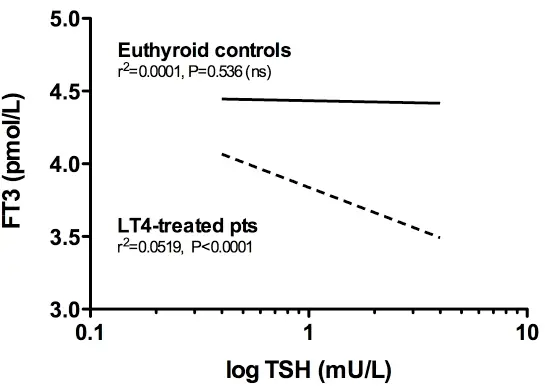
People who have a low TSH from taking thyroid medication may have low, normal, or high free T3/free T4 which differentiates this condition from low TSH (4) caused by overproduction of the body.
Also, those with this condition may have variable symptoms ranging from those of hyperthyroidism to those of hypothyroidism.
#3. Not Enough Production of TSH From the Pituitary Gland
Another reason you may have a low TSH is due to issues directly related to the pituitary gland itself (5).
If your pituitary gland is unable to produce TSH then obviously your levels will fall because your body can’t get it anywhere else.
This condition will always result in both a decrease in TSH and a decrease in circulating thyroid hormones and it’s best to think of this condition on the hypothyroid spectrum.
Emerging information is also showing us that the pituitary gland and hypothalamus are increasingly sensitive to environmental triggers such as the foods that you eat and your weight.
Both of these conditions can alter the amount of TSH and TRH that your brain is capable of producing which will then impact your free thyroid hormones.
Consider this example:
If you are someone who is under a significant amount of stress and you are a frequent dieter (both conditions known to lower the TSH and TRH) your TSH may be falsely low which will reduce
If you didn’t understand that a low TSH could be caused by stress and diet you might be inclined to believe that your thyroid is perfectly normal, even though it isn’t.
For this reason, and many others, it’s important to have a complete understanding of conditions that impact the TSH and how they present.
You can learn more about the way that each of these conditions impacts TSH and cause different symptoms here.
Using TSH to Diagnose Thyroid Problems
It may surprise you to know that there are no fewer than 5 different blood tests that you can run on your thyroid.
Despite this, doctors tend to order only one of those tests.
In fact, the current paradigm of thyroid treatment places a considerable amount of weight on this single test (6).
In other words:
Doctors use this test as a surrogate marker to evaluate thyroid function in your entire body.
We will talk about why that isn’t necessarily a good thing in a moment, but we need to stay on track.
So how does your TSH level alter your thyroid hormone?
This part can be a little confusing but I’m going to try and explain it in a way that makes sense.
Assuming that you are not taking thyroid medication (this assumption is very important) a high TSH usually indicates that you are not producing enough thyroid hormone.
I know what you’re thinking…
How can a high TSH mean that I have low thyroid hormone if TSH is supposed to make my thyroid gland produce more thyroid?
In order to understand this question, you have to understand the concept of feedback loops in the body.
A feedback loop is designed to manage the concentrations of hormones in your body by telling your body to reduce or increase certain hormones based on specific signals.
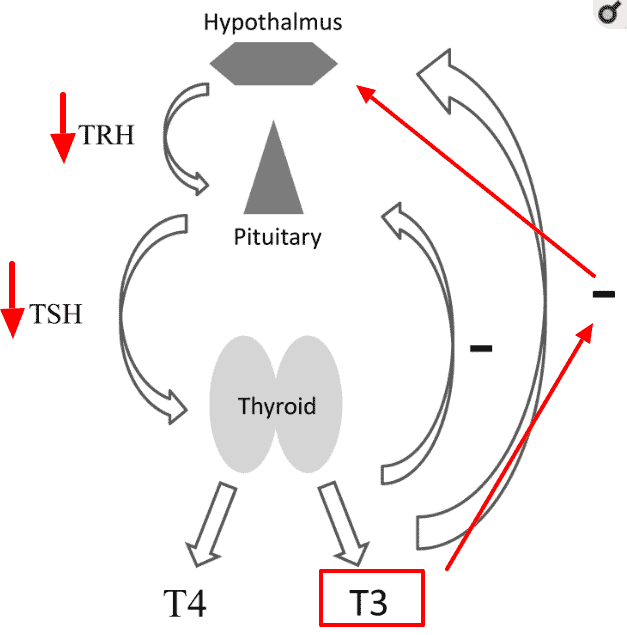
In this case, thyroid hormones which are released from the thyroid circle back to your brain and tell your body that you have ‘enough’.
Your body then reacts by adjusting the TSH.
If your TSH is high, it means that there is a low amount of thyroid hormone in the bloodstream which is coming into contact with your brain.
If the concentration of thyroid hormone is low in the serum then your body will react by increasing TSH to try and force the thyroid to produce more thyroid hormone.
The opposite is true when you have too much thyroid hormone in your body.
As thyroid hormone increases (either because you are taking thyroid medication or because your body is producing it), your brain will react by lowering the TSH to try and reduce the stimulation of the thyroid gland.
This is how a low TSH is often associated with hyperthyroidism and how a high TSH is often associated with hypothyroidism.
Instances Where the TSH can be Misleading
And, if this wasn’t confusing enough, it gets even more interesting.
Just because your TSH is low doesn’t mean that your body is getting enough thyroid hormone.
We often associate a low TSH with a state of hyperthyroidism, meaning too much thyroid hormone, but that isn’t always the case.
I want to spend a large portion of this article discussing states where there is discordance between the TSH and the thyroid status in your body.
Discordance refers to a mismatch between what we expect to happen and what actually happens.
So, when you have a low TSH, especially if you are taking thyroid medication, we expect that to mean that you have too much thyroid hormone in the body.
But this isn’t always true.
There are several states which can cause your TSH to be lowered but where there is an insufficient amount of thyroid hormone in your cells.
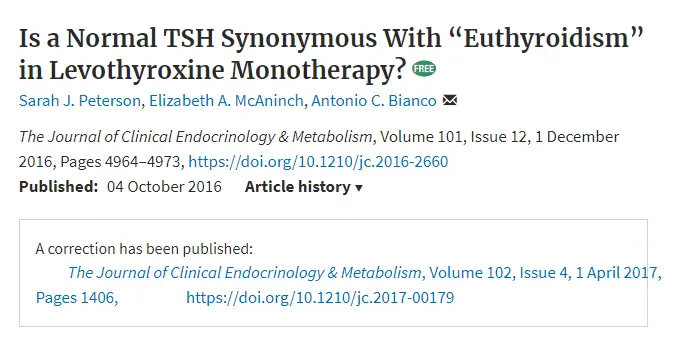
This has been shown in several studies (7) which highlight the difference between healthy individuals and their TSH and what happens to patients who take thyroid medication to normalize their TSH.
Those who take thyroid medication have significantly lower free thyroid hormone levels than controls.
With that in mind, let’s focus on understanding what happens to your TSH when you are taking thyroid hormone and why it doesn’t always mean that you are ‘healthy’.
What Happens to Your TSH When Taking Thyroid Hormone?
It turns out that TSH is a really good predictor of what is happening in the pituitary gland itself, but it doesn’t necessarily tell you how much thyroid hormone is getting into your other tissues.
And this is important because almost every cell in your body has a thyroid receptor.
So TSH would be a great predictor of thyroid function in the body IF your pituitary gland was just like every other tissue in the body, but it isn’t.
Your pituitary gland has special deiodinases which are different than other tissues in the body making it more sensitive to thyroid hormone than other tissues.
What does this mean?
It means that as you give someone thyroid hormone (especially T4) their pituitary gland will sense the thyroid hormone and drop the TSH in accordance.
But your other tissues may not get that thyroid hormone.

This results in patients who have normal or low TSH but still have symptoms of hypothyroidism.
Do all thyroid hormones alter the TSH equally?
No.
And in order to understand this, we need to talk about basic thyroid physiology first.
The two most important thyroid hormones in circulation include T4 and T3.
T4 is the inactive thyroid hormone in your body, but it has the potential to be activated by deiodinases after cleaving off an iodine moiety turning it into T3.
T3 is the ACTIVE thyroid hormone in your body. It turns on genetic transcription resulting in changes to your genes and the production of enzymes in your cells.
Why is this important?
Because most thyroid hormone that is used as a replacement is in the T4 form.
Meaning the thyroid hormone that doctors give you MUST be activated before your body can actually use it.
But here’s where things get interesting:
Your pituitary gland has no problem activating T4 into T3, in fact, it does this quite well.
But other tissues in your body have to compete with an inactive thyroid metabolite known as reverse T3.
Reverse T3 is the ugly stepsister of T3 and directly competes with T3 for binding and turning on genes.
Oh, and reverse T3 is created from T4 just like T3 can be.
So this means, in most tissues in your body, there is a tug-of-war going on between T3 binding and reverse T3 binding.
But this tug-of-war is not happening in your pituitary gland.
This is why basing your dosing decisions on the TSH by itself is not necessarily a wise decision.
So, how does taking thyroid hormone alter your TSH?
Taking either T4 or T3 will reduce your TSH, no question about it.
It turns out that T3 is about 3-4 times more powerful at reducing your TSH than T4 (8) is but they will both reduce it.
So if your TSH isn’t the best way to evaluate thyroid function…. what is?
Using Free T3, Free T4, and Reverse T3 for the Whole Picture
If you want to get a picture of what is actually happening in your thyroid gland then you really need to order more than just the basic TSH.
Ordering and evaluating your free thyroid hormones (like free T3, free T4, and reverse T3) can help give you an idea of what kind of competition exists for binding in your cells.
For instance:
We know that T3 is the “good” thyroid hormone so we can conclude (under normal circumstances) we probably want more free T3 in our body than reverse T3.
Why?
Because if they are both competing for binding in our cells, we probably want the good guy to win.
So it makes sense that if we test your thyroid hormone and you have low free T3 with high reverse T3 that probably isn’t a good thing.
And this condition happens to have a name: thyroid resistance.
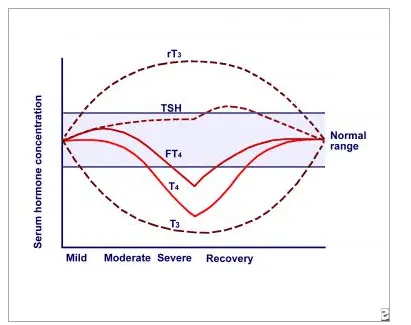
But, what is the TSH doing in situations like this?
Your TSH may be normal in this type of condition making diagnosis difficult.
Because really what is happening is that you have tissue-level hypothyroidism with “normal” blood levels of thyroid hormone.
Now your next question should be: is this common?
And the answer is that yes, it is more common than you think.
Conditions and behaviors such as repeated exposure to stress, yo-yo dieting, fasting, taking certain medications, and exposure to endocrine disruptors can all impact how well your body converts T4 to T3.
The presence of the conditions listed above promotes the conversion of T4 to reverse T3.
You can easily identify the relative levels of each of these thyroid metabolites with the following tests:
- Free T3
- Free T4
- Reverse T3
- Total T3
- Bottom line: You need more than just your TSH to determine what is actually happening in your body. Make sure that you get a complete thyroid panel when evaluating your thyroid function.
What is a Normal TSH?
Even though we know that the TSH isn’t necessarily the best test to use to diagnose or manage hypothyroidism it still has some value.
So what is the ideal TSH level?
Well, that depends on whether you are on thyroid medication or not.
Ideal TSH levels based on your condition:
- Not taking any thyroid medication – Generally healthy populations (not on thyroid hormone) have a TSH between 1.0 and 2.0 (9).
- On Thyroid medication – Your TSH may fluctuate dramatically based on whether you are taking T3 or T4, but in most cases, you will want a TSH that is less than 1.0. This lower TSH is required to obtain close to normal free thyroid hormone levels in those taking thyroid medication (10).
What’s interesting is that the reference range for the TSH ranges from 0.300 to 5.00 in most cases.
But this represents the REFERENCE range, not necessarily the OPTIMAL range.
Focus on the optimal range I’ve listed above if you want to feel normal and you can read more about optimal ranges in this post.
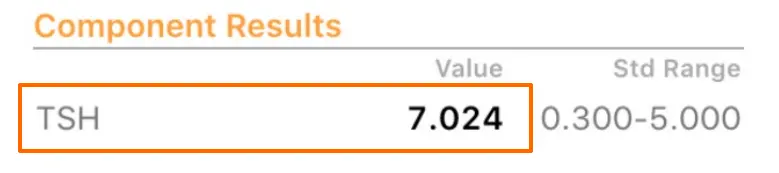
What does it mean if your TSH is low and you AREN’T taking thyroid medication?
If you are NOT taking thyroid medication and you have a low TSH then that truly might be a sign that you are hyperthyroid or have a condition known as subclinical hyperthyroidism.
But this same concept doesn’t necessarily hold true if you are taking thyroid hormone (although it may).
So let’s talk about what can happen to your thyroid while on thyroid medication:
Low TSH but Normal T4 & T3
If you are taking thyroid medication is it possible to have a LOW TSH but normal T4 and T3?
Yes, you can definitely have a low TSH with normal free thyroid hormones.
But what does this actually mean?
If you fall into this category then you will need to use more than testing to determine what is happening in your body.
For instance:
If your TSH is low and your free T4/T3 levels are normal but your body temp is low, your resting heart rate is low and you have all the symptoms of hypothyroidism – are you really “normal”?
The answer is obviously not, and that’s why you need more advanced measurements to determine what is happening in your body.
If, on the other hand, your TSH is low and your free T3/T4 levels are normal but you are having symptoms like heart palpitations or anxiety then it may simply be that your dose is TOO high.
Yes, both conditions can and do happen which is why constant adjustments of thyroid dosing are necessary.
Some people are exquisitely sensitive to thyroid hormone (including even T4 thyroid doses) which can create strange symptoms that may include both a mix of hyperthyroidism and hypothyroidism.
In these cases, it’s best to determine if your symptoms coincide with changing your medication and if other factors (such as body temp, heart rate, etc.) imply your thyroid hormone is too high/low.
- Bottom line: A low TSH with normal T3 and T4 levels may indicate subclinical hyperthyroidism if you are not taking thyroid medication, or a hypothyroid state if you are taking thyroid medication.
Low TSH with Symptoms of Hypothyroidism
Is it possible to have a low TSH but still have symptoms of hypothyroidism?
YES!
As I’ve mentioned previously your TSH only tells you how much thyroid hormone is influencing your pituitary.
It does NOT tell you how much thyroid hormone is influencing your hair follicles, cardiac tissue, skeletal muscles, insulin receptors, etc.
If you don’t have enough thyroid hormone hitting your hair follicles you will have hair loss.
If thyroid hormone doesn’t hit your heart cells then your heart rate will slow and so will your metabolism.
If it doesn’t get into your skeletal muscles then you may present with chronic pain and muscular pain.
If it doesn’t come into contact with your insulin receptors then you may develop insulin resistance.
The list goes on and on.
If you fall into this category then you may simply need more thyroid hormone or you may ultimately need to switch to a different type of thyroid hormone that contains T3.
- Bottom line: You can have a low TSH with symptoms of hypothyroidism. This occurs when your cells are not getting enough thyroid hormone but your pituitary is.
Low TSH and Weight Gain
Is it possible to gain weight with a low TSH?
The answer is ABSOLUTELY.
In fact, this happens all the time.
If thyroid hormone actually made people lose weight don’t you think there would be weight loss clinics pushing thyroid hormone-like crazy?
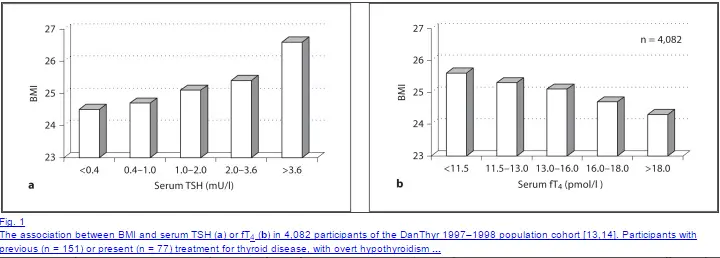
Of course, they would, and the drug companies would be fumbling over themselves trying to patent a new thyroid medication that they could make money from.
You don’t see this happening because thyroid hormone (as a medication) is not a weight loss drug… necessarily.
In most cases, people who are gaining weight with a low TSH usually have 1 of 2 problems (or both):
- T4 to T3 Conversion problems
- Allergies or sensitivities to the inactive ingredients of thyroid hormone (11)
The conversion problem refers to having issues turning T4 into the active thyroid hormone T3.
If your body isn’t good at converting thyroid hormone (from inflammation, infection, medical issues, etc.) then you will have plenty of T4 floating around in your system but very little T3.
The T4 floating around in your system can and will drop your TSH, but it doesn’t mean that it’s necessarily active in your cells.
You can test for this by looking at your free T3/free T4 levels and by evaluating your reverse T3 levels.
If you are having issues with conversion then you can bypass the system by taking medications that contain T3 thyroid hormone-like Cytomel, WP Thyroid, Armour Thyroid, or Nature-throid.
- Bottom line: High levels of reverse T3 can cause your TSH to drop and cause your metabolism to slow resulting in weight gain. To treat this condition you may need T3-containing medication.
Conclusion
Remember that while TSH can be helpful, it isn’t the only (or necessarily the best) way to determine what is happening with your thyroid.
Using a more comprehensive thyroid testing profile in conjunction with your subjective symptoms can help nail down what is actually happening to your body.
When talking about thyroid function it’s important to remember how critical the conversion of T4 to T3 is in regard to how you are feeling.
High levels of reverse T3 with low levels of free T3 may indicate thyroid resistance.
In cases such as these, your TSH becomes less helpful and often is lower than normal.
Now it’s your turn:
Do you have a low TSH?
Are you still experiencing the symptoms of hypothyroidism?
Have you checked your free T3 or Free T4?
What TSH level do you feel “best” at?
Leave your comments or questions below!
Scientific References
#1. https://www.ncbi.nlm.nih.gov/books/NBK285567/
#2. https://www.ncbi.nlm.nih.gov/pubmed/2816972
#3. https://www.ncbi.nlm.nih.gov/pmc/articles/PMC3148220/
#4. https://academic.oup.com/jcem/article/101/12/4964/2765082
#5. https://www.ncbi.nlm.nih.gov/pmc/articles/PMC3169862/
#6. https://www.ncbi.nlm.nih.gov/pmc/articles/PMC5321289/
#7. https://academic.oup.com/jcem/article/101/12/4964/2765082
#8. https://www.ncbi.nlm.nih.gov/pubmed/402379
#9. https://www.ncbi.nlm.nih.gov/pmc/articles/PMC3245392/
#10. https://www.ncbi.nlm.nih.gov/pmc/articles/PMC3148220/
#11. https://www.ncbi.nlm.nih.gov/pubmed/23377335




Hi, Dr Child’s,
I am currently taking dedicated thyroid(Etta) 135. I changed from Synthroid to Erfa because myt3 was 3.2 even after my Synthroid was raised to 150. I have been on Erfa now for 9 weeks and it has actually lowered my t3. This has confused my doctors as the Erfa contains t3 and should raise my t3 Numbers. Do you have any idea why this would be happening? I Also have Hashimotos with tpo antibodies at 1600. Thanks
Hi Kris,
You might consider looking into reverse T3 to see if you are converting the T4 into T3.
I am 64 years old woman who had the thyroid gland removed over 10 years ago. For a long time I have been suffering from strong feeling of internal shaking that is destoying my life. My Endo just puts this down to anxiety!
My latest test results are: TSH 0.31 (0.4 – 4.9mU/L); FT3 3.6 (2.6 – 5.7pmoL); FT4 11.6 (9 – 19pmoL).
Currently taking Levo 100 & T3 10mcg.
Should I increase or decrease meds?
Hi Carol,
Unfortunately, I can’t give you medical advice but you should look at your labs in conjunction with your symptoms when evaluating whether or not you should adjust your medication.
I am diagnosed hashimotos hypothyroid. I had a baby 3 months ago. They upped my levothyroxine during pregnancy, and lowered it back to my normal dose at 6 weeks post partum bc my tsh was .08. Now, 14 weeks post partum my tsh is .01 with a normal t3 free and normal t4. Experiencing muscle aches, numbness in my fingers, hair loss, low body temp, and anxiety. What should I do?
Hi Kristin,
I would take a look at this post which may explain some of your symptoms: https://www.restartmed.com/postpartum-thyroiditis/
Can you help? TSH has ranged from .008 to .012 on
120 mg of Armour.
T4 between .80-1.15 and
T3 5.3 to 4.2.
I fight weight gain, fatigue, low stamina, and hair loss. Endocrinologist just now weaning me down to 90 mg. after being these levels over a year. What are the risks of this low TSH and What do you recommend to get to normal healthy levels?
Thank you for all the detailed info. What would cause the TSH to be low (.006), T4 mid-range normal, but T3 very high (8.37)? I’ve been on Naturethroid for 2 years, my dose has been all over the place from 1 grain to 4 grains. Was diagnosed based on symptoms only (all labs were normal). After many months of bizarre symptoms that mimic hypo, I found I had iron overload. I donate blood every 3 months. Symptoms began to dissipate, however I started having hyperthyroid symptoms (palpitations, hot, insomnia, ect, but with a bit of weight gain). Could you please explain why one would have low TSH, normal T4, but really high T3? Thank you so much.
Thank you for the article. It looks like I have a low TSH with symptoms of hypothyroidism, so my cells are not getting enough thyroid hormone but my pituitary is! I am on T4+ T3 therapy and my labs came back like this:
Total T4) 81 nmol/ L 59 – 154
THYROID STIMULATING HORMONE * 0.04 mIU/L 0.27 – 4.2
FREE THYROXINE 17.2 pmol/l 12.0 – 22.0
FREE T3 5.0 pmol/L 3.1 – 6.8
How can I get enough thyroid hormone into my cells? Should I worried about the low TSH as I have low bone density? thank you 🙂
Hi Paola,
I would recommend you read this article which gives more info about the risks associated with a suppressed TSH: https://www.restartmed.com/suppressed-tsh/
Very informative article. Thank you!
In my case just wondering if it is better to have a low TSH 0.04 or a low FT4 (just under the range) and lowish FT3. Because as soon as I reduce my dosage my TSH goes into range and my FT4 and FT3 lower too much..what do do? I am postmenopausal and have a low bone density, osteopenia. It seems very difficult 🙁 a bit hopeless
I found this article very helpful and interesting, however, I just received a unique blood test result for thyroid function and I’m concerned about it…My T4 free is 0.75, TSH is 0.081 and T3 free is 2.7
I have been struggling to regulate my thyroid for 3-4 yrs and I’m discouraged about the weight I’ve gained, dry skin, hair loss and fatigue. I’ve been taking 81.25 naturethroid and 5mcg of liothyronine, so confused as to why my TSH is low? Saw doc today and she increased the liothyronine to 10mcg and advised me to take it morning and night. I am also on Gaia adrenal support, fish oil, CoQ10, multivitamin, and magnesium/calcium/zinc, and as of today will start taking HPTP (pituitary homeopathic) and beta-sitosterol. Any suggestions? I am at my wit’s end and my doc probably is too, as she says these results are not typical! Can’t wait to hear from you! Thank you in advance, Teri
Hi Teri,
I would recommend you get a complete thyroid panel to see if you are being treated correctly with your medication. You can read more about how to do that here: https://www.restartmed.com/normal-thyroid-levels/
Great article Dr. Childs. I’ve been on 45mg nature thyroid for years and felt ok, but severely sleepy to the point that I actually had been falling asleep at the drop of a hat in work meetings, working at my desk, etc. Some days I would have to go out to my car at work and take a nap-TWICE! I talked my doc into adding .5 mg of Cytomel. I feel much better, but now my labs are slightly out of range. I’m worried that she might not let me continue on the Cytomel.
Free T3—2.8
FT4——-.8
TSH——.303
T4——–8.6
I take other hormones as well. I have Hashimoto’s and to make things more complicated, I have an immune deficiency (CVID) which affects my hormones, including adrenals. I wish that I could come to see you!
What is your opinion of my lab results? Thanks much, Anna B.
Hi Anna,
You’ll need to check reverse T3 to see how your body is converting your T4. You can also compare your results to the optimal ranges in this post here: https://www.restartmed.com/normal-thyroid-levels/
Hope this helps!
Do you have a low TSH but symptoms of hypothyroidism? yes, I do:
– Weight gain:5kg in the last 2 months
– I am most all the time cold
– I wake up tired
– muscle pain
– dry skin
TSH -0.071( ref 0.05-4.4)
What about your free t3 and free t4 levels?
T4 – 18.9 ( ref 10.0-20.0)
What TSH level do you feel “best” at?
unkown
Vitamin D – 54 ( ref 50-125), currently on medication with eutyrx 75mg
hdl 2.0 ( ref 0.2-1.6)
ldl 2.6( ref 1-2.6)
Hi Elena,
Make sure you also look at both reverse T3 and free T3 levels so you have an idea as to how well you are converting T4. You can find more info here: https://www.restartmed.com/t4-to-t3-conversion/
Hi Dr. Childs! Thank you for your knowledge that you put on your website, it has helped me understand many things over these years of my fight!
Have you ever seen someone start out as a classic Primary Hypothyroid and then once medicated they develop Secondary Hypo? My new Dr seems stumped but leaning towards that I have Secondary due to the blood work that I’ve been having and STILL having symptoms…
No Meds:
TSH- 5.25 (.45-4.5)
FT4- 1.07 (0.82-1.77)
FT3- 2.5 (2.0-4.4)
RT3- 16.0 (9.2-24.1)
2 Grains NDT:
TSH- 0.014 (.45-4.5)
FT4- 1.09 (0.82-1.77)
FT3- 3.4 (2.0-4.4)
RT3- none
50mg Synthroid (NIGHTMARE)
TSH: 3.51
New Dr 1 grain NDT:
TSH- 2.21 (.45-4.5)
FT4- 0.81 (0.82-1.77)
FT3- 2.6 (2.0-4.4)
RT3- None
1.5 grains NDT:
TSH- 0.078 (.45-4.5)
FT4- 1.00 (0.82-1.77)
FT3- 2.9 (2.0-4.4)
RT3- None
My new Dr upped my Nature Throid to 1.75 and I am having a slew of Blood Work (including RT3) to confirm his suspicions that I may have Secondary Hypothyroid (I also always have high Prolactin and sometimes High Iron). From everything I read it’s not clear that if Medication can induce Secondary and I am so confused! Thank you for any and all advice.
Hi Dr. Child’s,
I appreciate how you respond so thoroughly to comments on here. I am 4.5 months postpartum and having my thyroid monitored, but haven’t yet started medication. My blood has been drawn four times. The first three times, I had elevated TSH (5.45 at it’s highest) and low FT4 (from 1.2 down to 0.9) along with low FT3 (2.2 down to 1.7). Last time I had my blood drawn, my TSH plummeted to 0.05, but my FT4 was also low (0.8) and my FT3 was low too (2.1). My symptoms are hypothyroid, not hyper. Any insight to what is going on? Or further tests I should request? My naturopath thinks the low TSH could be from the thyroid supplement (not a prescribed hormone) that I switched to but I’m not sure.
I have had my TPO tested twice. It was 39 a few weeks after birth, then went up to 240 about four months postpartum.
Thanks in advance!
Hi Emily,
I would recommend you check at these articles which may shed more light on your condition:
– https://www.restartmed.com/postpartum-thyroiditis/
– https://www.restartmed.com/thyroid-and-pregnancy/
I’m hoping for some direction. 17 yrs ago I was diagnosed with Graves disease and had radioactive iodine done. I’ve struggled with hypo symptoms ever since. This was compounded by my irregular taking of meds. A year ago I got serious. Dr. prescribed 180 mg (3 grains) of Armour for 3 months and I felt great. Lost 50 lbs. TSH came back .012 Dr then alternated 180 mg and 120 mg. I felt ok – weight loss was harder but still modest results. 3 months later TSH was .032. I’ve been on Armour 120 for 4 months and have felt awful. I can’t make it through the day without a nap. My hair is falling out. I’ve gained 20 lbs and I have no energy to prepare healthy meals so I know I’m cheating. I had another lab for TSH today and an appointment in 3 days to discuss the results. I need a reason to convince my Dr. (internist) to look further. Suggestions?
WOW! Wonderful info! Easy to understand because while i was reading this,I felt like i was having a conversation with a Dr..
Anyway,Im on NDT.My blood test result brought me here:
TSH is extremely low* 0.02 (yes!that low)
T3 uptake – 30
Free T4 Index – 1.7
T4 Thyroxine -5.5
TPO – 1
TGA – <1
I have an appt with my NP in 2 wks but meanwhile Im freaking out over the TSH. I was diagnosed with Hypo and have been taking Nature-Throid. I think my dose is too high maybe that's the problem but I also think I may have an RT3 problem–even though my T3 is in range? Im a size 8 should be sz 5/6.. But i still have outer eyebrows missing but have heart palps (is that strange?)
AND my energy and brain fog is brutal sometimes.. any links or advice would be SO greatly appreciated! Thanks 😀
Thank you for your article, I found it very interesting and informative. I have hypothyroidism. I have taken synthroid for over 25 years. Recently my doctor switched me to Armour Thyroid because my T4 was not converting into T3. Now my tsh is low and my free T3 is high. I still have symptoms of low thyroid and have put on a few lbs which I haven’t done in years. Is this Armour thyroid causing my issues or what could it be? My doctor has just lowered my dose of Armour Thyroid to bring my TSH up but I am afraid I will gain more weight and get more tired. Any thoughts or advice I would really appreciate it. Thank you so much
Hi Elizabeth,
Not everyone does well on NDT formulations because they are “static” in dosing. You may be someone who needed just slightly more T3 but got too much with the transition or some scenario similar to that.
Hi, so pleased I found this article! I’m in the UK and both me and my sister suffer all the symptoms, my sister has a resting heart rate of 45 and is not an athlete! Problem is UK doctors will not treat unless your TSH is over 5 (my sisters is steadily rising and now over 3). They won’t do full thyroid panel either. Do you have any suggestions? We were thinking of doing the private test and then taking results to gp. Concerned they have tunnel vision and no matter what will only treat if you’re TSH is over 5! I was thinking of buying armour privately! Any suggestions would be greatly appreciated!
Hi Tracey,
As far as I can tell, the best way to get treatment in the UK is to find and pay out of pocket for a private doctor. There have been others who comment here and have told me that that has worked for them.
Hi Dr Childs
Do you still answer questions here as I see the last one was quite a while ago?
Thanks
Hi Margot,
Yep! It just takes me a while to get to them because there are so many 🙂
Dear Dr. Child’s, I really appreciate your post. Currently I take both cytomegalovirus and tirosint. My latest labs are at- T-SHIRT 1.260/ T4 7.5/ T3 Uptake 24/ Free Thyroxine Index 1.8. My nurse practitioner says it is all great. However, I am not feeling well at all. Shortly after I take my meds in the am, I get this tremendous amount of nervous energy. I literally shake. I can barely focus or hold down a conversation. This is embarrassing. I’m 45 by the way.
By the evening, I’m so exhausted all I want to do is lay on the couch. Please give me some advice. Sincerely, Selena
Dr.Childs,
I have been on 50mcg of Levothyroxine and my TSH was low so dose was reduced to 25mcg. Lab redrawn after 8 weeks showed low TSH. Then instructed to omit dose 2 days a week for 8 weeks. Lab draw still showing low TSH. I am now instructed to taper dose down gradually then stop altogether. Does this sound like the right plan?
Hi Carol,
When I treat patients I am usually more interested in free thyroid hormone concentrations as opposed to the TSH. Without this information, I can’t offer much help.
I was diagnosed with hypothyroidism back in 2012 and put on synthroid, it took a while for dosage adjustments but my TSH finally normalized. In 2015 I had my left thyroid removed due to A-typical nodules growing on it and my synthroid dosage was increased to 150mcg due to a spike in my TSH prior to surgery. A biopsy of my left thyroid after removed had me diagnosed with Hoshimoto’s (still in 2015). Now between September 2017 to November 2018 my TSH levels have rollercoastered from 1.98 in September 2017, 7.89 in January 2018, .045 in May 2018, .027 in August 2018, and .028 in November 2018. I am always fatigued, my body temperature is always elevated to the point I will break a sweat wearing a t-shirt and shorts when everyone else is wearing sweatshirts and pants at a state of rest, and my heart goes into rapid rates (up to over 200 bpm) without me feeling it. I am under the care of a cardiologist for the heart issues. Constantly have chronic skeletal and muscle cramps and pain. So what are the questions I need to be asking my doctor?
Hi Patrick,
The best thing you can do is seek out a physician who is already knowledgeable on the subject.
In regards to the chronic pain, I would recommend you read this article: https://www.restartmed.com/hypothyroidism-chronic-pain/
You can also find information on how to find a doctor here: https://www.restartmed.com/thyroid-doctor/
Hi Dr. Childs. Due to my symptoms, my physician told me I had hypo (Juli.2018). With the same results, an endocrinologist said that my thyroid panel was perfectly normal and that I didn´t had hypo but just slow metabolism. But in any case, both said I should start on levothyroxine 50mg. With this dose, most of my symptoms disappear, so my physician increased my dose to 75 (August 2018). With this dose, I´ve felt great until the last couple of days that I started to feel tired again, with muscle pain, cold hands, and feet (Dec 2018).
These are my results:
Juli
TSH – 1.8 mUl/L
T4 – 8.7 ug/dL
T3 – 0.99 ng/mL
Free T4 – 0.78 ng/dL
August
TSH – 0.15 mUl/L
T4 – 8.07 ug/dL
T3 – 1.01 ng/mL
Free T4 – 0.89 ng/dL
Free T3 – 4.08 pg/ml
Dec
TSH – 0.09 mUl/L
T4 – 9.91 ug/dL
T3 – 1.17 ng/mL
Free T4 – 0.95 ng/dL
Free T3 – 3.74 pg/ml
Any insight/way forward from here would be much appreciated. I really don´t feel hyper and don´t understand how my levels are moving.
I’m a 28, female with no other real issues. Pretty healthy lifestyle.
Hello. I was diagnosed with Hashimoto’s a little over 2 years ago, and got pregnant a little over 1 year ago. I have never taken thyroid medication because I prefer to try to manage it naturally, but I was extremely disciplined with eating, exercising, and taking herbal supplements during pregnancy and my TPO actually got a lot lower during that time (from 293 down to 120.) My thyroid tests over the past 2 years have consistently shown normal to high TSH (never higher than about 7.0), always normal T4, and normal T3 except for 2 tests when I was pregnant that showed T3 getting lower. My TPO, as I mentioned, went from the first test of 293 down to 120 at 8 months pregnant, then it went back up to 243 about 2 months postpartum. Now, at 4.5 months postpartum, my T3 and T4 are normal but my TSH is low for the first time ever (0.34) and my TPO is alarmingly high (499.) What in the world does that mean?! Forgive me if the answer is in your article– I read it but I don’t have a scientifically wired mind so I may have misunderstood, and what’s really confusing me is not just my blood work numbers, but the progression– the combination of high TPO and low TSH. All my symptoms are still hypothyroidism, if that helps. Thank you!
Hi Katie,
It’s hard to say for sure without more information, but it may be related to postpartum thyroiditis: https://www.restartmed.com/postpartum-thyroiditis/
Postpartum thyroiditis is a variant of autoimmune thyroiditis which ultimately leads to hypothyroid symptoms (but can also cause hyperthyroid symptoms).
Thank you for this! I have VERY low TSH (like .3) but my T3 and T4 look ok right now, and I’m not producing any anti-thyroid antibodies. I’m 16 weeks pregnant and they keep doing tests. I still have many hypothyroid symptoms. I take 60 mg of Armour Thyroid and have for 10 years- since my second child turned 1. I was likely hypothyroid for a long time before that. And I’ve felt that there is a missing piece for many, many years. About 4 years before the hypothyroid diagnosis, I was in a severe car accident, which included head trauma. However, at the time, saving my life was more important than worrying about my pituitary gland and such. I strongly suspect that your suggestion about head trauma and the pituitary gland and hypothalmus might be at least part of the missing puzzle piece. I will be asking my midwife about that next week. Thank you! I’m off to keep reading.
Hi Maureen,
It’s also very possible that your TSH is completely normal because you are pregnant. I would check out these articles for more information:
https://www.restartmed.com/thyroid-and-pregnancy/
https://www.restartmed.com/tsh-levels-during-pregnancy/
Hi Dr. Childs! Thank you for your knowledge that you put on your website, it has helped me understand many things over these years of my fight!
Have you ever seen someone start out as a classic Primary Hypothyroid and then once medicated they develop Secondary Hypo? My new Dr seems stumped but leaning towards that I have Secondary due to the blood work that I’ve been having and STILL having symptoms…
No Meds:
TSH- 5.25 (.45-4.5)
FT4- 1.07 (0.82-1.77)
FT3- 2.5 (2.0-4.4)
RT3- 16.0 (9.2-24.1)
2 Grains NDT:
TSH- 0.014 (.45-4.5)
FT4- 1.09 (0.82-1.77)
FT3- 3.4 (2.0-4.4)
RT3- none
50mg Synthroid (NIGHTMARE)
TSH: 3.51
New Dr 1 grain NDT:
TSH- 2.21 (.45-4.5)
FT4- 0.81 (0.82-1.77)
FT3- 2.6 (2.0-4.4)
RT3- None
1.5 grains NDT:
TSH- 0.078 (.45-4.5)
FT4- 1.00 (0.82-1.77)
FT3- 2.9 (2.0-4.4)
RT3- None
My new is suspicions that I may have Secondary Hypothyroid due to severe blood loss from my accident (I also always have high Prolactin and sometimes High or low Iron). But this new Endo cut me off before I could even explain! Thank you for any and all advice.
Hi Kristina,
The short answer is that yes, many people have a combination of primary + secondary or primary + tertiary and so on.
Hi Dr. Child’s
I found your articles very helpful.
I have been on amour thyroid 190 mg a day from 2010 to 2015. My new dr lowered my amour to 120 mg a day and added liothyothrine 5mcg 2times a day.
I have been gaining weight and have noticed depression. Also I have been battling kidney infections. I get one or two a year.
My TSH has always been low. .015. I wasn’t educated enough to know their were other tests.
August 2018. FT4 was 1.54
TSH .010 I don’t know about FT3.
I was having heart palpitations and trembling.
So they took me off my liothyronine and lowered my thyroid to 60 mg. Still having trouble with my heart.
Retested 12-6-2018
FT3. 5.3 high
FT4. .86
TSH. .005 low
He didn’t believe the test so I had it redone on 12-14-2018
FT 3 4.9 High
FT4 .73 low
Tsh .005
What the heck
I am so confused on what’s going on.
I haven’t seen an endocrinologist. I believe I better.
I don’t feel good.
Depression
Gaining weight
Hair is thinning
My heart palatations have decreased.
I need a little advice.
To make matters worse I’m from Alaska and spend my winters in Az. We call that a snow bird.
Thank you
Debbie
Hi Debra,
Your sensitivity to thyroid medication can change over time and depending on various factors in your life. You may need a temporarily lower dose for now which may go back to normal in a few months to a year. I’ve seen this happen with my patients before as well.
Hi Dr. Childs,
I am a 67 year old female that has been on 125 mg of Synthroid for years due to hypothroidism. During the past year my TSH has dropped in the last 3 labs from 1.92 down to .40. (also lost 5 lbs.) My endocrinologist and my GP only test TSH. I exercise quite frequently and from October to December I had a pinched nerve in my C4 and had to take mega doses of Ibuprofen to get past the pain. Strange thing is that I have no symptoms of being hypo and I feel wonderful except for having periodic muscle fascinations and this started when my tsh dropped. Do you think I should insist that my endo does more tests to determine why my tsh is dropping? Would the stress of that pinched nerve have anything to do with the low numbers? I read that stress can affect the results. Thank you in advance.
Hi Connie,
Stress affects your thyroid lab tests negatively which is not what is happening here. You’re basically experiencing what happens to thyroid patients when they are treated adequately without relying upon the TSH. What will most likely happen is that your doctors will insist that you drop your dose and you will start to experience worsening symptoms (weight gain, fatigue, hair loss, etc.). This has to do with how current physicians treat thyroid diseases and this is part of the reason that my entire blog exists, to try and debunk this method of treatment. The best thing you can do is try to not drop your dose if possible.
Hi Dr.Childs
I have no thyroid and I take 2 grains of Armour Thyroid and I also have Psoriatic Arthritis and currently in a 2 year flare that makes movement a nightmare at times.
Can you tell me if my immunosuppressive drugs I take for psoriatic arthritis can cause my TSH,FT4,FT3 and T3 to be in the low end of normal? No matter what i do my Endo wants to drop my ARMOUR dose I mean come on I have no thyroid I gained 50lbs and developed Psoriatic Arthritis believed to be brought on by thyroidectomy.
Any idea why my tsh,t3,Ft3 and FT4 would be bottoming out I’ve been on 2grains since Aug 2018 and my numbers drop every time? I’m tired of reducing my meds soon I will be on no meds without a thyroid at this rate as I fought the past 3 reductions in the past few months and now I’m looking to fight again.
Since turning 40 it seems things have been downhill for me. I am 48 and use to be happy healthy and full of energy and all of this had changed since having conditions requiring meds and I feel being a female and hitting this phase of life has made it more difficult. My mother has suffered from thyroid throughout her life and I have been on levothyroxine 5-6 yrs with it being increased regularly but recent thyroid panel with TSH tach showed low TSH and normal t4 t3 uptake and free thyroxine index so she has reduced my med to 88 instead of 100 and says repeat test in 4 months. Also says my blood sugar was showing too high for the first time. I have high blood pressure, high cholesterol, thyroid and now signs of diabetes coming on. I feel I just want to stop taking everything and be drug-free. My hair had thinned and falls out and I drag around like I am depressed. Thank you for taking this time to fill us with understandable information and breaking things down so we can get a clearer picture. This helps and it is appreciated. Wish you were in Va.
Hi Torri,
You are very welcome and I’m glad you found it helpful. You can use this resource to try and help you find a knowledgeable doctor near you: https://www.restartmed.com/thyroid-doctor/
Hi Doc Childs
I am about one and 1/2 years post radioactive iodine for Graves. In Dec I was on 112mcg levothyroxine. Dec labs were:
T4, FREE
T4, FREE 1.9 HIGH 0.8-1.8 ng/dL 01
TSH
TSH 0.02 LOW 0.40-4.50 mIU/L 01
T3, FREE
T3, FREE 3.7 2.3-4.2 pg/mL 01
So meds were reduced to 100mcg
My most recent results were:
T4, FREE
T4, FREE 1.3 NORMAL 0.8-1.8 ng/dL 01
TSH
TSH 0.07 LOW 0.40-4.50 mIU/L 01
T3, FREE
T3, FREE 2.9 NORMAL 2.3-4.2 pg/mL 0
I feel just fine and my weight is good. Do you think I should stay on this dose, reduce meds again or have more comprehensive testing such as reverse t3’s?
Thanks, Ann.
Hi Ann,
Unfortunately, I can’t give medical advice to you unless you are an existing patient but you can take your lab results to your current doctor for further help. If your doctor isn’t willing to work with you, you can use this resource to find a thyroid-specific doctor: https://www.restartmed.com/thyroid-doctor/
How would you explain normal range FT3 in the presence of below range FT4 with TSH of 1.01 while taking 60mg Armour? Perhaps the pituitary recognizes the normal level of FT3 and decreases TSH? But how can you have adequate FT3 when FT4 is decreased? What about pooling of FT3? RT3 was drawn as well but results are not yet back.
Hi Angie,
Any thyroid medication will drop the TSH, and how well you convert will determine the approximate ranges of fT3 and fT4. In addition, some people are more sensitive to medications which contain T3 which drops the T4 level due to pituitary feedback.
Hello,
I have been taking 90 mg Armour Thyroid for years. I started on Synthroid and was later given Cytomel which I was allergic to. It landed me in the E.R. with hives everywhere.
Fast forward to January 2019, I went for my annual labs. My FT4 has been Here are my labs:
FT4: 0.8 (0.9 – 1.7) which has been at this level for years
FT3: 3.1 (2.3 – 4.1)
TSH: 0.441 (0.400 – 5.500) – A year ago it was 0.98.
My doctor recommended lowering my Armour and possibly adding back Synthroid to help my TSH levels. All I know is I want to feel normal and lose weight.
What are your thoughts on the labs?
I’m a 60-year-old female that started thyroid replacement with NP Thyroid about 3 years ago at 60 mg. I’m currently on 90 mg and I can’t get optimal because every doctor I’ve tried chases my TSH which is low (just below range). If I drop my dose my terrible body-wide pain starts up again. In spite of the low TSH, my free T4 is the bottom number in the range (0.9) and my free T3 is low at 2.0 (range 2.4-4.2 pg/mL). RT3 is 14. How can I explain to my doctor what I need? She’s willing to try Cytomel, but she wants me to drop to 60 – 75 mg of NP Thyroid and add in only 7.5 mcg of Cytomel for 6 weeks. Is this reasonable when I’m obviously so hypo? Thanks for any insight.
Hi Lori,
It’s a potential place to start but I doubt that will be enough to eliminate your symptoms.
Thank you so much for this article. I am, however still pretty confused as to what is going on with me. I have have had and been treated for hypothyroid since my 20’s. I have been through quite a bit of stress with work and a death in our family and really had not been taking care of myself. I really thought I was exhausted because of all of these factors and the fact that I had not been taking my medication regularly for diabetes and thyroid. I scheduled a doctor’s appointment expecting my blood sugar to be high and thyroid way off. My sugars were high but my thyroid was .019. My doctor said that I was taking too much medication and reduced it. I told him I had not been taking my medication. How could I have too much thyroid hormone if I am hypo and have not been taking my meds. Is it normal for someone to go from hypo for over 25 years to now hyper? Or could there be something more serious going on? Thanks for any insight!
Hi Lisa,
I wouldn’t say it’s normal but it can absolutely happen. You need to get a full set of labs off your medication to determine what is going on.
I’m happy to have found your site, but still a bit confused after reading several articles concerning TSH.
I had my ND check my thyroid levels recently, but she only did TSH. It came back as .22, so she said she wanted to reduce my 50mcg dose of Synthroid to 25mcg. I asked her to let me take a month to see if anything changed, as I went through some really major emotional stress in January and February, had lost my appetite as a result and had stopped eating much, losing nine pounds. I was also taking herbal supplements via tinctures created for me, such as white peony and ashwaghanda. I’ve been lethargic the whole time, very sleepy and I was still exercising 2-3 times a week, downhill skiing 4-6 hours each time. I’m not losing my hair, I have no tremors. I’ve not gained back the weight (and note that this was my weight most of the last 30 years; it fluctuates every so often due to thyroid and other hormonal issues. An OBGYN put me on three different permanent birth controls post endometrial ablation surgery in 2015 before I finally said “no” to synthetic hormones for good in spring 2017-that weight took forever to lose.
I was diagnosed with Hashimoto’s in 2008 amongst a few other major health issues at the time and I was showing up on and off as ANA+ as a result. I also have endometriosis and am estrogen dominant. It took years to get things back to more “normal.” Hashis is in my family: a cousin was recently diagnosed on the maternal side, but on the paternal side, my grandmother had a goiter and my aunt was on thyroid meds for much of her adult life.
The ND retested me last week and it was .26, so still too low in her mind. I have now requested an appointment with my endocrinologist, who is the only one I want messing with my meds.
I’m new to where I live, so this endo has known me less than two years and I just started with this ND in the fall. I don’t understand why only TSH was done when I know T3 and T4 should be taken into account.
Per last ultrasound in the fall, I have a suspicious nodule on my thyroid and others that are not. It seems feasible to me that this could be affecting things.
I worry that neither doctor really knows my case well enough and are just going by “Golden standard.”
I eat a very healthy diet, minimal to no processed foods, mostly organic and free ranges, grass fed. I do IF, so I wonder if that affects thyroid hormones at all.
What else should I be asking for? Am I on the right track? I feel like no one knows my body like I do, and I’m worried that messing around too much with medications is going to make things worse and take longer to recover from.
Thank you for any suggestions.
Hi D.M.,
I would recommend that you read these articles for more information on lab testing and their importance:
https://www.restartmed.com/tsh-isnt-the-best-test-for-evaluating-your-thyroid/
https://www.restartmed.com/normal-thyroid-levels/
https://www.restartmed.com/low-tsh/
Also, thyroid nodules generally do not impact thyroid function (that’s a general rule though).
Hello Dr. Childs, I am taking levothyroxine for hypothyroid 50 mcg daily and had my blood test done recently. My TSH is .094
T4,Free(Direct) is 1.58 ng/dL ,
Reverse T3, Serum A 32.2
T3 Uptake 29 %
Triiodothyronine (T3) 105 ng/dL .
So, looks like my TSH is low now and reverse T3 is high. Please advise.
This website has been life-changing. I had my thyroid removed 18 months ago. I was diagnosed with Graves 13 years ago and have always been able to manage things with ATD’s. The last time it came back however I was not responding to the Methimazole and it was not bringing my levels down much and I hated how the beta blockers made me feel to control my heart rate, so we decided it was best to remove my thyroid. I felt so much better after! The anxiety and crazy fast heart rate were gone within just a few days of surgery.
However, now I’m dealing with the never-ending battle of trying to find my perfect balance of medication. My TSH has been and is still super suppressed but I do not have any symptoms of a hyperactive thyroid. My endo office (I just see the PA’s for medication adjustment) has been so fixated on my low TSH and they keep lowering my doses which is causing my t3 and t4 to drop too. My personal belief is that you should look at the whole picture and this is what it seems you say too. My tsh bumped up a tiny bit this last draw but I honestly feel like in order to get my TSH to a “normal level” I’m going to have to let my T3 and T4 drop to below normal levels. I have symptoms of hypothyroid currently but I feel like they do not listen and just focus on the tsh. My hair is very brittle and is literally breaking off, I’m sluggish, my BBT is consistently low, and I’m gaining weight even though I’ve had no changes to my diet or activity level.
I’ve never had my RT3 tested. Could this be affecting things? I just had my antibodies tested and they came back in the normal range.
Here are a few of my lab draws to show how thing have been since surgery:
Started 100mg Levo 2 weeks post total thyroidectomy 12/20/17
2/2/18
TSH-0.005
TT3-77
FT4-.94
Increased to 112mg of Levo after this draw.
3/19/18-
TSH-0.008
TT3-108
FT4- .99
Then she thought I was being over medicated because my tsh was still low so she had me drop my Sunday pill to half a pill
5/1/18
TSH- 0.017
TT3-108
FT4-.96
I reported feeling sluggish so she added 10mg of cytomel to my 112mg Levo with keeping Sunday as a half pill.
7/23/18
TSH- 0.005
TT3-100
FT4-.95
We bumped up my Levo back to 7 days at 112mg and 10mg cytomel.
9/28/18
TSH- 0.005
TT3- 95
FT4- .94
She had me drop my Sunday Levo back down to a half pill because my T3 and T4 dropped suspecting I was just being sensitive to the medication. ???
12/31/18
TSH- 0.005
TT3- 104
FT4- 1.05
She had me drop my cytomel to 5mg suspecting sensitivity to that and then had me increase to 112 mg for 7 days of Levo.
3/5/19
TSH-0.006
TT3- 99
FT4- 1.02
She had me drop my Sunday pill again to half 112 mg tablet and stick with 5 mg cytomel.
At this point, I began getting frustrated with the jumping back and forth with my meds and being so fixated on my tsh that I asked if we could start looking into why my TSH is still suppressed. She still is insistent that is is that I am just sensitive to the meds.
I did some reading online and found a lot of information about how elevated antibodies can be a cause of suppressed TSH so I asked that we check them at my next draw.
4/15/18
TSH- 0.022
TT3- .90
FT4- .83
Anti-TPO- 24 IU/mil
TSI- .55
I was so bummed because I thought for sure my antibodies were the answer.
So what else could it be? My tsh is finally climbing a little but I feel like in order to get it up any more my T3 and T4 are going to have to plummet super low.
What are your recommendations! Should I have my RT3 checked? They’ve never checked? Are there any other reasons? I don’t feel great and would love my levels to be above mid-range normal, not rock bottom normal!
HELP! Any advice you could give would be so appreciated! I’m depressed and feel like I’m at a total loss and feel like the PA is so fixated on my TSH and is not treating me based on symptoms or on the whole picture of my thyroid panel.
Any advice you could give would mean the world to me! Thank you!
Hi Missy,
The single best thing you can/should do is look for a knowledgable doctor who is more willing to work with you and help you figure out what therapies are necessary for your situation. That includes someone who is willing to order more advanced tests and consider using T4/T3 combinations. You can learn how to find someone who fits this profile here: https://www.restartmed.com/thyroid-doctor/
Hello Dr Childs, I love your website and have learned a lot from it. I have been on desiccated thyroid for a few years, and recently my GP said he didn’t like that my TSH has been suppressed for a while (I’m talking 0.00something). However I have no hyper symptoms, but he still made me cut out my dose by 30 mgs every few months. As a result I have been gaining weight, developed carpal tunnel syndrome and I feel very tired. My free t3 is within the normal range but reverse t3 is high, what could be going on with me ?
Hi Samantha,
It sounds like you dropped your dose and you are now experiencing the symptoms of hypothyroidism. Your labs should level out probably within a few months and you will probably have a low free t3/low free t3 at that time as your TSH increases.
Hello Dr. Childs
I’m writing this letter because I have been completely frustrated with my local doctors and my thyroid issue.
I will turn 74 in July. Other than my thyroid issues, I am very healthy. My biggest problem is the lack of energy that I have. I’ve had this problem for at least the last 18 years or so and it seems to be getting worse. I know at my age I’m not going to have the energy of a 60-year-old but most of my friends in my age range have an incredible amount of energy compared to me.
I was born hypothyroid, and after being diagnosed around 6 yrs I was treated by a specialist in San Francisco. I have a letter from him stating that I was taking five grains of Armour thyroid in 1956. I had been taking that same amount of for approximately 30 years or so. I had a normal level. I was not hyper I did not have any of the symptoms I’ve seen written in medical journals of being hyperthyroid.
The following numbers are from the last thyroid test I had in April 2019.
T4 1.25 TSH .012 T3 9.3 these numbers represent my daily amount of 3 grains of armor thyroid per day for approximately three months. After my last visit, my doctor (endocrinologist) told me my TSH was extremely low, and my T3 was extremely high. She suggested I try 2.5 grains and come back for another test in July. In the past year or so I have had approximately 30 other blood tests and they all came in normal, so I don’t think I have any other health issues going on. In 2006 I was diagnosed with ADD. I was given a stimulant Adderall to help my concentration. What I also found out to my surprise was that it helped me out a lot with my energy problem. When I was younger I never had a problem with concentration, so I’m not really sure if I am ADD or not. I would rather not take any medication I don’t need.
Now for the big question I have for you. Is there any way that I could be hypothyroid with the pass lab test numbers. I know there are all kinds of opinions from doctors they specialize in the thyroid gland.
When I was a kid, and taking five grains of Armour Thyroid there was no such thing as the TSH test. Doctors at that time used how the patient felt. I’m just guessing that’s when doctors started using the TSH test where is the beginning of the end of my energy level.
Hopefully, to get in your opinion I can put an end to my quest for taking more thyroid. If you have the same opinion as they, I will most likely accept I have some other problem going on.
I want to thank you very much for all the time you spend helping the people on this blog.
Larry
Hi Larry,
Yes, you are correct in that in the ’50s and ’60’s thyroid medication was dosed based on symptomatology and other metrics such as metabolism and body temperature. Once the TSH was ‘discovered’ that’s when doctors cut all thyroid dosing basically in half which sparked a number of issues among patients such as yourself. It appears that it didn’t catch up with you until now for some reason.
In your case, it would seem that if a low TSH was going to cause a problem it would have caused one by now as you’ve probably had a suppressed TSH for 3-4 decades or more. It doesn’t make logical sense to lower your dose, especially if you were fine.
And yes, it’s possible to be hypothyroid with a suppressed TSH because the status of thyroid function in your body is better represented by other metrics such as free T3, the free t3:reverse T3 ratio, and total T3. Doctors are not trained to measure these lab tests, however, which is essentially the reason why I have this blog and do the work that I do.
Hi Dr. Childs
I had Graves’ disease 33 years ago, had RAI and became hypo for 33 years. I’m 56 years old now and my TSH is at .16. My doctor has lowered the dosage of my Levothyroxine 4 times now and it makes it worse by lowering my TSH My Free T4 is 16. My doctor has lowered dosage about every 50-60 days. I’m achy and I’d say I have insomnia, heart palpitations and a bit of eye discomfort but also sensitive to cold. Because of my age, I have been experiencing symptoms related to menopause so I think it’s difficult to decipher what’s related to that and to my thyroid. I’m going to see my GP in a few days and will ask for a referral to Endocrinologist. Any suggestions or insight would be appreciated. I want to know what I should be asking for or expecting of them. I understand it’s rare to become hyperthyroid after 33 years but not impossible. Is there any indication it could be a pituitary or hypothalamus problem? Also, right side of my neck is slightly swollen but not tender.
I appreciate your time.
Patricia
Hi Patti,
It’s possible to become hyperthyroid after RAI but very unlikely considering RAI is supposed to destroy your thyroid gland. Instead, it’s much more likely you are experiencing hypothyroid symptoms because your dose is too low while also experiencing menopausal vasomotor symptoms which appear to be thyroid related but are not. The only way to figure it out is with the assistance of a physician and some basic lab tests.
Hi Dr. Childs
I just wanted clarification on my dosage of Levothyroxine. My TSH had been 0.2 so my doctor reduced my last dosage, re-tested my TSH and it was 0.16 So is this not what he’s supposed to do given my TSH levels? Does this mean I have too much TSH? I was confused when you said my dose was possibly too low. Thank you again, very much.
Patricia
Hello DR, thank you for your great articles. I am feeling worse than ever.
My Dr said that I am stable. No change in med. Taking 2 grains Np Thyroid and 5mcg T3… Pressure in my head off balance, can’t function, BP went from 100/70 my whole life to 136/70. I’m in NY and been suffering for years. Dr refused further testing and doesn’t want to know about any symptoms. Thanks.
Tsh 0.187, range 0.358-3.741
reverse T3 11.3, range 9.2-24.1
FT4 0.61, range 0.76-1.46
T4 5.7. range 4.8-13.9
FT3 2.7 range 2.0-4.4
TT3 112, range 60-180
Hello, Dr. Childs, I am 47 female I have Hashimoto’s recently my blood pressure has been quite high 169/110 pulse 115 my EKG was abnormal had cardiac test everything looked good… I feel like crap… So doctor checked my levels and the T3 and T 4 were in range but my TSH was 0.01… I get the results sent to my email… My dr. calls and says “everything” looks great… I feel like crap 8 months ago my TSH was 6.0 Is this normal? I take 75 mcg levothyroxine and my weight is out of control! Thank you for any help…
Hi Shannon,
It sounds like your results are certainly abnormal and should be evaluated more closely by a physician who better understands thyroid management.
Hello Dr.,
I am very confused, as is my doctor. I am 57. Live in Phx, AZ. I always have all the blood tests that you mention. My numbers are crazy. My TSH is less than o.o1 (extremely low), FT3: 2.6, FT4: 0.7 (below normal), T4 Total: 5.1, T3 Total: 107, RT3: 7. So everything is super low, but I still feel hypothyroid. I am on NP Thyroid 120 mgs. and Liothyronine 45 mcgs. per day in split doses. My TPO antibody is normal. What is going on and what do I do now? Both me & my doctor is very confused. I have a great diet but am celiac.
I have a question: my TSH level is low again as of 7/2019 and I am not on medication, I am planning on having the sleeve surgery 8/3/2019 however do I need to be on medication before the surgery and how will my thyroid affect my VSG Surgery?
Also 5 years ago I was diagnosed as having Graves and diagnosed as hyperthyroid, I was put on medicine however three years later I was diagnosed as euthyroid and taken off medication and have been off medication up until this new testing and just received results as of 7/2019…. what is your recommendation about taking meds before during and after?
Hi Charisse,
It would be wise to undergo a complete thyroid lab test prior to your surgery to see if any changes are necessary. Hyperthyroidism can lead to complications such as hypertension and other issues related to your heart that you should be aware of prior to surgery.
Wow, what a wealth of information, my brain is trying to catch up to everything. I began searching the web for answers because my NEW primary care physician wants to lower my levothyroxine dose from 100 mcg to 88 mcg after 7 years of the same dose. I had Graves disease and had the RAI treatment done so even though my T3 (3.3) and T4 (1.1) results are normal, my TSH is .06 which is why she says I’m on too high a dose. I feel fine but have always had occasional palpitations during high stress and recently a little weight gain after an injury from which I lost a little weight. I’m an otherwise healthy 35 year old female. Should I get a 2nd opinion from an endocrinologist?
Hi Brandie,
You are certainly welcome to get a second opinion but just be aware that most endocrinologists do not think the way that you see outlined on this website. The majority are stuck in a different treatment paradigm and unwilling to accept new treatments even though the studies suggest that they are beneficial.
Dear Dr. Childs,
My wife is 80 years old and has symptoms of hypothyroid. She has probably been this way for decades but her doctors either never tested for thyroid status or tested only TSH and FT4. I only have a useful measure back to 2016. Her TSH has been consistently in the range of 1.0 to 2.3 uIU w/o thyroid medication. Her FT4 was .79 to .96 ng/dl – low end of normal. Her FT3 was .21 to .25 ng/dl slightly below the low end of ref range but way below optimum. Her rT3/FT3 was 41 to 70 – normal, and her FT$/FT# was 3.3 – normal.
Her diagnosis was all is OK. But her body temperature has been 96.3 to 97.1, and she has several symptoms of hypothyroid, especially cold extremities and cold sensitivity. I finally found a doctor who would prescribe T4 (50 ug), and more recently T3 (5 ug), both at very low dosage. Her TSH dropped sharply (to 0.6-0.7 uIU), but FT3 and FT4 hardly budged. I recently increased the T3 to 10 ug and TSH really tumbled (to 0.22 uIU), her T4 dropped to 0.64 ng/dl, but her rT3 also dropped (from 12 to 7 ng/dl). Her body temp came up about 0.5 degrees.
These results are inconsistent with anything I read about. In Aug 2018 her TGAB and TPAB were < 1, so no Hashimotos. However, in April 2019 her Thyroglobulin QN was measured as 1.4 ng/ml vs a ref range of 2.8-41. What is TGQN? My doctor hasn't commented and may not have noticed, and I never checked all of this before I read a lot of your posts.
Any comment you can provide will be useful. Thanks, Murray
Hi Dr. Childs,
I have been on 20 mg of Armour Thyroid for my hypothyroidism now for a few years. Up until this last year, all my lab results have been great. But this past year my TSH levels have dropped to 0.14 while my T4 Free is still normal at 0.9 and my T3 Free is normal at 4.0. I feel fine. My blood pressure is 105/50 which is normal for me. I sleep well, haven’t lost or gained weight and have no hair loss. My doctor is still very concerned. I would truly appreciate your opinion on this, please.
I’ve been on Levothyroxine for 20 years at a dose of 150 or 175. Is there any way to make my thyroid work without the meds? Thank you.
Hi Mary,
Possibly, but it depends on the situation. You can learn more here: https://www.restartmed.com/can-hypothyroidism-be-cured/
Hi Doctor!
Great web site and article, it’s very difficult to find much information at all on low tsh on the web! I am 50/M and never went to the Doctor much because really always heard it was not necessary without symptoms until 50. Just went since I turned 50 and the doctor did a lot of blood tests. Lipid/metabolic panel/complete blood count/vit D and B12, PSA and TSH. Everything was normal except I had a .04tsh. I am obese with a 31.64bmi but always chalked that up just to poor diet and not enough exercise. I pretty easily lose weight if I eat under 1800 calories and gain it if I eat over 2200 calories. I have yoyo’ed quite a bit during my 40’s dieting and then gaining it back by getting lazy with my diet, I just love sloppy food lol. I think now that I’m 50 I need to adopt permanent changes to lose weight, and have lost 15lbs by being pretty strict since I saw the GP 2 weeks ago. I always feel great, I might add. I don’t seem to have any symptoms of a thyroid problem, in my uneducated opinion. Do you think I should be concerned with this low tsh? I also read, maybe here/maybe not, that 60-80% of people with low tsh had a normal result when tested a year later. Thanks again for your information and the opportunity to comment. Good stuff! Regards, Tom.
Hello dr. Child,
Thank you very much for all your articles. I need your help too.
On the same doze of liquid Tirosint ( T4 only, 5x 100mg and 2x 125mg) the TSH has been reduced for the second time in 4 months.
Low TSH ( 0,42 mIU/L, ref 0,35-4,94) and high free T4 (19,39 pmol/L, ref 9,01-19,05).
Free T3 is 5,24 pmol/L (ref. 2,63-5,70).
Hypo symptoms: fatigue, hair loss, weakness.
When in July TSH was 0,60 mIU/L, I reduced Tirosint for 25mg per week, but I felt worse so I increased it again. Without dairy and gluten, soy, eggs, corn. A lot of vegetables and fruits. What to do to feel better? Your opinion will be very much appreciated.
Hi i have hypothyroid and my medication is elthroxin .50mg.
Hi Doctor
I was diagnosed with hypothyroidism about 10 years ago I think, currently on 75m of levothyroxine.
Recent test show low TSH Level of 0.11 mu/L
T4 level 21.2 pmol/L
I currently feel anxious and insomnia has worsened.
What do you advise
Many Thanks
Janine