
- Elevated reverse T3 acts as a brake on your metabolism at the cellular level. If your body is in chronic stress from illness, infections, or emotional trauma, it creates this anti-thyroid metabolite to conserve energy.
- Calculate your free T3 to reverse T3 ratio using your lab results. A ratio below 0.20 means too much reverse T3 is blocking thyroid function, and this is the most sensitive way to catch early thyroid problems.
- You can lower reverse T3 fastest by taking T3-containing medications like Cytomel or liothyronine, which directly suppress the T4 your body converts into reverse T3.
- Insulin and leptin resistance drive T4 to reverse T3 conversion. Treating these hormone imbalances is essential for keeping reverse T3 down long term, not just temporarily with T3 medications.
- Sleep 7-8 hours, manage your stress, exercise regularly, and eat whole foods. These four foundations matter more than supplements when it comes to lowering reverse T3 and restoring thyroid function.
Reverse T3 could be the missing link to finally explain why you still have hypothyroid symptoms despite taking thyroid medication.
The crazy part is that most doctors don’t even order reverse T3 and, even if they do, most aren’t sure what to do with the results.
This means it’s up to you as a thyroid patient to understand what this lab test is, how to interpret your results, and how to manage high levels (if present).
High reverse T3 has the potential to slow down your metabolism, reduce thyroid function at the cellular level, and result in full-blown symptoms of hypothyroidism.
It may seem like a daunting task to learn all of this information but don’t worry, it’s not as hard as you think, and learning about it now can pay dividends to your future self.
Today you are going to learn…
- How to tell if you have too much reverse T3 in your body
- The name of the blood tests you need to have ordered
- How to calculate your free t3:reverse T3 ratio (and why this is important)
- What causes elevated reverse T3
- And how to “flush” out or lower high levels of reverse T3 and how I treat patients with Thyroid resistance and high levels of reverse T3 in my office
Let’s jump in.
What is Reverse T3 Anyway?
What it boils down to is this:
Reverse T3 is a hormone metabolite that is created from the T4 thyroid hormone (1).
T4 thyroid hormone, of course, is the primary thyroid hormone that your body produces directly from the thyroid gland.
Your body then takes T4 thyroid hormone and eventually breaks it down into T3, T2, T1, and sometimes reverse T3 through something called thyroid conversion.
A simplified version of that conversion process can be seen below:
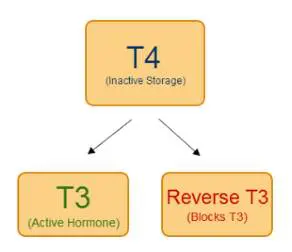
This conversion process is incredibly important to the body because it allows fine-tuning of thyroid hormone function throughout all of your cells.
And this is something you definitely want to happen, at least when it’s working correctly.
When it isn’t working correctly, the conversion process can slide down the wrong path which leaves you with the wrong types of thyroid hormone metabolites, namely reverse T3.
Unlike T4, T3, T2, and T1, which all have pro-thyroid effects, reverse T3 can be thought of as an anti-thyroid metabolite.
While T4, T3, T2, and T1 promote thyroid function, reverse T3 antagonizes thyroid function at the cellular level.
For people without thyroid disease, this conversion process works perfectly.
But if you have thyroid disease, especially for those taking thyroid medications, you can inadvertently alter this conversion process and lead to the creation of anti-thyroid metabolites which can act to make your thyroid function less efficiently.
Easy so far, right?
Why Does Your Body Even Have Reverse T3?
That’s a great question and answering it will help you understand why, in certain situations, your body creates it.
The fact is we aren’t 100% sure why reverse T3 exists in the body but we can make some general assumptions about why it exists.
The prevailing thought, and one that I am in agreement with, is that reverse T3 is meant to act as a brake on your metabolism (2) during times of extreme stress.
Let’s look at chronic illness as an example:
When your body is recovering from an illness (like pneumonia or a bloodstream infection) does it make sense for your body to increase its metabolism and provide energy to your muscles?
Of course not!
It makes far more sense to conserve your energy and metabolism by slowing down energy production and providing energy to vital organs and your immune system to take care of the immediate threat.
This is a protective mechanism designed by the body to ensure that it can weather illnesses.
What may surprise you is that it has a name and is well-documented in medicine.
It’s known as euthyroid sick syndrome.
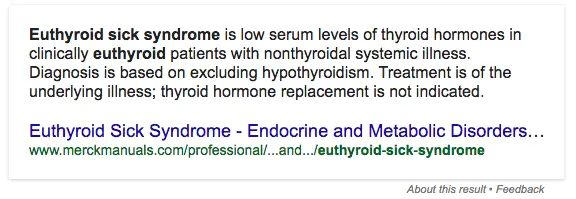
Patients who are under stress develop this condition by altering thyroid hormone metabolism through the conversion process I mentioned above.
Stress results in a typical change in thyroid lab tests manifested as low free T3, high reverse T3, and normal T4 and TSH levels.
I want you to take another glance at those lab tests mentioned above and even compare them to your results.
Do you see any similarities between your lab tests and the lab pattern typically seen in euthyroid sick syndrome?
If you are like many thyroid patients reading this then there’s a good chance you do.
But how can this be? Wouldn’t your doctor notice it?
You would think so but that isn’t the case!
Even though every doctor should have learned about euthyroid sick syndrome in medical school they believe that it’s a condition that only exists in extremely sick patients seen in the hospital or ICU.
Unfortunately, we are seeing more and more patients with multiple chronic medical conditions present with the same thyroid lab tests as those who are hospitalized which leads me to one important conclusion:
Maybe doctors are missing something about our current lifestyle, the increasing rates of illness and chronic medical conditions, and the impact that these have on reverse T3 and thyroid lab tests.
There are studies like this one (3) which can shed light on this very issue.
They show that other situations aside from being hospitalized can lower free T3 levels, increase reverse T3 levels, and cause changes in thyroid function that resemble “sick euthyroid syndrome“.
And it’s small things like this that may explain why so many thyroid patients walk around with hypothyroid symptoms despite being told they are “normal”.
Are You Pooling Reverse T3? High Reverse T3 Explained
Now that you better understand why you want reverse T3 levels to be as low as possible the next thing you need to understand is what causes them to be elevated.
Before we jump into the causes, though, let’s briefly go through some of the symptoms associated with an elevated reverse T3.
As you might suspect, the higher your reverse T3 the more hypothyroid you will feel.
Patients with high levels of reverse T3 tend to have one or more of the following symptoms:
- Decreased metabolism
- Lower than normal body temperature
- Cold intolerance
- Weight gain without changing eating habits
- Fatigue or low-energy
- Pain in the joints, muscles, or tendons
- Depression, anxiety, or bipolar disorder
- Other symptoms of hypothyroidism
These are the most common symptoms but realize that each person will present in a different way from the next.
For instance, I’ve seen people with high levels of reverse T3 present with a complete inability to lose weight and with severe depression without manifesting the other symptoms mentioned.
Others may experience issues primarily with their body temperature and even others still may have a mix of all of those symptoms.
There’s obviously a significant overlap between the symptoms I mentioned above and other medical conditions which is why reverse T3 testing is very important (we will discuss this topic soon).
But first:
What causes elevated reverse T3 levels, and what should you look out for?
- Calorie-restricted dieting – Especially HCG-based diets or VLCD (very low-calorie diets). These diets (4) have been shown to reduce metabolism and increase reverse T3.
- Chronic illness and infections – This includes viral infections like infectious mononucleosis (5), bacterial overgrowth syndromes like SIBO, and even chronic illnesses like cancer, cardiac/heart disease, arthritis, diabetes, and even obesity.
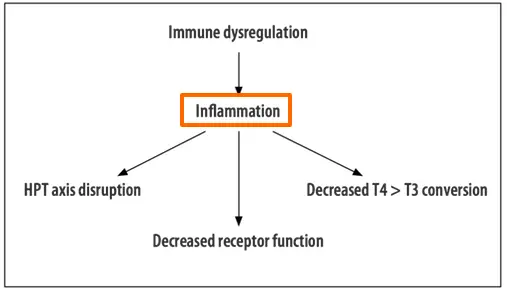
- Chronic Inflammation – Any cause of inflammation can result in decreased T4 to T3 conversion (6) and higher levels of reverse T3.
- Chronic untreated Gut infections – Up to 20% of T4 (7) is converted to T3 in the gut, which means if you have gut issues you may be missing out on up to 1/5th of your conversion power. Gut imbalances that thyroid patients deal with include SIBO, dysbiosis, reflux/GERD, yeast overgrowth, history of chronic antibiotic use, and inflammatory bowel disease.
- Emotional and physiological stressors (8) – This includes social issues like the death of a loved one, family problems, divorce, etc. It also includes psychological (PTSD) and physical trauma (motor vehicle accidents, TBI, or otherwise) (8).
- Some Prescription Medications – The most common medications causing elevated reverse T3 include blood pressure medications, diabetic medications, anti-seizure medications, narcotics, and antidepressants. A common example is the use of beta blockers which can be used to treat the symptoms of hyperthyroidism (9) in addition to elevated blood pressure (10).
What You Need to Know About Reverse T3 Testing
Reverse T3 testing is actually pretty straightforward.
There is a serum marker for reverse T3 that most standard lab companies can run.
What isn’t always straightforward is interpreting your results, but even that is not as difficult as it may sound.
Before we talk about interpreting your results, it’s important to understand how reverse T3 testing fits into a complete thyroid lab panel.
There are no fewer than 4 standard lab tests that need to be run to adequately assess thyroid function and each of these lab tests provides you with different information.
You never want to just order one lab test without the others because you won’t get the information you are looking for.
This applies to reverse T3 just as much as it applies to TSH testing.
This means if you are planning to really understand your thyroid, you will need to get the following thyroid lab tests: TSH, free T3, free T4, reverse T3, and thyroid antibody levels.
Obtaining these other lab tests will help you put your reverse T3 level into context, especially when combined with your symptoms.
One of the most powerful use cases for reverse T3 is in catching early thyroid disease.
Take a look at this image to see what I mean:
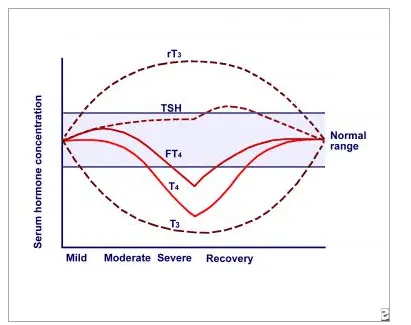
This image demonstrates the severity of the disease state on the X-axis and the concentration of thyroid hormones on the Y-axis.
Basically, it shows what happens to thyroid lab tests and when they become abnormal in relation to the severity of your disease.
What should stand out to you is the fact that reverse T3 (abbreviated as rT3) and T3 (abbreviated as T3) are the earliest markers of thyroid dysfunction.
They become abnormal much sooner than the other thyroid lab tests which makes these lab tests sensitive for diagnosing early thyroid problems.
What’s more, is that the difference between these two lab tests is more dramatic and pronounced than any other thyroid lab test.
For this reason, these two lab tests are critical in evaluating thyroid function.
You can determine the spread between these two values with a simple calculation which will give you the ratio of reverse T3 to free T3.
This ratio is called the free T3:reverse T3 ratio and is something that every thyroid patient should calculate using their own thyroid lab tests.
In an ideal world, you want your free T3 levels to be as high as possible (generally upper 1/2 to 1/3 of the “normal” reference range) and you want your reverse T3 levels to be as low as possible.
To calculate your free T3: reverse T3 ratio simply divide the numbers.
Your ratio should be > 0.20.
Any ratio < 0.20 indicates too much reverse T3 to free T3 and means that you should focus on either increasing your free T3 or reducing your reverse T3.
In order for this calculation to work, your units must be the same.
The units used in the United States for free T3 are pg/mL and the units used for reverse T3 are ng/dL.


Using the example above, if you divide 2.8 by 14.4 you are given a value of 0.19 which is less than that <0.20 level mentioned above.
If your free T3 and reverse T3 lab tests are not in these units, you can easily convert them and then make the calculation with some simple tools available online.
If you want a down-and-dirty way to assess your reverse T3 then you can also just look at the absolute value.
In most patients, a reverse T3 level of less than 15 ng/dL is ideal.
Values higher than this tend to start causing problems, especially if associated with a low free T3.
How to “Flush” Out Or Lower Reverse T3 Levels
So you’ve found out that your reverse T3 level is elevated, what now?
Your next step should be to try and drive that level as low as possible.
This is sometimes referred to as lowering reverse T3, treating reverse T3 pooling, or flushing reverse T3 out of your system.
These are all different names used to describe the treatment of high reverse T3.
What I want you to be aware of is that treatment should focus on
What you need to be aware of is that the treatment will focus primarily on the underlying cause (11).
Because of this, there really isn’t a one-size-fits-all treatment program that I can recommend.
I can and will give you recommendations for common causes, but you will still need to tailor that to your specific situation.
With this in mind, let’s talk about 5 different ways that you can lower reverse T3:
#1. T3 Containing Thyroid Medications
The fastest and easiest way to get rid of excess reverse T3 is with bioidentical hormone formulations that contain pure T3 thyroid hormone.
This would include medications like liothyronine, Cytomel, or sustained-release T3.
The reason this approach works so well is that when you give your body T3 hormone directly it automatically suppresses T4, which reduces the substrate that your body uses to create reverse T3.

In essence, you’re starving out the ‘food’ source your body uses to make reverse T3.
Naturally what will happen with T3 medication use is that your T4 levels will decrease, your free T3 levels will increase, and your TSH will decrease.
While on T3 thyroid medication it’s important to monitor reverse T3 closely, at least once every 6 to 8 weeks.
Typically within 2 months (and assuming your dose of T3 is high enough), your reverse T3 should drop to less than 10.0.
This is definitely the fastest way to reverse T3, but it doesn’t take into account the underlying cause.
So if you use T3 to reduce your reverse T3 without making any other changes, it’s likely that your reverse T3 will just jump back up once you stop taking T3 medication.
Is NDT Helpful for Reducing Reverse T3?
It certainly can help but there are a few things to realize if you want to use this class of medications to treat reverse T3:
- Each grain of NDT has about 38 mcg of T4 and 9 mcg of T3, which means that NDT still primarily consists of T4.
- In order to flush out the reverse T3, you must lower the substrate of T4 which generally means lowering your total dose of T4. In some cases, you may have to drop your NDT dose in favor of pure T3 medications.
- NDT dosing is static meaning you can’t individually alter the concentration of T4 and T3 unless you add additional thyroid medications.
You can still treat elevated reverse T3 with the use of Natural Desiccated Thyroid, but it’s generally not considered the best option.
#2. Supplements Can Enhance T4 to T3 Conversion
In addition to medications, every thyroid patient should also consider utilizing nutritional supplements.
The reason is simple:
The hypothyroid state sets the body up for certain nutrient deficiencies and since most thyroid patients are under-treated, most also have these deficiencies.
This is for 2 main reasons:
The first is that low thyroid states lead to low stomach acid which leads to decreased absorption of nutrients across the board.
The second is that low thyroid states also increase your risk of developing gastrointestinal imbalances which may further impair the absorption of minerals and nutrients.
You can check out this post here for more info about which supplements you should consider using and how to check to see what your body needs.
If you are trying to support the conversion of T4 to T3 with the use of supplements then there are a few you should pay special attention to.
The two primary supplements that you should focus on are zinc and selenium. Both of these supplements have been shown in some clinical studies (12) to increase T4 to T3 conversion, thereby potentially decreasing reverse T3.
In addition to zinc and selenium, I’ve also seen great success with guggulsterone or guggul extract.
We aren’t as concerned about supplements that promote thyroid hormone production (such as iodine and L-tyrosine), but they can still be helpful in some cases.
In addition to these supplements, you can also check out some natural therapies that have some good data behind their use as effective tools for naturally improving T3 levels and reducing reverse T3 levels.
#3. Reversing Hormones that promote T4 to Reverse T3 Conversion
As you are probably aware your hormones all work in tandem with one another.
This means that as one system slows down it may drag down other systems or cause an increase in other hormones to make up for the deficit.
This relationship holds true for thyroid hormones and their impact on leptin and insulin levels.
The link between these hormones is clear:
This is very important because hypothyroidism leads to a state where developing both insulin and leptin resistance becomes much easier.
Why do we care?
Because insulin and leptin resistance both cause inflammatory states which contribute to T4 to reverse T3 conversion.
Not only do they contribute to high reverse T3 levels but they also make weight loss very difficult.
Patients with high reverse T3 levels almost always have high fasting insulin and high fasting leptin levels.
In fact, I don’t think I have ever seen a patient with a reverse T3 greater than 25 with a normal insulin or leptin level.

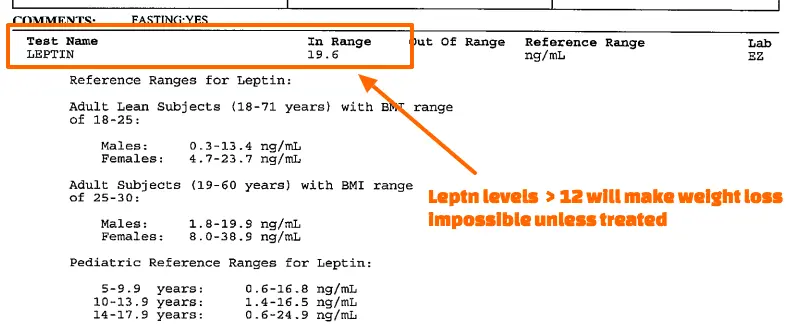

You can see examples from several patients above showing abnormal reverse T3 levels, high fasting leptin, and high fasting insulin levels.
These values may fall within the “normal” range but they are far from normal and will lead to symptoms of hypothyroidism, weight gain, and weight loss resistance.
Another big reason I want to talk about these hormone imbalances is that doctors don’t frequently run tests to check for either of them.
Doctors will routinely check hemoglobin A1c but rarely order fasting insulin and fasting leptin levels.
This means that if you have known thyroid conversion problems, it’s probably going to be up to you to request these additional hormone tests.
Treating and reversing both insulin and leptin resistance is very important for not only lowering reverse T3 but maintaining low levels over time.
To learn more about how to address these hormone imbalances please see the following case studies below:
- Victoza weight loss: 40 pounds lost with Victoza + LDN
- Byetta weight loss: 42 pounds lost over 3 months
- Hashimoto’s weight loss: 55+ pounds lost over 9 months with before/after pictures
These case studies provide a step-by-step walkthrough of how to approach leptin and insulin resistance including which medications, hormones, and supplements are most effective.
If you know you have insulin resistance then you can consider using these supplements to help lower your levels:
- Berberine: Helps reduce cholesterol, improve fasting glucose, and may help with weight loss.
- Alpha Lipoic acid: Helps sensitize the body to insulin and may help to reduce nerve damage in certain patients
- Chromium: Helps improve insulin sensitivity to cells and may help reduce cardiovascular disease in certain patients.
If you prefer the natural approach to treating leptin levels you can find more information here.
#4. Addressing Inflammatory Levels and “Cooling Off” Your Body
Everyone knows inflammation is bad for the body (15), but very few people understand how it makes things worse and, more importantly, how to address it.
Part of the reason for this is that the markers we use for inflammation are non-specific.
That means most of the time we know inflammation is present, we just don’t necessarily know what’s causing it.
Sure, in the presence of other abnormalities we might be able to take a guess, but we will rarely ever know with 100% certainty.
And this is a problem because inflammation is a known contributor to thyroid conversion problems.
We know that inflammation directly promotes the production of reverse T3 (16) by pushing your body down the T4 to reverse T3 conversion pathway.
So if you have high reverse T3 levels you need to be actively searching for sources of inflammation and treating the underlying cause.
You can easily test for inflammation by ordering these lab tests:
- CRP: You want this to be as low as possible but definitely < 1.0 for optimal thyroid function.
- ESR: Another non-specific marker of inflammation (17), for optimal thyroid function this should be < 10.
- Ferritin: Both a marker for iron stores and an acute phase reactant (18), this marker can be used in certain instances to help isolate non-specific inflammation in the body.
If you know that you have both high levels of inflammation and high levels of reverse T3 then you can safely assume that the inflammation is likely worsening your thyroid function.
The next step is to find where it’s coming from.
In hypothyroid patients it’s usually in these three places:
- Hormone imbalances (especially insulin and leptin resistance)- Please refer to the section above to understand how to both diagnose and treat these conditions.
- Undiagnosed gut imbalances like SIBO and SIFO – Both of these gut issues promote inflammation (19) in the GI tract and lead to increased intestinal permeability. You can find more about both here.
- Undiagnosed food sensitivities – These sensitivities promote inflammation (20) and further food sensitivities unless treated.
Bottom line?
If you have both high reverse T3 and elevated serum markers for inflammation you should be looking at the 3 main causes above and treating those if applicable.
If you don’t know where the inflammation is coming from you can still do some good by taking supplements designed to help reduce inflammatory levels and promote the “clean up” of breakdown products in the liver:
- Milk thistle + MSM: Designed to help improve liver function and promote proper phase 1 and phase 2 elimination of medications, supplements, and other products that need elimination in the liver. This combination may also help reduce AST and ALT levels (21)(if you have fatty liver).
- Omega 3 Fatty Acids: Omega 3 fatty acids can help reduce inflammation by reducing inflammatory cytokines.
- Curcumin: This well-studied herb activates PPAR-gamma levels (22) helping to reduce inflammation in the body.
- Quercetin & Bromelain: Particularly helpful in patients with digestive issues and those with chronic sinus/upper respiratory illness-like symptoms (post nasal drip and chronic stuffy nose).
This approach isn’t ideal but it’s better than simply ignoring it.
#5. Lifestyle changes to Balance Hormones and Promote Thyroid Function
Never underestimate the power of these 4 major areas when it comes to improving your thyroid:
- Getting 7-8 hours of quality sleep per night
- Reducing and managing your stress
- Daily low-intensity exercise and episodes of high-intensity exercise 1-3x per week
- A well-balanced diet full of real, whole foods
If you don’t practice these 4 basic things it doesn’t matter what you do, you won’t get better.
These are particularly important for those with high reverse T3 levels.
Remember that your body is a network of systems and hormones that all interact with one another.
When one system isn’t working properly, it will bring other systems down.
These areas are so important that many thyroid patients can see significant improvement in their thyroid symptoms by optimizing them without the need for additional treatments or medications.
The only problem is that most thyroid patients take them for granted and would prefer to take a supplement and call it a day.
Don’t fall into this trap!
Take that supplement if you want, but make sure you are also paying attention to your diet, exercise routine, sleep schedule, and stress levels.
Final Thoughts
Elevated reverse T3 is a serious issue for many thyroid patients and it’s a problem that is often ignored by many conventional doctors and endocrinologists.
The best way to evaluate your reverse T3 is by testing for it along with free T3 and free T4 levels.
To get a better idea of how reverse T3 is impacting your body, you can measure your free T3:reverse T3 ratio.
If your free T3/reverse T3 ratio is < 0.2 you have too much reverse T3 in your body.
The fastest most effective method for optimizing reverse T3 is with the use of pure T3 thyroid medication.
Now I want to hear from you:
Is this the first time you’ve heard about reverse T3?
Have you had your levels checked? If so, was it high or low?
What type of treatments have you tried to lower your reverse T3?
Have you tried medications that contain T3 like Cytomel or liothyronine? Did they work for you?
Leave your questions or comments below!
Scientific References
#1. https://www.ncbi.nlm.nih.gov/pubmed/3428867
#2. https://www.ncbi.nlm.nih.gov/pubmed/7355063
#3. http://www.ncbi.nlm.nih.gov/pubmed/12055988
#4. http://www.ncbi.nlm.nih.gov/pubmed/12055988
#5. https://www.nlm.nih.gov/medlineplus/infectiousmononucleosis.html
#6. http://www.ncbi.nlm.nih.gov/pubmed/11716958
#7. http://www.ncbi.nlm.nih.gov/pubmed/3049061
#8. http://www.ncbi.nlm.nih.gov/books/NBK28/
#9. http://www.ncbi.nlm.nih.gov/pmc/articles/PMC3475282/
#10. https://www.ncbi.nlm.nih.gov/pmc/articles/PMC5369873/
#11. http://www.ncbi.nlm.nih.gov/pubmed/16399020
#12. https://www.ncbi.nlm.nih.gov/pubmed/8157857
#13. https://www.ncbi.nlm.nih.gov/pmc/articles/PMC3608008/
#14. https://www.ncbi.nlm.nih.gov/pmc/articles/PMC3356957/
#15. https://www.ncbi.nlm.nih.gov/pmc/articles/PMC3492709/
#16. https://www.ncbi.nlm.nih.gov/pmc/articles/PMC3978663/
#17. https://www.ncbi.nlm.nih.gov/pmc/articles/PMC4653962/
#18. https://www.ncbi.nlm.nih.gov/pubmed/24549403
#19. https://www.ncbi.nlm.nih.gov/pmc/articles/PMC3099351/
#20. https://www.ncbi.nlm.nih.gov/pmc/articles/PMC1774228/
#21. https://www.ncbi.nlm.nih.gov/pubmed/17548789
#22. https://www.ncbi.nlm.nih.gov/pmc/articles/PMC2234255/


Hello,
I’ve been treated for hypothyroidism for about 11 years now. It was only recently discovered in my labs that I have low progesterone, testosterone, and cortisone along with my thyroid issues. I have been on a very high dose of thyroid medications for a long time. 10 grains of NDT and 75mcg of Cytomel daily. My free T3 and T4 are above range. My other low hormones are now being treated with more bio identical medications. Yet I still have hypo symptoms. I am wondering if it is from pooling RT3. I will try to have the lab done for it soon. Maybe you can help me with one major question I have until then…I have seen where some information online suggests dropping NDT down to 1-1.5 grains a day to clear the RT3 out, other sites suggest dropping NDT by half the person’s total does to accomplish this. What I don’t understand is are you supposed to drop your medication levels suddenly or taper them down to get rid of the RT3? Like would I need to drop to 5grains or 1.5 if RT3 pooling is confirmed or taper down over a couple months?
Thanks, Marie
Dr. Childs,
What if the patient has a free T3 of 4.9 and a Reverse T3 of 43… TSH is elevated at 5.8. Free T4 is 1.4. Antibodies are not elevated. Patient is symptomatic. Would you recommend starting lower with T3 supplementation for this patient? Patient also has symptoms of testosterone deficiency & adrenal fatigue… working on getting those labs.
Dr Childs
My Dr & I have found your videos & information very valuable. I am very sensitive to meds & a lot work paradoxyl on me.
I was on T4 88mcg for 4 years & felt great @115lbs. Then out of no where it was causing issues of fatigue, weight gain & etc. My levels on or off the T4 were much the same so I decided to stop it & felt much better. My Rt3 levels started to drop from 28. I am gluten, sugar & dairy free, I eat very little processed foods. My leptin was 17.7, RT3 serum 15.8 T3 Serum 2.54. T4 1.07,Uric acid 7.0, SHBG 50. So she put me on a compounded T3SR 2mcg. All as it has done is to make me exhausted & the pharmacist says I should get energy. So I started taking it before bed making sure I had not eaten for a few hours, then night sweats. I have not lost 1 ounce. When I was first put on T4 I lost 9lbs in the first 48 hours?
We are at a loss now. As she said if the T3 doesn’t work she doesn’t know what else to do? I have tried for a wile to get in with Andrea.
Another wrinkle in the RT3 picture:
I have very high Reverse T3, so far none of my docs have been able to treat it.
One complicating factor is that most of the manufacturers of T3 meds use microcrystalline cellulose as a filler, and that binds with all the thyroid hormones, and my system doesn’t seem able to unbind it.
So I became even more hypo-thyroid, and felt terrible.(Not good ever, but especially if you don’t have a thyroid gland!) There was one maker (Mylan) I could identify that used other fillers, but my pharmacy wasn’t able to specify any source when they order meds. So we stopped trying the usual method to reduce RT3.
YOU SAID ABOVE SERUM URIC ACID LEVEL AT <5 TO MUCH FRUCTOSE, BUT A COUPLE OF SENTENCES DOWN YOU SAY YOU LIKE TO SEE SAL AT <5 ??? I am going to get this and my leptin test on line so I would like to know what you really like to see. PS. Your awesome! Ava
Hi Dr. Childs!
I was diagnosed with Graves Disease in 2008 and after 3 months of acupuncture and Chinese herbals my levels were all in normal/optimal range. A few years ago I started to feel hypothyroid and my doctor said my TSH, fT4 and fT3 all were normal and the symptoms were probably due to menopause. I continued to feel hypo. The past several months I felt really crummy. Had my labs done again, this time adding rT3
TSH 0.97 (0.35-4.94)
fT4 1.1 ng/dL (0.7-1.5)
fT3 2.0 pg/mL ( 1.7-3.7)
rT3. 26 (10-24)
Doctor recommended I increase vitamin D, take a trace mineral complex that has selenium and Zinc and also take Rhodiola. She is also willing to prescribe T3 5mg twice a day. What are your thoughts on how I should proceed? Also my fasting glucose is 100, non fasting is 116 and my cholesterol is 224 non HDL is 130
Also my blood pressure is 100/60 to 104/65 on average. My resting pulse is 68-72 on average
Hi Amy,
Unfortunately I can’t give you specific medical advice, my best recommendation is to find a physician who you can trust and is willing to work with you.
Thank you for this podcast and overview. I am currently weaning off liothyronine and have been on it for 18 months. I was on 40 mcg for most of the time and was pushed up to 60mcg. I was 54 kg at this dose and since starting to waen i have put on 5kgs in 3 weeks with less calories and it is continuing to rise. Im an active person and i measure my food. I am very scared and any advice would be greatly appreciated. The t3 only treatment did not lower my reverse t3 but imsorry i cant give you the number as my doctor wouldn’t give me my pathology results.
Hi AF,
Calorie restriction will cause long term metabolic damage resulting in high reverse T3 levels and leptin resistance. You should find someone who can help fix your metabolism or the weight gain will likely continue.
Hello Dr Childs
My problems started with extreme anxiety over a very long and sustained time and was given Seroxat antidepressant. in the first few weeks i found i was constantly tired and sleeping throughout the day ,so much so i realise now that at one point i was probably going in and out of conciousness. I stopped taking Seroxat.
I then was given a blood test told my TSH was low and have been on thyroxine for about 16 years but the symptoms i originally went to the GP with were hypoglycemic symptoms.
That was 16 years ago and yet it was only 6 years ago i finally saw a Endocrinologist who did a fasting test. I was then told that i was a reactive hypoglycemic. My blood sugar was 1.8 causing the symptoms that had been happening many times over the past 16 years.
Can you tell me if this is a symptom of hypothyroid or a separate complication.
as i am now taking 150 mg thyroxine and taking 150 mg of a different antidepressant. Also eating a normal healthy diet as i have always done.
I have never gone back to my normal metabolism and still get hypoglycemic episodes if i get anxious or exert myself too much.
Hi Brenda,
Reactive hypoglycemia is usually an indication of an imbalance between glucagon and insulin levels, but I’m unaware of a direct relationship between that condition and hypothyroidism.
I had a SIBO that was causing for me to have a lot of hypoglycemia, because I wasn’t absorbing nutrients. I only absorbed carbohydrates and only high ones any time quickly. If I took something like nuts or fruit when I was hypoglycemic, I would continue to get worse until I had something like juice or bread. After treating the SIBO my hypoglycemia has been gone.
This was of course my personal experience so it doesn’t necessarily mean that you have the same.
Dr. Childs –
Do you have any suggestions for physicians in the Mid-MO area? I feel like my endo thinks I’m crazy. I have Hashimoto’s but my TSH, T4 and T3 are all normal. I have all these thyroid symptoms but they tell me nothing’s wrong. I also have fibromyalgia so I’m dealing with chronic pain and inflammation issues as well. I just feel like they’re not listening to what I’m telling them. Thanks!
Hi Stacy,
Unfortunately I do not.
Hi…
Been on t4 only for ten years post TT. Been on metformin 1000 Sr for 7 years for pcos. Switched to ndt 2 grains with t3 due to conversion issues. Gained a lot of weight. Now on t3 only. Does t3 only increase blood sugar levels and chances of diabetes?
Thank you
Hi there,
No it should not increase your risk of developing diabetes.
Hi,
Thank you for this article it is so informative. My daughter whose is 20 has Hashimoto. Just recently had labs done. She started the AIP diet in January, To be perfectly honest, I know she isn’t eating enough and is basically starving herself. Her biggest complaint is that she is unable to lose weight no matter what she does. Here are her labs.
T4F 1.2. .7-1.5
TSH .006. .400-5.0
T3. 99 86-192
T3F. 2.5. 1.8-4.2
RT3. 30. 8-25
Iron. 26. 35-135
Saturation. 8. 20-55
She is currently taking 125mcg Levothyroxin and 25 mcg cytomel. She did not take any medication 12 hours prior to labs. She just started taking an extra 25 mcg cytomel. I think she needs to stop the Levothyroxin. Her reverse T3 is too high. Please any suggestions or advice would be welcome. So sad that most of these DRs do not know how to treat. Her functional med DR hasn’t seen the RT3 labs as of yet, but he is unable to prescribe any meds. At our wits end :((( Thank you!
Hi Debbie,
Calorie restriction in the way you are describing will only make her reverse T3 worse and make weight loss efforts more difficult down the line, unfortunately.
My doc recently prescribed Cytomel 25 for three months due to high RT3 levels. It’s too soon to say if it is helping, but my question is – why only 3 months? I am afraid to go off it if it makes me feel better. Do you know why a Dr would only want me on it a short time?
Hi Sharon,
I’m not sure why your doctor would recommend that dosing schedule.
Dr. Childs,
What if the Free T3 level is high-normal, but Reverse T3 is still so high that the ratio is poor? What would you recommend in this case? Would you just start with a slightly lower dose of T3?
I’m so grateful to have found this website and will share articles with my dr. He sent me to an endocrinologist because my TSH, T4 and T3 were all almost zero, so he was concerned about a pituitary problem, and didn’t know why the TSH and T4 were not inversely proportional as is typical in hypothyroidism. The endo said I didn’t need the cytomel that I was taking in addition to the synthroid and took me off of it, after which I felt AWFUL! Thankfully, my GP put me back on it, but I have noticed that when I don’t have the synthroid refilled in a timely manner and only take the cytomel, I feel much better. (I know I should not let the prescription lapse.) I’ve never asked about reverse T3 levels, but I certainly will at the next appointment. Thank you for the information, Dr. Childs.
Hi Angela,
No problem and I hope you found it helpful.
Hi Dr. Child’s, I realize this article is from 2016 so I’m hoping you still will see my question. I have hashimotos with total destruction of the thyroid gland. I eat a very clean diet and take supplements religiously. I’ve suffered from severely low D levels in the past as well as low potassium and iron. I supplement with those as well as magnesium, selenium, zinc, vitamin C and probiotics. My current labs are TSH 1.02 (0.4-4.5uIU/ml) Free t3 3.7 (1.8-4.2pg/ml) Free t4 1.1 (0.89-4.2ng/dl) with no reverse t3 labs even though I have requested reverse be run many times I just can’t seem to get it run. I have been on .100mg synthroid for years and I suffer extreme widespread chronic pain. Is it possible to see a reverse t3 issue when chronic pain is involved? I have had inflammatory markers run with normal results so I am perplexed at what could be causing my severe pain? I have tried adding small doses of 5mcg cytomel twice a day with my synthroid dose at .88mcg. with bad results of anxiety and heart Palps. Would t3 only be an option for me with my problems even on lower doses of t3? I have suspected tissue level hypothyroidism as my problem for years but can’t get any doctors to listen and the ones who do don’t know how to dose t3 only. Any advice would be so helpful to me.
Hi Alicia,
Unfortunately the single best thing you can do is find someone who understands what I’m talking about here and can help you further. Each person is unique and different and so there is no generic answer I can give without a complete evaluation.
I was diagnosed with Hashimoto’s almost 3 years ago, I’m 24. Doctor is saying my Synthroid dose is too high because TSH is 0.04. My Free T3 is 3.5 and Reverse T3 is 27. My Free T4 is 1.4 and my TPO antibodies are 782. My doctor wants to lower my dose. Would you tend to agree or disagree?
Hi Ashley,
Unfortunately I can’t give you specific medical advice, but it doesn’t appear that you are heading in the right direction based on this limited information.
So in your opinion, would you agree with my doctor, or should I try to see someone else? I am just getting to where I “feel” better. Don’t get me wrong, I still have “flare-ups” and feel awful some days, but recently I’ve finally been able to function and I feel more like myself than I have in years.
Hi Dr. Childs.
My FT3 is at the very top of range at 4.2 (2.3-4.2) and my RT3 is 23 (8-25) which gives me a ratio around 18. My TSH is less than .01. I currently take 150 mcg Synthroid and 30mcg Cytomel per day. Based on your article, I believe that I should eliminate or reduce the Synthroid, but I’m not sure what to do about the dosage of Cytomel. I believe I read that FT3 levels can rise as RT3 falls, and I don’t want to become hyper.
Thanks so much. I love the article.
Hi Allison,
I don’t talk about the specifics of interpreting lab values while taking thyroid medication on my blog. I have private videos that go into detail on this subject in my weight loss guide: https://www.restartmed.com/hormone-mastery/
I had my Thyroid removed 12 years ago. I’m a 42 year old female and I’ve been busting butt in the gym, 6 days a week for the last 8 weeks, and I’m not seeing as great if results as most. I had my blood work done, and my TSH is 0.337
T4 is 11.3
T3 uptake is 30
T3 is 125
Reverse T3 is 24.6
What can I do to lower my Reverse T3? And is this hindering my weight loss? What kind of doctor should I search for to aide in my problem?
Hi Stephanie,
High reverse T3 levels are usually caused by some issue that needs to be identified and addressed if you want to lose weight. I would look into leptin and insulin levels first and go from there.
Hi,
It was really difficult for me to get my test done as in my country no option of getting test of Reverse T3 and leptin. Got lab test done in Dubai. Really confuse. Would appreciate if you can tell me which way to head. Currently Iam on levothyroxine 150mcg and liothyronine: 25mcg
Reverse T3:0.21ng/ml,
Free T3: 2.60pg/ml
Total T3:1.42nmol/l
Free T4:0.90ng/l
Total T4:6.0ug/dl
TSH:0.253ulU/ml
Leptin(EIA) fasting:10.95ng/ml
B12: 316pg/ml
Insulin fasting: 20.10ulU/ml
Uric Acid:5.3mg/dl
Iron: 210ug/dl
Hb1ac: 5.30%
SHBGH: 38.58nmol/l
Estradiol: 54.62pg/ml
TIBC: 349ug/dl
Best regards
Dear Dr.Childs,
Its so strange that you have replied to most of the people but me…..
Woukd appreciate your reply.
GP’s are the first line in treatment. And most GP’s dismiss anything but lab results and disregard the symptoms. My GP actually said NDT was garbage after me being on Synthroid for 20 years of misery. I ignored him and have lost 45lbs on it. Feel great. He was furious I took NDT. He said armor and NDT was garbage despite my loss and energy. Synthroid sellers has pretty much been responsible for having banned Armor from Canada, and Canadians have to sneak to get NDT. Very sad.
Hi Missy,
GP’s are the first line of treatment in conventional medicine, but you can bypass them directly by going to an integrative/functional/etc. physician.
My experience is that conventional doctors don’t know a thing about treating the thyroid or adrenals. I had hypothyroidism and conventional doctors didn’t check anything else but TSH. I had hypothyroidism, low T3 and a bit of hashimotos. With the help of a functional doctor I have no more problems with my thyroid. Still working on my adrenals though as I burnt myself out real bad. No medications though. Lots of supplements and I’m improving little by little. No more staying in bed or sofa. I can do a bit of walking already and normal daily things, just need to make sure I don’t stress myself too much.
Hi
So if I am following your protocol to reduce RT3 by only taking T3, my question is What if I am taking more T3 then is needed? Will that extra T3 then turn into RT3? What happens to extra T3 in your body? People with Graves have extra T3 does that move into RT3? I am hypothyroid, I’m just curious. Thank you.
Debbie
Hi Debbie,
I don’t have a protocol for treating RT3 (at least not made public), and I certainly wouldn’t advocate taking more T3 than you need because then you truly would be in a hyperthyroid state. The confusion exists surrounding what is “enough” T3 or “enough” thyroid hormone and I have my own opinion on that.
But to answer your question, T3 cannot be converted to RT3, at least not with our current understanding, but excess T3 can still cause harm in the body.
In your comment on April 30th 2016 you said:
“Your reverse T3 levels will elevate as a natural safety mechanism if your free T3 levels get too high.”
And
“And yes, I’ve seen reverse T3 levels rise as free T3 levels rise for the reason I stated above.”
So, just to check understanding: although excess T3 itself isn’t “converted” into a Reverse T3, it does “drive up” Reverse T3?
(I suspect that’s what Debbie actually meant, even though the words came out a bit different…)
P.s. Thank you got the level of detail and patient experience you’ve been willing to share here. Not many practitioners would give this amount if information freely!
Hi Ami,
Generally not unless the T3 is also accompanied by T4, either because the person is taking T4 thyroid medication or because the TSH isn’t completely suppressed.
Dear Dr Childs,
I beg you to help and advise me. My level of ft3 was always low (which caused a myriad of problems and debiliating symptoms) – usually under the range so my Dr recommended taking Cytomel- altogether with Levo.
The first month was amazing and the level rose to 2,7 (range 2-4.4)
but after another month without changing anything- nor the dose of cytomel nor the diet or lifestyle
ft3 decreased to 0,59 (range 2-4,4)
I feel like Iam dying… no energy AT ALL depressed pain all over
WHY? WHAT SHOULD I DO? My Dr doesn’t know …. has no answers
I have been on antibiotics for Lyme for 8 months, very slim, take all the mentioned supplements, probiotics, sleep a lot, do gentle excercise- literally everything you wrote.
I BEG YOU TO HELP
Hello! Thank you for the great article. I only found out this past week that my reverse T3 was extremely elevated. While all other labs were very normal. I am pregnant but my doctor seems to think the reverse T3 is very high. I have had two children born with hypothyroidism. No thyroid antibodies detected in any of us. I am very symptomatic and it only seems to get worse with each pregnancy. Extreme weight gain, fatigue, headaches, etc.. have you seen this in any of your patients?
Hi Avery,
Yes, that is quite common,
You said early on in your comments “I usually gauge the dose of T3 based on the reverse T3 levels.”
In the example you gave in your article (where RT3 level was 41.1; leptin 19.6 etc) what dose of T3 did/ would you recommend?
Hi Ami,
I don’t talk about dosing specifics in my blog posts, but I have some videos in my weight loss guide that go over dosing, etc.
Hi Dr Childs,
Have you seen patients successfully lower reverse T3 naturally, without prescription thyroid meds like T3? I’m going to start doing the natural treatment things you suggest, but am curious of outcomes you’ve observed.
Great article, thanks!
Thx~Alicia
Hi Alicia,
If it’s possible then it probably takes years to happen and it’s a very slow process. I’ve never seen it, but that’s because by the time patients come to me they’ve usually exhausted most treatments and need stronger therapies.
I think the problem comes in that many people are sold on the idea that everything can be treated naturally, and that’s probably true to some degree, but realistically some of these things will take years and years to reverse.
Thanks for the response. I just purchased your 60 day program. You talk about fasting in the main guide. Is the every other day fasting safe for people with high reverse T3 assuming we eat per your program on the non fasting days? My fasting insulin is 7.5; A1c is 5.3; leptin is 26.9. So I think fasting would be beneficial for me, after reading you guide. I only worry that my reverse T3 will go even higher than 33 if I fast, but maybe this concern is unfounded?
Also, I was on a half grain of Naturethroid which is what Dr prescribed for the high rT3 and my reverse T3 increased from 27 to 29 to 33. Dr said I should increase Naturethroid to a full grain, but seems like my body may just continue to convert T3 to rT3 if dose increases. Do you have any insight you can share/suggest? I have one of those new age expensive boutique doctors but I don’t think even he knows how to deal with reverse T3.
He won’t prescribe cytomel but I can always get it from Mexico, but T3 only sounds like scary stuff. I guess I’ll not take anything, and try to get my iron utilization and B12 into normal ranges first before resorting to doing a self monitored rT3 flush using cytomel. I do order my own labs and have access to the T3 protocols.
I just purchased your 60 day reset and weight loss program. You talk about the hormonal and metabolic benefits of fasting. Is the option 2 fasting program safe for people with high reverse T3 assuming we eat as per your program on the non fasting days?
Hi Alicia,
Yes, it’s 1 of only 2 therapies that actually help the condition. And you are correct, it must be coupled with the other therapies listed in the program.
Hi Alicia, I was wondering if you could email me. I had a few questions for you? actionhealthycoach@gmail.com
I have been trying to figure out what is wrong with me for so many years. I had a husband commit suicide 17 years ago and can’t recover from it. I have been on so many different kinds of antidepressants and treatments but I suffer with symptoms of hypothyroidism, depression, chronic tiredness, my body temp averages about 97.2 deg, etc. I just read your article and recently had thyroid tests AGAIN. I calculated my FreeT3:revT3 ratio to be .147. SO perhaps I have too much T3? I have tried levothyroxine and Armour and neither helped with hypo symptoms. Do you think I am on the right track?
I am being treated by a functional medicine Dr. currently for adrenal fatigue. In January we ran TSH, Free T3, Free T4, Reverse T3 & TPO/Thyroglobulin antibody. I have been taking adaptogens and a few supplements and still have all of the same symptoms. High heart rate, fatigue, insomnia, anxiety/panic attacks, no appetite, severe weight loss, dizziness, vision changes. She again ran all the same tests last week and there has been a few changes but in the wrong direction. I am not currently on and thyroid meds.
Jan 2017 results:
TSH 1.33 (range 0.47-5.01uIU/ml)
Free T3 2.5 (1.7-3.7 pg/ml)
Reverse T3 24.4 (9.0-27.0 ng/dl)
Free T4 1.04 (.71-1.85 ng/dl)
TPO 0.4 (0-9.0 IU/ml)
Thyroglobulin antibody <0.9 (0-4.0 IU/ml)
June 2017 results:
TSH 2.41 (increase)
Free T3 2.8 (increase)
reverse T3 24.4 (no change)
Free T4 0.97 (decrease)
Ferritin 18 ng/ml (5-204 ng/ml) – very low have started a iron supplement. Could the low ferritin be causing all of these symptoms? Do I need to also be on T3, how do I convince my Dr of this?
I have been chronically fatigued for over 15 years. I’ve tried all different avenues and have spent thousands of dollars trying to get well. I just tested and have high reverses t3 and low free t3 levels. I feel like death. I can barely type this to you today. My doctor prescribed me cytomel and I just started taking it and also doing a very clean while foods no grains diet. Once the reverse t3 is lowered.. What do I do then? Would I then need something like armor or just be done with thyroid meds? I don’t think my doctor knows what to do either. We are trying to find the source of inflammation now. So far nothing. Not hashimotos. I do tend to over eat and always hungry no matter what. Possibly leptin. Going to ask for that test next. Please help me if you can. I am so desperate. Thank you
Last March my labs looked like this: TSH – 2.37; Free t3 – 133; Free t4 – 1.13; Rt3 – 15.3; ALT (SGPT) – 84 and flagged as high, meaning liver issues AND Naturopath said I have no thyroid issues.
I went to a different healthcare provider and she found candida, hypoglycemia, low iodine, low Vit. K, and very low progesterone. (I am a fairly fit 54 yr old female – life long runner).
I was given iodine, changed diet to no dairy, no sugar, no gluten, added probiotics and added Cytomel 5 mcg a day.
These are my latest labs – TSH 6.34; Free t3 – 128; Free t4 – 6.7; Rt3 – 16.6; iodine is now too high and same liver test is in normal range.
I feel sicker than ever and my healthcare provider has now added dessicated thyroid – 30mg a day. I also take 1000 mcg of B12 methylcobalamin sublingual melts a day – my heart does weird jittery stuff if I don’t take it.
Good sleep is impossible. I feel I am in a walking coma and can’t find any healthcare provider who knows what they are doing. WASTED TIME, WASTED MONEY! This is my life….
Hello,
I have hashimoto and I would like to know if it is normal to have a very low RT3 for more than 2 years: 5.5 [9.2 – 24.1 ng/dl]? I use 1.5 grain of NDT for 2 years, my FT4 is still low 12 [12-22 pmol/L] and my FT3 still in the upper limit 5.7 [2.6 – 5.7pmol/L], with a TSH <0.01. On all forums I am told that I have pooling problems, but my RT3 is low, is it possible? Despite 4-5 times a week of cardio and a good diet (Paleo), I continue to gain weight. Would the T3 protocol only be better than the NDT in my case? I do not know if there is a link, but my SHBG is very high also 70 [12-60 nmol / L].
Thank you
Adam
Hi Adam,
High SHBG may be limiting your testosterone levels which may worsen some of your symptoms. You will want to evaluate all hormone systems in addition to your thyroid.
Thank you for your response, your site is very interesting, but unfortunately we do not have functional physician in Montreal and it is very difficult to pass more accurate tests. Is the T3 in the NDT can increase as much the SHBG? My SHBG was much lower with synthroid.
Thank you
Adm
Yes, it is most likely the T3 in the NDT that is causing your SHBG to rise. I use SHBG and total T3 as a way to determine if patients are getting “enough” thyroid hormone. You don’t want either of these values to be elevated.
If I understand correctly, if the T3 is high and the SHBG is also high, my medication is correct and my doctor should not increase it, even if I am only 1.5 grains. Can T3 and SHBG be raised in the blood, but the T3 does not penetrate the cells and that’s why I continue to gain weight and be tired, even though my T3 is very high? Have you ever seen a patient have enough NDT with only 1.5 grain? Before taking NDT, I was using 137 mcg of Synthroid, I use 1.5 grain only because my doctor considers that 1 grain = 100 mcg of T4.
Thank you
Adam
After a pesticide exposure I gained and gained weight and was completely exhausted, joint pain, tendon pain. After testing high rT3 went on T3 only meds.
After 12 weeks on T3 only I felt absolutely amazing, the chronic pain was gone and I began losing weight and feeling happy again. I also became much more flexible, energetic and productive.
I thought my doctor was crazy when she suggested high rT3 issues and am sorry I waited too years after the diagnosis to act.
Hi Dr. Childs,
I was wondering. I have quite normal thyroid levels now. T3 is not perfect (4.1 (range 3-6.5). My functional doctor says ideal is between 5 and 6. I had a small amount of hashimotos, but this has been fixed with nutritional changes now. I still have lots of neurological symptoms like numbness, difficult mornings, tiredness, weakness, cold and heat intolerance and some other thyroid symptoms. We tried Nature Throid, which got me completely badly overstimulated and exhausted. I have also good days, but still not enough. My doctor said that the thyroid problem is on cell level, meaning the cells and metabolism are damaged, but that there is enough of thyroid hormones in the blood now. I was hypothyroid before and no medications for a few years. I have supplements like d-ribose, CoQ10, fish oil and a whole stack of vitamins and minerals. I’m on a dairy-free and gluten-free, very low sugar diet. What is the best approach to treat the cell and metabolism issues? Any tips? Are there any articles here about this kind of issues? Or is it just the matter of time and letting the body heal with the right nutrition and supplements? Thank you.
Hi Dr Child’s, I have high rT3 (28) and am about to start on T3 only ( liothyronine ) bloods were:
TSH 4.2 ( 0.27-4.2)
T4 126.6 ( 64.5-142)
FT4 16.44 ( 12-22)
FT3 3.93 ( 3.1-6.8)
RT3 28 ( 10-24)
RT3 ratio 9.14 ( normal>15. Borderline 12-15 Low <12 )
My Question is what would be a starting point in mcg to throw at rT3?
Hi, if I’m taking T3 medication, can I test for RT3 or will the T3 medication affect the results?
I hope you can answer this for me! I’d really appreciate your thoughts!
Thanks.
Hi Anna,
Yes you can test for RT3 while taking T3 only medication and it will affect the results (but you want it to).
Dr Childs
I recently got diagnosed with hypothyroidism. I had to beg the Dr. to run more tests because I really felt like something was wrong. I have been losing hair over the past few years and I was becoming concerned. My Reverse T3 was really high
37.4 ( 9.2-24.1ng/dl)
I read your article and Thank You so much for making sense of this. I am on Cytomel and Nature Thyroid, its to early to tell how I am doing since i just started. My question, does Ferritin play a role in the thyroid and hair loss? And if so or not what supplement can i take to help hair loss? And would it be ok to take with the medication I am on?
Thank you kindly ~
Hi Dr Childs
I am in the UK. I have FM but no diagnosis of hypothyroidism, in spite of symptoms of weight gain, cold intolerance, hyperhidrosis and fatigue.
I recently had some private blood tests and my T3 was 4.5 (nearer the low end of the range), but my reverse T3 was 28 (though measured in ng/dl rather than pmol). I tried to work out my ratio with the adjustments but one ratio came up with 0.2 and the other 6. I see they’re both too low but one seems much lower than the other! I’ve no idea what’s causing my reverse T3. None of the other results stands out, except my C Reactive protein is just on the high side (just outside range) and I am on antidepressants and wonder could these be the cause of my results. Thanks
Hi Jaki,
You might find the link between thyroid symptoms and hypothalamic obesity disorder interesting in your case: https://www.restartmed.com/hypothalamic-obesity-disorder/
Many thanks, Westin. I will have a look 🙂
Hi Dr Westin
I followed the link to hypothalmic obesity disorder which I read with interest – I have many of the symptoms as well as sweating when I’m cold. I have Fibromyalgia and am going through the menopause so hard to separate what is what at the moment. I’ve had no thyroid treatment because all my thyroids are within range although my reverse t3 came out high in a private test (plus ratio between that and t3 was less than 0.2). I’m in the UK though, and so a lot of your treatments aren’t available. My appetite is not particularly voracious though not having quite passed through the menopause the hormonal changes have caused hunger cravings at times – the females in my family have also tended to bloat around this time of life. I eat a lot of fish and no meat, though I do have a sweet tooth. I am also on anti-depressants anyway for other symptoms, only a small dose, but the equivalent of what you call Paxil over there, and it’s one of the a/d’s that causes the most weight gain. I know some people have had Low Dose Naltrexone prescribed with Fibro so that is available over here. I am nervous about self-medicating on t3, even if I could get it, (though it has been advised online) but I have also been told it can be dangerous. My t3 is low but within range. Thanks
Great article! Should a person stop taking iodine with high reverse T3? My reverse T3 is 22.6 ng/dl , my free T3 is 2.94 pg/ml, TSH 2.5 and T4 6.9 ug/dl
I take 5 drops of lugols 2% a day. I wonder if iodine is helping or hurting in the case of high reverse T3……
Hi Dr. Childs,
I am taking levothyroxine 25mg for a couple of months now. My TSH level slightly drop and my FT4 is slighty higher which I suggest is a good thing but my FT3 level dropped. What may be the reason about it?
Thank you for your informative talk. I have TSH of .869, T4 9.5 Free T3 0.81 and Free T3 2.3. I do have Hashimoto’s T peroxidase Antib 191.10.
I am inflammatory and trying to address that with the microbiome diet and foods for gut health and probiotic balance. But do you think I should take less T4 (I take 88 mcgs/day now) and more T3 (I take about 1.75-2.5 mcgs a day (cutting the lowest pill of 5 mcgs). These are substitutes – so I think the generics are slightly lower in strength, from my experience. Thank you so much for your time – if it’s not too late to converse with you (now 2017!) Joanne
HI Westlin Childs
firstly id like to thank you on behalf of all the people here you have gone out of your way to reply too and such a great article. You give many hope and direction here….
I am new to all of this. Please help me understand my situation.
I had helicobacter bacterial infection five yrs ago and my health deterioted since then and i was then diagnosed with chronic fatigue syndrome/ M.e is the other name, this diagnoses was from symptoms alone, not a definitive test ..therefore i am not satisfied with the diagnoses .
I am dependant on probiotics now. I am ill without them.I eat healthy and dont have many bad habits that way,.My lifesyles been stressful but i have started meditating a lot more and self hypnosis ..both wonderful..and help me stay positive in all this.
Recently symptoms of hypothyrodism (which i’ve always known i have incl cold intolerance and eyebrows vanishing at the ends amongst all the other more well known symptoms there are )have worsened, to the point its hard to do my daily chores severe mental fog too.
Here are my results
TSH 1.02 miu/l
FREE thyroxine 16.7 pmol/L
total t4 91.4 nmol/L
free t3 4.26 pmol/L
reverse t3 27 ng/dl
reverse t3 ratio 10.27
thyroid antibodies –
thyroglobin antibody <10 iu/ml
thyroid peroxidase antibodies 9.8 iu/ml
VIT D 53.9nmol/L (dropping every year no matter if i take supplements or sit in the sun all day get a tan, also i have a sun allergy showing up on forearms last few yrs)
CRP high sensitivity 0.3 mg/l
Ferritin 13 ug/l (dropping no matter what i do again)
the report says my results are ok..but i dont this is really true. Especially since reading your informative article.
Please reply and advise
THANKS
RI
i must add i took lactoferrin once and felt like complete death huge reaction …..i wonder why that was until today … is there a link at all ?
Hi
Pls may I share my results…where my reverse t3 level is 27 and ratio is 10 % .. all the other’s seem relatively normal within range but some lower end. Myvit d and ferritin keep dropping regardless of any action I take to bring them up and area quote low now. I have all the hypothyroid issues. Thanks
Dr. Childs,
First of all, thank you for this amazing article. Needing your advice. Have been hypo for a few years now. Started on synthroid and never got to feeling good. April 2017 test results of TSH 1.030
Free T4 1.47
T3 160
Free T3 2.8
Decided to go to NDT since was having continued fatigue, hair loss,and inability to lose weight on synthroid.
Just got labs done again (Aug 2017) after being on NDT for 8 weeks. Lab results of
Tsh 2.2 (went up)
T3 234 (went up)
Free T3 4.7 (went up)
Feeling better, have energy, decreased hair loss, but have weight gain again. Could my reverse T3 be high? Should I add in cytomel? Help, at a loss since tsh went up from 1.030 to 2.2.
Hello, Westin I really am thrilled to have found your blog. Two years ago I began the struggle with euthyroid eye disease and did a full thyroid panel.
I had normal Free T4, Free T3, TSH but was borderline for high for Reverse T3(27.3 with less than or equal to 5.5 considered normal). I have seen an endocrinologist and was insulted when I brought up the reverse T3 number. She said they weren’t important and when I was tested for TPO and TG antibodies which both were high she said so what you have hashimotos and said your TSH is normal so I don’t need to see you for another year. What do you make of this!!
Dr. Childs,
I have been looking into thyroid problems for appox. 6 months, because I was diagnosed with Hashimoto’s Thyroiditis. I went to see one Dr. who told me my labs were fine, even with a TpO Anitbody # of 324.7, I was fine; the reason I couldn’t lose weight was because I was fat, lazy and crazy. Obviously I don’t see her any more, and have started going to an endo, and have found a different doctor. The Endo upped my levyothroxine to .88 which got rid of 75-80% of my problems, except for a few (hair loss, weight gain, being cold, oh and I have a few tremors due to sub-clinical hyperthyroid).
My labs…: TpO: 369.8, TSH: .040, T4: 1.09, T3: 132.1. RT3: 20.1, Iron: 82, Ferritin: 52, Cholesterol: 182
The Endo wants me to cut my levythroxine in half one day a week, and take normal dosage the other 6 days. I should mention he doesn’t believe in T3 or RT3 as they have nothing to do with the thyroid and they are pointless tests. As you can see I’ve done my homework.
Dr. Childs,
I literally started reading this article and began to cry. I think I have the Reverse T3 problem. I have seen general practitioners, rhuematologists, and endocrinologists. No one has an answer to really help me. My T3 is always high and I have been told that something I am taking is causing it like a supplement but that it is not a big deal and we shouldn’t treat the condition with medication. They encourage me to try to figure out what I am taking that is causing the high T3 and alter my diet. I have spent years trying to do this but nothing I do causes my blood work to change. I wouldn’t care so much except I am suffering.
I’m experiencing:
Extreme Joint Pain
Intermittent Joint Inflammation
Numbness in parts of my body that come and go (and I have had a full panel of tests for MS and I do not have that)
Feeling like my mind is foggy and my recall is at times challenging
Migraines with aura
Hair loss – my hair is constantly falling out
Weight gain – I am 30 to 40 pounds over my typical weight and have been for the past 5 years but am a healthy eater and I exercise. Plus no matter what I do I can not lose weight.
The consensus is that I have Fibromyalgia with some atypical numbness present due to sensitive nerves. That and I am ingesting something that is causing my T3 to be elevated. All other markers are in range therefore the high T3 I’m told is not something to concern myself over. Maybe that is exactly what I have but when I came across this article I thought this might explain what has been happening to me. I don’t know if Reverse T3 has been tested for me. I have only heard he term T3.
I know you are not taking patients (or at one time were not) but if that has changed I’d really like to come see you. I am desperate.
I just calculated my free T3/reverse T3 ratio and it is 0.156. So it’s too low and my reverse T3 is high (27, normal 10-24 ng/dl). When I first started Naturethroid (NDT), my rT3 had gone down, but now it’s back up again. My TSH was 0.3 (normal 0.3-4.2 mIU/L), free T3 4.2 (normal 2.8-4.4 pg/ml), and free T4 0.9 ng/dl (normal 0.9-1.7 ng/dl). I already have insulin-dependent diabetes since 2015, and my HbA1c is now at 5.7%. What would you recommend for me to try to bring the rT3 down? I am a post-thyroidectomy patient for a history of papillary thyroid cancer in 2009. My Endo has not been keen on letting me only take T3 without any T4. My current dose of Naturethroid is 1.125 grain in AM and 1 grain in PM. Thanks!!
Hi Kim,
You can find further information on how to reduce reverse T3 levels and increase free T3 levels in these articles:
https://www.restartmed.com/thyroid-support/
https://www.restartmed.com/increase-free-t3-naturally/
I have no thyroid and my Reverse T3 test came back 19.7 ng/dL Is this normal? I’m not understanding the along with your numbers. Thank you.
Hi Teressa,
Assuming the standard reference range then it looks like you may have sub optimal reverse T3 levels.
Hello,
My T3 is low, but when I try any type of medication with T3 I get severe insomnia. I’ve tried starting with very low dose and still get insomnia. Any tips?
Thank you,
Sandy
Hi Sandy,
It may be that your low T3 is due to something such as inflammation or nutrient deficiencies in which case fixing that problem should be your priority over taking T3 medication.
Hi Dr Childs,
I had a total thyroidectomy back in 2010 and since then I’ve been struggling. Synthetic meds did not work for me, then I ended up on NatureThroid. I stabilized at 4.25 grains, but it was giving me gut issues (constant clearing of my throat, GERD, etc). Now I am on 5.75 grains of WP Thyroid and my gut feels much better. However, I cannot regulate the dosage. I tried lowering to 5.5 grains but the day or two after, my hips would start hurting a lot, I’d get irritable, etc. My latest labs are Free T3 5.3, Reverse T3 36, T4 1.7 and TSH 0.01. I know these are high, but don’t know how to lower them without painful symptoms. I also seem to have water retention issues (puffy ankles), a few stubborn pounds (about 7 lbs), memory issues, and body temp variations. I have no idea what to do and what other tests to ask for. I could really use your advice – thank you very much!