
- Elevated reverse T3 acts as a brake on your metabolism at the cellular level. If your body is in chronic stress from illness, infections, or emotional trauma, it creates this anti-thyroid metabolite to conserve energy.
- Calculate your free T3 to reverse T3 ratio using your lab results. A ratio below 0.20 means too much reverse T3 is blocking thyroid function, and this is the most sensitive way to catch early thyroid problems.
- You can lower reverse T3 fastest by taking T3-containing medications like Cytomel or liothyronine, which directly suppress the T4 your body converts into reverse T3.
- Insulin and leptin resistance drive T4 to reverse T3 conversion. Treating these hormone imbalances is essential for keeping reverse T3 down long term, not just temporarily with T3 medications.
- Sleep 7-8 hours, manage your stress, exercise regularly, and eat whole foods. These four foundations matter more than supplements when it comes to lowering reverse T3 and restoring thyroid function.
Reverse T3 could be the missing link to finally explain why you still have hypothyroid symptoms despite taking thyroid medication.
The crazy part is that most doctors don’t even order reverse T3 and, even if they do, most aren’t sure what to do with the results.
This means it’s up to you as a thyroid patient to understand what this lab test is, how to interpret your results, and how to manage high levels (if present).
High reverse T3 has the potential to slow down your metabolism, reduce thyroid function at the cellular level, and result in full-blown symptoms of hypothyroidism.
It may seem like a daunting task to learn all of this information but don’t worry, it’s not as hard as you think, and learning about it now can pay dividends to your future self.
Today you are going to learn…
- How to tell if you have too much reverse T3 in your body
- The name of the blood tests you need to have ordered
- How to calculate your free t3:reverse T3 ratio (and why this is important)
- What causes elevated reverse T3
- And how to “flush” out or lower high levels of reverse T3 and how I treat patients with Thyroid resistance and high levels of reverse T3 in my office
Let’s jump in.
What is Reverse T3 Anyway?
What it boils down to is this:
Reverse T3 is a hormone metabolite that is created from the T4 thyroid hormone (1).
T4 thyroid hormone, of course, is the primary thyroid hormone that your body produces directly from the thyroid gland.
Your body then takes T4 thyroid hormone and eventually breaks it down into T3, T2, T1, and sometimes reverse T3 through something called thyroid conversion.
A simplified version of that conversion process can be seen below:
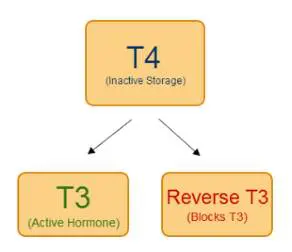
This conversion process is incredibly important to the body because it allows fine-tuning of thyroid hormone function throughout all of your cells.
And this is something you definitely want to happen, at least when it’s working correctly.
When it isn’t working correctly, the conversion process can slide down the wrong path which leaves you with the wrong types of thyroid hormone metabolites, namely reverse T3.
Unlike T4, T3, T2, and T1, which all have pro-thyroid effects, reverse T3 can be thought of as an anti-thyroid metabolite.
While T4, T3, T2, and T1 promote thyroid function, reverse T3 antagonizes thyroid function at the cellular level.
For people without thyroid disease, this conversion process works perfectly.
But if you have thyroid disease, especially for those taking thyroid medications, you can inadvertently alter this conversion process and lead to the creation of anti-thyroid metabolites which can act to make your thyroid function less efficiently.
Easy so far, right?
Why Does Your Body Even Have Reverse T3?
That’s a great question and answering it will help you understand why, in certain situations, your body creates it.
The fact is we aren’t 100% sure why reverse T3 exists in the body but we can make some general assumptions about why it exists.
The prevailing thought, and one that I am in agreement with, is that reverse T3 is meant to act as a brake on your metabolism (2) during times of extreme stress.
Let’s look at chronic illness as an example:
When your body is recovering from an illness (like pneumonia or a bloodstream infection) does it make sense for your body to increase its metabolism and provide energy to your muscles?
Of course not!
It makes far more sense to conserve your energy and metabolism by slowing down energy production and providing energy to vital organs and your immune system to take care of the immediate threat.
This is a protective mechanism designed by the body to ensure that it can weather illnesses.
What may surprise you is that it has a name and is well-documented in medicine.
It’s known as euthyroid sick syndrome.
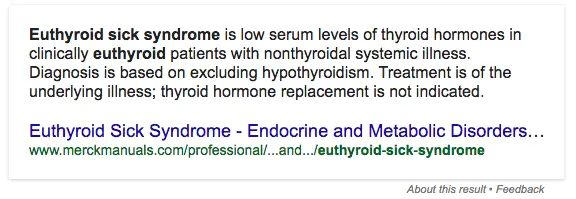
Patients who are under stress develop this condition by altering thyroid hormone metabolism through the conversion process I mentioned above.
Stress results in a typical change in thyroid lab tests manifested as low free T3, high reverse T3, and normal T4 and TSH levels.
I want you to take another glance at those lab tests mentioned above and even compare them to your results.
Do you see any similarities between your lab tests and the lab pattern typically seen in euthyroid sick syndrome?
If you are like many thyroid patients reading this then there’s a good chance you do.
But how can this be? Wouldn’t your doctor notice it?
You would think so but that isn’t the case!
Even though every doctor should have learned about euthyroid sick syndrome in medical school they believe that it’s a condition that only exists in extremely sick patients seen in the hospital or ICU.
Unfortunately, we are seeing more and more patients with multiple chronic medical conditions present with the same thyroid lab tests as those who are hospitalized which leads me to one important conclusion:
Maybe doctors are missing something about our current lifestyle, the increasing rates of illness and chronic medical conditions, and the impact that these have on reverse T3 and thyroid lab tests.
There are studies like this one (3) which can shed light on this very issue.
They show that other situations aside from being hospitalized can lower free T3 levels, increase reverse T3 levels, and cause changes in thyroid function that resemble “sick euthyroid syndrome“.
And it’s small things like this that may explain why so many thyroid patients walk around with hypothyroid symptoms despite being told they are “normal”.
Are You Pooling Reverse T3? High Reverse T3 Explained
Now that you better understand why you want reverse T3 levels to be as low as possible the next thing you need to understand is what causes them to be elevated.
Before we jump into the causes, though, let’s briefly go through some of the symptoms associated with an elevated reverse T3.
As you might suspect, the higher your reverse T3 the more hypothyroid you will feel.
Patients with high levels of reverse T3 tend to have one or more of the following symptoms:
- Decreased metabolism
- Lower than normal body temperature
- Cold intolerance
- Weight gain without changing eating habits
- Fatigue or low-energy
- Pain in the joints, muscles, or tendons
- Depression, anxiety, or bipolar disorder
- Other symptoms of hypothyroidism
These are the most common symptoms but realize that each person will present in a different way from the next.
For instance, I’ve seen people with high levels of reverse T3 present with a complete inability to lose weight and with severe depression without manifesting the other symptoms mentioned.
Others may experience issues primarily with their body temperature and even others still may have a mix of all of those symptoms.
There’s obviously a significant overlap between the symptoms I mentioned above and other medical conditions which is why reverse T3 testing is very important (we will discuss this topic soon).
But first:
What causes elevated reverse T3 levels, and what should you look out for?
- Calorie-restricted dieting – Especially HCG-based diets or VLCD (very low-calorie diets). These diets (4) have been shown to reduce metabolism and increase reverse T3.
- Chronic illness and infections – This includes viral infections like infectious mononucleosis (5), bacterial overgrowth syndromes like SIBO, and even chronic illnesses like cancer, cardiac/heart disease, arthritis, diabetes, and even obesity.
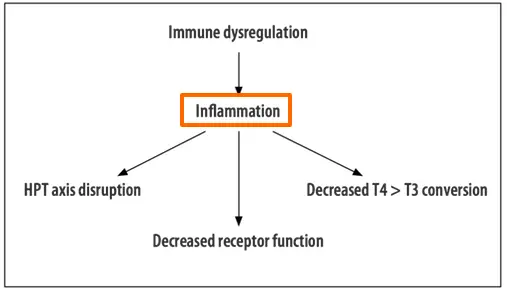
- Chronic Inflammation – Any cause of inflammation can result in decreased T4 to T3 conversion (6) and higher levels of reverse T3.
- Chronic untreated Gut infections – Up to 20% of T4 (7) is converted to T3 in the gut, which means if you have gut issues you may be missing out on up to 1/5th of your conversion power. Gut imbalances that thyroid patients deal with include SIBO, dysbiosis, reflux/GERD, yeast overgrowth, history of chronic antibiotic use, and inflammatory bowel disease.
- Emotional and physiological stressors (8) – This includes social issues like the death of a loved one, family problems, divorce, etc. It also includes psychological (PTSD) and physical trauma (motor vehicle accidents, TBI, or otherwise) (8).
- Some Prescription Medications – The most common medications causing elevated reverse T3 include blood pressure medications, diabetic medications, anti-seizure medications, narcotics, and antidepressants. A common example is the use of beta blockers which can be used to treat the symptoms of hyperthyroidism (9) in addition to elevated blood pressure (10).
What You Need to Know About Reverse T3 Testing
Reverse T3 testing is actually pretty straightforward.
There is a serum marker for reverse T3 that most standard lab companies can run.
What isn’t always straightforward is interpreting your results, but even that is not as difficult as it may sound.
Before we talk about interpreting your results, it’s important to understand how reverse T3 testing fits into a complete thyroid lab panel.
There are no fewer than 4 standard lab tests that need to be run to adequately assess thyroid function and each of these lab tests provides you with different information.
You never want to just order one lab test without the others because you won’t get the information you are looking for.
This applies to reverse T3 just as much as it applies to TSH testing.
This means if you are planning to really understand your thyroid, you will need to get the following thyroid lab tests: TSH, free T3, free T4, reverse T3, and thyroid antibody levels.
Obtaining these other lab tests will help you put your reverse T3 level into context, especially when combined with your symptoms.
One of the most powerful use cases for reverse T3 is in catching early thyroid disease.
Take a look at this image to see what I mean:
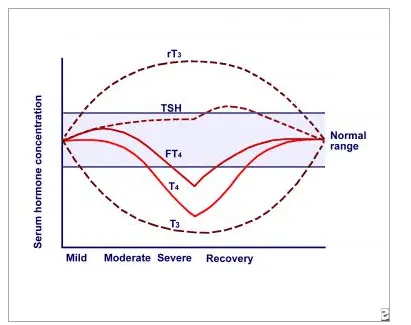
This image demonstrates the severity of the disease state on the X-axis and the concentration of thyroid hormones on the Y-axis.
Basically, it shows what happens to thyroid lab tests and when they become abnormal in relation to the severity of your disease.
What should stand out to you is the fact that reverse T3 (abbreviated as rT3) and T3 (abbreviated as T3) are the earliest markers of thyroid dysfunction.
They become abnormal much sooner than the other thyroid lab tests which makes these lab tests sensitive for diagnosing early thyroid problems.
What’s more, is that the difference between these two lab tests is more dramatic and pronounced than any other thyroid lab test.
For this reason, these two lab tests are critical in evaluating thyroid function.
You can determine the spread between these two values with a simple calculation which will give you the ratio of reverse T3 to free T3.
This ratio is called the free T3:reverse T3 ratio and is something that every thyroid patient should calculate using their own thyroid lab tests.
In an ideal world, you want your free T3 levels to be as high as possible (generally upper 1/2 to 1/3 of the “normal” reference range) and you want your reverse T3 levels to be as low as possible.
To calculate your free T3: reverse T3 ratio simply divide the numbers.
Your ratio should be > 0.20.
Any ratio < 0.20 indicates too much reverse T3 to free T3 and means that you should focus on either increasing your free T3 or reducing your reverse T3.
In order for this calculation to work, your units must be the same.
The units used in the United States for free T3 are pg/mL and the units used for reverse T3 are ng/dL.


Using the example above, if you divide 2.8 by 14.4 you are given a value of 0.19 which is less than that <0.20 level mentioned above.
If your free T3 and reverse T3 lab tests are not in these units, you can easily convert them and then make the calculation with some simple tools available online.
If you want a down-and-dirty way to assess your reverse T3 then you can also just look at the absolute value.
In most patients, a reverse T3 level of less than 15 ng/dL is ideal.
Values higher than this tend to start causing problems, especially if associated with a low free T3.
How to “Flush” Out Or Lower Reverse T3 Levels
So you’ve found out that your reverse T3 level is elevated, what now?
Your next step should be to try and drive that level as low as possible.
This is sometimes referred to as lowering reverse T3, treating reverse T3 pooling, or flushing reverse T3 out of your system.
These are all different names used to describe the treatment of high reverse T3.
What I want you to be aware of is that treatment should focus on
What you need to be aware of is that the treatment will focus primarily on the underlying cause (11).
Because of this, there really isn’t a one-size-fits-all treatment program that I can recommend.
I can and will give you recommendations for common causes, but you will still need to tailor that to your specific situation.
With this in mind, let’s talk about 5 different ways that you can lower reverse T3:
#1. T3 Containing Thyroid Medications
The fastest and easiest way to get rid of excess reverse T3 is with bioidentical hormone formulations that contain pure T3 thyroid hormone.
This would include medications like liothyronine, Cytomel, or sustained-release T3.
The reason this approach works so well is that when you give your body T3 hormone directly it automatically suppresses T4, which reduces the substrate that your body uses to create reverse T3.

In essence, you’re starving out the ‘food’ source your body uses to make reverse T3.
Naturally what will happen with T3 medication use is that your T4 levels will decrease, your free T3 levels will increase, and your TSH will decrease.
While on T3 thyroid medication it’s important to monitor reverse T3 closely, at least once every 6 to 8 weeks.
Typically within 2 months (and assuming your dose of T3 is high enough), your reverse T3 should drop to less than 10.0.
This is definitely the fastest way to reverse T3, but it doesn’t take into account the underlying cause.
So if you use T3 to reduce your reverse T3 without making any other changes, it’s likely that your reverse T3 will just jump back up once you stop taking T3 medication.
Is NDT Helpful for Reducing Reverse T3?
It certainly can help but there are a few things to realize if you want to use this class of medications to treat reverse T3:
- Each grain of NDT has about 38 mcg of T4 and 9 mcg of T3, which means that NDT still primarily consists of T4.
- In order to flush out the reverse T3, you must lower the substrate of T4 which generally means lowering your total dose of T4. In some cases, you may have to drop your NDT dose in favor of pure T3 medications.
- NDT dosing is static meaning you can’t individually alter the concentration of T4 and T3 unless you add additional thyroid medications.
You can still treat elevated reverse T3 with the use of Natural Desiccated Thyroid, but it’s generally not considered the best option.
#2. Supplements Can Enhance T4 to T3 Conversion
In addition to medications, every thyroid patient should also consider utilizing nutritional supplements.
The reason is simple:
The hypothyroid state sets the body up for certain nutrient deficiencies and since most thyroid patients are under-treated, most also have these deficiencies.
This is for 2 main reasons:
The first is that low thyroid states lead to low stomach acid which leads to decreased absorption of nutrients across the board.
The second is that low thyroid states also increase your risk of developing gastrointestinal imbalances which may further impair the absorption of minerals and nutrients.
You can check out this post here for more info about which supplements you should consider using and how to check to see what your body needs.
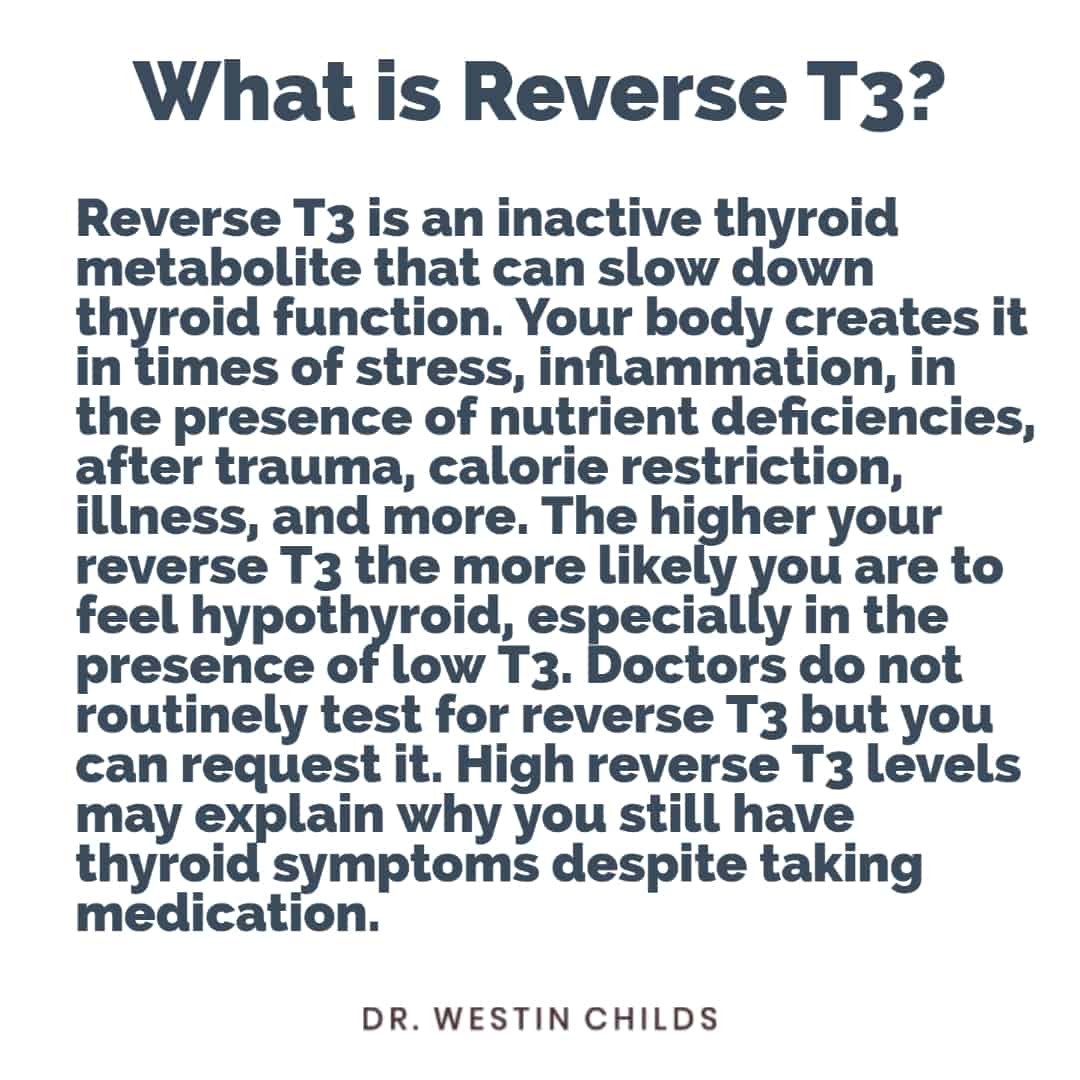
If you are trying to support the conversion of T4 to T3 with the use of supplements then there are a few you should pay special attention to.
The two primary supplements that you should focus on are zinc and selenium. Both of these supplements have been shown in some clinical studies (12) to increase T4 to T3 conversion, thereby potentially decreasing reverse T3.
In addition to zinc and selenium, I’ve also seen great success with guggulsterone or guggul extract.
We aren’t as concerned about supplements that promote thyroid hormone production (such as iodine and L-tyrosine), but they can still be helpful in some cases.
In addition to these supplements, you can also check out some natural therapies that have some good data behind their use as effective tools for naturally improving T3 levels and reducing reverse T3 levels.
#3. Reversing Hormones that promote T4 to Reverse T3 Conversion
As you are probably aware your hormones all work in tandem with one another.
This means that as one system slows down it may drag down other systems or cause an increase in other hormones to make up for the deficit.
This relationship holds true for thyroid hormones and their impact on leptin and insulin levels.
The link between these hormones is clear:
This is very important because hypothyroidism leads to a state where developing both insulin and leptin resistance becomes much easier.
Why do we care?
Because insulin and leptin resistance both cause inflammatory states which contribute to T4 to reverse T3 conversion.
Not only do they contribute to high reverse T3 levels but they also make weight loss very difficult.
Patients with high reverse T3 levels almost always have high fasting insulin and high fasting leptin levels.
In fact, I don’t think I have ever seen a patient with a reverse T3 greater than 25 with a normal insulin or leptin level.

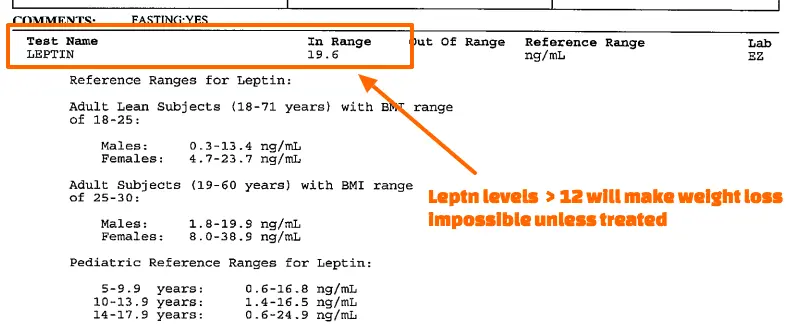

You can see examples from several patients above showing abnormal reverse T3 levels, high fasting leptin, and high fasting insulin levels.
These values may fall within the “normal” range but they are far from normal and will lead to symptoms of hypothyroidism, weight gain, and weight loss resistance.
Another big reason I want to talk about these hormone imbalances is that doctors don’t frequently run tests to check for either of them.
Doctors will routinely check hemoglobin A1c but rarely order fasting insulin and fasting leptin levels.
This means that if you have known thyroid conversion problems, it’s probably going to be up to you to request these additional hormone tests.
Treating and reversing both insulin and leptin resistance is very important for not only lowering reverse T3 but maintaining low levels over time.
To learn more about how to address these hormone imbalances please see the following case studies below:
- Victoza weight loss: 40 pounds lost with Victoza + LDN
- Byetta weight loss: 42 pounds lost over 3 months
- Hashimoto’s weight loss: 55+ pounds lost over 9 months with before/after pictures
These case studies provide a step-by-step walkthrough of how to approach leptin and insulin resistance including which medications, hormones, and supplements are most effective.
If you know you have insulin resistance then you can consider using these supplements to help lower your levels:
- Berberine: Helps reduce cholesterol, improve fasting glucose, and may help with weight loss.
- Alpha Lipoic acid: Helps sensitize the body to insulin and may help to reduce nerve damage in certain patients
- Chromium: Helps improve insulin sensitivity to cells and may help reduce cardiovascular disease in certain patients.
If you prefer the natural approach to treating leptin levels you can find more information here.
#4. Addressing Inflammatory Levels and “Cooling Off” Your Body
Everyone knows inflammation is bad for the body (15), but very few people understand how it makes things worse and, more importantly, how to address it.
Part of the reason for this is that the markers we use for inflammation are non-specific.
That means most of the time we know inflammation is present, we just don’t necessarily know what’s causing it.
Sure, in the presence of other abnormalities we might be able to take a guess, but we will rarely ever know with 100% certainty.
And this is a problem because inflammation is a known contributor to thyroid conversion problems.
We know that inflammation directly promotes the production of reverse T3 (16) by pushing your body down the T4 to reverse T3 conversion pathway.
So if you have high reverse T3 levels you need to be actively searching for sources of inflammation and treating the underlying cause.
You can easily test for inflammation by ordering these lab tests:
- CRP: You want this to be as low as possible but definitely < 1.0 for optimal thyroid function.
- ESR: Another non-specific marker of inflammation (17), for optimal thyroid function this should be < 10.
- Ferritin: Both a marker for iron stores and an acute phase reactant (18), this marker can be used in certain instances to help isolate non-specific inflammation in the body.
If you know that you have both high levels of inflammation and high levels of reverse T3 then you can safely assume that the inflammation is likely worsening your thyroid function.
The next step is to find where it’s coming from.
In hypothyroid patients it’s usually in these three places:
- Hormone imbalances (especially insulin and leptin resistance)- Please refer to the section above to understand how to both diagnose and treat these conditions.
- Undiagnosed gut imbalances like SIBO and SIFO – Both of these gut issues promote inflammation (19) in the GI tract and lead to increased intestinal permeability. You can find more about both here.
- Undiagnosed food sensitivities – These sensitivities promote inflammation (20) and further food sensitivities unless treated.
Bottom line?
If you have both high reverse T3 and elevated serum markers for inflammation you should be looking at the 3 main causes above and treating those if applicable.
If you don’t know where the inflammation is coming from you can still do some good by taking supplements designed to help reduce inflammatory levels and promote the “clean up” of breakdown products in the liver:
- Milk thistle + MSM: Designed to help improve liver function and promote proper phase 1 and phase 2 elimination of medications, supplements, and other products that need elimination in the liver. This combination may also help reduce AST and ALT levels (21)(if you have fatty liver).
- Omega 3 Fatty Acids: Omega 3 fatty acids can help reduce inflammation by reducing inflammatory cytokines.
- Curcumin: This well-studied herb activates PPAR-gamma levels (22) helping to reduce inflammation in the body.
- Quercetin & Bromelain: Particularly helpful in patients with digestive issues and those with chronic sinus/upper respiratory illness-like symptoms (post nasal drip and chronic stuffy nose).
This approach isn’t ideal but it’s better than simply ignoring it.
#5. Lifestyle changes to Balance Hormones and Promote Thyroid Function
Never underestimate the power of these 4 major areas when it comes to improving your thyroid:
- Getting 7-8 hours of quality sleep per night
- Reducing and managing your stress
- Daily low-intensity exercise and episodes of high-intensity exercise 1-3x per week
- A well-balanced diet full of real, whole foods
If you don’t practice these 4 basic things it doesn’t matter what you do, you won’t get better.
These are particularly important for those with high reverse T3 levels.
Remember that your body is a network of systems and hormones that all interact with one another.
When one system isn’t working properly, it will bring other systems down.
These areas are so important that many thyroid patients can see significant improvement in their thyroid symptoms by optimizing them without the need for additional treatments or medications.
The only problem is that most thyroid patients take them for granted and would prefer to take a supplement and call it a day.
Don’t fall into this trap!
Take that supplement if you want, but make sure you are also paying attention to your diet, exercise routine, sleep schedule, and stress levels.
Final Thoughts
Elevated reverse T3 is a serious issue for many thyroid patients and it’s a problem that is often ignored by many conventional doctors and endocrinologists.
The best way to evaluate your reverse T3 is by testing for it along with free T3 and free T4 levels.
To get a better idea of how reverse T3 is impacting your body, you can measure your free T3:reverse T3 ratio.
If your free T3/reverse T3 ratio is < 0.2 you have too much reverse T3 in your body.
The fastest most effective method for optimizing reverse T3 is with the use of pure T3 thyroid medication.
Now I want to hear from you:
Is this the first time you’ve heard about reverse T3?
Have you had your levels checked? If so, was it high or low?
What type of treatments have you tried to lower your reverse T3?
Have you tried medications that contain T3 like Cytomel or liothyronine? Did they work for you?
Leave your questions or comments below!
Scientific References
#1. https://www.ncbi.nlm.nih.gov/pubmed/3428867
#2. https://www.ncbi.nlm.nih.gov/pubmed/7355063
#3. http://www.ncbi.nlm.nih.gov/pubmed/12055988
#4. http://www.ncbi.nlm.nih.gov/pubmed/12055988
#5. https://www.nlm.nih.gov/medlineplus/infectiousmononucleosis.html
#6. http://www.ncbi.nlm.nih.gov/pubmed/11716958
#7. http://www.ncbi.nlm.nih.gov/pubmed/3049061
#8. http://www.ncbi.nlm.nih.gov/books/NBK28/
#9. http://www.ncbi.nlm.nih.gov/pmc/articles/PMC3475282/
#10. https://www.ncbi.nlm.nih.gov/pmc/articles/PMC5369873/
#11. http://www.ncbi.nlm.nih.gov/pubmed/16399020
#12. https://www.ncbi.nlm.nih.gov/pubmed/8157857
#13. https://www.ncbi.nlm.nih.gov/pmc/articles/PMC3608008/
#14. https://www.ncbi.nlm.nih.gov/pmc/articles/PMC3356957/
#15. https://www.ncbi.nlm.nih.gov/pmc/articles/PMC3492709/
#16. https://www.ncbi.nlm.nih.gov/pmc/articles/PMC3978663/
#17. https://www.ncbi.nlm.nih.gov/pmc/articles/PMC4653962/
#18. https://www.ncbi.nlm.nih.gov/pubmed/24549403
#19. https://www.ncbi.nlm.nih.gov/pmc/articles/PMC3099351/
#20. https://www.ncbi.nlm.nih.gov/pmc/articles/PMC1774228/
#21. https://www.ncbi.nlm.nih.gov/pubmed/17548789
#22. https://www.ncbi.nlm.nih.gov/pmc/articles/PMC2234255/


What is the best way to clear amiodarone-induced high reverse T3. I had to be on it a month.
Thank you!
Hi!! Great article I found this just on the right time. I got my labs yesterday
Rt3 34.5
Tsh 1.19
Free t3 2.9
T3 uptake 30
Free t4 1.03
T4 11.4
T7(FTI) 3.3
And my endo says that Im ok. I’ve been for a 1yr now in extreme pain, fatigue, hbp inability to loose weight and gaining without making any diet changes. Im really tired and stressed loosing my hope of feeling better. Im a single mother also working fulltime and I think I wont survive another year this way
I take WP Thyroid, my T4=1.16, TSH=1.79, FT3=3.2, TPOAB=11.7. RT3=20. I had been taking selenium but it raises my blood pressure
I have no thyroid. Can I still raise my Free T3 naturally?
Thanks
Hi Dr. Childs…
Can someone who is underweight have the RT3 problem? My ratio of T3 to RT3 is 15.7. I have cardiac sarcoidosis, an inflammatory immune illness. About a month ago I started having extreme jitteriness first thing in the morning, which dissipates through the day and is usually gone after dinner, but is worse again in the morning. I’ve been a poor eater most of my life (not bad food, just not enough food) and am wondering if it’s finally caught up to me at 55! (I am consciously eating better since my sarc diagnosis this past May.) My doc says my thyroid tests are “normal” (TSH is 3.96, T3 is 3.6, T4 is 1.36, RT3 is 23) but I have many of the symptoms you describe, except that I am underweight and can’t put weight on if I try!
Thanks for your help! 🙂
Hi Jean,
Yes, you can have conversion issues regardless of your weight.
I had a goitre that has been removed along with parathyroid glands that had some cancer cells detected.
I now use thyroid extract which has 20% T3 and 80 % T4.
I still feel cold and achy a lot of the time and attend an osteopath once a week to deal with trigger points that cause me chronic pain. I use anti inflammatory drugs every day as a result of the pain.
Can I start on supplements as the warning on the bottle says do not use with thyroid hormone medication?
It was hard enough to get my Dr to change to extract let along run the tests you suggest and living with chronic pain is not a dodle!!
Hi Chrissy,
The supplements can be taken in conjunction with thyroid hormone medication, they just shouldn’t be taken at the exact same time as they may interfere with absorption.
Hello and thank you so much for your posts! On the road to wellness (I hope), I have suffered from chronic candida, sibo and ALL that goes with it (intermittently caring for it which has led me to a greater state of dis-ease now), MTHFR as well and now my Naturopath found my RT3 levels are high and she started me on liothyronine. My biggest fear is what to eat? I am so restricted with the candida and sibo foods and then I was just reading I shouldn’t eat cruciferous veggies?! Is there a good diet guideline that I can follow that doesn’t cost me $200 for a coach to tell me? Any whole foods that I should truly avoid? I don’t eat fruit or any grains. Thank you
Hi Rebecca,
Glad you found them helpful!
A couple of thoughts regarding diet and health:
1. Restricting the amount of foods you eat may lead to tolerance issues long term, meaning you won’t be able to add back foods into your diet without side effects.
2. The exact macromolecule ratios and types of food you need to eat depends on your body, hormone imbalances, autoimmune issues, etc. so it really needs to be tailored to your body. What you should be eating changes over time as well and shouldn’t be static during the healing process.
For these reasons it’s usually helpful, and sometimes necessary, to get professional help.
I have hashi’s and I have been on every brand of NDT out there , I’m currently on Np thyroid at 4 grains a day, prescribed 5 a day but it seemed to be too much. I do raise by half a grain during my ovulation time of the month or I have worsening of symptoms. I was recently put on cardizem for heart palpitations and depakote for migraines. I have gained 40 lbs in a year and I am MISERABLE! I can’t stop either one of the meds due to the medical conditions (4-5 migraines a week with a hospitalization at least once a month for them). I’m not really sure what to do at this time . No one has ever checked the reverse t3 and I had to beg the family Dr 10 years ago to even check the “free’s” . I feel like I get a little weaker and more sore every day. I just need a direction follow. I was also diagnosed with Mast Cell Activation Disorder because I have recurrent anaphylactic reactions, hives and general allergic reactions. Could this be something to do with the hashi’s? I’ve done more research than my Dr’s and I just seem to be getting more confused by the conflicting information. Anything would help. Thank You in advance. Ps I’m the mother of 5 children and the need to be healthy and well is a must!!!!!
If I take my NDT at night, what time of day is beneficial to take Zinc and Selenium?
Hi Dr Childs,
My Rt3 is 25 and I have been on Topimnax for about the last 41/2 to 5 months. I was on 25mg and and on 37.5mg for almost 3 weeks of the total time. My bad estrogen is dominant also even though I’m post menopausal and barely have any. Will the Rt3 go back down naturally since i am off the topimax? If so how long will it take? Thanks so much
Read this article and switched from levo 100 (T4) to NDT 90 (Armour) and was able to lower my RT3 from a 34 to a 16 after 6 months. Super change! I have more energy, less headaches, and much less hair fall out now. My Free T3 stayed about the same (low end of normal) and my Free T4 dropped from high end of normal to low end of normal. I am now slowly increasing my NDT dose to around 105. So far, this is the best I’ve felt in years. However, my TSH is still .1 and it has always been low ever since I’ve been on thyroid replacement since total thyroidectomy 15 years ago. I just don’t care about the TSH anymore, but man, do the doctors sure place a lot of importance on it!
Hi I’ve been on 6 grains naturethroid and 50 mcg levothyroxine but hypo symptoms and weight problems won’t resolve. Last time I had my reverse t3 tested it was high at 49. Free t3 was 4.4 Do I have to do a t3 only protocol? If I lower my ndt dose will it help me lose weight?
I have been on NDT for three years and it basically stopped working for me, despite raising my dose higher and higher until I was on 8 grains a day at one point. I felt it was likely a reverse T3 issue, because of intense stress/pregnancy/surgery/illnesses in the past few years, so I requested that rT3 be added to my labs. It was high, as I suspected, but my endocrinologist dismissed it as the reason for my weight gain and hypothyroid symptoms because the ratio of rT3 to T3 was fine. Is it still an issue if rT3 is high (upper 20s) but the ratio is within range, and if so, should it be treated the same way as outlined here?
I have a reactivated Epstein-Barr virus. My RT3 is 28, Free T3 is 3.0, TSH is .727, fasting insulin is low at 2.0 and I have trouble gaining weight. I do have hypo symptoms like fatigue and dry skin, but I am not at all depressed. I seem to confound a lot of info on your site. I am healing EBV with rest,’diet and supplements. I take Tirosint 125 and just added 5mg Liothyronine. Sounds like I need to reduce Tirosint and increase T3. My Ferritin is low at 34. I was hoping that RT3 would go down on its own as I heal from the virus.
Thanks Dr Childs for all your information.
I have high RT3 with a poor T3 ratio.
If I go on a compounded T3/T4 medication to lower my RT3, can I stop the medication when I feel better and my ratios are optimal. Steve.
Do you offer vegan/vegetarian substitutions in your 60 day plan?
Hi. I read this article about the reverse T3. My PC doctor did check this and it showed high (25). My doctor said it’s only slightly high and not to worry about it. I used the calculation you have and it came to <20 (13). When I mentioned this the doctor dismissed it. I have most of the symptoms listed. A lot of that may come from having Lyme disease 11 years ago and not getting the first treatment until 9 months after the bullseye rash. Diagnosis wasn't made until 2 years later. I have had most of your listed symptoms after the Lyme infection. How do I find a knowledgeable doctor? My PC doctor does not show any interest in pursuing.
Thanks.
Hi JJ,
I wish I had recommendations on how to find a physician but currently I don’t have a reliable solution. I know some people in the past have had success with going to a compounding pharmacy and asking for a list of physicians that treat with bio-identical hormones, however which may be worth exploring.
Hi Dr. Childs,
If my reverse t3 levels are high due to stress over past 4 months, having never had thyroid problems before, can this be reversed and regular thyroid function return if taking T3 meds, supplements to help with conversion and addressing the underlying cause? Or is it more likely that I will always have thyroid dysfunction? Labs only became less than optimal after 3 months of chronic stress. Thank you.
Hi Lucy,
Provided the stress is minimal you can probably reverse the condition with the use of lifestyle changes, supplements, diet, etc.
It’s difficult to say for sure, but my experience suggests that minor dysfunction is usually relatively easy to “reverse”.
Hi could you please tell me are there some people that just can’t tolerate t3 .I have tried so many times and it gives me chest pains. Even when the t3 is really low. Also low heart rate.
Hi Desley,
Yes, some people simply can’t tolerate T3 medications.
I have been using a throyid protect supplement which is really working for me. My weight has stabilised my hair skin and nails have improved so much and I am not feeling the cold as Bart as I used to so very happy. I have a problem with myofacial pain syndrome. Is this attributable to my throyid function as would love to get on top of this also
Hi Chrissy,
Yes they may potentially be related, you can learn more about it here: https://www.restartmed.com/hypothyroidism-chronic-pain/
What does this lab work mean?
Tsh. 0.438
T4 1.02
Thyroxine total t4 8.3
T3 free 3.16
T3 reverse 44.6
How would you treat? Zinc..thank you
Great article!
Im 41 and fairly fit. I am active, do weights and cardio 3-4 times a week. I axed gluten/dairy/sugar and coffee, plus alcohol but still suffer from 5 autoimmune diseases. I have a great doc who pushed my armour to 5 grain 5+ years back and relieved 99% of my symptoms but they are slowly back, including cracked heels. My lipid panel is all green (I take a ton of supplements) but I feel hypothyroid again. What gives? Can all of this autoimmune stuff really wreck my T4-T3 conversion causing my Ft3 levels to go high? Recent saliva profile shows adrenal fatigue, high cortisol/ low dhea so im guessing that doesn’t help. Just wondering how often you see autoimmune patients w/ this issue and can we rebound?
Hi Doc,
First, thanks so much for providing sound, valuable information and resources. I’ve been dealing with rather sudden and unexplained weight gain over the past three months. I am a long distance runner, follow Dr. Sara Gottfried’s hormone reset protocol religiously (which worked tremendously for me post partum), making the weight gain even more of a mystery. I’ve seen several healthcare professionals who are quite dismissive of my thyroid tests. My reverse T3 is 17, my free T3 is low, my free T4 and TSH are also on the low end. I came across your article on reverseT3:freeT3 ratio, and it rang a bell. I’ve subsequently been dealing with mood changes, anxiety , brain fog. I really believe this might be what I’m dealing with. Flushing out Reverse T3 requires supplementation of T3, am I understanding this correctly? Are there other means in enhancing this process? I currently take your T3 conversion booster and thyroid/adrenal support.
Additionally, I’ve come to find out my serum ferritin is at 12, yikes!!! A problem I had dealt with post part but is clearly an issue again. I’m assuming this further complicates my thyroid issues???
Thanks again for your support and resources
I have struggled with my Hypothyroidism for about 15 years. Doctors have always had a hard time getting my levels to balance out. I recently had labs drawn and I’m actually on the hyperthyroidism side now something that has never happened in 15 years. My labs are as follows:
TSH: 0.05
T3: 8.3
Reverse T3: 26
T4: 10.7
Thyroid Peroxidase antibodies: 1
I was taking Natur-throid: 1 grain 3 tablets daily
Synthroid: 25 mcg 3 times weekly
Ecothyroid: 4 x week
Obviously this is to much for me and I will be seeing my doctor shortly to discuss results. Any thoughts on how to proceed.
Thank you for any advice
Very informative article. I just have my blood not sure if i can benefit from the flush
T4 1.38
TSH 3.80
IGF-1 171
Reverse T3 25.0
Thyroid Peroxidase 11
Tryroglobulin 1.6
Thank you
This article needs to be proofread and edited. There are several errors, such as this one: “Not only do they cause high reverse T3 levels but they also make weight gain impossible”. Shouldn’t that say’make weight LOSS impossible?’
Hi Jennifer,
Yes, you are correct! Insulin resistance and leptin resistance make weight loss very difficult. Thanks for pointing that out 🙂
HI! Thanks for this post.
What does CRP test stand for?
I would like to translate it to Spanish…
Thanks,
Ann
Hi Ann,
CRP stands for C-Reactive Protein but is often abbreviated CRP on test and lab slips.
My daughter has POTS & Hashimoto’s. She’s currently on 1 mg of LDN and WP Thyroid @ 4.5 mg. Her labs are: TSH < 0.14 ulU/mL (low), Total T4 15.2 ug/dL (high), Free T4 1.85 ng/dL (high), Total T3 275 ng/dL (high), Free T3 5.6 pg/mL (high), Reverse T3 44 ng/dL (high). Both Ab's are eleveated, TgAb at 253 & TPO at 165. Her Fibrinogen is high at 589 mg/dL, NT-proBNP is mildly eleveated at 182 pg/mL, Vit D is at 44 (normal range). Dr doesn't think she needs to lower WP Thyroid dose, I do. Dr. said she needs to reduce stress to lower RT3, I'm not convinced that is the problem although she's in college and that has caused some stress. I think she needs to reduce WP Thyroid and was hoping the Dr would prescribe some sort of T3 but no luck. How fast can you reduce WP Thyroid? or what's the protocol to reduce a NDT? Prior to starting NDT most of her thyroid numbers were in range, except Free T3 was on the low side of normal range and TSH was 3.5, unfortunately her RT3 wasn't initially checked. Thanks!
Hi Dr. Childs,
I’m at a good weight and my complete thyroid panel was in the normal functional range except rT3 was 45. I have a cancerous thyroid nodule that is going to be taken out and I did a n looong elimination diet for leaky gut treatment. Curious if you think the cancerous thyroid nodule could affect rT3 even if localized and contained?
Thanks,
Maymie
Hi Dr Childs
I have
Low FT3 1.5 pg/ml ratio 2.0 – 4.4
Low rT3 5.2 ng/dl ratio is 9.2 – 24
Low FT4 .33 ng/dl ratio 0.82 – 1.77
TSH 34.444
I am taking 15 mcg of T3 Paddock – just discontinued and switched to Sigma brand 3 days ago
I used a compounded T4 the last 2 months and hence my results.
I used 75 mcg of compounded T4 but I seem to react to the cellulose in the veggie cap.
Tirosint did not work as I have a pork allergy and they use porcine.
I now will switch back to Levoxyl using the 50 mcg tablets. I did not feel great on it either but my numbers were much better.
Do I need more or less T3 and T4? When increasing the dose I get restless legs, urinate a lot and do not sleep well at all. A dose of 50 mcg T4 and 15mcg T3 made me feel better but my numbers are out of wack. What shall I do.
Dr. Child’s,
I love reading your blog! You are very informative. I was able to get my primary doctor to rx cytomel for me as my T3 was very low with a normal TSH and T4. Well, I feel somewhat better, not not 100%. By far better than when I went in last. I feel I have a conversion problem. However, I had to continue taking levothyroxine with cytomel. My new labs now show a normal T3, ft3, a low T4, and a low TSH. I fear he will take me off of the cytomel as my TSH is showing hyper. I am not! My resting HR is 56, I have low body temp, and do HIIT 6x a week mixed with weight training. I am not rapidly gaining weight, however I am not losing any either. I am also not overweight therefore my doctor is not worried about weight. I have gained 20 lbs in the last year though on the same diet, if not a healthier diet now. My concern is that I need T3 Longer. I plan on taking a few of your articles to him to read. But I feel with a straight forward plan he is more willing to work with me. However because my T4 is so low now I am unsure of what I should ask for from him. Any suggestions would be much appreciated. If you were practicing I would def be back down to AZ.
Hi Westin,
Excellent info, big fan of your research and posts.
My Doctor said I have subclinical hypothyroidism because my TSH was 7.2. She gave me Levo 100 but most of the symptoms didn’t go away and one come up new MY BREATHING falls when I’m doing CrossFit or any exercise.
Even my THS reduce to 2.2, she said my levo dosage was ok and I didn’t need t3 med because t4 converts to t3 naturally (no way!! for what I read in this post I have high t3 reverse)
what worries me it the lack of air or air hunger. I just add t3 to my t4 doing a combo of t4=100 and t3=20, with no positive result, then I add more so t4=150 and t3=50.
If my reverse t3 is high and my air hunger still there; do I need to increase the combo dosage or only t3?
Thanks.
Hello Dr. Childs:
Thank you so much for your article. I have a lot of the issues you talk about, but rather than high TSH, I have low TSH. I am post-menopausal, and on a natural thyroid supplement. I do have the high reverse T3 levels, so would lowering them still be the best approach? When you talked about using bio-identical supplements such as liothyronine, you also mentioned that the TSH levels would drop, which is not something I need since mine are below low normal already. Thank you!
Hi Elaine,
It depends on why your TSH is low. If it’s low due to thyroid medication like T4 then you can reduce your current dose to add T3 without having a negative impact on your TSH.
I never had conversion problems with NDT in the past but an online thyroid group suggested that T3 might be better for me because I was also put on Cortef (hydrocortisone for my low cortisol). I started getting symptoms of too high T3 and want to switch back to NDT but now it’s converting to RT3 making me extremely hypo. Is it possible that it will start converting on its own again if I give it a week or so? Even the tiniest addition of NDT has caused me to be badly hypo. It’s only been a couple days but I have tried this a few times over in the last 2 weeks and same thing. Selenium and Zinc has not helped. How long before the Selenium and Zinc will begin converting? Is it immediately?
Hi Dr Westin I have just had my reverse t3 done 431.0 (230.0-2.200) t3 ratio 0.949(1.200-2.200) I have been told thats not bad. I have trouble converting t4 to t3. Cant take synthetic t3 as I have side effects My t4 keeps going up and down . Just wanted your opinion. Thanks Desley.
Doctor, can you please recommend a specialist in my area my endocrinologist I think is throwing her hands up after trying to treat me for 3 years. She’s now put me on the same medicine I came to her on Synthroid 3 years ago accused me of taking too much of my thyroid medicine and or taking some other Thyroid supplement in addition to the medicine she has prescribed me. I would like to find a new endocrinologist or thyroid specialist in my area who do you recommend I am On the Border in between Indianapolis and Cincinnati. Dayton Indianapolis and Cincinnati would be perfect locations for me. If you know of a specialist could you please reply thank you so much.
Hi Corey,
You can find more info on how to find a thyroid doctor here: https://www.restartmed.com/thyroid-doctor/
Hi,
When you speak of blood pressure meds being a cause of high RT3, would a diuretic fall into that category? My most recent RT3 lab was 19, and the previous one in October 2017 was 14. What about alcohol use? I also have two amalgam fillings, so I know that I’m also dealing with mercury. But I’ve had those since a child, so that wouldn’t explain the sudden increase. I’m trying to figure out why the increase. Any thoughts?
I had some kind of toxic exposure, that lead to the usual biomarkers of ‘biotoxin illness’. I’ve been detoxing, supplementing etc for almost 2 years. My main issue was sudden debilitating insomnia. I show High reverse T3. My environmental doctor attempted to treat me with a very low dose of T3…and it sent me crawling out of my skin. So, he made the assumption that my thyroid is absolutely not the primary issue. After more research, it appears I should have never tried the T3 without addressing my low adrenal function first. Do you hold the view that adrenals must be addressed before thyroid? Most docs I’ve seen think I’m ‘false’ hypo, as I don’t show multiple symptoms. Sleep meds make me feel worse and only work occasionally (likely lowering already flattened adrenal function). I am desperate to get to the bottom of what is going on.
Thank you for the very informative and much-needed information! Here are the results from last lab tests (I requested these tests.): Free T3 3.33 pg/mL, T4-Free 1.57 ng/dL, TSH 1.82 mIUL, Reverse T3 18 ng/dL, Thyroglobulin 0.2 ng/mL, Thyroid Peroxid 156 IU/mL. I currently take Levothyroxine 88 MCg and my doctor said my labs look fine and there is no need for T3 or NDT. I asked him what he thought about discontinuing Levothyroxine and he said it shouldn’t be a problem to experiment with discontinuing the medication since I’m on such a low dose. I want to discontinue this medication due to the side effects (bone density concerns). I changed my diet in the past year and lost 50 lbs by incorporating healthy fats, limiting carbs and removing sugar. In the last two months, I removed gluten from my diet. I was diagnosed with the thyroid condition 15 years ago shortly after the birth of my son. I believe that my body is totally different now and I may be needing a different approach. Your thoughts would be appreciated. Thank you!
Dear Dr. Childs: I LOVE your thorough and informative blog posts! This post seemed to cater to my exact condition, which is the “LOW Free T3 levels, HIGH Reverse T3 levels and NORMAL T4 and TSH levels.” Background: from 2004-2016 I was essentially the same weight besides pregnancy. Two years ago I started gaining weight, despite no change in diet or exercise. I only have one ovary and was tested as having essentially non-existent Progesterone levels. Last two years I’ve been on 400 mg of Progesterone daily. 2017 was a very low-energy year for me so it prompted me to have new blood work done. Beginning of March 2018, my lab results showed: My Free T3 is 2.7, Reverse T3 is 24.5, T4 is 1.34 and TSH level is 1.390. I’ve also had other lab tests done to give the bigger picture: Ferritin 31, Iron and TIBC 001321 is normal/ideal, Vitamin D low, Progesterone, and Estradiol normal. In March I began an extensive supplement regimen, which included zinc and selenium and added daily stress-relieving walks outdoors. As per my doctor’s orders: I waited until April to start the generic Cytomel. I started off slow and did experience some of a headache and jitty symptoms, but after two weeks those went away. I have graduated slowly up to 40 mcg of Cytomel, taken in three different doses throughout the day. I’m at a loss because I’m not doing too well on the liothyronine sodium. Although my energy levels are better while on the pill, I have to take it three times daily or my energy crashes after about 4 hours + I get extreme brain fog. Since starting liothyronine, I have gained three more pounds & I have procured a constant and usual amount of water weight around my stomach (so much so that it has prompted me to take two pregnancy tests–both negative–even though I have an IUD). Both for the weird energy-rollercoaster and the weight gain, I’m not feeling very happy with the liothyronine. Should I wait it out? Does it just get worse before it gets better or do you suspect there’s an additional issue? What would you recommend? Should I get my fasting insulin and fasting leptin levels checked? PLEASE HELP!
I live in Australia and there is no one here that will help me. My RT3 is 559. What can I do to naturally reduce this as no doctor will give me T3?
Hello,
As always, your article is very interesting.
From what value do you consider the RT3 too low and for how long?
My RT3 was 9 ng/dL in May 2017 and 5.5 ng/dL (9 – 24 ng/dL) in May 2018 with only 90 mg of NDT (FT3 = 5.5 pmol/L and 5.7 pmol/L).
Is it harmful to stay so long at low value of RT3?
What condition can cause a low R3?
Thank you
Adam
I just finished chemotherapy treatment (for breast cancer) just over 2 weeks ago.
As is apparently quite common, I managed to gain 10 pounds over the course of the 5 months of treatment.
During treatment, I walked for about 40 minutes, 3 times a week (as much as I could manage with the fatigue).
Since the treatment concluded, I’ve been walking every day as well as doing an additional hour of aerobic and body sculpting exercises every day. And yet, it seems I’m getting more and more bloated each day.
It finally dawned on me that perhaps my body isn’t assimilating my Synthroid (T4 – 850/week) and T3 (5 mcg/day – I take the T3 only in the morning).
I wonder if my metabolism/hormones were altered by the chemo and steroids.
Perhaps I should be taking my T3 twice a day, rather than once.
I forgot to mention, since finishing the chemo, I’ve switched to a very low-calorie diet, but it seems to no avail. My weight just seems to go up and up. Very distressing.
I hate to be going into surgery (for a double mastectomy) like the enormous balloon that I am. Cancer does indeed suck, in all aspects. 🙂
Hi Abby,
Both chemotherapy and steroids can interfere with thyroid hormone conversion (and potentially production). Cancer therapy also causes extreme stress on the body which can make the situation worse.
It’s a tough situation to be in, but the best thing you can do is try to optimize your thyroid medication.
thanks for your response!!! good to know that i’m not crazy and there’s an actual issue related to the chemo/steroids/stress. Here’s hoping my body recovers sooner rather than later!! thanks again!! 🙂
Hi,
I had my thyroid ablated in 2005 due to Grave’s disease (hyperthyroidism). It’s been a wild ride since then. I currently have “normal” thyroid labs, but I’m finding it impossible to lose weight. In fact, I started an exercise regimen and have gained 8 pounds. Fun times. I’m 38 years old and 20 pounds overweight due to thyroid fluctuations… and that’s before I gained the 8 pounds.
I’ve been reading a LOT of your articles and I’m trying to wrap my head around everything you’re teaching, so that I can work with my naturopath on truly getting my body back to normal.
I’ve been on T4-only (levothyroxine) for 13 years, 150 mcg for the past 9 years.
My labs: T3 is on the lower end of normal, T4 is on the higher end of normal, TSH is suppressed, and RT3 is just over 16. I only recently discovered the need to test RT3, so I don’t know how it’s changed over time, but I can say for sure that my labs over the years are consistently lower-end T3, higher-end T4 and low TSH. Therefore, every doctor wants to reduce my levothyroxine and then I end up feeling awful.
But now I’m seeing a naturopath and we’re trying to solve the puzzle. We are slowly reducing my T4; I recently went from 150 mcg to 137 mcg and now we’re jumping down to 112 mcg because I’ll be adding T3 (Cytomel) to the mix. We’re starting with 5 mcg daily and possibly adding a second 5 mcg dose in the afternoon, if I don’t react badly to the T3 (I have heart palpitations of unknown cause that came on suddenly (and never went away) after I tried taking NDT 2 years ago… not sure if it was an autoimmune response or if it was sensitivity to T3).
So, getting to my question (the long way ’round): What I don’t understand is how to properly titrate this. Do I keep reducing the levothyroxine as far as possible, assuming my body responds well to the Cytomel? Is the goal to eventually take T3 only, or is it vital to have T4 there as well (keeping in mind that I don’t have a thyroid… or much of one after ablation)? What lab results am I looking for?
Also, if I’m taking high amounts of T4, won’t I be making too much RT3 since I’ll have the T3 readily available (because of the Cytomel) and the T4 HAS to convert to something? What’s the protocol for reducing T4-only medication so you can add T3-only medication?
Hi Jenny,
In my experience, there is no substitute for a knowledgeable practitioner that can help guide you. I’ve seen patients attempt to do this on their own and, without the right knowledge or experience, it tends to not turn out well. I would put energy into finding someone to help if possible because treatment is very nuanced and individualized.
Thank you, this is very clear yet detailed. I good refresher for lay folks to gain direction.
Hi Lind,
Glad you enjoyed it!
I am so glad to have found your blog and this particular post. I have been taking Armour thyroid for years but have over the past year or so started feeling just terrible and only after requesting my doctor order a reverse T3 test found out mine was quite high. She tells me this is not a problem. The more I read, the more I think differently. I had gone on a six-month low cal diet last year and managed to get off 20 pounds. I’ve gained back 10 of that, am just exhausted all the time and can fall asleep at the drop of a hat. I feel as if someone pumped me up with a tire pump. How can I find a doctor my insurance will cover who thinks like you do? I am retired and existing on Medicare and Social Security.
Hi Teddee,
As far as I know, most doctors who think this way do not accept insurance because of all the restrictions and limitations. You may be able to find one but it may require long-distance travel.
Does cytomel increase estrogen in the body which could cause estrogen dominance = weight gain and puffiness?
Hi Sonja,
Cytomel typically does the opposite.
Thank you for your reply. If Cytomel is taken, I saw somewhere that you recommended to titrate the dose yet take the dose once a day.
I read that the body normally produces 4mcg of t3 every hour or so. What happens to the excess of Cytomel if taken in one dose?
Dr Childs,
Thank you for this in-depth, easy-to-follow analysis. I know this article is a few years old, but I’ve been desperately trying to understand something that has been going on with my own health and just came across it. A year and a half ago, I had a complete mental/physical collapse after a prolonged period of chronic stress and poor health management. Since that time, I have gotten on a path of healthy living–through diet, exercise, and sleep–but fatigue, depression, and serious brain fog have persisted. The depression itself has been abnormal, and I’ve been convinced there is a deeper physical issue. In particular, I’ve wondered if it’s thyroid related. All tests have come back in the normal range (though perhaps on the lower side) except for Reverse T3–an integrative doctor included it in my labs, and I got a result of 30 (just out of the normal range). My iron is also low (though not my ferritin) which I know plays a role in the t3 production. Anyway, I’m wondering, based on all this, is it worth pursuing a more in-depth look at thyroid imbalances? Is there something possibly here that can be a piece of the puzzle? I have some ideas of some more investigative, integrative doctors I can talk with, but I just wanted your thoughts on if this could be thyroid related. Thank you for your time and attention.
Hi Wes,
It sounds like your thyroid may be involved but you need to figure out if the thyroid is primarily responsible or if it’s secondary to some other issue, once you figure this out you can determine if you need to use thyroid medication or not.
Hi.
I’m a little late to this site, but someone for the love of God help me figure this out. I am a believer that we are all each different and have different numbers to our own “normals”. I am 43. At the age of 23 had Graves disease and the ended up doing RAI therapy due to the pills not working. I was extremely ill, so much so they thought it would take 1 year to go hypo. It took less than 6 weeks and came in the form of what appeared to be a heart attack and 26 pounds gained in one week eating lettuce and yogurt. It was not a HA, but my body quickly going the other way. So began the years, and i mean years of med altering. Synthroid is what i was given. After years of dosing, 300mcg is what I am on. I do not convert t4 to t3 well, I diagnosed this myself, and demanded a blood test to confirm. I am also on Cytomel 25mg. No doctor will listen to me. I feel awful. I am so tired. All. The. Time. Muscle and joint pain. I can not see well out of my right eye. depressed. Anxiety with OCD behavior with safety things. My bones hurt. Weight gain and I do not eat much at all. Every doctor I see says oh my, your on way to much medicine. They send me to U of M specialist. The professor himself went through my list of symptoms at me and said he goes by numbers and that I am on an obscene amount of meds and says he believes I have thyrotoxicosis. He’ll call with my blood work. oh and that i clearly ate way to much as 40 pounds in three months is too much. He didn’t call. I had to track him down. My results. “completely normal” and hung up. tears. I have periods where I am so exhausted I can not move. can not get out of bed. requested a neurologist. Do I have MS? runs in family. Nope. I don’t. But she, whose wonderful, ran a glucose test, as well as a tolerance test. fasting normal. 86. GTT. 53. Some kind of reactive hypoglycemia or diabetes or something. She referred to yet another endo. No apt til November 2018; went to my PCP, who’s a PA, and she ordered blood work I requested as I seem to be the only one, other than the neuro, who can’t stand me living life this way. My TSH <0.05. My T3 131 t4, It was normal. Last time I made her order Cytomel my t3 was 83 and I felt awful. I still have and feel extremely Hypo. I exist in life. Not live it. I also have low vit d, and b/12 was low normal, so i got scripts for that. CRP was 5.6. elevated. What in the world do I need to do. My PCP is willing to let me switch to Armour Thyroid. Is the med, Synthroid,(generic) which I’ve been on for 20 years making me ill? Not working? No clue to Reverse values. But I'm on meds so It should be ok. Help.
I am so frustrated with my thyroid. I have always been on armour thyroid or ndt with the exception of when I was pregnant. but recently my tsh went a little too low and my t3 little high (my resting heart rate was also high at like 95-100) and t4 too low on the armour. So I switched to 137 levo /5cytomel , then I had my dr switch me to brand synthroid. I felt ok. Still little tired, but when I went to her my numbers were ok but tsh slightly low at .001. So she lowered my t4. I blew up retaining water and I look like I gained ten pounds within weeks.( In the past I have found synthroid made me retain water but when I was pregnant had no idea lol ) I had her switch me to Tirosint now. I’m hoping this helps but the bloat and water retention I have is insane. I eat the same, work out hard 5-7 days a week I am sooo frustrated !!! I don’t know what to do. And am wondering if I should ask for these additional tests or for an increase in t3, but would they give an increase in t3 if my numbers are ok?