Dr. Westin Childs Blog Posts & Articles | Page 26
The complete guide to using Selenium to naturally enhance your thyroid

How To Use Selenium To Support Your Thyroid

Photo of author

Evidence-Based

Supplementing with selenium may provide a way to enhance your thyroid function in a natural way.  Whether you’ve heard of selenium before (or this is your first time), you’ll find all the information you need to get started with this micronutrient.  Today you’ll learn: Let’s dive in: Selenium & Thyroid Function Selenium is a micronutrient …

Read the Full Article

Conditions That Cause Thyroid Pain & What to do About Them

Conditions That Cause Thyroid Pain & What to do About Them

Photo of author

Evidence-Based

Believe it or not, most people who have thyroid problems never experience thyroid pain. This is both good and bad. Good in the sense that it’s an uncommon condition and bad in the sense that it’s never normal. If you’re experiencing pain in or around the base of your neck (right where your thyroid gland …

Read the Full Article

Thyroid cancer basics: Symptoms, prognosis, diagnosis and more

Thyroid Cancer Basics: Symptoms, Prognosis, Diagnosis & More

Photo of author

Evidence-Based

Cancer is a scary word and most of the fear associated with this word has to do with not understanding cancer.  If you can learn the basics of thyroid cancer, including what to expect with treatment and prognosis, then you may not be as fearful about your cancer.  This guide will teach you what you …

Read the Full Article

Pros and Cons of Hormone Pellets Side Effects & More

Pros and Cons of Hormone Pellets: Side Effects & More

Are hormone pellets the holy grail of hormone replacement therapy? Do they really provide you with a hands-off, low-maintenance solution to your symptoms? Not exactly, but there’s a time and place for them to be used. If you were to ask me, though, I would tell you there are plenty of other, better options available. …

Read the Full Article

T3 basics the test, the medication, the hormone

T3 Thyroid Hormone: What Your Doctor Isn’t Telling You

Photo of author

Evidence-Based

This is lesson #4 in my thyroid beginner series and today it’s all about the hormone T3.

The last lesson we discussed the value of T4, how it is produced, what it does, and how it influences your body. 

We’re going to do the same thing in this lesson but discuss the other (more active) thyroid hormone: 

Need More Help? Get My Perfect Thyroid Diet Meal Plan (+ Shopping List)

Join 200,000+ thyroid patients and get the plan by email right away.

What is T3?

T3 is the most powerful thyroid hormone that your body produces. 

If you were paying attention yesterday then you know that your thyroid gland, under the influence of TSH, produces T3 thyroid hormone directly. 

In fact, about 20% of the total amount of hormone that your thyroid produces is T3 (1).

This hormone influences almost every cell in your body, through nuclear receptors, and can be tested through routine blood work. 

Your doctor can also prescribe T3 as a medication directly. 

Later in this video and post, we will talk about why many people may actually need T3 medication to feel optimal. 

But let’s focus on T3 as a hormone first. 

T3 as a Hormone

T3 is often referred to as triiodothyronine, especially on lab work or in scientific studies. 

But don’t let this confuse you, because triiodothyronine is another name for T3 and both are referencing the same active thyroid hormone. 

You know that T3 is the most active thyroid hormone in your body, but how does your body get the hormone?

Through 2 main ways:

#1. Your thyroid gland produces it directly (20% or so)

#2. And through the conversion of T4 into T3 (2).

T3 then circulates through your body where it impacts nearly every cell, either on the surface of the cell or directly in the nucleus (3), to cause all of the positive benefits of thyroid hormone. 

T3 is responsible for helping your hair to grow, providing you with energy, helping you lose weight, lifting your mood, increasing your heart rate, managing your cholesterol, and so on. 

All of these benefits come from the effects of T3 on the cell. 

How do you end up with low T3?

Well, if we go back to the two main ways that we know your body produces T3 we can reverse engineer what can cause low T3. 

#1. Your thyroid gland isn’t producing ENOUGH of it.

Conditions such as hypothyroidism, Hashimoto’s thyroiditis, inflammation of the thyroid gland and obesity can all result in reduced production of thyroid hormone directly from your thyroid gland. 

A reduction in either T4 or T3 will lead to low T3 in your body. 

Why?

Because of reason #2:

#2. And/or you aren’t able to convert T4 into T3 adequately. 

The thyroid conversion is the process by which your body takes circulating T4 and turns it into T3, through certain enzymes (4), when it needs to. 

If you have a low supply or reservoir of T4 then obviously the amount of T4 that your body can draw upon to create T3 is limited and this may lead to low T3 in your serum (that you can test with lab work). 

If you can identify which issue is causing low T3 in your body then you can help direct your therapy and treatments. 

But just realize that regardless of the reason, if you have low T3 you will likely experience the symptoms of hypothyroidism. 

T3 as a Lab Test

T3 can be easily tested in the blood through two main tests:

#1. Free T3 (amount of unbound active thyroid hormone)

#2. And Total T3 (total amount of T3 in the serum)

Testing for T3 gives you an idea of how much function your thyroid gland has on your body because you are testing for the active thyroid hormone (compare this to T4 which is less biologically active (5)).

T3 is therefore probably the single most important thyroid test that exists (superior to even TSH) (6).

With this in mind, you will want to put a priority on your T3 and ensure that it is in the “optimal” range. 

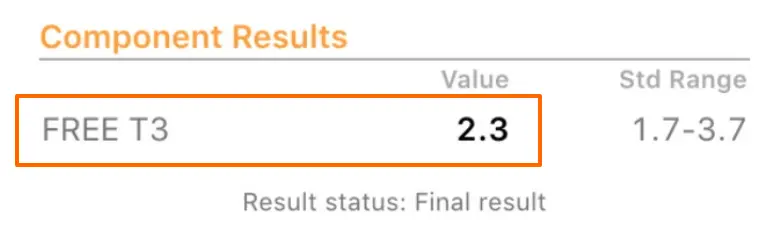
You can use the example below to illustrate the point: 
low-free-t3

In this example, the free T3 is measured at 2.3 with the reference range of 1.7 to 3.7. 

So, from a technical standpoint, the lab is measured in the “normal” range and this is probably what most physicians would tell you. 

But what they fail to realize is that most of your hormones operate on a spectrum ranging from zero function to optimal function and everything in between. 

You can still “function” with a sub-optimal T3 but you may pay the price of fatigue, hair loss, constipation, and weight gain as a result. 

It’s in your best interest, then, to ensure that it is “optimal” for your age. 

You do not want to compare your personal T3 to that of someone in their 80’s or 90’s, instead, you want to compare it to a healthy person that is age-matched to you (currently labs are not set up to give this information) (7).

The “optimal” value will vary from person to person but a safe assumption is that you want your free T3 value in the upper 50% of the reference range that you are given (reference ranges change based on the lab). 
join 80000 thyroid patients

In a perfect world, you would have tested your free T3 when you were “healthy” and have that as a comparison, but that’s incredibly rare. 

So, without this knowledge, you can assume that a healthy range is probably near the top of the range. 

In our example that would mean that the “optimal range” would be anything greater than 2.7 putting this patient at a slightly sub-optimal level. 

Another important point to mention is that your T3 should always increase if you are taking any type of thyroid medication. 

If your T3 doesn’t increase with medication then you need to take a look at conversion, absorption, or look into using a different type of thyroid medication

T3 as a Medication

T3 can also be used as a medication either by itself or in combination with T4 (and other thyroid medications). 

We’ll get into the various formulations of T3 below.

T3, because it is so powerful, tends to have more side effects when compared to T4. 

This doesn’t necessarily mean that you should avoid T3 medication but it does mean that it’s more difficult to dose correctly and this may be part of the reason that Doctors shy away from using it. 

T3 has a direct influence on your heart cells which can cause your blood pressure and heart rate to increase immediately after taking the medication. 

You may feel this sensation as heart palpitations and/or anxiety. 

These types of symptoms usually go away over time or as you adjust your dose and aren’t necessarily a reason to stop using the medication. 

It’s also important to realize that T3, like thyroid medication, is probably the most effective medication for helping with weight loss (8).

If you are struggling with weight loss, and you have thyroid disease, you need to take a close look at your Free and Total T3 levels (see examples above). 

Liothyronine & Cytomel

Liothyronine and Cytomel would be considered “immediate release” versions of T3 because they are usually rapidly absorbed into the body after ingestion. 

And because T3 has a short half-life, it’s not circulating around in your blood for a significant amount of time (9).

This may be an issue for some people who then opt to take more frequent, but smaller, doses throughout the day. 

This problem is largely solved with SR T3. 

SR T3

SR T3 is a compounded medication in which the active T3 hormone is bound to a “sticky” material which delays or slows down the absorption of T3 in your intestinal tract. 

This allows for a slow but steady stream of T3 into your body throughout the day. 

SR T3 is often preferred if you experience symptoms such as heart palpitations, anxiety, or headaches when using T3. 

One potential problem with SR T3 is that it may dramatically reduce the absorption of the dose that you take. 

For instance:

If you take 50mcg of SR T3, your body may only absorb some fraction of the total (such as 25mcg or 30mcg of the original 50mcg). 

This typically doesn’t happen with the IR T3s. 

NDT

T3 is also found in combination with T4 in medications such as Natural Desiccated Thyroid. 

Natural Desiccated Thyroid (or NDT for short) is dosed differently than other thyroid medications and is referred to as “grains”. 

1 grain of NDT contains around 38mcg of T4 and about 9mcg of T3. 

It’s better to use grains as a unit of measuring the potency of NDT because each formulation has a different set of milligrams which equals 1 grain. 

For instance:

65mg of Nature-Throid = 1 grain while 60mg of Armour Thyroid = 1 grain. 

Don’t let this confuse you though, just realize that NDT contains both T4 and T3. 

Because your thyroid gland (when it is healthy) produces around 80% T4 and around 20% T3 it makes sense to supplement your body with similar ratios. 

This may be why patients who start taking T3 medication often feel much better compared to when they were on T4 medications by themselves. 

Conclusion

T3 fits into the categories of tests, medication, and hormones all in one. 

Understanding what T3 does and how it works is critical to understanding thyroid function in the body because it is considered to do all of the “heavy lifting”. 

Getting your physician to test for T3 and to prescribe T3 medication can be difficult, but certainly not impossible

If you’re having trouble, don’t hesitate to try T3 support supplements, which can help your body naturally create more T3.

Between the two, you will be able to optimize your T3 status.

If you are struggling to get help, you can use this as a resource to help you find a knowledgeable physician

But now I want to hear from you:

Have you had your T3 tested? Were your levels optimal?

Are you currently taking T3 medication? How is it working for you?

Are you struggling to find a doctor willing to work with you?

Leave your comments below! 
#1. https://www.ncbi.nlm.nih.gov/pubmed/12915350

#2. ncbi.nlm.nih.gov/pubmed/6479377

#3. ncbi.nlm.nih.gov/pmc/articles/PMC329808/

#4. ncbi.nlm.nih.gov/pmc/articles/PMC3673746/

#5. ncbi.nlm.nih.gov/pmc/articles/PMC4699302/

#6. ncbi.nlm.nih.gov/pubmed/27700539

#7. ncbi.nlm.nih.gov/pubmed/27440910

#8. ncbi.nlm.nih.gov/pmc/articles/PMC3205882/

#9. ncbi.nlm.nih.gov/pmc/articles/PMC5167556/

T3 basics: what your doctor isn't telling you
Can medications cause thyroid problems

List of Prescription Medications That Cause Thyroid Problems

Photo of author

Evidence-Based

It’s estimated that at least 70% of Americans take at least one prescription medication and that up to 20% of Americans take five or more medications (1). We know, if you read this blog, that up to 15% of patients in the United States also take thyroid hormone (2) (a prescription medication) for thyroid disease.  When …

Read the Full Article

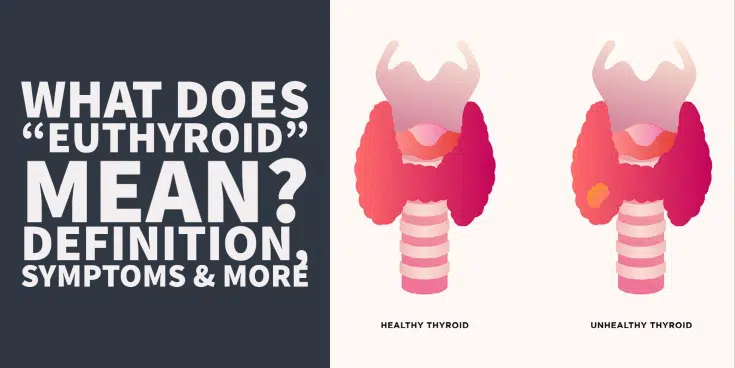
What does euthyroid actually mean? Definition, symptoms and more

What does “Euthyroid” Mean? Definition, Symptoms & More

Photo of author

Evidence-Based

If you have thyroid disease then understanding what euthyroid is incredibly important.  If you aren’t in a euthyroid state then you may suffer from the symptoms of hypothyroidism such as weight gain, fatigue, hair loss, dry skin, and more.  This article will teach you everything you need to know about this term including how to …

Read the Full Article

the best menopause test

The Best Menopause Test: How to Confirm you are in Menopause

Photo of author

Evidence-Based

Are you suffering from depression, weight gain, hot flashes, or menstrual irregularities? Are you approaching the age of 50?  If so, then these symptoms may be attributed to the decline in important sex hormones which is seen during the menopause transition.  You can easily identify if you are in menopause with some very simple tests.  …

Read the Full Article

Side effects of stopping thyroid medication abruptly

Side Effects of Stopping Thyroid Medication Abruptly (& Why it isn’t Safe)

Is it safe to stop taking thyroid medication? In most cases, if you stop taking your medication cold turkey, you will experience many negative side effects.  In this post you will learn more about why you shouldn’t stop taking your thyroid medication (without physician supervision), the side effects of stopping thyroid medication abruptly, reasons why …

Read the Full Article

Is Natural Desiccated Thyroid (NDT) the Best Thyroid Medication?

Is Natural Desiccated Thyroid (NDT) the Best Thyroid Medication?

Photo of author

Evidence-Based

Natural desiccated thyroid is a thyroid medication that comes from pigs!

This medication contains a more “complete” profile of thyroid hormones when compared to almost all synthetic thyroid medications out there. 

This has led many people to tout NDT as the “best” thyroid medication. 

In this article, we are going to explore this claim while also discussing the pros and cons of this medication. 

You’ll learn who should use this medication, who should avoid it, and the pitfalls of using it

Let’s dive in: 

What is NDT or Natural Desiccated Thyroid Hormone?

NDT or natural desiccated thyroid hormone is simply a type of thyroid hormone medication. 

It can be used to treat people who have low levels of thyroid hormone in their body from conditions like Hypothyroidism and Hashimoto’s thyroiditis. 

NDT is often claimed to be one of the “best” thyroid medications out there because it’s considered to be all-natural. 

So, with this in mind, let’s break apart what NDT actually is. 

First:

Where does NDT come from?

NDT is porcine-derived which means that it comes from pigs. (1) 

To get NDT, people must take the thyroid gland of pigs and desiccate or dry it out. 

From there it is standardized to a specific dose and contains 38mcg of T4 (the inactive thyroid hormone) and 9mcg of T3 (the active thyroid hormone) in each grain. 

Grain is just a way to standardize the dose of NDT between different brands. 

Natural desiccated thyroid also contains other hormones and prohormones such as other types of thyroid hormone (T1 and T2).

These hormones are not nearly as active as T4 and T3 but they are thought to play an important physiologic role in the body otherwise, (2) why would your body produce them?

Each grain of NDT contains around 76% T4 and around 23% T3 which is a ratio close to the 80% T4 and 20% T3 that your thyroid produces naturally when it is healthy. 

For this reason, and because it contains prohormones, and because it comes from a natural source, (3) many people believe it is one of the most complete thyroid medications out there! 

While this may be true, it doesn’t mean that it works equally well for every single person. 

Let’s dig into the basics of NDT and talk about why it may not be the best medication. 

Need More Help? Get My Perfect Thyroid Diet Meal Plan (+ Shopping List)

Join 200,000+ thyroid patients and get the plan by email right away.

Natural vs Synthetic Hormones

NDT is considered to be natural because it is sourced from a “natural” source, pigs. 

This sourcing of thyroid hormone is different from the approach used to create other formulations of medications such as Levothyroxine and Synthroid

Other medications are created in a laboratory from other basic compounds. (4) 

But you must always remember that ALL types of thyroid medications are considered to be bio-identical which is very important. 

Bio-identical means that the hormones you are taking by mouth are considered to be IDENTICAL to the hormones that your body produces naturally!

Where these medications differ is in the SOURCE. 

The source for NDT is from pigs while the source for Levo and Synthroid is other chemical structures. 

Some people believe that naturally sourcing thyroid hormone is superior to creating it chemically in a lab. 

From my perspective, there is no difference between thyroid hormone from a human or a pig when compared to thyroid hormone created in a lab

Both compounds look the exact same and function in a similar way in the body. 

Where they differ is in the other hormones and pro-hormones that come in NDT formulations. 

NDT Brands

Let’s take a second to discuss the various brands of natural desiccated thyroid hormones out there. 

There are several “well-known” brands and some less well-known brands. 

What you need to understand is that these medications do differ in the type of active and inactive ingredients in them but they all contain both T4 and T3 thyroid hormones. 

While it may not sound like the inactive ingredients make a big difference, they actually may be the reason that some people simply can’t tolerate certain types of NDT brands. 

For instance:

It’s not uncommon for someone to be on Armour thyroid but not feel well when switching to NP thyroid even if their dose stays the same. 

These differences are likely the result of how your body interacts with the inactive ingredients and how difficult it is for your intestines to break down and absorb the hormones in the medication. 

What that means for you is that if you don’t tolerate one type of NDT brand it doesn’t mean you won’t tolerate all of them. 

Instead, you may want to switch to a couple of different brands to see if you can find one that works for you. 

With that in mind, you can find a list of NDT brands below: 

Is NDT Superior to T4 Medication for Hypothyroidism?

It is largely felt by many online communities that natural desiccated thyroid is the single “best” thyroid medication out there. 

This logic has led people to believe that if you are taking NDT and it isn’t working for you that the problem must be with your dose and not with the medication itself. 

I’m not a fan of this approach and don’t believe that when it comes to your thyroid that there is a single “best” thyroid medication

A better approach is to always listen to your body while you look at other problems beyond your thyroid

Thyroid tunnel vision can lead you to believe that every problem you have is associated with your thyroid and that adjusting your dose is the solution to this problem. 

shop thyroid support supplements that can help you get back to feeling 100% again

This approach to management has led many patients to take higher than necessary doses of thyroid medication which can be dangerous! 

So, while NDT is a great medication, it’s certainly not the “best” or the only thyroid medication available. 

The type of thyroid medication that you use, and your dose, should be individualized to YOUR body. 

Natural Desiccated Thyroid for Weight Loss

One important note worth mentioning is that of weight loss and NDT. 

Some studies, like this one, have shown that switching to NDT does result in modest weight loss in certain patients. (5) 

This particular study took a look at 70 patients that were already taking T4 medication (Levothyroxine). 

This group of patients was taking this medication and despite having a normal TSH still had some symptoms of hypothyroidism. 

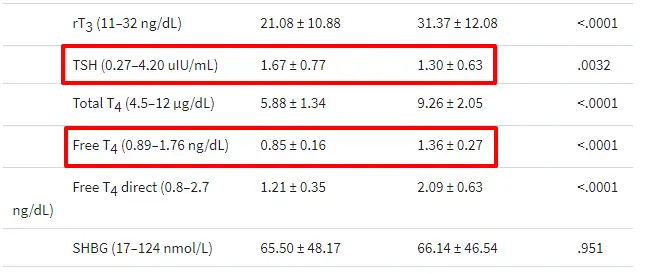
Thyroid lab tests in patients taking natural desiccated thyroid compared to T4

These patients were then randomized and given NDT (desiccated thyroid extract) for 16 weeks and then placed back on their old medication. 

During the period that these patients were taking NDT, they noticed around a 3-pound weight loss on average and roughly 50% of patients taking NDT wanted to stay on it. 

Not only did they lose weight but they also reported feeling much better on the medication in a subjective sense (based on their own opinion). 

3-4 pounds may not sound like a big deal to you, but when you realize that weight is incredibly difficult to lose when you have hypothyroidism this is actually a great feat. 

But does this mean that the weight loss is due to NDT itself or simply due to the T3 in the medication?

While we don’t have definitive studies, it’s logical to believe that the same results would have been achieved by simply adding T3 (in the form of Cytomel or Liothyronine) to existing doses of T4 in these patients. 

So, while NDT can certainly help you lose weight if you have hypothyroidism, don’t fall into the trap of believing that the weight loss is caused by the NDT itself. 

Instead, the weight loss is most likely the result of IMPROVING the total T3 and free T3 levels in your body! 

And this can be done with T3 medication of any type. (6) 

Common Problems and Symptoms when using NDT

Let’s talk about some of the problems associated with NDT use. 

The way that your body responds to NDT is going to be different from other people out there. 

This means that the type of NDT that you use, and the dose that you use, all may potentially lead to problems. 

What’s important is to focus on how YOU feel and how YOU tolerate the medication. 

By listening to your body, and by checking your thyroid lab tests, you can be certain that you are taking the right dose for your body. 

You can find a list of the most common problems that patients experience when they use NDT below: 

  • Some people take too much natural desiccated thyroid hormone – (7) Overdosing on NDT is a common problem because many people believe that higher doses will somehow improve their thyroid function. This leads to overdosing and symptoms of hyperthyroidism in some patients. This problem stems from “thyroid tunnel vision”.
  • Dosing is static which means you can’t tweak the T4 and T3 concentrations – NDT comes in a static dose of 38mcg:9mcg of T3. This means that you can’t individually adjust the amount of T3 in the medication without also adjusting the T4. You might do great on 38mcg of T4 but may need something like 5mcg of T3. If you fall into this category then you can’t adjust your medication. 
  • May lead to variations in free T3 & Free T4 levels – Some people experience very high free T3 levels and very low free T4 levels even when using low doses of NDT. This problem probably has to do with how each individual processes thyroid hormone in their body. 
  • Symptoms arise from the use of T3 which can be difficult to manage in some patients – (8) Some patients are exquisitely sensitive to even incredibly low doses of T3. These are patients that would probably do fine on certain types of T4 medication (such as Tirosint) but do poorly when they start even low doses of NDT. 
  • May be hard to break down for some patients in the intestines – This problem isn’t unique to NDT medications, but it’s worth considering if you have intestinal issues. Inactive dyes and fillers may cause reactions and may make the digestion of NDT difficult. 
  • May lead to immunogenic reaction (may not be ideal for patients with Hashimoto’s) (9) – There is a theoretical risk that taking a foreign pig-derived substance can “flare” up the immune system and worsen thyroid function in patients with Hashimoto’s thyroiditis. I don’t think this is a reason to completely avoid NDT if you have Hashimoto’s thyroiditis but you should be aware that it can happen.

Overdosing on NDT

Believe it or not but doctors have been using NDT since the 1950s!

Even back then it wasn’t uncommon for doctors to prescribe high doses of NDT (up to 3 to 8 grains per day) to patients. (10)

This was way before thyroid lab tests were created, so dosing was often based on the “Basal metabolic rate” which is a marker for metabolism. 

These doctors found that increasing the dose of NDT did result in modest weight loss by increasing the metabolism, but once the dose was lowered, the metabolism of the patient went back down to below-normal levels. 

This is as relevant today as it was back then. 

Currently, many people believe that by simply increasing their dose of NDT that they will finally feel better and relieve their symptoms. 

This happens frequently in patients who are suffering from weight gain. 

This leads to higher and higher doses of NDT which dramatically suppresses the TSH and temporarily helps with weight loss. 

But the unintended effect is that it may also cause long-term harm because of the high dose of NDT being used. 

Studies dating back to the 1950s showed that if you are responsive to NDT you only need a small dose (usually 1-2 grains) to improve your symptoms and improve your metabolism. (11) 

If you are still feeling symptomatic at that point then some of your symptoms are likely related to some other problem or some other hormone imbalance!

You can avoid these potential negative side effects by using only the appropriate dose and by monitoring your thyroid lab tests in the process. 

Who should use NDT

NDT is a great medication and many people out there stand to benefit from its use. 

I’ve compiled a list of just some of the patients that tend to do the “best” on this medication below: 

  • Those who have failed T4 medication – If you’ve been on T4 medication such as Levothyroxine or Synthroid and you just aren’t feeling well after 6-8 weeks then it may be time to consider a T4/T3 combo medication. 
  • Those with low free T3 levels (usually need a T3 medication) – Up to 15% of the population suffers from thyroid conversion issues which means they don’t convert T4 into T3 as well as other people. If you fall into this category you may have a “normal TSH” but your free T3 and total T3 levels may be lower than normal. If you fall into this category then adding T3 (from either NDT or Liothyronine) may help bring these levels up and help you feel better. 
  • Those who are post-thyroidectomy – Your thyroid (when functioning normally) produces around 80% T4 and around 20% T3. If you don’t have a thyroid, because it was removed or destroyed, then it makes sense to supplement with thyroid hormones close to this ratio. Most post-thyroidectomy patients take only T4 medications (so 100% T4) which do not contain T3. Some of these patients don’t feel well despite having a normal TSH. Taking NDT can provide your body with T3 in a ratio that is close to what your body produces naturally and may help those without a thyroid. (12)

This is not an all-inclusive list but it can help get you started! 

Conclusion

Natural desiccated thyroid is a thyroid medication that contains both T4 and T3. 

Because of this, it may be one of the better thyroid medications (but not the best!) out there. 

If you have thyroid issues and are struggling with low free T3 levels, weight gain, and/or other symptoms despite having a normal TSH, then this medication may help you

When using it be careful to watch for side effects such as anxiety, heart palpitations, or hot flashes which may indicate that your dose is too high. 

Now I want to hear from you:

Are you taking NDT? Is it working for you?

Are you not tolerating NDT?

Is it causing negative symptoms?

If so, leave your comments or questions below!

I’ll do my best to respond to each comment. 

Scientific References

#1. https://www.ncbi.nlm.nih.gov/pubmed/10365676

#2. https://www.ncbi.nlm.nih.gov/pmc/articles/PMC4272398/

#3. https://www.ncbi.nlm.nih.gov/pubmed/15253676

#4. https://www.ncbi.nlm.nih.gov/pmc/articles/PMC4146262/

#5. https://www.ncbi.nlm.nih.gov/pubmed/23539727

#6. https://www.ncbi.nlm.nih.gov/pmc/articles/PMC5965938/

#7. https://www.ncbi.nlm.nih.gov/pubmed/29942726

#8. https://www.sciencedirect.com/science/article/pii/B9780323189071000883

#9. https://www.ncbi.nlm.nih.gov/pubmed/9545109

#10. https://www.ncbi.nlm.nih.gov/pmc/articles/PMC1642898/?page=1

#11. https://www.ncbi.nlm.nih.gov/pmc/articles/PMC4980994/

#12. https://www.ncbi.nlm.nih.gov/pubmed/23072197

are natural thyroid medications really better
0