NP Thyroid Facts: What you should know before using it

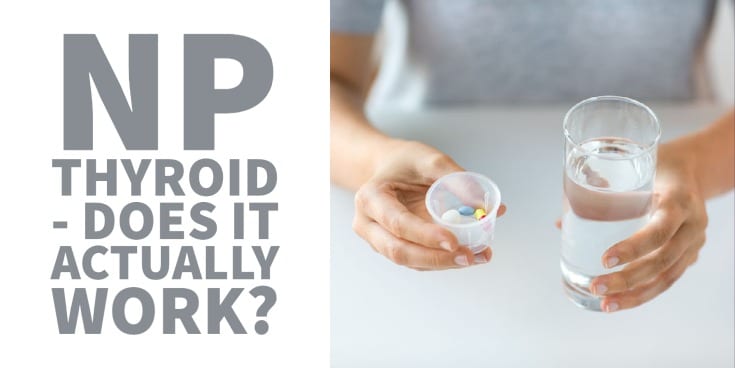
NP Thyroid Facts: What you should know before using it

Key Takeaways

  • NP thyroid is a natural desiccated thyroid medication that contains both T4 and T3, putting it in the same class as Armour thyroid and Nature-throid but with its own unique characteristics.
  • Understanding the differences between NP thyroid and other NDT formulations is important because recent reformulations of other brands have made some less reliable.
  • NP thyroid can be a good option for patients who need both T4 and T3 in their medication, especially those who have not responded well to levothyroxine alone.
  • The ingredients, fillers, and inactive components of NP thyroid differ from other NDT brands, which can matter for patients with sensitivities or absorption issues.
  • Before switching to or starting NP thyroid, make sure you understand how it compares to other options in terms of cost, availability, and formulation so you can make an informed decision with your doctor.

If you don’t know much about NP thyroid then you are in the right place. 

We are going to be talking about FACTS that you should know prior to using this medication. 

If you don’t know what NP thyroid is then let me fill you in.

NP thyroid is a type of natural desiccated thyroid medication that is used to treat LOW thyroid function. 

It falls within the same class as Armour thyroid and Nature-throid but it is different and unique. 

Learning and understanding more about NP thyroid is important nowadays because there have been several changes and reformulations to other brands of NDT making some less reliable. 

This means the thyroid medication landscape has changed and you should be aware of what separates these medications from each other so you can find out what YOU should be using. 

5 NP Thyroid Facts you should know (before using it)

NP thyroid, while not necessarily a “new” medication, is still somewhat less known compared to other more popular brands of NDT

Below you will find what I think are the MOST important things you should know about NP thyroid (preferably before using it). 

These facts range from information about the ingredients found inside of NP thyroid, how it compares to other thyroid medication formulations, why it’s good for weight loss, and how it compares in terms of cost. 

Let’s jump in…

Need More Help? Get My Perfect Thyroid Diet Meal Plan (+ Shopping List)

Join 200,000+ thyroid patients and get the plan by email right away.

#1. NP Thyroid Is Considered An NDT Formulation

The first thing you should know is that NP thyroid is an NDT formulation. 

NDT, as I mentioned earlier, stands for natural desiccated thyroid and refers to an entire GROUP or CLASS of medications. 

Medications that fall into this group are all created in the same basic way. 

They all contain similar active ingredients (we will touch on these in a minute) but they differ in their INACTIVE ingredients. 

These inactive ingredients, as you will soon find out, can make all of the difference for certain people. 

We don’t want to forget about the active ingredients, however, because they are also important (probably the most important). 

So what is NDT? 

NDT is a way of creating medication from certain animals (usually pigs). 

It is created by taking thyroid glands from pigs (usually) and drying them up and then desiccating them (smashing them up into tiny pieces) and then standardizing the HORMONE content in each ‘grain’. 

This is then formulated into a tablet which is then provided to you as the patient from a pharmacy. 

Each grain of NDT (which includes NP thyroid) contains the same active ingredients of T4 and T3 (both of these are thyroid hormones). 

But NDT also contains additional ingredients which are VERY beneficial. 

These additional ingredients include calcitonin (a hormone secreted from the thyroid gland), T1 thyroid hormone, and T2 thyroid hormone. 

These ingredients may not sound like much but they are actually a big deal. 

No other thyroid medication contains these ingredients (unless they are in the same NDT class of medications)!

The medications you are probably aware of (like levothyroxine and Synthroid) contain only ONE thyroid hormone which is T4. 

This is what separates NDT brands and formulations from other thyroid medications (and part of the reason why they are so special and effective). 

Unfortunately, what sets them apart is also what makes doctors hesitant to recommend them. 

Many doctors believe that it is somehow negative or a problem that the hormones are derived from an animal. 

They think this even though the hormones are BIO-IDENTICAL or BODY-IDENTICAL (meaning they are an exact match to those that your thyroid gland produces naturally). 

NP thyroid falls into this class of NDT medications which means it has all of these beneficial properties. 

#2. Armour Thyroid & NP Thyroid Are Not The Same

The next thing you should understand is that even though both NP thyroid and Armour thyroid are BOTH medications that fall into the NDT class they are NOT the same

I repeat; they are NOT the same medication. 

What does this mean?

It means that certain people will do better on NP thyroid and others will do better on Armour thyroid. 

It does NOT mean (though it may) that you can switch to one from the other and back and forth and not experience any issues. 

This does happen but it is typically the exception rather than the rule. 

So how do these medications differ?

They differ in their INACTIVE ingredients. 

Remember:

I already said that NDT medications have several things in common but where they differ is in their inactive ingredients. 

And these inactive ingredients can make all of the difference, at least for some people. 

You can find a complete list of ingredients for BOTH medications below. 

COMPLETE list of ingredients found within NP thyroid:

COMPLETE list of ingredients found within Armour thyroid:

  • Triiodothyronine
  • Thyroxine
  • Calcium stearate
  • Dextrose
  • Microcrystalline cellulose
  • Sodium starch glycolate
  • Opadry white
  • T1, T2, and calcitonin

The first thing you should see is that NP thyroid has exactly 1 fewer ingredient than Armour thyroid making it slightly more “clean”. 

I am using clean in the sense that it contains FEWER inactive ingredients and dyes. 

But you can also see that they are, in fact, quite similar. 

The main difference is that Armour thyroid contains Opadry white and cellulose while NP thyroid contains maltodextrin (1) and mineral oil. 

Again, these minor differences may not sound like a lot but they can actually be the difference between whether your body absorbs and uses the medication or it doesn’t. 

If one is not working for you don’t be afraid to switch between them! 

#3. NP Thyroid Is Better (Probably) Than Levothyroxine & Synthroid

What about the difference between NP thyroid and levothyroxine or Synthroid?

Is NP thyroid better?

And I think the best, and easiest, way to say this is…

Most likely, yes, and probably. 

A bit ambiguous, I know, but the truth is that MOST patients who switch to NP thyroid from levothyroxine will probably prefer this medication over what they were previously using. 

How can I make such a statement?

Well, I have my own personal experience to draw from but I also have research studies to draw from as well. 

From these studies (1), we know that approximately 50% of people who switch from levothyroxine to DTE (desiccated thyroid extract – another way to describe NDT medications) prefer the DTE or thyroid extract. 

shop thyroid support supplements that can help you get back to feeling 100% again

This doesn’t GUARANTEE that it will happen to you, after all, there are about 50% of patients didn’t notice a difference. 

But I would argue that doses being equal, you will most likely do better on NP thyroid over levothyroxine. 

And the reason is simple:

As I mentioned earlier, NP thyroid contains BOTH active thyroid hormones (T3 and T4) as well as minor amounts of the lesser active thyroid hormones T1 and T2. 

The net result is that most people who make the switch not only feel better but also experience more energy and slight weight loss. 

If you are thinking about making the switch then I would recommend that you go ahead and give it a try. 

But, before you do, you should be aware that MOST doctors tend to underdose NDT medications and this DOES impact how you feel about it. 

It’s not fair for you to switch from a high dose of levothyroxine to a small dose of NP thyroid and then to make your assessment on whether or not it works based on that experience. 

That’s why I said that all things being equal (meaning your dose) you will probably prefer NP thyroid. 

But in order for that statement to be true, your dose MUST be aligned. 

You can learn more about converting between NDT and levothyroxine in this detailed guide which I explain how to actually do it. 

#4. NP Thyroid May Help You Lose Weight

Another question that people frequently ask is whether or not NP thyroid will help them with weight loss. 

And I kind of already alluded to the answer above, but the answer is yes, it has the potential to help with weight loss (more so than levothyroxine). 

Making the switch doesn’t guarantee that you will lose weight, however, as that depends on many more factors than just your medication. 

But it does provide much more of a chance than run-of-the-mill medications such as levothyroxine and Synthroid

The key here is that it contains BOTH active thyroid hormones including the MOST active thyroid hormone T3. 

T3 is what is responsible for managing your metabolism, helping provide you with energy, and helping you burn more calories. 

The higher your T3 is the more likely you are to lose weight. 

I mentioned earlier that there were studies that showed that patients who switched from levothyroxine to DTE preferred the switch. 

Well, one of the reasons was because people who switched experienced weight loss in the process! 

And this weight loss occurred without the use of exercise/dieting, etc. 

It just happened naturally with the change in medication. 

Again, the reason for this is most likely because NP thyroid contains T3 whereas levothyroxine and Synthroid do NOT. 

If weight loss is high up on your priority list AND if you are feeling poorly on Levo/Synthroid then it would be wise to consider making the switch to NP thyroid. 

But remember:

Weight loss on NP thyroid will be dose-dependent

You can’t expect to make the switch and shed pounds if your doctor underdoses you during the transition. 

#5. NP Thyroid Is (Relatively) Affordable

What about the cost?

Is NP thyroid affordable?

Well, actually, yes it is, especially when compared to other formulations of NDT. 

In my experience (and based on pharmacy prices) NP thyroid is usually the cheapest of ALL NDT thyroid medications. 

Again, this isn’t a hard and fast rule as your mileage may vary but for most pharmacies this is true. 

Why isn’t it always the cheapest?

How To Tell If It's Really Your Thyroid: Get My Hypothyroid Symptoms Checklist

Get the PDF. Check off your symptoms. Find out in 60 seconds if it's your thyroid (or something else).

You have to remember that pharmacies are just third-party sellers of prescription medications and they are in the business of making money. 

Most people don’t realize that pharmacies will set their own prices and those prices can vary drastically from location to location even among the same type of pharmacy. 

For instance, a CVS pharmacy 2 miles away from you can charge more than a CVS pharmacy 10 miles away. 

But it’s up to you to figure out which one is the cheapest and to do that you need to do a little bit of research. 

You should also be aware that it can sometimes be cheaper to pay the cash price instead of the price that your insurance wants you to pay. 

I know this goes against everything you’ve probably ever heard but it is absolutely true. 

If you are ever picking up a medication you should always ask your pharmacist or pharmacy what the cash price is for the medication WITHOUT using your insurance. 

Your pharmacist may give you pushback on this but you would be surprised to know that, in some cases, the cash price is actually cheaper than your insurance price. 

Don’t just assume that your pharmacy is doing these calculations for you and giving you the best deal. 

Don’t forget that you as the consumer have the option to shop around! 

Here in Arizona, the cost for NP thyroid (cash price) ranges from around $20-$30 (depending on which pharmacy you use). 

You can compare this to the Armour thyroid cash price which is often $30 to $50 per month. 

I often recommend that patients use a cash coupon service such as goodrx.com which can help you price out prescriptions from pharmacies near you. 

Should You Use NP Thyroid?  

So, what’s the verdict?

Should you use NP thyroid or should you look for something different?

My recommendation to you is that if you are feeling poorly or if you feel that there is significant room for improvement in your health and your symptoms then YES you should consider a TRIAL of this medication. 

I’m a huge advocate of using multiple thyroid medications to try and find what works for YOU before you settle down on one. 

I have personally run patients through 5+ thyroid medications before we land on one that works for them. 

It can be frustrating to do this but it’s the best way to find out what works for you. 

Don’t be afraid to give NP thyroid a try if you are using another brand of NDT such as Armour thyroid or Nature-throid. 

Lastly, there have been reports that NP thyroid has changed its formula and that it is no longer working. 

While it may true that some of the suppliers have changed which may influence the inactive ingredients, the primary ingredients remain unchanged. 

The FDA regulates the concentration of hormones found within medications so the T3 and T4 concentrations cannot be altered in these medications (at least not without telling everyone). 

What’s more likely is that the INACTIVE ingredients have been slightly altered which impacts certain individuals. 

But NP thyroid still certainly has the potential to work and still does work for many people. 

Now I want to hear from you:

Are you currently using NP thyroid?

Is it working for you? 

Do you want to switch to NP thyroid?

Which thyroid medication are you currently taking?

Leave your comments or questions below to keep the conversation going! 

Scientific References

#1. https://www.ncbi.nlm.nih.gov/pmc/articles/PMC4940893/ 

#2. https://www.ncbi.nlm.nih.gov/pubmed/23539727

np thyroid or levothyroxine, which should you use
Dr. Westin Childs

Dr. Westin Childs, D.O.

Thyroid specialist and supplement formulator

I left traditional clinical practice to work on thyroid problems full time. I research and write everything on this site myself, and I formulate the supplements I recommend, now used by more than 100,000 thyroid patients. You can read why I do this if you want the longer story.

P.S. Here is how I can help you right now:

Follow along:

167 thoughts on “NP Thyroid Facts: What you should know before using it”

  1. I had my cancerous thyroid removed in 1996. I was on 200 mcg of Synthroid or levothyroxine, dropping to 137 then 125, since then. My thyroid levels of TSH suddenly started bouncing all over. I started seeing a Nurse Practitioner who specializes in endocrinology. She started me on 60 mg NP thyroid. I have lost 6 pounds in a week and a half, eating ice cream most days. I feel more normal now, after all these years.

  2. I have been taking NP thyroid since May. After 4 weeks my thyroid levels were quadrupled in blood work. The doctor wanted to double the dose to 60mg. Is this normal to increase dosing that soon? Wouldn’t the meds cause the levels to increase,
    ?

    • Hi Valerie,

      Every provider is a little bit different. I typically wouldn’t increase the dose that soon but, depending on the circumstance, it may make sense. It’s hard to know without more information of the variables and history of the patient.

      But, yes, if you increase the dose it will increase your thyroid levels further.

    • Hi Nadine,

      I’ve seen conflicting information on that. It doesn’t appear on the official ingredient list but some sources say it may be in the capsule coating. I don’t have an answer right now but if you find out please let me know.

  3. Just switched from levothyroxine to NP Thyroid. I will be interested to see if there is a difference in how I feel! Thanks for the information.

    • Hi Donna,

      Happy to help! Please note that thyroid medications are all dose-dependent. So whether or not it will work will depend on whether or not you are on the right dose. Most doctors underdose patients when they convert them from levothyroxine to any NDT medication like NP thyroid. You can learn how to make this conversion correctly here: https://www.restartmed.com/thyroid-medication-dosage-chart/

  4. I wish I had found you sooner, Dr. Childs, but it’s never too late. I have PCOS and was prescribed NP Thyroid. Have not started it because I don’t feel certain about it. My main concern is that I will react to it, fast heart rate, etc… Is this something that is common? What if I don’t do well, may I just stop taking it? My doctor is very confident and stands behind NP Thyroid. I am the nervous one.

    • Hi Debi,

      It can cause those symptoms but they are uncommon. As far as medications go, thyroid hormones are quite safe as long as they are dosed correctly.

      • Hello Dr Westin Childs
        I was just switched from Levothyroxine to NP thyroid. I was on levothyroxine for 15 years and my levels have always been within range.. which we all know mean nothing when it comes to how we feels. However I took the NP for 3 days and I thought I was going to have a heart attack.
        I was on 125 mg of levothyroxine and they switched me to 30 of the NP..
        I felt fine the first day, the second day felt a little short of breath and funky and the third day I almost called and ambulance I felt so weird.
        Would these symptoms be indicative of too much or too little of the NP? My prescribing PA is telling me I should take 90 and I will feel much better.. this seems off to me.
        Last bit of info I am treated for hashimotos..
        Would you recommend just going back on levothyroxine?? Please advise..

        Thank you so much,
        Misty Thornton

  5. I took naturethroid for years with great results. When it was not available, Kaiser Permanente switched me to Armour. I’ve done well on 60 mg dose. Now, without any notice, I was sent NP thyroid. I am assuming, because of the cost. I am very nervous about switching over as I am very sensitive to fillers. I have Hashimotos and had terrible reactions when first put on thyroid medication and given levothyroxine. I read your information here about Armour versus NP and all of the comments in this thread mentioning issues with the fillers in NP thyroid, and am wondering if that is still an issue.

  6. I was on Synthroid 112 mg . I convinced my Dr. to switch to NP thyroid. He prescribed me 60 mg NP thyroid which is much lower than I think should be. I menage to buy supplies for 3 months and right now I’m cutting the pill on a half and my dose is 90 mg. Can you please tell me what is the right dose of Np thyroid for me because my DR. told me that he can’t find anywhere how to calculate the dose of NP thyroid? When I higher my dose of medication I feel much better. Thank you

    • Hi Maja,

      Unfortunately, there really isn’t a way to find out how much thyroid medication any one person needs without some element of trial and error. There are some ways to guess how much a person might need based on body weight, but they aren’t very accurate or helpful which is why your doctor is probably having a hard time finding them. It’s often better to just figure out how much thyroid medication you need based on your lab tests.

  7. I’ve been taking 60 mg NP Thyroid for a little over a year. I have finally lost weight and feeling better after a few years of not with unexplained weight gain but my hair has been shedding and is so thin now. My Dr has tested me and has not found any deficiencies and my thyroid levels are all good. Can the hair loss be from the NP Thyroid ?

    • Hi Denise,

      It could be, yes. All thyroid medications have the potential to cause hair loss. There are also many other contributing factors to hair loss, though, and they may or may not be picked up by standard lab tests.

  8. I’ve been taking 60mg daily of NP Thyroid for about 3mon and after doing some research have come to the conclusion that I’m reacting to the maltodextrin. Have been putting up with bloating, gas and a skin condition with itching and red scaly patches that won’t resolve. Going to ask my doc to switch me over to Armour. Have you heard of others w the same sensitivity?

    • Hi Lynn,

      Yes, I’ve seen people react to various inactive ingredients in just about every thyroid medication available.

  9. Hello Dr. Childs! I have been taking natural, grass-fed dessicated whole bovine thyroid gland for the last few months as a substitute for NP Thyroid that I was previously taking. The brand is Dr. Ron’s. I have Hashimoto’s Thyroiditis and I have very high antibodies to Thyroid Peroxidase (TPO). I am wondering if bovine thyroid gland contains TPO naturally? Or has this substance has been removed from the product? I think that possibly, because I have antibodies to TPO, taking this product could be causing an escalation in the severity of my autoimmune disorder. Which products/medications for hypothyroidism do not contain TPO and what do you think I would do best on?
    Thank you so much for your help,
    Johanna

    • Hi Johanna,

      Thyroid glandulars would, theoretically, contain thyroid peroxidase and they may, theoretically, increase TPO antibody production. In reality, it doesn’t seem to occur frequently.

  10. I am taking 75 mg of NP Thryroid every morning and adhere to all the protocols about no caffeine or food until after at least an hour. By late afternoon I start to heave symptoms of lethargy, nausea, and headache. Would I be better to split my dose 60mg in morning and 15mg midday? Would that help keep my T3 level up?

    Thank you.

  11. I just started with a new functional medicine provider. I’ve been on NP thyroid, 60 mg, for quite some time. Usually when I have blood work done I’m told not to take the NP that morning, but this practitioner had me take the NP the morning of the blood test. My free T3 was high at 4.9. A year ago when I had blood tests ordered by a different practitioner where I did not take NP that morning, my free T3 was 2.8. The new provider thinks I should switch to levothyroxin because of the high T3 issue and she thinks it isn’t a good idea to take porcine derived thyroid (which I see you debunked). Is there any reason for me to switch to levothyroxin?

    • Hi Sarah,

      I don’t really buy the argument that you must switch to levothyroxine because your T3 is high. They can always just reduce the dose of NP thyroid first and see what happens. I’m always suspicious of the knowledge of doctors that try to push patients to levothyroxine so quickly without first exhausting other options.

      • Hi Dr. Childs. Great article and very nicely written! I have noticed that some of these hormone replacement clinics are now prescribing low does (15mg) of NP Thyroid to individuals whose T4/T3 are in the normal band but want to get patients into the upper T3 band to promote increased energy and weight loss. I am seeing the T3 go up and TSH drop which makes sense but are there any other ricks that should be considered with this practice? Could this cause any thyroid issues in the future?

        • Hi Matt,

          In general, you never really want to give someone a hormone unless they truly need it. I know from experience that the practice of giving low dose thyroid medication rarely seems to work, especially for those who are already borderline to begin with.

  12. I have been taking NP Thyroid for four years, beginning with 60mg daily, but Dr. increased to 90 mg after my September 2023 test showed T4 not on target. I am 80 years old and my enlarged-with-nodules thyroid gland was surgically removed 20 years ago. Synthroid and Levothyroxine never worked well for me, so I’ve been happy with the NP Thyroid. However, my BP is usually in the normal range, but yesterday it shot up to 238 over 102. After numerous tests, the ER doctor told me that there is too much T4 in my blood, that it is acting like constant shots of adrenaline. The doctor who monitors my thyroid medication told me to skip every other day taking NP Thyroid at 90mg dose and I have an appointment with him in a few days. Have you encountered this before and is it difficult to resolve so there is no more BP problem? Thanks. J. Denman

    • Hi Johnnye,

      If your elevated blood pressure is truly related to your thyroid then reducing your dose will resolve the issue.

      • I hope it is the reason and that it doesn’t take long to get my blood pressure back to normal.

        Thanks,
        Johnnye D

  13. When I first became hypothyroid I was prescribed levothyroxine. It did not work for me. I then took Naturethroid. When I could not get Naturethroid anymore I was prescribed NP thyroid. Desiccated thyroid is the only thing that works for me. I take it twice a day in divided dosages. My first dose is 60mg. and my second dose is 30mg.

  14. Question!
    Timeframe for a blood draw (FT4, FT3, reverse T3, TSH, anti-TPO, anti-TG) when taking NP-Thyroid? I have been not taking the dose the morning of a draw…

  15. I started NP Thyroid and noticed that I’m getting darker. I’m Puerto Rican but I noticed that my skin is darker. Is that possible? I am feeling better.

    • Hi Lucy,

      Thyroid hormone may interact with melanin production so I suppose it’s possible, though I would say, if it does occur, it would be rare.

  16. I’ve taken levothyroxine for 5 years with no problem.
    My functional doctor changed me to NP Thyroid. It’s been 6-7 months we’ve been trying to get the dose correct. I now take 45 mg determined by bloodwork.
    Lately I’m extremely cold and anxiety is much worse. Also brain fog.
    I must add I’m probably dealing with long COVID or reaction to the vaccine.

  17. Hello Dr. Childs,

    Thank you for your website. Does NP Thyroid cause bone loss? If so, is there a thyroid medication that does not?

    Thank you!
    Michelle Baxter

    • Hi Michelle,

      All thyroid medications have the potential to cause bone loss if you take too much. It isn’t a side effect specific to a certain type, it’s a dose-dependent side effect of all thyroid medications.

  18. I have had really bad HypoThyroid issues for years. First of all my body cannot tolerate the normal dose they start you on 30 mg. It creates heartracing and shaking to the point I look to go to the hospital. It has taken me years to get someone to listen to me. My levels were above 43 and has been up and down forever. My Endocrinologist talked to me, asked many questions and we came up with a plan that seems to work. I take NP Thyroid, 15 mg in the morning and 15 mg in the afternoon. By splitting it up I can tolerate it. What he told me, He is retiring this summer sadly, but he explained to me that people seem to insist that everyones numbers should be at 10. He believes other wise. He told me if we can get the number down to maybe 20, as long as I am feeling better, that is our goal. And in just 3 weeks I notice a difference. I have more energy. If I happen to miss my afternoon pill, I can feel it. So I try hard never to miss any of the pills. I had tried the others, the synthetic ones, and they made me feel worse than ever. So I will be staying with the NP Thyroid. It works better fo me and I don’t feel as though I am having a heart attack.

  19. Hello, I take 37 mg of Np thyroid. I have had hypothyroid since 1988 and am 72 years old. I have tried every medication and compound. Armour thyroid converted me to hyperthyroid! I had a doctor increase my Np to 57 mg and my blood pressure shot up! I see NMD who is very conservative but I have been gaining weight very rapidly even though I haven’t changed anything! I do 16-20 hour fast everyday and eat very low calories. I have 2 questions. One is I ordered your 2T cream but now seeing NP has that, is this too much? Second I used to take iodine supplements but NMD said Np has iodine in it and it would be too much. Didn’t see that in your ingredient breakdown either! Thanks, I also take your Berberine.

  20. I am a 71 year old woman. At 69 started losing weight- went from 110lbs to 78lbs., felt miserable, hair was falling out. At 70 discovered it was my thyroid. Goiter with nodules. July 2024 at age 70 had thyroidectomy. I have been on levothyroxine, Synthroid, back to Levothyroxine all at different doses. Current weight is 74lbs. I have found that I feel ” close” to normal on 75mcg. Levothyroxine and 5mcg Liothyronine. My Dr. Has been great at listening to me and working with me. Currently suggested I could try NP Thyroid. My concern is more weight loss! Suggestions?
    .

  21. I had blood work done in May and my thyroid level came back at 31, the Dr started me on Thyroid NP 15mg, 30 days later they retested and my thyroid level went UP to 37.6, so she increased me to 30mg of Thyroid NP, I went back August 4, and my thyroid level has dropped to 29 but she increased me to 60mg of Thyroid NP. I honestly am still so fatigued and just have no energy and still have not lost 1 pound. Does it sound like we are on the right track?

  22. I value your opinion and would really appreciate your thoughts on the FDA’s claim in trying to cancel these natural thyroid medication options for the US. This is scary for us who have found help and healing from desiccated thyroid meds.

    • Hi Erin,

      I’m not too worried. These things often work themselves out. There’s almost always some kind of workaround. A lot can happen in a year.

  23. Help please. 71 years old had thyroidectomy 1 year ago. Find levothyroxine 88 to much 50 to low. On 75mcgs levothyroxine and 5mcg Liothyronine (split morning and evening) Feel better but not good. Doctor suggested NP. 60 mcg. I’m debating between NP or Synthroid? Suggestions?

    • Hi Heather,

      There’s really no way to pre-determine how you will do on any given thyroid medication, you must use some element of trial and error. Just give it a try and see, you can always switch back or try another if it doesn’t work out.

  24. Hi,
    I just switched to NP Thyroid (1grain) 60mg about two days ago and have been taking Synthroid 100mcg for 17years or so. Is there a transition period where I won’t feel so great? Is that normal? Are there supplements I should take to help support my thyroid and hormone levels during this time? I’ve already noticed that I am way more tired with a constant headache, and the weight gain is starting slowly. I’ve worked so hard to lose weight and to see it come back without doing anything different is concerning. I have Hashimoto’s and hypothyroid. Any help and advice would be greatly appreciated

    • Hi Francesca,

      The transition period is all dependent upon whether or not you are taking the right dose. If you are, you shouldn’t be experiencing the symptoms you mentioned. Just for perspective, 100 mcg of Synthroid contains 100 mcg of T4. Your current dose of NP thyroid contains 38 mcg of T4 and 9 mcg of T3. So, effectively, you just dropped your dose significantly. This usually happens with physicians who don’t really understand the conversion between Synthroid and NDT formulations. You can learn more about that conversion here: https://www.restartmed.com/thyroid-medication-dosage-chart/

      And, yes, many supplements can be taken to help. The best for your situation include:
      https://www.restartmed.com/product/thyroid-glandular-plus/
      https://www.restartmed.com/product/essential-t2/
      https://www.restartmed.com/product/t3-conversion-booster/

      • I switched from 100 mcg gwnwric levothyroxine to 60 mg NP thyroid 5 days ago. Felt really energetic but by day 3 began having a lot of heart palpitations. The last two days I split my dose in the morning and early afternoon. I’m still having palpitations and just a weird feeling. Should I stick with it and hope this goes away? I’ve been on levo for 20 years so I’m sure there’s an adjustment period. Or is it possible I just don’t tolerate the t3 in it very well? My numbers were normal in range before switching.

  25. Thank you for your insight on all there types of thyroid drugs/issues. I am 65 and have only half my thyroid due to benign goiter removed 10 years ago.
    I am currently on 90mg NP thyroid. My original script was for Armour but was given the NP by the pharmacy. I took it for a few months before I noticed. I asked for the Armour as prescribed and within days felt worse! So I informed them to always keep it NP. Had bad experiences with the synthetic drugs. A year ago I was on 120mg (slowly graduated from 30 to 90 to 120 within 2 years and felt great) In the last year my new doc has taken me down to 90mg and I have gained 40lbs in one year. I recently got another test and she wants to go down again! My symptoms are already significant hair loss, brittle and dry hair, weight gain, dry skin and problems concentrating. I’m worried that if I go down again things will get worse. My original prescribing doctor said he was treating my symptoms and not relying on test numbers but my new doc is young and not listening.

  26. I started taking NP thyroid (15mg) about one month ago. I don’t want to keep taking it forever and just ordered your Natural Dessicated Thyroid. I’m hoping to wean off of the NP eventually. I also take Lugols, and other Thyroid support supplements like Ashwaganda, A/D/K and L-Tyrosine. I am 73 and have been on Bio-identical hormones (estrogen, testosterone, and progesterone for several years). My hypothyroid symptoms were being cold, tired and depressed all the time. They have improved a little since I started taking NP.

Comments are closed.

0