
- TSH is one of the worst ways to evaluate thyroid function yet remains the most widely used test. Your pituitary gland is the most sensitive tissue to thyroid hormone, so it reaches optimal levels before other tissues do. A 'normal' TSH doesn't mean your cells have enough thyroid hormone.
- The optimal TSH range should be below 2.0, not the standard lab reference of 0.5-4.5. Anything above 2.0 suggests potential thyroid dysfunction. A healthy person typically has a TSH around 1.0.
- You can have a normal TSH but still be hypothyroid if you have low T3 syndrome, insulin resistance, chronic inflammation, or autoimmune thyroiditis. In these cases, free T3 and reverse T3 levels become more reliable indicators than TSH.
- The reverse T3 to free T3 ratio is one of the most sensitive ways to determine if your cells are getting enough thyroid hormone. Check all five tests together (TSH, free T3, reverse T3, free T4, and antibodies) for an accurate picture.
- If you have thyroid symptoms plus 'normal' TSH, your doctor likely needs to order a complete thyroid panel. A single elevated TSH only appears late in the disease process, after your thyroid has already lost significant function.
This guide will walk you through everything you need to know about TSH including why it isn’t always the best marker of thyroid function in the body and which conditions make the interpretation of TSH less accurate. You will also learn more reliable ways to test thyroid status in your body.
TSH might be one of the worst ways to evaluate thyroid function and yet it is probably the most widely used thyroid lab test out there.
Why?
In an attempt to oversimplify thyroid function and management, doctors have become reliant upon TSH testing.
But what if there was a better way? A way that reconciles the fact that so many patients have a “normal” TSH, and yet, still experience the symptoms of hypothyroidism…
Sound too good to be true?
It isn’t.
And we are going to talk about it in detail below.
In this post, we will discuss why TSH levels are not the best way to evaluate your thyroid function, but more importantly, we are going to talk about how to actually assess thyroid function and which lab tests you need…
Is your TSH Normal?
This is probably one of the most common questions I get on a daily basis (or some variation of are my lab tests normal).
Just take a look at the comment section of any post and you will find plenty of people posting their labs with that exact question.
So let’s answer it once and for all.
Is your TSH actually normal?
In order to find out if it is normal, we have to first understand what this test is actually testing for.
Don’t worry, we aren’t going to jump into advanced thyroid physiology (you can find more about that here if you’d like) instead I want to keep things basic:
TSH stands for Thyroid Stimulating Hormone and it comes from your pituitary gland (1).
The pituitary is a gland in your brain that attempts to tell your thyroid how much thyroid hormone to produce.
So why do Doctors care what the pituitary is telling your thyroid gland?
Well TSH turns out to be a quick and dirty way to diagnose both hypothyroidism and hyperthyroidism but it falls short when things get a little more complex.
In the case of standard hypothyroidism, your TSH increases.
In the case of standard hyperthyroidism, your TSH decreases.
But what about the non-standard cases?
What about patients who have normal TSH levels but every hypothyroid symptom?
Does the TSH work for everyone?
Not really and here’s why:
When we talk about any hormone we really need to understand how and where the hormone has action in the body.
Thyroid hormone is activated inside the cell of the target tissues and it does this through a nuclear receptor (2)(actually thyroid hormone has both genomic and non-genomic actions but the genomic actions are particularly important for symptomatic control).
In simple words, it means that thyroid hormone gets inside the cell and directly turns on genetic transcription (it changes your DNA/RNA directly).
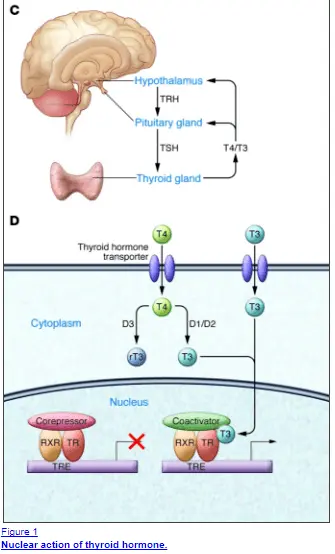
And this is good, but what is important here is that each tissue has a different demand for thyroid hormone depending on the situation.
Again, let’s put this into simple terms…
If you are incredibly sick in the ICU of a hospital, does it make sense for your body to put energy into growing your hair follicles or making your nails strong?
Not really…
Instead, each of the cells in your body has a different demand for thyroid hormone depending on the situation, time of day, stress you are under, etc.
So how does this fit in with the pituitary gland?
Well, the pituitary gland is just another tissue in the body that has a demand for thyroid hormone and sensitivity to thyroid hormone.
The downside is that unlike other tissues in the body the pituitary is the MOST sensitive tissue to thyroid hormone in your body.
It has a different set of deiodinases (3)(these are the enzymes that either activate or inactivate thyroid hormone).
Without making it too complex the pituitary gland has only the enzyme which activates thyroid hormone.
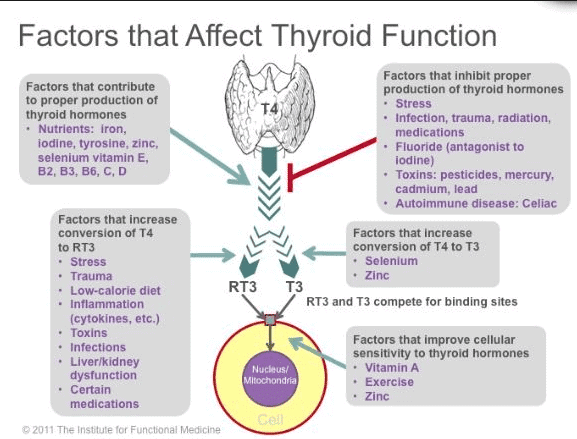
Now compare that to other tissues in the body which have the ability to both inactivate and activate thyroid hormone (your body does this through increasing or decreasing reverse T3 levels).
It’s like the pituitary gland has one switch and it’s the “on” switch.
That means if thyroid hormone is floating around in your body it will eventually make it to the thyroid gland which will cause your TSH to drop.
But that does not mean that the other tissues in your body are getting enough thyroid hormone.
Instead, it’s usually the opposite…
Normal vs Optimal TSH Range
Now having said all of those things it doesn’t mean that the TSH is entirely useless (in fact I will talk about how it can actually help somewhat helpful later).
But in order to understand how to evaluate your TSH, you need to understand that there is a huge difference between being “normal” and being “optimal”.
To start with I have never seen a healthy individual with a TSH > 1.0.
This would indicate, at least subjectively, that the ideal TSH (provided the disease is not present in any form) is somewhere around 1.0.
Nowadays due to the Standard American Diet (4), decreased activity levels, absurd rates of insulin resistance, and many other factors, it is truly rare to see a “healthy” person.
That means we need to change our definition of “normal”.
If you look at laboratory tests you will see that a normal TSH level generally falls within 0.5 to 4.5 (or some small variation).
You can see the range from different lab tests below:

As you can see the TSH reference range is 0.35 to 5.5.
You can see we have a problem here.
Truly “healthy” people have a TSH < 1.0 and yet the “normal” range extends all the way out beyond 5 in this case.
That means your Doctor won’t flag your TSH as abnormal unless it falls outside of those reference ranges.
But as I mentioned above it is important to consider that your pituitary is the MOST sensitive tissue to thyroid hormone in your body.
That means it is entirely possible to have a “normal” but less than “optimal” TSH.
By these new standards, you can consider a TSH which is greater than 2.0 to be an early indicator of some thyroid dysfunction in the body.
It certainly doesn’t mean that anything < 1.0 is “normal” (we need your other thyroid and hormone lab tests to determine that), but it does give us some guidance in terms of understanding how someone can be inside the standard reference range and still have symptoms.
This is where things can get a little more complicated.
There are several conditions where the TSH can be decidedly “normal” in fact it can even be sometimes < 1.0 but the patient can still be hypothyroid.
These conditions include:
- Low T3 Syndrome or Euthyroid sick syndrome
- Cases of Partial or complete thyroidectomy
- Cases of Insulin and/or Leptin resistance
- Cases of Chronic inflammation (including chronic pain, fibromyalgia, and/or chronic fatigue syndrome)
- Hashimoto’s or autoimmune thyroiditis
Unfortunately, patients who fall into any of these categories tend to get misdiagnosed and/or mismanaged by providers who rely solely on TSH levels for diagnosis.
- Bottom line: The “Optimal” range for TSH should be < 2.0, anything higher indicates potential hypothyroidism. Do NOT use the standard lab reference range as your definition of “optimal”.
Let’s go through some examples so you have a better idea of what I am talking about…
#1. Low T3 Syndrome
Low T3 syndrome is exactly as it sounds.
Patients have low T3 but the problem is that they have a relatively preserved TSH (in the normal or even optimal range), but free T3 levels that are either at the low end of the reference range or barely below it.
You can see the example below which shows a free T3 level of 2.5 with a reference range from 2.3 to 4.2.

This is a big problem because T3 is the active thyroid hormone.
So low levels of this hormone in your blood mean you will have low levels of active thyroid hormone despite whatever your TSH may be.
Basically what happens is your body decreases the amount of free T3 and increases the amount of reverse T3 in your body.
This is felt to be a protective mechanism to conserve energy when your body is under extreme stress.
The problem is that this condition extends beyond the typical acute illness that so many Doctors relate it to.
In fact, it has been shown that calorie restriction can even cause low T3 syndrome (5).
Answer this question:
Have you gone through a calorie-restricted diet in your life? Have you gone through the HCG diet or some other medically assisted weight loss program?
And in case you are wondering here are other conditions that can cause Low T3 syndrome and put the “brakes” on your thyroid function:
- Chronic yo-yo dieting or caloric deprivation leading to starvation
- Chronic illness, infection, or autoimmune disease
- Chronic medical conditions like Diabetes, cardiovascular disease, metabolic syndrome, etc.
If so, then there is a good chance you may have low T3 syndrome which is causing hypothyroidism but NOT altering your TSH.
Fortunately, it is relatively easy to check for and just requires the complete thyroid panel which we will be going over below.
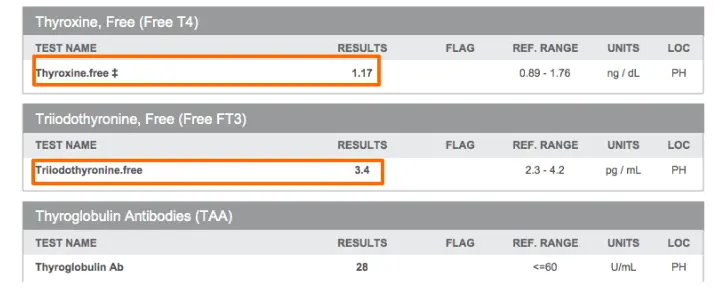
#2. High TSH but Normal T4
Another subset of patients have what would be considered subclinical hypothyroidism where their TSH is absolutely elevated (even the conventionally trained physician would agree) but their free T4 is relatively preserved.
Let me show you an example below:
This TSH is elevated at > 3.0 which most physicians would agree is suboptimal (in fact some providers have recommended we change the range to include anything > 2.5 as abnormal (6)).
And yet despite the fact that the TSH is > 3.0, in this case, their free T4 is still relatively normal at 1.17 with a reference range of 0.89 to 1.76.
Occasionally this scenario will prompt a physician to simply recheck the thyroid lab tests within a month without proper treatment with thyroid hormone.
And patients who are in this situation feel frustrated because they are symptomatic with abnormal labs, but still aren’t getting treatment.
So why does the free T4 stay relatively preserved in some patients?
The answer depends but usually is made clear by checking reverse T3 levels.
Remember that T4 is simply a reservoir hormone for T3.
T4 is inactive unless it is converted to T3.
But it can be turned into Reverse T3 instead of free T3 which can put the brakes on the thyroid and your metabolism.
But unless you check the reverse T3 level your free T4 may appear falsely “normal” despite the fact that your body is lacking thyroid hormone at the cellular level.
#3. Partial Thyroidectomy with Falsely “normal” TSH and T4/T3
This is another big one that I will occasionally run into and it highlights just how good the body is at preserving serum levels of thyroid hormone (or how inaccurate thyroid lab tests really are depending on how you look at it).
Below is an example of a hypothyroid patient who underwent a partial thyroidectomy some 20+ years ago.
A partial thyroidectomy is a surgical operation in which only half of your thyroid gland is removed and should be compared to a complete thyroidectomy in which the entire thyroid gland is removed.
Patients who undergo a partial thyroidectomy may or may not be treated with thyroid medication after their treatment whereas those who undergo a complete thyroidectomy must be treated with medication afterward.
This patient was certainly still alive without half of her thyroid gland but she was not thriving.
She was experiencing massive weight gain (at one point she was 100 pounds overweight) with constant fatigue, brain fog, and depression.
With half of her thyroid gland, she was still able to produce some thyroid hormone but not an optimal amount.
Her TSH was still 2.37 (so within the normal range) with a reference range of 0.45 to 4.5 uIU/mL:
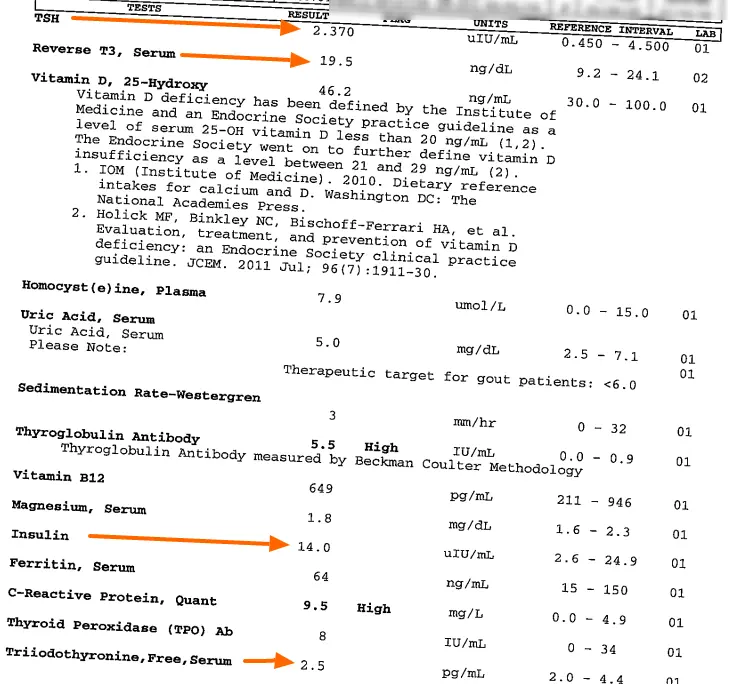
At first glance her labs look “decent” but how can you reconcile these labs with her clinical symptoms?
And it wasn’t until she was started on Nature-throid (she was previously on levothyroxine but didn’t feel any improvement) that she had a near complete resolution in all of her symptoms over about a 6 month period.
In the process, her body transformed and she was able to lose more than 50 pounds.
In fact, you can see her before/after pictures and her entire case study here.
So why is it that this patient was obviously hypothyroid, but she was still able to produce somewhat “normal” thyroid lab tests?
Again, it highlights the importance of not focusing solely on the TSH but instead using other markers to help diagnose thyroid-related problems.
Taking a closer look, you can clearly see that her other lab tests were indeed abnormal.
Her free T3 was at the low end of normal and her reverse T3 was greater than 15.
Putting these together, it would be safe to assume she had a conversion issue leading to disordered thyroid hormone processing.
When you understand how inflammation (indicated by her high CRP) leads to T4 to reverse T3 conversion (7), her thyroid labs make perfect sense.
But in order to come to this conclusion you really have to look at the whole picture.
#4. High TPO antibodies but Normal TSH with Hypothyroid Symptoms
Then, of course, we have the situation of autoimmune thyroiditis…
The situation where patients have hypothyroid symptoms, “normal” lab tests but elevated antibodies to either Thyroglobulin or thyroid peroxidase.
Patients in this situation are often told to take the “sit and wait” approach.
That is, sit and wait until your body destroys your thyroid gland from inflammation and autoimmunity, and then you will need thyroid hormone.
If the body is able to “preserve” thyroid function after a partial thyroidectomy (as evidenced above) then it is certainly able to preserve function if 10-50% of the thyroid gland is destroyed.
This often leads patients with autoimmune thyroiditis until their TSH finally increases to a point where providers feel thyroid hormone is indicated.
Obviously, there is a better approach and that is to look at and evaluate all thyroid laboratory tests (in addition to the TSH) and treat if there is a combination of symptoms + abnormal lab tests (even if those abnormal lab tests are just antibodies).
Below I’ve included an example from a recent patient who had undiagnosed autoimmune thyroiditis for many years:

You can see the TSH at 12.27 with a reference range of 0.40-4.50 in a patient with debilitating fatigue and weight gain for years (undiagnosed) with accompanying elevation in both thyroglobulin and TPO antibodies.
This is what will happen to your thyroid gland over time assuming you don’t treat the autoimmunity or inflammation, and it just doesn’t make sense to wait until the damage is greater than 50% to prove it.
(Bonus) #5. Increased D2 (Deiodinase) Enzyme Activity
Now that you have a basic understanding of thyroid physiology we can discuss another physiologic change that may make understanding your lab tests difficult.
There are enzymes in your body, known as deiodinases, which really help to control and regulate thyroid hormone at the cellular level.
Remember:
Thyroid hormone doesn’t do anything if it’s in your bloodstream. It must make it inside your cells to turn on your genes and have an impact.
And, in order to become active, it needs to be changed by certain enzymes in your body.
One particular enzyme, known as D2, plays a major role in converting T4 into the active T3 hormone (8), especially at the cellular level.
In this way, D2 helps regulate how much thyroid hormone each cell gets by activating or inactivating thyroid hormone as necessary.
While this is a great thing for thyroid control at the cellular level, it can also make diagnosing hypothyroidism more difficult.
Why?
Because D2 has been shown to increase its activity as thyroid hormone levels decrease in the bloodstream (9).
As this enzyme increases in activity, it can do a lot with a little and it can make what little thyroid hormone you have more effective by keeping it active inside the cell.
This helps your cells get what they need, but it also may falsely make your lab tests look more normal than they really are.
Understanding the way that these enzymes work is essential to understanding why treating “TSH” doesn’t work for all people.
In a sense, it doesn’t really matter to your body what your serum T4 level is because it cares much more about the concentration and activation of thyroid hormone inside the cell.
And this process is controlled by these very important enzymes.
Changes in TSH Over Time and With Disease Severity
Why is it that in all of these conditions (they account for the majority of you guys reading this post by the way) the TSH and other lab tests remain decidedly “average” despite obvious dysfunction in other lab tests?
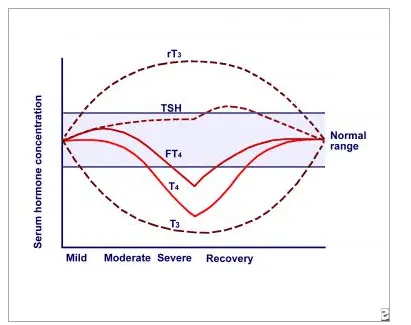
To better understand what is happening in your body it’s best to visualize the thyroid lab tests over time on a chart.
Above you can see a chart that depicts all thyroid lab tests over time and based on disease severity.
On the left is a mild disease state (inflammation, autoimmunity, chronic infection, dieting, etc.) and as you travel right on the X-axis, you can see how the lab tests change over time.
What’s important here is that the TSH doesn’t start to elevate until the disease state has reached “severe”.
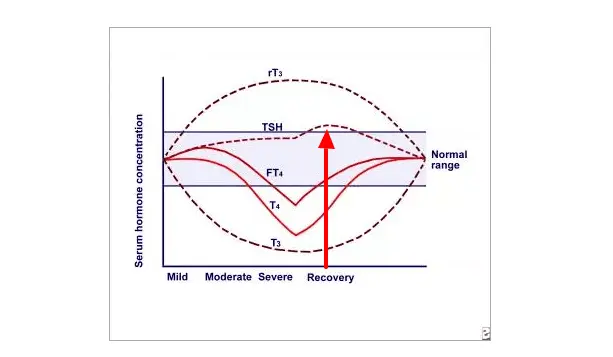
Around this time is when the free T4 level also begins to drop as well below the “normal range”.
But compare those lab tests to both reverse T3 and free T3 which show changes much earlier than the other lab tests.
Both rT3 and T3 can be used as sensitive markers for assessing thyroid disease severity because they become abnormal earlier than other thyroid lab tests.
This illustration helps explain (in addition to the differences in deiodinases, tissue level demands, etc.) why not all thyroid lab tests are created equal and why the TSH falls short if used by itself.
Even if the TSH is used in tandem with free T4, this combination still is less sensitive when compared to rT3:T3.
Instead one of the most sensitive ways to determine if tissues are getting enough thyroid hormone is the reverse T3 to free T3 ratio (which we will discuss below).
Conditions That Make the TSH Less Reliable
In addition to the conditions listed above, there are a few other states that make the TSH less reliable.
I am talking specifically about insulin and leptin resistance:
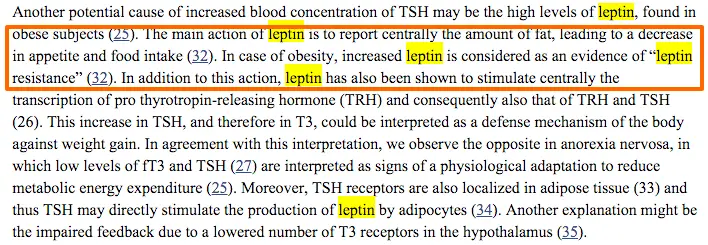
Both of these conditions reduce T4 to T4 conversion (studies showing this link for insulin resistance here (10), studies showing this link for leptin resistance here (11)).
In the most basic sense as leptin levels and insulin levels increase, the body preferentially converts T4 to the inactive thyroid metabolite reverse T3.
This leads to an “adaptive” state which reduces metabolic energy expenditure.
In lay terms, it reduces your metabolism or the number of calories that you burn on a daily basis.
The exact mechanism by which leptin and thyroid hormone are connected is not completely understood (you can read more about it here (12)), but one thing is certain:
Leptin levels and thyroid function are connected.
Leptin resistance and hypothyroidism both appear to be caused and sustained by calorie-restricted diets (chronic yo-yo dieting) which cause high reverse T3 and low free T3 levels leading to clinical hypothyroidism.
The big problem is that this condition is relatively new and our understanding is limited.
But, as a result, it’s not well recognized by many providers or physicians who aren’t trained to identify or look for it despite the fact that it is highlighted in the medical literature.
- Bottom line: If you have leptin resistance (as indicated by a high fasting leptin level) there is a VERY high chance you also have tissue-level hypothyroidism even if you have “normal” lab tests. This condition may need to be diagnosed by testing both your reverse T3 and free T3 levels together.
The Complete Thyroid Panel: How to Diagnose Hypothyroidism
So let’s say you are convinced that your thyroid is suboptimal and you’d like to prove it.
What tests do you need and how do you interpret the results?
We are going to go over them below, but I need to say something first:
Thyroid lab tests shouldn’t be used as THE definitive test for diagnosing and managing hypothyroidism by themselves.
They can be very helpful for the initial diagnosis and sometimes for management, but once you introduce thyroid hormone into the system exogenously (from the mouth) you have changed the dynamics of the system.
I’m not going to go into detail on this now, but just realize the lab tests aren’t the end-all-be-all for diagnosis.
Having said that they can be quite helpful, especially if you are thyroid hormone naive (meaning you haven’t been on medication before).
If this is the case, then these ranges may be helpful for you:
- Free T3: Should be in the top 50% of the reference range (may be falsely elevated in cases of high reverse T3)
- Reverse T3: Should be < 15 (without exception), if your Free T3 is high and your reverse T3 is high then your ratio of T3 hormone in your medication is off
- TSH: Should be < 2.0 *anything higher indicates tissue level hypothyroidism in other tissues in the body (note that a TSH < 1.0 does not indicate optimal thyroid function, especially in the face of abnormal free T3 and reverse T3)
- Total T3: Generally should be in the top 50% of the reference range
- Free T4: Generally in the mid-range (only useful if NOT on thyroid medication as high levels of T3 only hormone will drive the T4 down)
- Sex hormone binding globulin: In women, it should be in the 70-80 range and can be helpful for determining tissue levels of thyroid hormone (can’t be used if a woman is on birth control medication or oral forms of hormone replacement therapy)
- Thyroid antibodies: Should be < 30 (but preferably non-existent for whatever reference range is used)
- CRP and ESR: Both of these markers should be as low as possible (*note that these are non-specific markers for inflammation and as they increase so to will the reverse T3)
As you can see testing for hypothyroidism is far more complex than just testing the TSH (and maybe the free T4).
When you understand the physiology and how different aspects like inflammation, insulin resistance, differences in genetics, and leptin resistance alter thyroid physiology it is easy to see how the TSH falls short.
But remember:
Even those “optimal” reference ranges listed above can be misleading in certain cases, but if used in combination with hypothyroid symptoms (and occasionally basal body temperature + resting metabolic rate) it’s possible to avoid misdiagnosis.
I would also point out that these ranges are really only helpful for those not on thyroid medication already.
Once you start thyroid medication several changes take place that alters these numbers and makes interpretation difficult unless you understand the physiology.
As an example:
Increasing doses of Synthroid or Levothyroxine will certainly drop the TSH (remember there is no competition for reverse T3 in the pituitary) but may actually make thyroid function in the peripheral tissues worse due to T4 to reverse T3 conversion.
So lab tests in this instance would look something like this:
- TSH decreases
- Free T4 increases
- Free T3 drops
- Reverse T3 Increases
- Sex hormone binding globulin stays the same indicating low tissue levels of thyroid hormone
This pattern is seen very frequently in patients who are treated based on the TSH alone but have insulin/leptin resistance and/or a history of calorie-restricted dieting.
If you fall into that category you will need advanced thyroid testing and a provider who can interpret them for you.
When is the TSH Helpful?
We just spent all this time discussing why the TSH doesn’t provide very much value, but it turns out that it does have some limited value.
TSH can actually be very helpful in initially diagnosing hypothyroidism and (sometimes) in helping to determine the ideal dose of thyroid hormone medication.
First:
Newer studies have shown that the healthy TSH reference range should be between 0.3 and 2.5 mU/l (13).
If your TSH is outside of this range then you should be evaluated further and you should consider a trial of thyroid medication.
And Second:
The rate at which your TSH drops can be helpful in determining your total dose of thyroid hormone needed.
Let’s say you start with a TSH of 3.5.
You start titration with Natural desiccated thyroid and after 2 months your TSH drops to 1.0 on 2 grains (130-135mg) of NDT.
This indicates your total dose will likely need to be much higher than someone who drops their TSH down to 0.05 with the same dose.
This highlights that each patient has a unique demand for thyroid hormone in their body and standard dosing should not apply to everyone.
It’s also important to remember that both T3 and T4 will cause your TSH to decrease.
In fact, T3 thyroid hormone is 3x more potent at decreasing your TSH than T4 thyroid hormone (14), so put that into perspective when using medications like cytomel, liothyronine, or NDT.
So if you are started on any medication containing T3 and your TSH does not drop very quickly then that is an indication you might need higher doses of thyroid hormone.
Once you start treatment with thyroid hormone the TSH generally has less utility than the other thyroid lab tests indicated above, but it still can be useful under certain circumstances.
Recap & What to do Next
Let’s wrap this long post up with a recap and some direction if you feel you fall into any of the categories listed above.
First:
TSH can be a helpful test but it really falls short under many circumstances in both the diagnosis and management of hypothyroidism.
For several reasons (including pituitary sensitivity to thyroid hormone, hormone changes, and differences in thyroid medication) measuring the TSH isn’t the most accurate thyroid lab test.
In fact, even with the combination of all thyroid lab tests, sometimes a diagnosis can still be difficult to obtain (meaning it must be based on a combination of symptoms and lab tests).
In cases of low T3, subclinical hypothyroidism, partial thyroidectomy, and autoimmune thyroiditis the TSH may NOT accurately reflect the thyroid status of your body.
If you feel that your TSH doesn’t reflect your thyroid status then your best step is to look for a knowledgeable provider to order all of the tests necessary for diagnosis.
Generally, this means you will have to look outside of the insurance model (I know it’s not what you want to hear but it’s just the truth right now) because most Doctors practice what is known as the “standard of care” and that standard is to test only the TSH.
If you are working with someone and they don’t order the tests or balk when you ask for certain tests that is a good indication they are not the provider for you.
I’ve created a resource designed to help you find knowledgeable doctors which you can use here.
Now it’s your turn:
Do you feel TSH has been helpful in diagnosing or managing your thyroid condition?
Why or why not?
Have you had your other lab tests evaluated? Tests like free T3 and total T3?
What is your healthy TSH range?
Leave a comment below!
Scientific References
#1. https://www.ncbi.nlm.nih.gov/books/NBK499850/
#2. https://www.ncbi.nlm.nih.gov/pmc/articles/PMC3578364/
#3. https://www.ncbi.nlm.nih.gov/pubmed/21415143
#4. https://www.ncbi.nlm.nih.gov/pubmed/21139124
#5. https://www.ncbi.nlm.nih.gov/pubmed/3051835
#6. https://www.ncbi.nlm.nih.gov/pubmed/16148345
#7. https://www.ncbi.nlm.nih.gov/pubmed/27051079
#8. https://www.ncbi.nlm.nih.gov/pubmed/2333963
#9. https://www.ncbi.nlm.nih.gov/pubmed/17991805
#10. https://www.ncbi.nlm.nih.gov/pubmed/21104580
#11. https://www.ncbi.nlm.nih.gov/pmc/articles/PMC3608008/
#12. https://www.ncbi.nlm.nih.gov/pmc/articles/PMC377492/
#13. https://www.ncbi.nlm.nih.gov/pubmed/19941233
#14. https://www.ncbi.nlm.nih.gov/pubmed/402379


Hi there, I’m wondering if you have another article that talks more about hyperthyroidism as this one went into details more about hypothyroidism. Thanks!
Hi Daphne,
You can read more about hyperthyroidism here: https://www.restartmed.com/hyperthyroidism-weight-gain/
Most cases of hyperthyroidism end in hypothyroidism which is why it’s generally more relevant to discuss hypothyroidism.
Hi,
I have had my thyroid removed for several years now. (Over 10). I have been fighting this battle with little to no success. I am 51 years young and feel like I am 151. I went from a vibrant go getter that loved life and doing anything and everything to not wanting to do nothing, no sex drive, not energy to work in the yard, no energy to really do anything. I have gone to several doctors and they just play with my meds and my levels go up and down but never in the optimal levels. Just had my labs done and TSH was 27.91 Free T4 is 1.0 and Free T3 was 2.1. I am currently on 200mcg and they are starting me on a T3 med. (Not sure the name) I have tried Armor med’s and that worked for a little while, then my levels started again going way out of wack for no reason. Any suggestions would help. Been to several different doctors and still out of wack.
Hi Sharon,
It’s probably a good idea to consider switching from whatever medication you are taking to tirosint (due to better absorption) and consider adding T3 to your current medication. It sounds like you may have a resistance syndromes or you may have difficulty with absorption (or both). It’s certainly abnormal to be on 200mcg of T4 and still have a TSH of 27 which means some changes need to be made.
You can read more about tirosint here: https://www.restartmed.com/tirosint/
You can read more about liothyronine here: https://www.restartmed.com/liothyronine/
Hello, recently developed severe fatigue, sensitivity to cold and chills, body temp of 95.8-96.8,bloating, difficulty sleeping, mental brain fog, brittle nails, dry skin, and some nausea. Recent lab tests reveal: tsh 1.07, t3 free 2.9, and t4 free 1.05 Anything thyroid-wise that might explain this?
Hello. I am a 38 yr old female and cannot seem to find an answer for my problem anywhere. I have always had a TSH in the 2-3 level and have always been asymptomatic. My last test showed an 8!!!!! With a T4 of 13!!!!
I am a size 0 and have had a consistent weight 110-115 (5ft 2”) for over a decade. I eat completely plant based and processed foods only a few times a year if that. Alcohol intake is also maybe 3-4 x a year as well. I am very active and am dedicated to my 1.5 hr cardio and weight training 6x a week. I am not tired and am generally happy. No aches and pains etc. My
only other blood work that has shown to be abnormal is my ferritin and this has been since I was a teenager. The highest it’s ever been is a 30 and at present it is a 15 (I do take a palafer supplement and watch my diet closely). I am at a total loss and so confused. I really would like to control this without medication if possible and have started on an iodine and selenium supplement. The only change in my lifestyle over the last year was a car accident and I do have ongoing pain from that between my shoulder blades. I also have a family hx of hypothyroid on my dads side (including my dad) and my mom has crohns. Any help would be greatly appreciated. Thank you for your time!
T3 1.47ng/ml
T4 17.37ng/ml
TSH 6.28uu/ml
I saw thst one test listed was serum magnesium. Shouldn’t they do an RBC Magnesium test because 99% of the magnesium is in the cells and not in the serum?
I am reading this and still not understanding my symptoms. I have had hashimotos for 11 years. I have been on Armour for 8 years now doing well but I recently in the last 8 months am having issues with insomnia and weightloss, palpitations ect. I am 41yeaes old. My endo NP is sweet but I feel doesn’t do all the right test. In the last 4 months my TSH has gone from 0.4 to 3.3 to now 1.75 the only time I was sleeping normal was 3.3. She never draws free t4 or free T3 or reverse T3. You state that TSH should be less than or equal to 1.0. Could all these symptoms be hyperthyroid despite tsh >1 this last time I took my morning Armour at 6:30am and labs were drawn about mid-day 12ish.
I am frustrated, she wants to try me on Synthroid to see if that helps but I am skeptical.
I am just curious on your thoughts on this. My tsh is currently 7.3. I haven’t had any other lab work done. I’m 11 months postpartum and I breastfeed. I am currently taking the mini pill as well. Do you think any of these things is contributing to such an abnormal number? I got the lab tech just to draw a random lab on me bc I was curious. I have gained like 30 lbs but I’ve read on forums that well breastfeeding makes some folks gain weight. And here I am above my 10 month prego weight.
Forgot to click the notify me of response button on my question. Whoops
Hi Dr. Child’s. I am a 48 y.o. Female and not getting much help from my doctor. I am presently looking for a functional doctor. My Dr. would only test my TSH: 3.20, Free T3: 3.0, and Free T4: 0.8.
Can you help me interpret my values.
Of course my Dr. says “normal”.
Hi Dr Westin,
I’ve read through many of your articles and can’t quite find an answer to my problem.
10/10/17 – NO meds:
TSH – 7
FT3 – 3.1
FT4 – .80 (.61 – 1.1)
RT3 – 12.7 (9-27)
2/2/18 (Started Levo 25mcgs – 3 weeks on)
TSH – 3.6
FT3 – 3.1
FT4 – 2.3 (1.4 – 3.8)
RT3 – 16 (8-25)
(Reverse T3 went up 21%) = ratio FT3/RT3 dropped from 24 to 19
Typically in your examples FT3 goes down when RT3 goes up. My FT3 stayed the same, yet my RT3 went up. This doesn’t make sense to me. My doctor wants me to INCREASE my Levo to 50mcgs but I don’t understand how that will help? Wouldn’t some T3 help more? Maybe even stopping the 25mcgs of Levo? Is my FT3 not getting into the cells?
I still have all the same symptoms – hair loss, cold intolerance, anxiety, depression, brain fog/memory impairment, …..
Could you please explain whats going on? Thx : )) Leeanne
Hi Dr. Childs,
I’ve been reading your work for quite some time, and I first want to say thank you for all that you do. As for me, I’m just trying to figure out whether what I’m experiencing is due to a slight case of hypochondria, or if there’s possibly more to it. As a point of reference, I’m currently 49, male, 5’9, body fat 20%, and my typical body temperature is 97.7. Twelve years ago, I was dealing with severe fatigue, brain fog, etc., and my MD measured my testosterone @ 204, so I was started on depo testosterone. Things seemed much better afterwards, but I still was having occasional foggy thinking and a low libido. My MD referred me to an endocrinologist, who then ran LH/FSH, TSH, FT3 and FT4 and said everything was normal and upped by testosterone dosage. He ordered an MRI, and the pituitary was described as being “slightly heterogeneous and of low-normal volume”. I questioned him about this, because by this time I was also experiencing cold intolerance (still am; my fingers are so cold they’re almost numb right now as I’m typing, and it’s 75 outside) and wondered if there was perhaps something else going on; his response was that because all other tests were normal, my low libido was a result of unrealized depression and I was otherwise fine. He ran tests once a year for 3 years, each time telling me that I was “normal”, and with that in mind I realized he wasn’t doing anything different from what my PMD could do. Fast-forward to 2018, and the cold intolerance is getting worse, I put on weight easily and can’t seem to lose it despite regular weight-lifting activity, and the fatigue is still there and getting more irritating, i.e., I tired-out after changing the sheets and vacuuming the house the other day. I went and had my own labs done at a local facility and compared them to the previous results from my MD. To make a long story short, my TSH went from 0.837 uIU/ML in 2012 to 1.880 a few days ago (Feb. 2018), with a steady rise from 2012 – 2014. During this time Free T4 has bounced between 1.0 – 1.24, and FT3 has ranged between 3.0 – 3.8. The T4 and TPO AB were only performed this year, and the results were 8.6 and 19 IU/mL, respectively. So, I’m just curious as to your thoughts; is this worth exploring further, or am I possibly just one of the “worried well” and my other symptoms are potentially better attributed to something else?
Thanks,
Chris
I take 100 mcg of levothyroxine with thyroidectomy. I still have all symptoms of hypothyroidism. I have begged my doctor to look at medication. I have had tons of heart tests, because he says my problems are not due to the thyroid. Except for Lipids, all tests were okay. My triglycerides have jumped to over 600. My weight is in normal range. I have extreme fatigue and ache. I asked for all my test results, and I just found out that my t3 test result is .67. How can I get my doctor to even talk about t3 medication? It has been 8 months now, and he still won’t listen to me. We argued the last time I was in his office. He said finally he would order t3 medicine, but when I got to the pharmacy, he ordered more Warfrin, no t3. I want to cry every time I go to the doctor because my hope is always destroyed. I even overheard him tell the nurse outside the room I was in in his office that I was the patient and he was the doctor and that I would just have to learn to listen to him. He also told me that I needed to diet and lose weight. I weigh 137 at 5’5″.
Thank you for this post. Last year I asked my primary doctor to run some tests because I felt my symptoms lined up with hypothyroidism. My TSH level came back as 4.56. The hospitals lab ranges consider it normal if it’s under 4.68. I tried to get a second opinion from an endocrinologist but they required a referral from my doctor. The only person I could find was a naturopathic doctor who also felt my TSH was okay but that I should still have reflex testing. My Free t3 and t4 came back as optimal by all standards. I did not have reverse t3 tested. I paid a fair amount of money and still feel as though I’m not being listened to even after doing so much of my own research. I’m at a loss of where to go from here. I’m located in Maine and it seems as though no one here is aware of optimal ranges.
Hello. I’m currently 24 weeks pregnant. My tsh level is 11.5 and my free t4 is 0.74. My doseage of synth was raised about a month ago when my tsh was 11.9 and free t4 was 0.82. I was taking 25mcg of synthroid and he upped the dosage to 50mcg. Since the dose was raised my levels have not changed. He decided today to up my dose to 125 mcg of synthroid. Any feedback on what is going on and if this will have a negative affect on my baby?
Hi Emma,
I would recommend you read this post which goes into more detail about thyroid hormone medication and pregnancy: https://www.restartmed.com/thyroid-and-pregnancy/
I have a TSH of .7 and T4,FREE (DIRECT) 1.17. First time testing T4 but TSH on a steady decline from 1.7 in 2012. Experiencing every hyperthyroid symptom. Including weight loss, diarrhea anxiety, heart palpitations and sweating yet cold extremities. Thyroid issues run in family. Can I be hyperthyroid?
Hello Dr. Childs,
I’m having all sorts of problems with PCP. I was diagnosed with hypothyroidism about 10 years ago with my first tsh reading at 14.4 the highest tsh my then PCP had ever seen. I was put on levothyroxine and a year later my lvls returned to normal function. About a year later I was back on the meds for a 6 or 7month stint before they returned to normal. A year later I was put back on meds and the symptoms never went away. I started to inform myself about what being hypothyroidism actually meant, I then started to ask questions and demanded more test after about 2 years telling a doctor to run a test to check for autoimmunity. I fired him and got a new doctor with a whole new set of struggles. Our first two autoimmune test came back normal and then it happened. My tsh went to 0.01 and I started experience once new symptoms my t4 and t3 were in normal range and tpo just went slightly over the normal range. Enough for them to put Hashimoto’s on my chart and asked to be put on Armour Thyroid the last year has been the worse in my life battling weight and fatigue to a point I am zombie-like. they recently found a node in the right lobe of my thyroid and its graded at a tr3. My most recent labs were all over the board. My tsh was less than.02 my t4 was normal as normal can be and my t3 was 16× what it should have been I’m quoting my doctor and my Tpo was 126.4 on the 0.0- 0.9 scale. My doctor has switched me back to levothyroxine 150mg. and I have been on it for weeks now and feel like Im dying. my body temp is extremely low 96.5-97.0 I have back aches and pins and needles in my hands, feet, and face, dry skin, hair loss. Dizziness, fainting spells, neck pain, dry eyes and Dry mouth. joint pain. I’m a 34-year-old mom who is desperate to stop feeling like a 90-year-old woman. What should I have my doctor test for so she can help me?
Hi there. I have had my thyroid removed due to cancer and also have a tumor on my pituitary gland. My TSH is so low and I have terrible symptoms and have been to the hospital 5 times. My t3 and t4 fluctuate but in normal ranges. This is so unbearable physically and my endocrinologist doesn’t find it an issue. I’m struggling to find someone to support me in this matter bc I cannot stand the symptoms I am having and cannot sleep, I’m exhausted, have muscle cramping, numbness to left side at times of extremities, headaches that are the worst I have ever had, chest pain and palpitations, can’t breathe, my memory isn’t normal and I black out now and then. I couldn’t remember things when the doctor in emergency asked me questions. I cannot live like this. Do you have any suggestions?
Help please!! I have just about every symptom of something being wrong with my thyroid. I e even been told before I have Hashimotos. I have cysts on my thyroid and one Dr said it looked like and old torn up beat up moth. I’m so exhausted all the time and my labs came back “normal”. I really need advice or what to do next. 🙁
Hi Sarah,
I would check out these articles which should help you get on the right track:
How to evaluate your labs: https://www.restartmed.com/normal-thyroid-levels/
How to find a thyroid doctor: https://www.restartmed.com/thyroid-doctor/
Hi, Dr. Childs,
Thanks for your post. I’m 32 in good shape work out and eat healthily. I just got diagnosed with hypothyroidism. My T3 and T4 came out normal but my TSH is 8.33. My mother was diagnosed at my age and takes 75 mg of Synthroid they gave me Levothyroxine 25mg to start. Is it possible something else caused my spike in TSH were they too quick to give me meds? I want my levels normal I do have some symptoms like being cold a lot maybe a little more tired and slightly dryer hair. I also want to start trying for kids soon. I want to make sure I was directed properly and given the right medication. Thanks for your time.
I have random symptoms that would point to Hashimoto’s or hypothyroidism. I have fatigue, puffy face, hair loss, thinning of eyebrows, cold intolerance, thyroid swelling (causing difficulty swallowing), palpitations (from skipped beat sensation), weight gain (or inability to lose weight despite running avg 20 miles per week).
total t4 7.9ug/dL (4.5-12.0)
TSH 2.00 uIU/mL (0.4-4.1)
Free T3: 3.4 PG/ML (2.2-4.2)
What’s the opinion? My doctor’s office hasn’t told me one way or another what we are going to do. I am not currently medicated for my thyroid but am feeling crummy.
I was diagnosed with hypothyroid disease 20 years ago, just a few months after I lost my youngest son to a house fire. I am third generation hypothyroid in my family and now my daughter is 4th generation. I have been symptomatic from the beginning. My symptoms have included chronic fatigue, hair loss, sleep disturbances, severe depression, dry skin, muscle weakness, joint pain, chronic pain, weight gain, cold and heat intolerances and for the first two years, infertility issues. Just this year I was finally approved by my health insurance to see an endocrinologist which I have seen three times so far. As a young adult, I was in a car accident which resulted in head trauma, whiplash, a concussion and a broken nose. I read about a study of post diagnosis of thyroid disease after traumatic injury, in this case, whiplash. The article suggested that damage due to the trauma I received could be the reason or cause of my lack of overcoming my thyroid symptoms. Vasal temp was suggested and I did that every day until my next appt. at which time I was given a T-3 medication though my doctor said my temps were in the normal range?? So, 95.6 is normal?
I am taking 2 grains of Armour Thyroid daily for the past 20 years. My TSH is suppressed at .008. My Free T3 and Free T4 are in a good place. My Dr. is concerned my TSH is so suppressed and wants me to change to Synthroid/Cytomel combo. What are your thoughts on my situation?
Thank you in advance
Hi Allie,
You can find more information about a suppressed TSH in this post: https://www.restartmed.com/suppressed-tsh/
Hi Westin, I’ve been obsessively researching thyroid and pituitary function and I really appreciate your thorough write-up!
I’m a very active 29-year-old female. I’ve always been very muscular and slim. However, I’ve noticed a number of slight changes: put on 10lbs, periods changing, acne development, changes in sleep. Also of note, my thyroid is enlarged, my doc felt it at my annual, and now I feel it every time I swallow (2 weeks later).
Overall, I’m a very healthy person and generally eat well. My TSH levels (fasting, with morning tests) over the past years (2013-2018) are 2.34, 1.56, 2.75, 1.20, 1.13, 1.74.
Fasting glucose (80-98).
HDL cholesterol (56-75).
LDL cholesterol (72-99).
Would the best path forward be to go get a full test for TSH, Free T3, Free T4, Total T3, Thyroid Antibodies, and Reverse T3?
My TSH level came back as 25 (not 2.5) 25 today but I don’t have even one symptom of hyporthyroidism.
When I was put on levothyroxine 100 mg, I gained 8 lbs water weight in a 24 to 35 he period, my hair began to fall out, my breathing was horrible, always hungry, and sluggish. I took myself off the meds. It has taken a couple weeks to lose the excess water and get back to normal.
My Dr. Doesn’t do much but push Levi.
I have been seeking an all natural cure not just treating symptoms that should exist but don’t.
Can you or anyone help me make sense of this?
Hi Darlene,
I put together a very long, detailed and easy to read post on hypothyroidism which should help you. You can find that here: https://www.restartmed.com/hypothyroidism/
Hello everyone I’m new to this group! I’m in need of some advice so I had a total thyroidectomy June 2013 due to a goiter! Also was told that my parathyroid glands are sleep and may never wake up well as of today they are still sleep because I’m taking lots of calcium along with vitamin d! Question is this dec I had the gastric sleeve surgery and I’ve lost about 100 lbs since – well I have not seen an endocrinologist in about a year my primary doctor decided to lower my dose from 175 down to 125 (Synthroid) a couple of weeks ago because he said with weight loss you have to watch your levels and they are reading too high! Well for the first time since my surgery I ended up getting admitted to the hospital with my calcium being too low now I have missed a few doses of calcium but I’ve done that many times before and it has never ever gotten this low before? I did read that if your thyroid hormones are off it can cause malabsorption of the calcium! I see a New endocrinologist on Friday and I can hardly wait! Any suggestions? Maybe switch back to 175 or maybe I should have gone down to 150 instead of all the way down to 125? Maybe I need a different brand of thyroid hormone? Like armor or nature thyroid? Help!!
Hi Ralph,
Thanks for sharing! Your best bet is to base dosing off of more than just the TSH and be sure to check markers such as total t3 and free t3. A lack of thyroid hormone may lead to a reduction in the absorption of nutrients through the production of stomach acid as you suggested.
Hello,
I was put on Levothyroxine about 4 years ago while trying to get pregnant. My IVF doctor (couldn’t get pregnant for over a year at age 27-28) found my free T4 was low and put me on it. I stayed on it through pregnancy and then through a second pregnancy a few years later. Labs were run throughout and I was always within what the doctor considered okay and I felt good. After giving birth to my second child, my TSH was very low >.1 so they took me off the meds. I have felt fine ever since (has been about a year and a half).
I recently got my labs done (i finished nursing about a month ago, if that has any bearing) and my TSH is <.02. My Free T4 is 1.4 and Free T3 is 341. I feel good. So, is there anything to worry about here? I have had a really hard time finding a good Endo who really understands thyroid well and doesn't just go by old standards. My GP is who ran these labs.
I am wondering if this is something I need to go find a good Endo for, even if I feel good?
Hi Kallie,
If you feel that your thyroid is managed appropriately then there probably isn’t a reason to find a new doctor. The only thing worth considering is your TSH suppression which you can learn more about here: https://www.restartmed.com/suppressed-tsh/
Thanks for the response. I am not currently being treated by an endo (very hard for me to find one I like). My PCP seems concerned by the low TSH and is trying to push me to go see one. But I feel good. I just don’t want to be pressured into taking meds I don’t really need. Is it possible my body needs to have the TSH at these levels in order to keep my T3 and T4 at healthy levels for me? I am very happy not being on meds and would only want to go on them again if it was absolutely necessary and there was no way I could remedy this with diet, etc. Thanks of the link to the article; i’m on it.
I have been on .75 mcg and levothyronin (5 mg Lyrothyronine 2 pills twice a day) for several years. My doctor tests me every 6 months. My TSH is consistently very low, the last test showing .01. My T4, FREE is slightly below normal at .7. I feel fine except I am fighting weight gain daily despite doing hard workouts at the gym 4-5 days per week. I am 70. My doctor is concerned about my results. I agreed to take a lower dose for 3 months as a test to satisfy her. I got depressed and gained weight. She put me back on my regular dose but remains concerned. I don’t know what to do. Stay as is? Change? She’s concerned that I will get osteoporosis. I have had osteopenia but my bone density has remained stable for several years without medication. Should I be concerned. Should I make a change? Help!!!
Hi Louise,
You can read more about the potential risks of TSH suppression in this article: https://www.restartmed.com/suppressed-tsh/
Hey my daughter has been diagnosed with Thyriod issues. Recent blood work shows normal T-SHIRT, high T4, normal reg. Blood work, testosterone levels normal , high sex hormone binding globin. She is currently on 300 msg of synthyroid…..any suggestions…tired of let’s wait and see….
Hi Kadie,
I would look into this program which can help get her started: https://www.restartmed.com/diet-low-carbohydrate-high-fat/
How do I find a doctor who understands this stuff? I feel like my endocrinologist just ups my Synthroid every time I complain
Hi Ken,
You can learn more about that topic here: https://www.restartmed.com/thyroid-doctor/
I have Hashimoto’s with total thyroidectomy. Every woman on my dad’s side of the family has either Graves or Hashimoto’s. My latest labs were
TSH 0.19 from 0.09
Total T3 0.87 from 1.0
Free T4 0.75 from 1.0
I’m on 100mcg Synthroid and 5mg of Cytomel.
I’m so frustrated and don’t know who to turn to.
Just had my 11 yo and 14 yo labs checked. Still waiting for the antibodies tests to come back but this is their results:
Jenna Tsh 5.47 Free T3 4.6 Free T4 0.9
Julie 6.88 4.5 1.3
My 16yr old daughter has had irregular periods only 1 in the last 6 months. Her hair is falling out. She has lost about
2/3 of it. She is tired and has trouble concentrating. Saw our new GP and she diag. her with subclinical hypothyroidism. refered to pediatric endo. He says after all test she does not have a problem with her thyroid. No follow up with him. Her test results are below. What is your take on this? She still has all the above symptoms.
TSH w/reflex 6.339 u[IU]/mL range:0.530 – 3.590 u[IU]/mL
T4, FREE 0.88 ng/dL range:0.60 – 1.40 ng/dL
TSH 2.19 u[IU]/mL range:0.53 – 3.59 u[IU]/mL
T3 FREE 3.23 pg/mL range:2.52 – 4.34 pg/mL
THYROGLOBULIN AB <1 [IU]/mL range:0 – 4 [IU]/mL
THYROID PEROXIDASE AB 6.59 [IU]/mL range:0.00 – 9.00
TSH WITH REFLEX (PCC) 6.339 u[IU]/mL range:0.530 – 3.590
Testosterone, Total 46 ng/dL range:9 – 58 ng/dL
FSH 5.20 m[IU]/mL m[IU]/mL
Testosterone, Total 46 ng/dL range:9 – 58 ng/dL
FERRITIN 24 ng/mL range:11 – 307 ng/mL
PROLACTIN 9.1 ng/mL ng/mL
VITAMIN D 25 OH TOTAL 27.6 ng/mL range:30.0 – 100.0 ng
Hi Susan,
It looks like her thyroid may be sub-optimal.
Thanks for your work.
I’ve been on either NDT or a synthetic T4 and t3 combo for years. Doing pretty well but sometimes am still getting varied opinions from drs on the suppressed TSH. Mine at times is undetectable.
I have a family history of heart disease and one dr is concerned and so encourages me to stay lower with T3 dose. This puts me around the mid level of t3 (or a bit less) on labs.
Is there any evidence that a suppressed TSH can lead to heart attack or stroke when it’s low from supplementing? Or has that been disproven?
Are we to look more at the FT3/4 levels and “ignore” TSH if supplementing?
Thank you, I like to stay up to date with latest findings and I can tell you’re on top of this
Hi Alison,
You can find the potential dangers of TSH suppression here: https://www.restartmed.com/suppressed-tsh/
I was diagnosed with Auto immune Thyroiditis over 2 years ago and my TSH has gradually reduced from 8.16 mu/L down to 0.6 mu/L. Over the same period my T4 has increased from 14 pmol/L to 18.2 pmol/L.
For some reason, for the first time ever, when my TSH dropped to 0.6, my T4 dropped from 18.2 to 16.6 pmol/L?
What could cause both the TSH to drop as well as the T4?
I am currently taking 125mg of Levo and this increased from 50mg steadily over the last 2 years (May 2016). I have been on 125mg though for the last 9 months.
I still have the same unwell symptoms that I get when I know my levels are not stabilised.
My GP has recommended O move to monthly blood tests and will now also check T3 as well as T4 and TSH.
Please can I have your thoughts on this?
Is it likely that my thyroid has stopped producing due to the antibodies destroying the tissue? I have TPO check taken and I had 1081 iu/mL on a ref. Range of 0.00 – 59.00.
Many thanks.
I’ve been Hypo for years. Blood tests just done about a month ago:
TSH .03
Free T3 3.2
RT3 7.9 (low)
Free T4 .74
Thyroidglobin 2.1
Thyroperoxidase antibody <1
DHEA 92
Eastradiol <20 (post menopause)
Insulin Like Growth Factor 197 (high)
Progesterone .63
Sex Hormone Binding Globulin 132
Testosterone <10
My overall CBC is good but my Total cholesterol jumped to 365
I've been on and off hcg Simeons protocol for years. Horrible situation from doing so – just as you've stated in your articles. Last January I began intermittent fasting – one meal a day basically. Lost 15 pounds in two months. Inflammation in my body was gone and I could begin exercising again after 7 years. Went on vacation and contracted a parasite which has caused stomach issues and weight gain. I also had tremendous fatigue, mood swings, and ended up with a major zinc deficiency. I gained 5 pounds back and am battling w/ taking it back off. I've been trying my one meal a day and just isn't working great. I started on hcg injections a couple weeks ago – did 1.0 injection Saturday and Sunday, Then Tuesday, Thursday the first week. I felt GREAT!! Lost 3.5 pounds and was working out. Mood was great etc. The following week, I did Sunday, Tuesday and Thursday and gained weight???? Didn't feel great. So I thought the dose was too high. I went to twice a week the past week and same thing. I start off on Monday lower, gain through the week, then usually drop a pound by Friday but it's the same few pounds. I did an injection last Thursday, went away for the weekend, came back less than what I left. Injected on Monday but decreased it to .5, exercised, one meal a day with MCT in my morning black coffee, and two days later I'm up 1 lb. I don't understand how to handle my dosing or if there's something else going on. Perhaps increase my dose again??
Hi Tina,
Yes, it may be that your dose is slightly off (too little). But it’s also a possibility that you are suffering from persistent metabolic damage and this can take months to years to heal. So it may just be that you also need to be patient.
Dr. Childs,
A question on when to have labs ran.
When do you run labs if one is on NDT or synthetic medication to ck where you are at?
In the morning BEFORE you take your meds OR some point after you have taken your meds, say 2 hours.
In the first case you are getting a trough reading and the second case you case you are getting a top reading, and which reading would be used to gauge if you need to up your meds or reduce your meds to get into the “optima” range?
Thanks,
omi
Could you help me understand my labs? My TSH is low (.33), my free T4 is low (.7) but my free T3 is normal (2.7). One doctor says I need to lower my meds, one says I need to raise my meds and another says I need a cat scan to see if I have a brain tumor. I am on armour thyroid 150 mg daily and have been for years. I am experiencing many symptoms that make me feel awful…extreme exhaustion, muscle weakness & tremors, nausea, brain fog, dizzy spells, cold hands, etc… I just cant figure out why one lab value says I am hypothyroid and another says I am hyperthyroid. Any insight? Thanks!
Hi C,
You can’t look at labs and interpret them without also looking at symptoms and other hormones. Once you put all of those things together you will start to see the full picture. The short answer is I can’t help unless I have much more information.
I’ve read all your articles, believe all my issues are related to my thyroid and I have most of the symptoms for hypothyroidism with a raised TSH. My doctor however says my results are normal and has diagnosed me with Fibromyalgia with the offer of antidepressants.
My TSH is 3.2 (0.27-4.0)
Free T4 18.9 (12-22)
Free T3 6.05 (3.10-6.80)
No antibodies present.
My ferritin levels are 17 (12-300)
I wonder if the low levels could be affecting my thyroid function but don’t understand how my T4 and T3 hormones are unaffected.
Active B12 and folate are normal. Vitamin D 107. Supplementing with zinc, selenium, vitamin D and K2.
Symptoms are joint pain, muscle pain/weakness, sore wrists/elbows/ankles, restless legs, pins and needles feeling, tinnitus, acid reflux, constipation, dry skin, dry eyes, coarse hair, scalloped/coated tongue, fatigue, heavy/painful menstruation, cold intolerance and premature greying. No weight gain which makes me question if it could be something else.
Grateful for any suggestions on what I could do next since my only option is antidepressants, which I suffered severe side effects taking.
My TSH was 2.7 before 2 months, now it’s 3.4 and free T3 is 3.66 and free T4 is 1.51. Doctor says it’s normal but I have all hypothyroidism symptoms plus high cholesterol. I will check after 2 months. Any suggestions??
Hi Joe,
Yes! Compare your own levels to those found here: https://www.restartmed.com/normal-thyroid-levels/
I recently had a routine ultrasound on thyroid for my new primary Dr. I was diagnosed hypothyroid 20yrs ago with levothyroxine management. Have had some fluctuations but for the most part, it has worked ok (or I am just used to not feeling great). The US showed hypoechoic, difficult borders, mixed echogenicity .9 nodule on the right lobe and .8x.3x.6 on left appearing adjacent lymph node. My question is, does this warrant FNAB? The radiologist recommended it. I am actually going through immunotherapy treatment for secondary bladder cancer after UTTUC right now and was given the choice to wait and do another US in 4mo to compare with possible biopsy to follow. Recent tsh.08 Ft4 2.15 Pt3 1.25.
Hi Debs,
Radiologists are notorious for recommending follow up of abnormal lesions as a CYA tactic (also, because some of these actually do lead to malignancy overtime). Generally, the choice to biopsy depends on the overall size and characteristics of the nodule, and if the nodule has some of these then it’s a good idea to biopsy it.
I was diagnosed with Hashimoto’s thyroiditis 30 years ago. At first, I was treated with Synthroid only until my TSH level became erratic and Cytomel was added to the mix. Now, it was discovered that I had a suppressed TSH (0.01) for many years. Even though my TSH was suppressed, I felt great. Now the Endo as decided to lower both Synthroid and Cytomel (3rd reduction) but the TSH is not moving – remaining at 0.01. At this time, the hypo symptoms are back, and I don’t think I could handle another reduction if my TSH doesn’t move. Any advice on what to do, or what could be going on?
Thanking you in advance.
J
Hi Josee
Following a sub-total thyroidectormy, my TSH has been suppressed for decades – also at 0.01. Doctors would panic and lower my thyroxine and I would immediately become hypothyroid with no change in my TSH. As Dr Childs has mentioned, it is wrong for doctors to base treatment on TSH alone. I have stopped allowing doctors to make adjustments based on my TSH and simply tell them it has been the same for 30 years.
I have a TSH level of 2.37. Been having heart palpitations 24/7. Lost weight, feel hot most of the time. My Dr says I’m fine. She won’t retest me or test the t3 or t4.
Hi Gabby,
It might be a good idea to seek a second opinion if your doctor isn’t willing to work with you.
I currently have all the symptoms of hypothyroidism. I had to beg my doctor to run additional labs since my TSH came back normal. Here are my results:
TSH – 0.91 mcIU/mL
T3 – 3.3 pg/mL
Reverse T3 – 26.3 ng/dL
T4 – 0.87 ng/dL
TgAB – 0.99 IU/mL
TPOab – 0.38 IU/mL
My physician informed me that my lab work was fine and no treatment was needed. I’m not convinced that he is correct. Most of my results are within ‘normal range’ but not in the ‘optimal range’. Thoughts? Do I need to convince him to give me a referral to an endocrinologist?
Thanks!
Hi Jane,
A referral to an endocrinologist is not likely to yield any different results. I would take a look at this article so you have a better sense of what is going on: https://www.restartmed.com/breaking-down-the-verywell-health-thyroid-survey/
You can also find more information here: https://www.restartmed.com/normal-thyroid-levels/
Dr. Childs,
Been on Levothyroxine for 27 years. If I feel great and have no current symptoms of hypo, should I follow the recommendation of doctor and reduce the dosage of Levothyroxine from 100 mcg to 88 mcg? I moved last year and have just seen a new doctor. My labs 5/2019 showed T4 at 1.98 and TSH at .45. It was recommended I reduce my Levo dosage from 100 mcg to .88. I am reluctant to make a change since I feel good, no hypo symptoms. However, I do have occasional flushing and occasional heat intolerance. In last year, have made some changes so I have a very low-stress lifestyle and have been eating more nutrient-rich foods and less gluten. I also take 1000 mg b12 and glucosamine Chondroitin with UCII and 500 mg magnesium. I’m in good health and take no other meds except occasional Tylenol or Advil for muscle or joint pain.
My History: 57-year-old female diagnosed and continuously treated since 1992 for hypo. I was in college, working full time and dealing with ill mother and divorce so pretty sure of the cause. I have been on 100 mcg levothyroxine for most of the time. Was changed to 1.12 mcg twice resulting in heavy anxiety, feeling terrible and changed back to 100 mcg. I have felt great and have no symptoms of hypo for well over a year so I am pleased with my Levo 100mcg results. In 2017, I was tested for antibodies and informed they were over 600 and have Hashimotos. That was the first time I was tested and was with a new doctor due to a move too. No changes were recommended or made to my 100 mcg.
Hi there, I have been on Eltroxin 25 in South Africa and my TSH was around 4. We have now been in the UK for a year and was on Levothyroxine 25. They tested in March and my TSH was 24.18 so he put me on Levo 50. 8 weeks later and the nurse has just phoned, my TSH is now 26 and he has put me on Levo 75. He does not test anything else besides my TSH. I do have an appointment on Tuesday to discuss this as I am picking up weight at an abnormal speed. Since March, I have picked up 12kgs. My question is when I see him on Tuesday, can I ask him to do more thorough tests and if so, what tests?
Hi, Thank you for your informative articles.
My TSH dropped off the radar 4 years ago. I have Hashi’s and my doctor thinks I’m over medicated and has decreased my Synthroid dosage –
TSH 0.06 (range .32-5.04 mU/L)
FT4 14 (range 10.6 -19.7 pmol/l)
FT3 3.87 (range 2.6 – 5.80 pmol/L)
She thinks I’m hyperthyroid. I’m very uncomfortable decreasing my dose due to fatigue/weight issues that I currently experience.
Do you concur that I should reduce my Synthroid meds?
Dr. Childs,
On my last visit to the doctor he told me that my TSH level was a bit too high and he was going to keep an eye on it. He did explain it but I didn’t follow everything he told me so I started to do my research when I got home. I read your article about the test and I’m still wrapping head around it all. I’m 66 years old over weight but otherwise in good general health. Below this is the history of the tests.
11/07/16 3.720 mU/L
11/20/17 3.890 mU/L
11/19/18 4.270 mU/L
05/20/19 4.648 mU/L
11/11/19 4.700 mU/L
I’m trying to determine what follow up questions I should ask.
Do you have any suggestions?
Thanks.
I have no thyroid as I mentioned one other time. I am 74 and have been mistreated for at least 38 yrs. For the last maybe 15 yrs I have taken a brand of NDT (very hard to get most of the time) which made me feel more normal at least. I take 3 Grains per day. I feel I could use more but the good old TSH says no more. No other test are run. I now know why I never get results from reading your information. Would it be possible for me to take T3 alone like 75mcg a day. I don’t convert T4 well. I am on Medicare and only get what they will pay for. I have even offered to pay the difference.
Thank you,
Hi Elba,
It would be possible, yes, but I definitely wouldn’t recommend starting at a dose that high at your age as it may cause some cardiac symptoms. Your current T3 dose is only 27mcg so increasing to 75mcg would be quite the jump. You should also be cautious of seriously suppressing the TSH at your age due to the fact that you’ve lost the protective effects of estrogen.
Dr Childs, my recent labs were: TSH 1.575; Free T3 4.10; Free T4 .99 – I take 60mg Armour/day. I really would like to be off this medication if possible. It’s the only one I take.
I have a lot of fat (or fluid or inflammation) accumulation in my stomach/abdomen. My weight is 134, 5’4″. Can you help with the abdominal issue? Any advice is appreciated.
Dear Dr.
You have provided a wealth of info that msinstream medicine doesn’t. I’ve become an avid believer in Functional medicine.
Regarding the thyroid, I know that it absorbs and stored iodine. I’ve read that people suffering from Hashimoto’s may have a negative reaction to high iodine diet. This is strange because the thyroid craves it. But, then I read an article about thyroid disfunction beceuse it was overloaded with halides such as bromine, chlorine and fluoride. All these halides areabound in our diets and water. So us it possible that these halides are absorbed in the thyroid to the point of saturation. And when iodine comes knocking at the thyroid’s door, it wont accept it and an adverse thyroid response to the iodine appears. So should the thyroid be detoxified from these other halides so that iodine can be absorbed and do its job?
Hi Sam,
Iodine is most likely acting to detoxify the halides by pushing it off of existing thyroid hormone.
The problem then is that many endocrinologists are telling their patients to reduce iodine intake. Should the doctor tell then to stick with the rich iodine diet? Or can the doctor detoxify the thyroid in another way?
Thanks for responding