
- After thyroidectomy, you'll likely gain 20-30 pounds as a new baseline unless you proactively manage your thyroid medication and hormones, making proper replacement critical from day one.
- Total thyroid removal creates a more challenging weight loss scenario than autoimmune hypothyroidism because your body cannot produce any thyroid hormone on its own, requiring higher external replacement doses.
- Standard levothyroxine-only replacement after thyroidectomy fails to achieve weight loss for most patients. You typically need combination T4 and T3 therapy at higher doses to match lost metabolic capacity.
- Patients who gain less weight post-thyroidectomy consistently use T3 supplementation, optimize other hormones (insulin, cortisol, sex hormones), and maintain lean muscle mass through strength training.
- Weight loss after thyroidectomy is possible but requires patience and physician collaboration. Expect 1-2 pounds per week maximum, and plan for 6-12 months of treatment adjustments before reaching your goal weight.
Almost every patient gains weight after having a thyroidectomy.
In fact, it’s considered normal to gain 20-30 pounds and most doctors just shrug it off as “normal”.
When you consider that thyroid hormone controls the metabolism of your entire body and that after removing it most patients gain 20-30 pounds, shouldn’t we at least consider that something is wrong here?
Maybe our current treatment recommendations might be flawed.
It just seems logical, right?
I hate to break it to you, but most doctors don’t think twice about it. And there aren’t a lot of resources for patients after they get a Thyroidectomy.
But here’s the deal:
Patients who have had a total thyroidectomy deserve special attention because their situation is unique, and they shouldn’t be treated like all other thyroid patients.
Luckily, there are some tips and tricks you can use to help with weight loss after thyroidectomy and I’m going to share them with you here…
Why Do Patients Gain Weight After Thyroidectomy?
It’s well known that many patients (especially women) gain weight after having their thyroid removed.
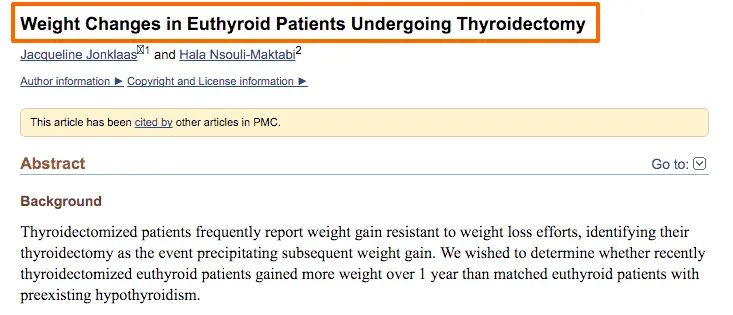
In fact, it’s been shown that women who have a total thyroidectomy gain more weight than patients with hypothyroidism (1).
And, let’s face it:
Most Doctors don’t do a good job of treating hypothyroidism, otherwise, websites like this wouldn’t exist!
And, following the trend, doctors typically do an even worse job in treating post-thyroidectomy patients.
Let’s take a minute and talk about weight gain after thyroidectomy.
Why are patients gaining so much weight?
The truth is that regulating hormones is very complex.
The thyroid system in your body is no exception.
And the medical world doesn’t have a great track record in balancing and regulating hormone levels.
Take for instance Type I Diabetes:
Medicine has developed near-continuous blood glucose monitoring systems and we still don’t do a great job of controlling blood sugar (2).
Now compare that to your thyroid.
How often are you getting your labs tested? How often is your medication being changed? Are you feeling any better about those changes?
It might be time to make a change to our current treatment paradigm, or at least consider the fact that we don’t have it all figured out.
In order to understand why our current treatment doesn’t work, we have to understand why we actually gain weight…
Weight Gain is Not About Calories
Weight gain is not about eating too many calories or not exercising enough. Period.
It’s about an imbalance in your hormones.
How else do you explain the sudden weight gain in post-thyroidectomy patients despite eating the EXACT same foods before and after?
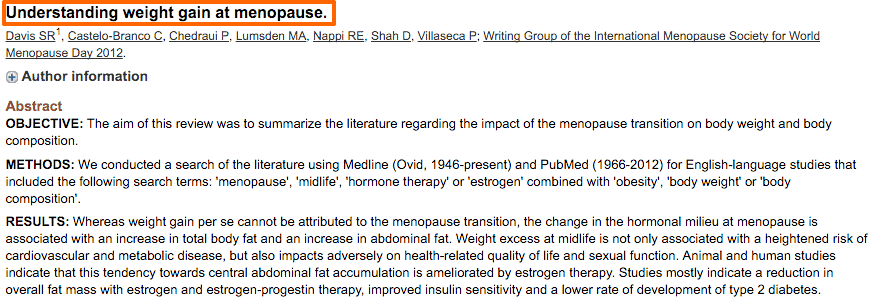
Or how about the weight gain associated with menopause (3)?
Do these women just happen to magically start eating more and exercising less at the precise time their estrogen levels drop (in the case of menopause) or their thyroid levels drop (in the case of thyroidectomy)?
Obviously not.
Weight gain is a hormonal problem!
And to fix it we have to fix the hormonal imbalance.
Unfortunately, the current paradigm is set to make you believe that in order to lose weight you must eat less and exercise more.
You even get this kind of advice from places like the Mayo Clinic (4) and Livestrong…
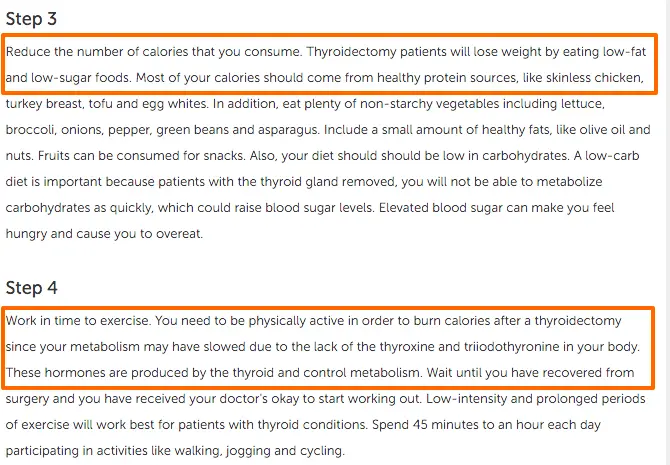
This is bad advice, so please don’t follow it. (Check out this post on nutrition facts that should be common sense but aren’t for more info)
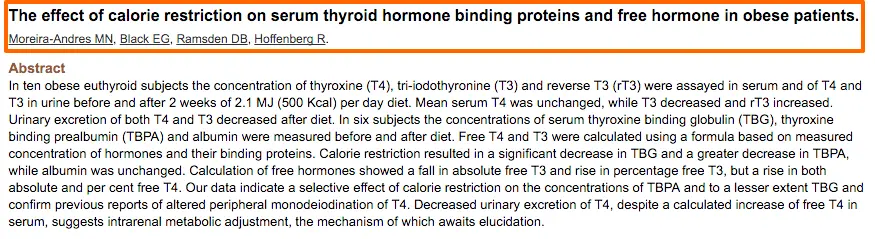
In fact, reducing your calories has been shown to reduce your overall metabolism, and may make your thyroid function even WORSE (5).
Dieting leads to low levels of Free T3 and higher Levels of Reverse T3 which means you’re going to slow down your metabolism even more.
I know what you’re thinking:
I don’t have a thyroid and I take medication so it doesn’t matter to me.
Not true at all.
If you’re on T4 medication your body must convert it to the active Free T3 in order for it to work.
And your body can still turn it into Reverse T3 as well.
So it definitely still matters to you.
What about Diet after Thyroidectomy?
The truth is that diet is still important for weight loss in Thyroidectomy patients, but not as you think.
I don’t want you to think you need to restrict your calories to lose weight (that won’t work).
But it is still important for you to eat a HEALTHY, nutritious, and whole-food diet.
If you don’t know what that is you can find a lot of information about it here.
And, to answer your question, yes it will work for patients with a sluggish thyroid and for those without a thyroid.
So in addition to eating a whole food diet, what other things will help with weight loss after thyroidectomy?
Let’s jump into some tips that can actually help you lose weight if you no longer have a thyroid.
1. Get On the Right Type and Dose of Thyroid Medication
This is a critical step and the first place I recommend you start. (It can also be the toughest part because it requires a doctor to prescribe you the RIGHT medication)
As I’ve mentioned before your thyroid controls the metabolism of your body.
And currently, we have an epidemic of thyroid patients that are being undertreated.
To understand why this is you need some basic understanding of thyroid physiology:
There are 2 main types of thyroid hormone that your doctor can prescribe.
T4 = The inactive thyroid hormone <— This is what most Doctors prescribe and very few people do well on this medication (Yes I said that it is inactive by itself)
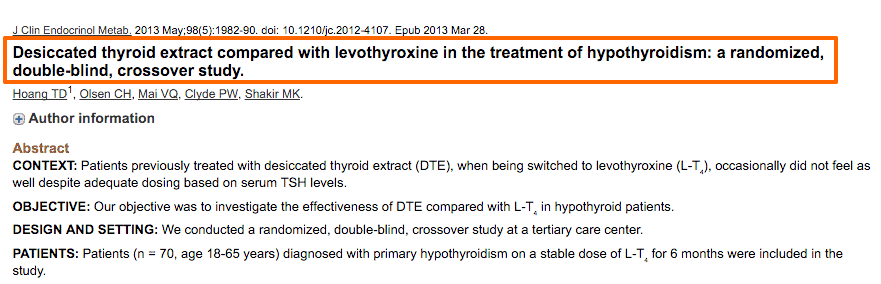
T3 = The ACTIVE hormone <— Most people do better on this medication (6) but most Doctors don’t prescribe medications containing T3
For more information on thyroid medications check out this post here.
Most people do better on medication that contains the T3 hormone and studies show this to be the case.
Patients on Natural Desiccated Thyroid hormone (a medication that contains T3) lose more weight and have better satisfaction than patients on levothyroxine (the medication you are most likely taking).
Why is this?
It turns out that your thyroid produces both T4 and T3 medications (when it’s functioning normally).
It produces about 80% T4 and about 20% T3 (7).
When your thyroid is gone most patients are given T4 medications ONLY (remember that this is the INACTIVE hormone).
As a result, most patients develop weight gain and symptoms of hypothyroidism.
So what can you do?
Whenever possible I recommend attempting to mimic nature. That means dosing your thyroid with 20% T3 and 80% T4.
If your doctor is willing to work with you, you have a couple of options:
Get on Natural Desiccated Thyroid Hormone which contains roughly around an 80/20 ratio of T4 to T3 – in addition to other less biologically active thyroid hormones.

Add Cytomel or liothyronine to your dose of T4 – Let’s say that you are currently on 100mcg of T4. In this case, I would simply add 20-25mcg of T3 medication to your regimen (note: you may need more or less depending on how sensitive you are to this medication).
Adding T3 medication to your regimen can drastically improve your overall symptoms and metabolism thus leading to more weight loss.
And remember:
After thyroidectomy, the ONLY way you are getting T3 is in the form of medication.
2. Optimize your Free T3 Levels
Under normal circumstances, your body must produce free T3 from T4 (unless you provide T3 directly via medication).
The problem is that your body can also turn T4 into Reverse T3 which is a thyroid blocker (it sits on free T3 receptors on the cells and blocks the action of thyroid hormone).
Because of this, it is important to optimize this system and make sure your body is producing as much free T3 as possible and as little reverse T3 as possible.
I’ve gone into a lot of detail on how to increase your free T3 levels naturally in this article, but I will also go over some useful info here as well.
In order to optimize free T3 levels you will want to do the following:
- Take supplements that increase T4 to T3 conversion like zinc, selenium, and B6
- Get off of medications (if possible) that block (8) T4 to T3 conversion like antidepressants, narcotics, mood stabilizers, pain modulators, blood pressure medications, and diabetic medications. You can find an entire list of supplements and medications that interfere with thyroid function here.
- Heal any digestive issues you may be dealing with like acid reflux, bloating, or irritable bowel syndrome – use a high-quality multi-strain weight loss probiotic.
- Make sure your iron levels are in the “optimal range” (more info in this article here)
- Reduce inflammation in the body (high levels of inflammation promote reverse T3 production)
Bottom line:
Higher free T3 levels = Higher metabolism = more weight loss
Increase these levels naturally with supplements or artificially with medications, but either way, you will want your free T3 levels as high as possible (but still within natural physiologic ranges).
3. Balance ALL Hormonal Systems in the Body
Balancing your thyroid is just one piece of the weight loss puzzle.
In fact:
I’ve never seen a thyroid patient with just ONE hormonal imbalance, and patients with weight loss resistance tend to have several.
And it’s also important to remember that hormones interact with other hormones!
For instance, thyroid hormone interacts with progesterone (9), cortisol (10), and insulin levels (11).
This is especially true in patients without a thyroid.
To make your weight loss efforts MOST effective you will want to evaluate the following hormones:
- Insulin Levels – High levels of insulin (AKA insulin resistance) cause weight gain in the belly. More info here.
- Estrogen Levels – High levels of estrogen and low levels of progesterone promote weight gain in the hips/butt and thighs.
- Testosterone Levels – Low levels of testosterone cause depression, weight gain, and reduced muscle mass.
- Leptin Levels – Leptin resistance causes increased appetite, low metabolism, and chronic weight gain. Find out how to reverse it here.
- Cortisol – Adrenal fatigue leads to weight gain in the belly, reduced energy, and inability to tolerate stress. Almost EVERY thyroid patient has issues with cortisol.
Use the following guides to help balance these hormones:
- Learn how to use progesterone safely and correctly for weight loss here
- Learn how to use powerful supplements such as Berberine and Alpha lipoic acid to help with weight loss and improve insulin signaling
- Learn how to deal with Testosterone and DHEA here
- Learn how to lower Leptin levels with targeted supplements here
I’ve included a table below that will teach you what tests to ask for and how to determine if your hormones are out of balance:
4. Be Strict with your Diet but Don’t Restrict Calories
When I use the word diet I am referring to the food that you eat.
I’m not referring to DIETING or eating a calorie-restricted diet.
In fact, eating a calorie-restricted diet will actually make your thyroid function worse (12).
Since we’ve already discussed diet in this article I won’t go over it much more except for some general guidelines:
- Stick to Organic Food groups and Grass-Fed/Organic Meats
- Don’t be afraid of eating Healthy Fats
- Eat lots of Vegetables
- Don’t snack every 2-3 hours
- Avoid Processed foods or anything that comes in a box or package
- Avoid sugar and artificial sweeteners as much as possible
5. When your Energy Improves make Exercise Count
It may be difficult to think about exercising when you are suffering from fatigue after your thyroidectomy (another sign that you are being undertreated), but I can’t underscore how important exercise is for your health.
Exercise isn’t important because you are “burning calories”.
It’s important because it helps to balance hormones in your body (13), release endorphins (14), and stimulate neurotransmitter release (15).
Even if your energy levels are low, I recommend that you start with low-intensity exercise on a daily basis:
That can be walking for 30 minutes per day.
Once you have a handle on low-intensity exercise, you can then start to add in slow-weight training and high-intensity exercise.
These types of exercise have been shown to be more effective than traditional “aerobic” exercise and have the additional benefits of building muscle mass and taking up less time than standing on a treadmill for hours.
Putting it all Together
I know that it can seem impossible to lose weight after thyroidectomy, but let me tell you that it IS possible and I’ve helped MANY patients do it.
It just takes a systematic approach and a sympathetic physician.
Because getting on the right type and dose of thyroid medication (preferably medication that contains T3!) is so important I recommend that you find a Doctor who is willing to work with you.
In addition, you will need to find someone who will look at your other hormone levels and treat them appropriately.
The other aspects: Diet, exercise, lifestyle changes, and supplements/vitamins – are things that YOU can take care of.
Also, remember that healthy weight loss may take months to achieve. But once you are able to lose pure fat mass without losing muscle mass, your weight loss will be long and lasting.
Now I want to hear from you:
What have you done to lose weight after your thyroidectomy?
What has worked, and what hasn’t?
Was changing your thyroid medication helpful?
Leave your comment below!
Further resources:
Weight changes in euthyroid patients undergoing thyroidectomy (16).
Weight changes in patients with thyroid cancer after thyroidectomy (17).
Weight gain in hyperthyroid patients after thyroidectomy (18).
More studies show weight gain in hyperthyroid patients after thyroidectomy (19).
Scientific References
#1. http://www.ncbi.nlm.nih.gov/pmc/articles/PMC3229816/
#2. http://www.ncbi.nlm.nih.gov/pubmed/8299480
#3. http://www.ncbi.nlm.nih.gov/pubmed/22978257
#4. http://www.mayoclinic.org/healthy-lifestyle/weight-loss/basics/weightloss-basics/hlv-20049483
#5. http://www.ncbi.nlm.nih.gov/pubmed/6771066
#6. http://www.ncbi.nlm.nih.gov/pubmed/23539727
#7. https://www.ncbi.nlm.nih.gov/books/NBK499850/
#8. https://www.ncbi.nlm.nih.gov/pubmed/20578900
#9. http://www.ncbi.nlm.nih.gov/pubmed/9846161
#10. http://www.ncbi.nlm.nih.gov/pmc/articles/PMC3520819/
#11. http://www.ncbi.nlm.nih.gov/pmc/articles/PMC3356957/
#12. https://www.ncbi.nlm.nih.gov/pubmed/12055988
#13. http://www.ncbi.nlm.nih.gov/pubmed/10683091
#14. http://www.ncbi.nlm.nih.gov/pubmed/6091217
#15. http://www.ncbi.nlm.nih.gov/pmc/articles/PMC2077351/
#16. http://www.ncbi.nlm.nih.gov/pmc/articles/PMC3229816/
#17. http://www.ncbi.nlm.nih.gov/pmc/articles/PMC4595360/
#18. http://www.ncbi.nlm.nih.gov/pubmed/24522995
#19. http://www.ncbi.nlm.nih.gov/pubmed/11531931


Hello Dr Childs,
I have focused much of my effort on dietary changes as it relates to PCOS and the related insulin resistance. I recently decided to change my approach and started reading up about thyroidectomy specific diet and so came across this post.
I am now convinced that this should be my focus for weightloss and I’m guessing that it would improve my other conditions as well. I believe thyroid disease has been a problem for much longer than I realized and it’s a shame it had to be removed due to cancer.
My question is, as someone who has been diagnosed with Hoshimoto’s and has no thyroid, I read that synthetic hormone replacement is recommended over natural because the nature of autoimmune disease is such that the body will attack the natural hormone replacement more readily than the synthetic. And that I need synthetic for consistency and cancer repression. Is this true?
I am on Tirosint 112 mcg Mon through Sat, and 125 mcg Sundays. My bloodwork always looks great. Dr. just says that I need to eat less and exercise more….
I could prob reign in my eating a bit, but is it pretty good/clean. I was powerlifting and bootcamp training for 1.5 years. My weight hovered about the same throughout that time and I’m up about 5 lbs since starting that. More distressing, my waist size as not decreased at all. I saw a decent body recomposition of muscle and gained strength but my waist did not change at all. My coach was dumbfounded. I gained about 15 after surgery in 2011 and was about 10 or 15 overweight going in. So where I sit, I’m about 30 over at the moment, and I’m sidelined due to a foot injury as well. 5′ 3′, 165 lbs, heavy boned somewhat larger framed.
I feel generally good and am capable physically, at least compared to other thyroid sufferers. But I’m approaching my 40s and my weight is creeping up no matter what I’m doing.
Other info, besides the Tirosint
100 mg of prometrium daily for PMDD and PCOS
Bcomplex
Omega 3
Curcumin
Vit D 5000
Probiotics
collagen protein
500 magnesium at night when I remember
ACV water several times a week
very little gluten, dairy, eggs, corn, soy, peanuts, sugar
NO artificial sweeteners. I do well at eliminating above foods for several weeks at a time but have been unsuccessful at long term elimination.
ANY insight you could offer would be greatly appreciated. And if you can recommend anyone in the Pittsburgh, Pa area, I could look them up. Sorry for the long post, and thanks.
Hi Patty,
If you’re interested in weight loss you can find more information about my weight loss programs here: https://www.restartmed.com/hormone-mastery/
And yes, under certain circumstances your body can create antibodies to porcine sourced thyroid hormone.
I’ve had a total thyroidectomy more than ten years ago, since then my weight has climbed. I am post menopause and my weight since last year has increased by more than ten pounds. I’ve complained to my endo doc and he just put it off to age, I’m 59. I don’t look overly heavy but have gained about 50 pounds since my thyroidectomy. I changed doctors recently and he’s given me phentermine which helped with not being hungry, lost 1Lb, probably because I didn’t eat lunch! I told him about the T3, so he changed my medicine to nature throid. I have hopes this will help. I do walk a fair amount, about 2-3 miles a day. I have also done almased for four weeks with little weight loss. HELP! I’m going to be 200 pounds if my weight keeps increasing. I was taking 175mg Synthroid, 5mg Cytomel, now I’m taking 94.5 nature throid.
Hi AC,
You can find more information about weight loss post thyroidectomy in my guide here: https://www.restartmed.com/hormone-mastery/
Hi,
I had thyroid cancer 10 years ago and have been on Armour Thyroid and now Nature Thyroid. My energy is great, I eat low carb and (mostly) avoid sugar. I run/walk every day. My thyroidectomy and radiation treatment forced me into early menopause. All labs are fine, but I can’t get rid of these last 15 pounds.
I started adding Selenium recently but nothing has changed. I was waiting needing if you had any thoughts on new strategies I could try?
I got more from your article than I have from numerous docs, so thank you!
Hi Karla,
If you’re interested in weight loss then I would look into my weight loss program: https://www.restartmed.com/hormone-mastery/
Hi
I had my thyroidectomy over 6 years ago and I have gained about 60lbs. I have always struggled with my weight but since my surgery it has gotten worse.. No matter what I do. I eat healthy low carb diet with regular exercise and it seems that I gain weight instead of losing which has been a very depressing journey to say the least. I have been to 2 endocrinologist since my surgery in regards to my weight gain and I get the same story .. You need to eat less and exercise more. Which believe me I get! I went to my family Dr yesterday for a skin tag removal and was discussing how I have gained so much weight and my frustrations for my hard work of eating right and exercising with no results. She asked me why I was not prescribed T3? I said I had no idea I should be on this.. SO I have started taking T3 once a day to start. I take 200mcg of Synthroid is the T3 going to be effective with some weight loss relief? Any suggestions of what else I can do to lose the excessive weight?
Hi Kerry,
This topic is very complex which is why I have created a weight loss guide which you can find more information about here: https://www.restartmed.com/hormone-mastery/
You can also find more information about why almost every post thyroidectomy patient gains at up to 20 pounds after surgery here: https://www.restartmed.com/hyperthyroidism-weight-gain/
Please Dr, I am scheduled to have thyroidectomy today. I am so worried about my weight changes after the surgery. I am already obese. Pls I really need your help. I don’t want to gain any more pound rather I want to lose weight after the surgery
Helpful information I am going to try to implement.Thanks.
Hi Kristi,
No problem, keep us updated on your progress.
Hello Dr. Childs,
I just found your website and was hoping for a recommendation. I had a total thyroidectomy in Match 2016 due to thyroid cancer. This was a year after my son was born and I had already gotten below my prepregnancy weight. Following the thyroidectomy I continued to get in better shape and felt really good. My doctor was happy to work with me and prescribed Armour. I moved in August 2016 and my new doctor refuses to concen himself with anything other than my lab work. When I became pregnant a second time he took me off Armour and has continued to reduce my synthroid from 175 to 112 in just 7 months. I feel miserable. I’m 8 weeks postpartum, I cannot lose any weight, I feel awful, my milk supply is drying up. All of these symptoms followed within a week of my last dosage decrease. My first few postpartum weeks went really well. The weight was dropping, my milk supply was great, and my baby is a great sleeper. I get 7-9 hours of sleep a night. He says it’s due to postpartum and beyond ordering labwork he refuses to see me. How can I find a doctor willing to treat me, a human being dependent on these meds for my quality of life and not just read the results of two lab reports? Thank you for your time!
Hi, I’m in the UK and 3 weeks ago had a total thyroidectomy on suspicion of thyroid cancer. The jury is out on the cancer but prior to going for the op, I had lost about 30lbs (from super heavy 420lb to 390lb). During the week after the op, I put 14lb back on even though I was largely in hospital and eating uk hospital food which is naff. I came out and got straight back on the diet, but have seen really slow loss in week 1 and a plateau in week 2. This is really unusual for me as I can drop weight quickly when I put my mind to it (have tried many times, and get good success, but then fall off the wagon). My concern is that the Levothyroxine I am taking (175mg) is preventing my body dropping the weight. I am taking a multivitamin (a good one) to try and keep my minerals up and also have just started taking another supplement containing Green coffee extrct, caffeine, cinnamon, chlorine bitartrate, bioperine, chromium picolinate, slelenium methonine (55mcg). Going back to see consultant and will raise concerns with him (again) next week, but is there anything else I can take or do to help?
Hi, I also had a complete thyroidecdomy and have changed Endroconologisrt’s 3 times for not listening to my concerns. I am out of options for Dr’s. Please can you recommend someone in Tx that has similar beliefs and open mindedness when it comes to needs like ours. At my wits end. Have gained over 50 lbs, moody, depressed and mind fog. All levels are good. Levothyroxine 100 mg. please help me
Hi Dora,
I am training a physician who will be accepting patients in Texas soon, but I don’t have an exact date for you. We will let our email list know when that happens.
I had a total thyroidectomy in 2015. Finally found a Doctor who heard my complaints. After over 10 years of arguing with doctors, knowing I had a multi nidglar thyroud. But I was “normal” I just needed to “eat less and exercise more.” Well it turned out I had mestatic papillary thyroid cancer.
I am finally dropping fat. I demanded t4 and t3 meds. And knowing I gluten and lactose intolerant, I knew I had to be diligent with my diet. I literally became vegetarian after my RAI tx. Because my body no longer tolerates flesh. I’m good with that.
My fruit intake increased, I’m feeling much better.still struggling to find that right dose as most doctors fear the medical malpractice crap. And I’m treated by tsh, kept suppressed but “it would be medical malpractice to keep you that high.”
Enough with the numbers! What about how I feel?
And what about the other numbers??? I finally found an internal med doc who is willing to manage my care. I fired my endocrinologist. Whom lowered my meds so low I had to quit my job and ended up bleeding fir 57 days causing a total hysterectomy.
Today I’m good.
I just had the RAI about 1.5wks ago. I am so scared of gaining any weight as I have gained for the past 6mths. I do have a lapband but due to other issues I had to have it loosened about 9mths ago (liver issue).
They said there is a 60% chance the RAI would kill the entire thyroid. I am trying to figure out what all I can do to stop or try and stop any additional weight gain.
Interested in a consultation.
I persuaded my Md to prescribe liothyronine 5mcg along with the 125 mcg levo. My tsh went from 1.51 to .34, so she told me to cut the lio in half. I don’t feel that is the right approach.what do ypu think? BTW, 1 yr since complete thryoidectomy.
I had a tyroidectomy 7 years ago and weight has creeped up by 30#’s. For the past year I have been eating clean and 99% sugar free. I fuel cycle my meals and have successfully lost 8 #’s. I have even thrown exercise in the mix. I have a whole slew of symptoms that I have been complaining about for years. The last Dr who is an endocronologist listened and ran a test to find out I was post menopausal. The gynocologist decides to throw some estrogen in the mix, and says if this dose doesn’t help symptoms you can take two pills. Well, needless to say, that didn’t help do I stopped that all together. So levythyroxine is the only pill I’m taking. Everything I’ve read today hits the nail on the head. So happy to finally find out I’m not a crazy “fat” lady crying about not being able to lose weight no matter what I do. My first step has been to try to find a functional medicine Dr in the area. I am going to have to travel 150 miles to fin d one according to your functional medicine website. Next I am calling my endocrinologist this morning to beg to have these tests run. If he refuses, i will find another Dr.that will run the tests. My endo said he would prescribe armour thyroid but doesn’t like to on patients without thyroid as it is harder to monitor. Wish me luck!
De Weston. I’m 47yrs old and I have my thyroid leveled with snthyroid but I can’t seem to lose weight. What extra supplements to take and foods to eat
Hi Stephanie,
You can find more information about weight loss here: https://www.restartmed.com/hormone-mastery/
I had a thyroidectomy 3 years ago.
I gained 40 pounds after.
I have finally stopped gaining because I take Nature Throid. Which has helped so much. I take 3 granules per day. But I take it 4 different times of the day. That has been the key to me having enough energy to make it thru the day. And to sleeping well at night.
I think to actually lose weight I need to clean up my eating some summer has been bad on my diet. I also need to add zinc and selenium. Along with being more committed to probiotics, I have them I just forget some days to take them.
Thank you for this information. It is so hard being a post thyroid removal patient.
I have an amazing doctor who I work with along with a Pharmacist who I actually meet with and discuss symptoms and how I am feeling. He is excellent at knowing when I should do labs and reading them and understanding how my medicine affects me. And making sure I am taking the correct supplements like Vitamin D3 and reacted Iron to keep those levels where they need to be to keep me healthy.
Thank you for your information, keep up the great work! This is something science needs to do better with.
Hi Amanda,
No problem, and glad you found it helpful! Thanks for sharing your story.
I am a 57 year old woman. I had a complete thyroidectomy nine years ago due to a goiter and hoshimotos. I had unexplained weight gain for five years before being diagnosed. I had a complete hysterectomy four years ago with no hormone replacement because of breast cancer in my sisters. I have gained 75 pounds over the past ten years. They he k my thyroid levels every three months and they change my meds every time from being too low or too high. They can’t regulate it. Can you help me please?
Hi Cheryl,
The best thing you can do is seek out a physician who is knowledgeable and understands what I discuss in this blog post. After that amount of time and weight gain you will now most likely have many other issues that need to be addressed beyond your thyroid.
I had a total thyroidectomy several years ago and am taking T4 meds only and live in the UK. I would like to find a doctor in the UK who has assisted patients with no thyroid to take natural desiccated thyroid hormone but can’t seem to find one. Any ideas or information on finding this illusive help. Thanks for any help or advice available
First article I have found truly helpful. I had thyroidectomy about 5 years ago. My Dr. checks levels about every 6 months. I’m not sure why she even has me go in the office, she only cares that T4 is in range and she won’t listen st all to how I feel if it is in range. She doesn’t even test T3 and when I question she says it’s very different when it’s a cancer situation and that she wants levels different because of that. She’s put enough fear in me that makes me worried to mess with or really seek another Dr. (not that I have many options)
In your experience if it was thyroid cancer does that change what you do following thyroid removal?
For awhile I was eating very clean and exercising and felt better than I have in years and was in the best shape of my life. Once I fell off that a little bit and has been next to impossible to get back. Right now I’m experiencing close to what I would say I felt when I was off all medication before radioactive iodine. Brain fog,blurred vision, no energy, weight gain, feeling down.
She has me right now on Synthroid 112 during the week and 100 Saturday and Sunday.
I’m getting ultrasound and lab work (t4) done next week.
Sounds like your advice might just be to find another Dr.
Do you have any thoughts on cancer related Thyroidectimy?
Appreciate your study’s and what you do. Would love to get consult with you.
Hi Beverly,
As you suggest it’s generally a better use of your time to find a new physician rather than try and convince them to treat you differently. In regards to your other question – I tend to focus on the management of thyroid function postoperatively, I don’t necessarily focus on cancer itself.
In 2010 I had 130 and now 192lbs, I gaining weight no matter what I do, I take Synthroid from 2011 for hypothyroidism in June 137 because thyroidectomy. I am 55, to be short I have a tumor in the pituitary and severe adrenal insufficiency because I have taken 5mg prednisone for 36 years because my kidney transplant. I’ve have had 4 endocrinologists whom do not try to help, just want me to diet. I have low levels of ACTH, cortisol, sometimes T3, PTH, and high A1C, LH, FSH. I need energy and feel well for that I just but yours T3 Booster and Thyroid adrenal Reset, please tell me what you recommended.
Hello Dr. I am active duty in the US. Military. In March I had a total thyroidectomy and after I did the radioactive Iodine treatment. I have never had an issue with my weight and since I have gained 30 lbs. I have lost about 10 lbs. of that since having a very strict diet. I keep asking my Endocrinologist to give me T3 but he will not. since I’m in the military I cant just switch providers either. I also don’t feel right nowhere close to the amount of energy I used to have and a lack of interest and excitement in almost everything. If you can please direct me in what I need to do it would be great. Thank you for your help.
When my thyroid mass got out of control in Oct. 2016, I gained 15 pounds in a month. Had a total thyroidectomy in April 2017. I am six months out with stable levels at 137 mcg Synthroid. I have a lot of energy and feel better. My weight has remained the same since surgery, though lately I notice it’s going up a pound or two. I am 39 yo, was slender before surgery and still at a healthy BMI. That said, I am very concerned that my working out (approx 6 hours/week) and low carb diet is not working at all. I can’t budge the weight and I feel physically uncomfortable. My doc reviewed my diet and exercise and said keep it up, don’t trim calories or add exercise. Can you please tell me what I should ask him to change from a hormonal perspective? What is the question: (1) should I be on Armour; or (2) should I be on a T3 med? I am concerned about a long-term approach as I enter my 40s. Thanks!!
Hello! I’m very excited that I found your website. I’m 22 years old and 3 years post thyroidectomy, and of course I was told that as long as I took my levothyroxine I’d be fine… 3 years and 30 pounds later, here I am. I actually was able to lose around 15 of the 30 pounds that I gained from being very strict about eating a healthy diet and now I’m in a rut. I’m in the process of getting my labs checked now, not as comprehensive as you suggest but it’s a start. I struggle with mourning my thyroid since I’m no longer sure that my surgery was necessary and I know that my body will never be like it was, but seeing your before and afters have given me hope. I’ll update when I get the ball rolling with new meds, etc. Thanks for what you do. There’s such a paucity of (correct) info for post-thyroidectomy patients.
Hi
Having my thyroid removed Jan. 3rd and after reading all of the comments, I’m confused and terrified. I’m hoping to lose a quarter of me with determination. Now… Not so much!
I don’t want to scare you, but I would avoid having your thyroid removed if at all possible. Get second opinions, preferably from a functional/naturopathic doctor, not a traditional endocrinologist. If you’re having it removed because of a goiter you can often live with that. There’s an underlying cause to whatever is going on with your thyroid… Removing it doesn’t fix that cause. I don’t know your specific case, so maybe you really have no other choice but to remove it, but because I wish I had gotten a second opinion before having mine removed I feel the need to tell you this. Don’t be afraid though! You’ll be okay either way, but life is just easier with a thyroid. Good luck 🙂
My wife had a total thyroidectomy earlier this year. We are very active and typically eat pretty clean. I have a question about your comment about snacking. Many people believe having a healthy snack every 2-3 hours helps feed the metabolism. Is this different for those without a thyroid? Can you please explain?
This is a great article and I hope will help my wife drop the few pounds she is anxious about.
Hi Todd,
The philosophy behind snacking to boost metabolism doesn’t have scientific backing. On the contrary there is a case to be made that constant snacking results in an increase in total food intake and promotes insulin resistance. Snacking may be good for certain people, but many do great on 2-3 meals per day and forced snacking may be counter productive for these people.
I am Scheduled to have a total thyroidectomy because of some throat and cough issues ive had for over a year.
Do you have any advice for someone going into to this!
Hi Dr.Childs. I had a thyroidectomy in 2001, a Tetany attack the day after. Since the surgery I have gained 60 pounds and have not at all been able to lose a single pound. My doctor, of course, is very “careful” in changing my meds. I have never been the same level since the surgery, which is very frustrating. Your blog and information is incredible, thank you so very much. Since I have also been on antidepressants since then it is even harder to try losing weight. The Tetany attack caused severe anxiety and panic attacks back then. With the medications it is under control, but my head won’t let go of the experience, so I can’t get off the antidepressant. Any thoughts on how to control the fear of ever having another attack. I am on a daily calcium regiment, but I am always worried.
Hi Marie,
You will most likely be on calcium indefinitely because your surgeon probably accidentally took out your parathyroids along with your thyroid gland and it is your parathyroid glands which help control calcium levels. You might consider looking into Wellbutrin as an alternative anti-depressant to SSRI’s which may actually help with weight loss: https://www.restartmed.com/wellbutrin-weight-loss/
Hello. I had my thyroid removed in 2008 due to medullary thyroid cancer and have gained weight steadily since then. Breastfeeding and increasing T3 are the only factors that have contributed to weight loss, temporarily, as the weight always returns. I am currently on 150 MCGs of Tirosint and 30 MCGs of generic Cytomel. I feel great every time we increase the T3, but the effects seem to last only temporarily. It’s as if my body has developed a resistance to T3. I am within range for Free T3 and Free T4 and cortisol is slightly elevated (per 24 hour urine test). Reverse T3 is normal. I am very grateful to have had my calcitonin levels undetectable for a decade, but have had low self-esteem for a decade due to being overweight (40 lbs weight gain). I never had a weight problem before my thyroid was removed. I have seen different endocrinologists, naturopaths, counted calories, reduced carbs and nothing is working. Any suggestions that you may have would be greatly appreciated.
I have the opposite problem. I can’t gain weight. Total thyroidectomy in 1999. I am on 2 grain NT. I work with FM doctor, but still no clear answer why I am underweight. Did you see this problem?
Dr.Childs,
I am on the cusp of 4 years post-total thyroidectomy, I was 29 when diagnosed with papillary thyroid carcinoma. I’ve entrusted my care to the only endocrinologist in the area, and I’m extremely dissatisfied with the treatment I’ve been receiving the past 4 years. She only treats my lab values, doesn’t listen to my symptoms, and has continuously dropped my Levothyroxine dose ever since. I’ve been on 112mcg for over a year now, yet she states my labs are hyper and is wanting to drop my doseage even further despite increased fatigue, lack of energy and clarity, and steady weight gain even though I’ve maintained a decent low-carb diet over the years. She added the lowest doesage of Cytomel for 6 months, and then took it off the table, stating it made no difference so it wasn’t worth continuing. I’m a single mother of a 5 year old daughter, have a full-time job, and am pursuing my first degree… and can barely stay alert enough to get my daughter tucked into bed at night, let alone have the energy to actually play with her and be an active part of her life.
Dr.Childs, like many others, I am frustrated and exhausted. This endocrinologist isn’t listening, she isn’t treating me as a person… all that matters to her are the lab numbers. Even when I had the cancer before my thyroidectomy, my numbers were “normal” so it is hard to believe that this is all I’m left with. I don’t know what else to do.
I WOULD LOVE SOME HELP…PLEASE! You might be the only one that can help or shed light. I wish you were closer. LOL. I am 46 years old. I had a complete thyroidectomy on November 2, 2017. I have always had to work on my weight, but I exercised and dieted. I had the complete and was immediately on 100 mg of Synthroid by the Thyroid Surgeon. I felt pretty good. I actually lost a little weight..not a lot. I thought well, ok this was better than I thought. Well, 6 weeks later the Endocrinologist decided to move me down to 88 mg of Synthroid. WELL WELCOME TO THE WORLD OF HELL!! It has been a nightmare every since. Anxiety, depression, severe weight gain (even though I drink a lot of water and really don’t eat a lot), not sleeping, grouchy, skin complexion is poor, hair is thinning, severe stomach bloating, swelling, abnormal periods of 3 weeks of non stop heaving bleeding to weeks of no period, my hands and feet get cold and my face feels like I got a huge sunburn and bright red in color, etc. I have spoken with my Endocrinologist and my regular doctor. I just always get “Well, it takes time! Your body has to adjust. This is normal until we get your levels right.” Well, then I go back 6 weeks after that and they lower it again to 75 mg. Well, I have been steadily gaining weight which is causing more anxiety, depression, etc. I have spoken with my Endocrinologists about the Cytomel and she says no until my levels are steady. My TSH on 88mg Synthroid was 0.03 (which normal is supposed to be (.3-.5) and they said the tested T3 and T4 levels weren’t bad. WHAT? I was explained that the TSH levels were controlled by the brain. When you are missing levels/hormones on the thyroid, the brain is sending signals to compensate for the thyroid being gone.?????? I am so down right now, I don’t know how much longer I can continue this way. I can’t get a doctor to listen and understand when I tell them this is not a normal way to live and I am drowning. All I keep getting told is that it could take up to a year to get this resolved. My regular doctor even tested other hormones to see if I was in early menopause because of my symptoms and age. Until this procedure, I never took more than an Advil and daily vitamin. I seriously can’t handle a year of this. I don’t know what to do, what to take, etc. Can you help shed some light on someone who can’t take much more? I am almost at the point of just not taking the Synthroid at all.
I had my thyroid removed on 9/1/17; which was cancerous. I have gained approximately 30 lbs. while watching my intake and exercising on a regular basis. I have gone back to my endocrinologist and general practitioner for assistance with my medication. I am currently on Levothyroxine 112mcg. I am constantly exhausted, walking around in a daze, no energy or desire to do anything. I have asked them to put me on an additional T3 after reading your materials and they will not do it. The blood tests that they run are only looking for TSH and T4 levels. I am very frustrated and am considering trying to get an appointment with Johns Hopkins. Thank you.
Hi Ellen,
It doesn’t really matter if you go to Johns Hopkins or not as they will give you the same advice. All physicians who are conventionally trained will give you the same answers because they use the same approach.
Your best bet is to find a provider who fits the criteria listed in this post: https://www.restartmed.com/thyroid-doctor/
13 yrs ago I had thyroid removed a lobectomy of entire thyroid. This was because I had several huge lumps growing there, and then it was noticed entire thyroid was covered in non cancer tumors. When tumors were noticed I was pregnant and I had gained around 100 pounds which were not normal, this was my 6th pregnancy. After the surgery I asked for the Synthroid I was told I was getting and the doctor told me he looked over my charts and saw meth addiction in my past, and he decided he was not going to give it to me. I wanted to attack him! I was scared, angry and insulted! I said..so what can I do! Please help me!! He said we could look at doing gastric bypass. I said what about later..i will just gain it all back..he said well we could do gastric bypass every time I needed it. I was horrified ! This was NOT the last time I had this same thing told to me. I don’t understand how because of my past I’m no longer worthy of medication or anything that could very much help me with quality of life? I should still have right to same treatments as anyone else. It just so happens my husband’s mother had passed away from Gastric bypass complications not even 3 yrs before this. Anyways here I am much older and still dealing with ignorant fools who think I deserve to suffer instead of helping me. I’m tired of it and honestly, wonder if I could just find Synthroid on street to buy? I don’t eat much but I’m creeping back up the scale and I’m ready to give up on myself. Please help.
Hi Dr!
I just had my thyroid removed last 2016 because of cancer. I am 28. I’m taking levothyroxine 100mcg. After 8 months I gained 15 kilos. I thought it was just normal. I’ve read taking levothyroxine makes you lose weight but after another 12 months I gained another 15lbs. I’m dieting, restricting calories, do some excercise but nothing is working. It makes me depressed and stressed. Until I saw your posts. I believe my doctor won’t let me change my medication, or add the T3. Can i just buy T3 myself with just a small dosage? My aunt is working in a drug store I think I can just ask her to buy liothyronine for me. Thanks for your help.
Hi Laurie,
I generally recommend against purchasing and using thyroid medication without physician supervision as it can be dangerous if dosing gets too high. It would be better to try and seek out a physician who is knowledgeable in your area because it’s never as easy as just adding a small dose of T3 and losing weight. Hope this helps!
Thanks for replying Dr. Will see my doctor later to discuss about this. Thank you!
I am 32 and have been living without a thyroid for 5 years (cancer). I have visited 3 different naturopathic type doctors who claimed to know about thyroid issues and they have all failed me. I am thankful I found your website and SO wish you were closer. It’s so depressing to know I have to deal with these issues for the rest of my life and have yet to find a doctor that understands so I have to try and figure everything out myself. If you know of a doctor in or around the Sacramento area please let me know 🙂
Hi Sandy,
I don’t know anyone to refer you to but I do believe that this type of practice and information will grow over the next 5-10 years and it will be much easier to find a knowledgeable thyroid doctor.
Hello Dr. Childs,
I was searching online today for just this topic and found your you tube video. I am 46 years old, and 10 months post thyroidectomy along with removal of metastatic papillary follicular thyroid cancer into a central neck lymph node. It has been quite a journey. I had radioactive iodine treatment this past November. My doc has me only on Synthroid .125, Last year before my surgery I had lost a lot of weight and now it is gradually climbing back up and I am just sick about it. Before the cancer diagnosis I was on naturethroid and I was doing great. But now because of the cancer factor, I was told I always have to be on synthroid. So far they haven’t added any t3 and I just don’t know how to ask. My doc isn’t the most receptive person. I know my body and I know something isn’t right. The other factor is perimenopause and my body is just wacky all together, so I don’t know what is what. I just know my body can’t tolerate the weight gain and it is slowing my down. I eat pretty healthy, I have my moments. I am hoping that with some of your info posted on your site I can figure this out but its just a real downer not knowing how to manage with a doctor who doesn’t test t3 at all and dismisses feelings of fatique, joint pain etc, saying none of it is related. How do you get your doctor to order the tests you want? Thank you for sharing your knowledge. It’s a great help!
Hi Amy,
It’s very difficult (read impossible) to get your Doctor to order tests if they don’t understand how to use them or what they mean, you are much better off seeking a second opinion with someone who understands hormone dysfunction.
I am on 150 mcg t4 six days a week and 75 one day a week which averages about 140 a day but I’m only taking 10 mcg t3. Another dr said to take 15 mcg t3 but endo said 10. I don’t feel I’m getting enough. Can I up it myself?
Hi Kathy,
I wouldn’t recommend making any changes to your thyroid medication without consulting your physician. You may cause more harm than good by doing so.
Finally. A doctor who “gets it”. I was never told that I would gain so much weight after my thyroidectomy. Since I started gaining weight after surgery, while still having the same symptoms I had prior to surgery. I only wish I had done the research before my surgery. All of the information you have provided has taken me years to learn! I am now on NP Thyroid – after begging my Endo for years to change me since a symptom of my synthroid seemed to be arthritic pain. How would it be possible to find a doctor who is trained in Functional Medicine in my area? I’m in Mississippi.
Hi Jennifer,
You can find some resources on how to find a doctor in this post: https://www.restartmed.com/thyroid-doctor/
I have a more complex question. I had thyroidectomy in 1994, was diagnosed with fibromyalgia in 1999 and a hysterectomy in 2002. I have gained a total of 95 lbs since this has started….not counting what I lost and found again. I am in a physically demanding job and I can’t lose an ounce. After 25 years on synthroid I finally got on armor. Currently at 120mg. I have to admit I did better with it all five- eight years ago before coming off estrogen and supplements but I am really struggling now. I just turned 50 and I feel I can’t balance out. I am at the end of my rope. Where would you suggest I start? I have a GP who will refer me to any specialist I need to see.
Hi Heather,
You’ll want to find a doctor who is both knowledgeable about thyroid function as well as other hormones. You can find how to do that here: https://www.restartmed.com/thyroid-doctor/
I had a full thyroidectomy in August. I gained 10 lbs within the first month. Then I went hyper, heart palpitations, extreme anxiety and depression. My doctor has pulled me off thyroid meds for the past 11 days, and plans to keep me off of it for another 7 days -this makes me very nervous. Is this okay?
Also, the depression and anxiety are debilitating. I have had therapy sessions and set up an appointment with a psychiatrist (I am already on anti-depressant that worked great until I got sick). Any suggestions in regards to this? My endo seems pretty clueless when it comes to the mental health aspect, and doesn’t seem concerned about the fact I’m totally off thyroid meds -and has asked me not to call for 7 days, as that’s when he gives results.
Hi Amy,
T4 medications have a half-life of 5-7 days so they stay in your system for about 30 days or so. In regards to depression, I would take a look at these resources:
https://www.restartmed.com/hypothyroidism-and-depression/
https://www.restartmed.com/t3-thyroid-hormone-depression/
https://www.restartmed.com/product/thyroid-chill/
I have found your wonderful and comprehensive advice to my problems with hair thinning and serious loss as well as loss of energy and gaining weight after partial thyroidectomy in October 2009. I think I will begin looking for a functional medicine doctor because my doctors do not want to work with me. When I have noticed in recent (2014, 2016 & 2018)lab tests that T4 did not convert to T3, I became concerned. I have a good low carb diet but I love my coffee or herbal teas. I am also having my sessions on cross-trainer: 3x weekly but it does not seem to be working. I am hypoglycaemic so I need to watch what I eat or drink. Usual visits to standard care of dieticians doesn’t help either. Of course, my concerns were brushed off or denied. That got me thinking. Once again, big thank you for your down to the earth clarifications so I can go ahead after analysing my lab results since then.
Hi Magdalena,
You are very welcome! I’m glad you enjoyed it and thanks for sharing your story.
I had my thyroid removed 5 years ago and in the first year managed to lose some weight and keep it off, however after having a baby almost two years ago and having tried different diets, etc, I am still the same weight and struggling. My memory has also worsened. I am currently on a dose of 200mg levothyroxine one day and 175mg the next. My oncologist has advised that because my thyroid was removed due to it being cancerous I would need a high-level dosage but have noticed I never required this much previously. Please, can you help??
I am curious if the getting off of antidepressants also applies for TT patients or just hypo. I had a TT in 2017 due to cancer and became severely depressed. I have been on 2 antidepressants since. Does this block the T4 to T3 conversion for TT patients as well?
Hi Rachel,
Yes, the medication blocks the conversion of T4 to T3 period. So it doesn’t matter if you have a thyroid producing your own T4 or if you are taking T4 medication by mouth (as in those who don’t have a thyroid). This is just the mechanism of the medication and how it impacts thyroid hormone metabolism.
Hello, I find your information fascinating, and the clearest in my research. But as you have said, each person is different. I was slight hypo for 7 years on 25mg T4. In August 2018 I started to have shaky hands, and I had my yearly nodes ultrasound and turns out I went hyper and developed antibodies for Hashimotos and Graves. I did not want to go on the meds for Graves so I had my thyroid removed, and at that time off all meds. (nodes had enlarged as well and I did not have cancer). I have had 8 blood tests since the end of November and my TSH has been .01 every single time. Yet I had the worst hypo symptoms post surgery. I discussed your T3 research and she agreed to add that. So I am taking 125t4, and 20 t3. I just had tests and now my ft3 shows 6.17, t4 is 14.2 and TSH .01. I am so confused as to what I should do. I am living in Germany, and scheduling an appt with an Endo (been going to Nuclear Medicine as they call it) in hopes to test all these hormones etc. I am also turning 50 this year, so have pre-meno. ANY advice?? 🙂 Do you do consulting over email or video? I will be in the states in April, but not AZ. thanks!!! Jen
PS: Maybe TMI but had the Merina IUD inserted in June 2018, could that have caused or changed anything? My doc here says no… and love how it took away my heavy periods and anemia.
Hi Jennifer,
I’m not accepting patients but I do have a limited number of phone calls that I can do, but those work best only for those who have doctors willing to work with them.
Hello,
I’m sure it has already been asked, but there are so many questions to read through… why is it bad to eat every 2-3 hours? I’ve been on a weight loss program called Optavia and they promote eating every 2-3 hours for boosting your metabolism. I lost about 35 pounds so far but have completely plateaued. Could this be why? Or could it also be the 80g of carbs in their food?
Hi Kimberly,
Eating 3 hours can be bad in some instances as it may perpetuate insulin resistance. There are several reasons why you may have plateaued in your weight loss but I doubt that the eating every few hours is the main issue.
Thank you for your quick reply! Your article has loads of information that I’m excited to dive into. I’ve currently asked my endo to order some tests and check my hormone levels. Hopefully she will be willing since she also has no thyroid and understands the difficulties. If not, your link to finding a doctor will be helpful. Thank you for giving hope to those of us who don’t feel right even though all our numbers show that we are “normal.”
Hello. I had a total thyroidectomy almost 6 years ago. In January I fell and knocked my head (no serious concussion) and broke a vertebra. I’m fine now, but I had my thyroid hormones checked (I’m on a version of Synthroid) and my TSH was reduced to the lowest level of “normal.” My endocrinologist says this is due to the fall and reduced further my daily dose, but immediately after the accident, my GP had given me ALCAR 500 mg daily for sciatica which helps greatly with the pain which got worse after the fall and I’m wondering if this isn’t suppressing my TSH levels. Can you give me your thoughts? I can find nothing on the internet about this. My endocrinologist also won’t give me T3 as he says I’m too old – 70 – and risk osteoporosis (I have osteopenia) and other problems – I had had an adenoma and a parathyroidectomy before having my thyroid out. Thank you.
Hi Eloise,
It’s unlike that your ALCAR is reducing your TSH. It’s much more likely related to your current dose of thyroid medication. But just having a low TSH is not the same thing as a suppressed TSH so it may not even be an issue.
You can learn more here: https://www.restartmed.com/suppressed-tsh/
I gained 10kg after thyroidectomy until my right dose was established. The doctor went too low,I think it choose the wrong calculation formula.
With fasting I lost about 5kg and I stay there. Not enough T3.
The article has a lot of good information but also a possible fatal mistake. T4 is a source of T3. 25mg cytomel can be too strong, your heart may not resist to the strong cramps it may induce and you will snap often and swich moods. Read about the side effects of cytomel on Pfizer site and read about too much T3 effects. From my experience too much T4 or T3 will have some of known effects and in buzzare combinations. For example more bowel movements,tiredness but no weight gain. You could have heart palpitations and fluctuating blood pressure and mood swings. But not necessarily all symptoms.
You produce T3 from T4. So it is better to investigate why your body does not do the conversion. Eventually take T3 but start with the lowest dose and monitor your heart and test results
I took 25mg Cytomel and had strong cramps at heart, then 10 mg and had all kind of stings to the heart 2-3 hours after taking the pill. Now I am at 5 and plan to get off despite knowing I will be tired again. But I have another plan: I am celiac and despite the gluten free diet I have poor conversion from T4 to T3. Perhaps missing selenium,zinc and other important minerals to assist the conversion. So I will concentrate on conversion and monitor reverse T3 and other indicators of poor conversion. With cytomel I confirmed that low T3 was a cause for my fatigue and I know now what I have to imptove to get off T3 and be on Synthroid only. That’s why it is difficult to diagnose and treat,it depends on every individual, they can’t grasp it an generalise it. You must check you favorite foods,missong minerals and vitamins,control the hours when you take your pill and know it may interact with everyting you et or drink 2 hours before and until 4 hours after you take your medication. That does not mean everybody is so. Some will have good cinversion and take it with food. Others,like me for instance, can take it at night to have a lot of time before and after food and still not achieve good T3 levels and cytomel will not solve it. So you need to find what makes you not have right levels – food? Stress(cortisol), a digestive sickness, the liver? You have to find it and fix it by changing lifesyle and appropiate foods.
I wonder if you can help me understand how to calculate conversions between meds.
I was taking 125 Synthroid + 2 grains Naturethroid for the past 2 years. Despite my energy levels being ok (or maybe I just adapted) I was stuck with this awful 30 lbs of weight gain and weightloss resistance.
I started reading your blog and was thinking, hmm, maybe I should go back to the 4 grains of naturethroid I was on before the T4/NDT combo.
So I switched. And 3 weeks later I was crashed in bed in the afternoons unable to make it through the day. I thought I had calculated it pretty well? Obviously not.
I asked my doc to write me a script for 5mcg cytomel so I could start small and titrate up to where I feel energized to not want to hide in bed.
First day 1 took 1 pill. I did not nap, felt a little zooted but it was a relief to be honest to fire on all cylinders. 2nd day I took 2 and did not get tired after eating, and actually had an appetite.
Question is… 4 grains seems like a lot if I am adding the cytomel.
Would it be better to just take t4 sy,throid /t3 cytomel or take all 3 with NDT, given I dont have a thyroid and with NDT I would be getting what ever ancillary T1-5’s from the piggy.
I am new to all of this, so please forgive my naivete. I am a 50yo female in excellent condition, who has no thyroid issues. Upon yearly physical, my physician stated that my neck looked a tad bigger on one side. Being a slim, petite woman, I suppose it was abnormal to her. After a sonogram found two nodules on either side of my neck, a biopsy was performed. One side came back negative and the other indeterminant. Upon genetic testing, it was reported that the indeterminant nodule was BRAF positive. Add that to my Mother having hypothyroidism and my Grandmother have a thyroidectomy (for unknow reasons) and I have been advised to have a total thyroidectomy. Additionally, I was advised by the surgeon and endocrinologist that if I did not have surgery, I should have a biopsy every six months.
Any insight as to if I should go through with the surgery?
Thank you………
Hi Kristine,
It would be a good idea to take the next 6-12 months to change up your lifestyle and do everything you can to try and avoid a thyroidectomy. You can then recheck the nodule with another biopsy and go from there.
I am 48 year old female that had several Papillary Carcinomas on Thyroid. I also had a Hysterectomy 2 years ago from Fybroid issues and also Open Heart Surgery for a congenital Heart disease issue 3 years ago. Also I started into Perimenopause 2 years ago. I have had a total Thyroidectomy a month ago and find I feel sick, tired, insomnia and headaches daily. My hot flushes are worse as well. My Doctor put me on Thyroxine 100mg and doesn’t want to test me til the 3 month mark to see if I need medication changes. I don’t want to keep going like this for another 2 months. I eat well and exercise daily. There definitely is so many confusing and conflicting information out there.
Hi Lucinda,
What kind of conflicting information are you seeing?