
- Add T3 medication to your T4 therapy if you have persistent hypothyroid symptoms like fatigue, hair loss, brain fog, or weight gain even though your TSH is normal, because free T3 levels matter more than TSH for how you feel.
- T3 increases your basal metabolic rate and helps repair metabolism damaged by calorie restriction, making it especially helpful for hypothyroid patients stuck in a metabolic rut unable to lose weight despite eating very few calories.
- Choose immediate-release T3 (Cytomel or generic liothyronine) when possible, but switch to sustained-release T3 if you experience heart palpitations or jitteriness from rapid absorption spikes.
- T3 helps reduce both insulin resistance and leptin resistance, two hormone imbalances that make weight loss nearly impossible, giving your body a chance to break free from fat storage cycles.
- You likely benefit from T3 if you have high reverse T3 levels, low free T3 despite normal TSH, a history of insulin resistance, or have failed to improve on natural desiccated thyroid hormone alone.
Many patients on levothyroxine or Synthroid stand to benefit by simply adding a small amount of T3 medication to their regimen.
T3 is metabolized in the body in a different way than T4 which makes it special.
It’s also the strongest and most powerful of all the thyroid medications but it must be used correctly.
Learn about the benefits of T3 including which patients should use T3 and why in this post:
What is T3 Thyroid Medication?
T3 thyroid medication is the strongest of all thyroid medications.
Why?
Because T3 is the active thyroid.
But most patients with hypothyroidism are not taking T3 thyroid medication.
How come?
Despite the medication being quite safe if used correctly, many physicians simply aren’t comfortable with prescribing it.
As a result, most patients are taking some form of T4 thyroid hormone.
You know these medications well: levothyroxine, Synthroid, and Tirosint.
All of these medications fall into the class of T4 thyroid medications.
And, unfortunately, they are considered to be weaker when compared to pure T3.
T4 thyroid hormone must be activated in your body through special enzymes.
When it is activated your body changes its structure and turns T4 into T3.
Once it’s in the T3 form it can then get into your cells and activate genetic transcription through its action on nuclear receptors.
But your body can also inactivate T4 by turning it into reverse T3.
And this is one of the reasons that using T3 thyroid hormone is so special.
Instead of providing you with a medication that your body must activate, you can instead bypass this activation process and provide the body with the direct and active thyroid hormone (T3).
Is using T3 actually dangerous as most physicians would have you think?
It turns out that, as long as it is used correctly, there are very few side effects of using T3.
More and more physicians are starting to add T3 to existing doses of T4.
This might come in a combination such as levothyroxine + Cytomel (usually in small doses).
But T3 can be used much more effectively, and safely, at even higher doses.
In fact, most patients stand to benefit tremendously by adding a small amount of T3 to their existing dose of T4, even if it means lowering their current dose of T4.
T3 can also be safely combined with natural desiccated thyroid hormone (you can read case studies here).
But the question remains:
Who should consider using T3?
- Bottom line: T3 is the strongest form of thyroid hormone and can be prescribed by your doctor. Certain patients stand to benefit by adding doses of T3 to their existing T4 dose. Unlike T4 thyroid hormone, T3 does not require activation to exert its effects on the body.
When to use T3 thyroid medication
Determining if you would benefit from T3 thyroid hormone is not as difficult as you might think.
As a general rule of thumb:
The more medical conditions you have, the more excess body fat you have, the more medications you are on, and the more inflammation in your body… the more likely you are to benefit from T3.
Why?
Because all of these conditions create an environment inside of your body that favors the production of reverse T3 over T3.
That means you are in a state of thyroid resistance.
In a nutshell, your body is basically blocking the action of thyroid hormone at the cellular level, this can occur even though you have “enough” thyroid hormone floating around in your bloodstream.
When it comes to thyroid hormone we really don’t care how much is floating around in your blood, we really only care if thyroid hormone is getting inside your cells and turning on your genes.
But we don’t have a great way to test for this, so instead, we use surrogate markers such as reverse T3 and sex hormone-binding globulin.
Most patients who stand to benefit from using T3 thyroid hormone fall into one or more of the following categories:
- Hypothyroid symptoms despite having a “normal” TSH or normal thyroid blood levels (see the complete list of symptoms here)
- Difficulty of weight loss or inability to lose weight (read more about how T3 influences weight here)
- Low serum levels of free T3 via lab testing despite having a “normal” TSH
- High levels of reverse T3 on lab testing
- History of insulin resistance or high blood sugar
- History of leptin resistance (or fasting leptin level greater than 10)
- Continued fatigue despite taking thyroid medication
- Failure to improve even while taking natural desiccated thyroid hormone (like Armour Thyroid, WP Thyroid, NP Thyroid, and Nature-throid)
- History of bipolar disorder or treatment-resistant depression
- History of chronic pain/fibromyalgia
While this list isn’t exhaustive, it does include the majority of patients who might benefit from the addition of T3.
It’s also important to consider T3 therapy (either in addition to your current dose of T4 or NDT) if you are having any issues or remaining symptomatic despite taking thyroid medication.
This might manifest as intolerance or sensitivity to thyroid medication, or an inability to absorb your thyroid medication.
Benefits of Using T3 Thyroid Medication:
Because of the unique way that T3 is utilized in the body when compared to T4 it comes with several benefits that we should talk about.
These benefits have to do with the fact that this medication does NOT require an activation step in the body, which means that it is active once it is absorbed.
#1. More Weight Loss
Another VERY important aspect of T3 is its ability to influence weight loss.
So does T3 help with weight loss?
The answer is a resounding yes!
In fact, this effect is much more pronounced than T4 and/or NDT.
Why does T3 help with weight loss more than T4?
T3 has a greater action on the factors that influence your metabolism than T4 does.
Studies have shown that patients taking suppressive doses of T4 thyroid hormone, resulting in a low or “suppressed” TSH still have a lower metabolism than what would be expected (1).
Obviously, a low metabolism would result in an inability to lose weight and this might explain why so many hypothyroid patients have issues with weight loss despite taking thyroid hormone.
In addition, other studies have shown that patients with “normal” TSH levels tend to have lower levels of both free T3 and free T4 (2) compared to age-matched controls.
This reduction in thyroid levels may help explain the difference in weight among hypothyroid patients and euthyroid patients.
Basically, your free T3 and free T4 levels seem to matter much more than your TSH when determining how you will feel when taking thyroid medication.
And lastly, other studies have indeed confirmed that patients who take T3 thyroid hormone over T4 show that they have more weight loss (3) and a higher metabolism WITHOUT negative side effects.
This doesn’t necessarily mean that everyone will benefit in this way from T3 but it does mean that using T3 should be a serious option for patients who are not tolerating T4-only thyroid medication (or NDT).
#2. Higher Basal Metabolic Rate
Another benefit of T3 medication is that it increases (or normalizes) your basal metabolic rate.
Hypothyroid patients are very susceptible to having a lower-than-normal metabolism for a variety of reasons.
First:
Having low thyroid itself changes your metabolism and will lower it. This is one of the main reasons that weight gain is a symptom of hypothyroidism.
Second:
The second reason is also very common and more sinister than the first.
Because hypothyroid patients tend to gain weight these same patients usually undergo calorie-restricted weight loss programs to try and lose weight.
Unfortunately, calorie restriction actually makes the problem even worse by further lowering the metabolism (4).
The combination of low thyroid hormone plus metabolic damage from calorie restriction results in a metabolism that is usually in the range of 1,200 to 1,500 calories burned per day.
This is why many hypothyroid patients have difficulty with weight loss and why Doctors look at you like you’re crazy when you tell them that you’re eating 1,000 calories per day and still not losing weight.
The benefit of using T3 is that it can help heal your metabolism and increase your basal metabolic rate through its influence on your mitochondria.
#3. Reduction in Hypothyroid Symptoms
Another benefit of using T3 is that many of your true hypothyroid symptoms will likely improve or be reduced dramatically.
I’m talking about hair loss, fatigue, weight gain, brain fog, etc.
These symptoms are all indicative of low tissue levels of thyroid hormone and many of these symptoms persist even while taking thyroid medication like T4.
But once you start taking T3 thyroid hormone your body is able to take up the T3 and use it at the cellular level.
This results in greater tissue levels of thyroid hormone in your skeletal muscle (increasing metabolism and energy), your hair follicles (reducing hair loss), and your brain tissue (reducing depression and brain fog).
While it is true that other factors like nutrient deficiencies may contribute to your symptoms, it’s easier to distinguish the cause of these issues when you start taking T3.
#4. Higher Body Temperature
Through its influence on energy production in your mitochondria, T3 can actually help to increase or normalize your body temperature.
Your total body temperature is a reflection of the amount of energy you are producing and the amount of energy you are burning.
Many patients walk around with very low body temperatures (in the 95-96 degree range) as a consequence of hypothyroidism.
This low body temperature is almost always associated with a slower metabolism and a low basal metabolic rate.
T3 thyroid hormone helps improve your body temperature in several ways:
First:
It directly mediates energy production in your mitochondria (this helps boost your metabolism).
Second:
T3 helps the body burn fat tissue and activate brown fat to further increase metabolism and increase fat burn (5).
The addition of T3 helps to normalize these processes and can increase your body temperature to normal levels (and help increase your metabolism in the process).
#5. Improvement in Other Hormone Imbalances
One of the main reasons that thyroid patients DON’T get better when starting thyroid hormone is due to its effects on other hormones in your body.
Hypothyroidism helps potentiate two very important hormone imbalances:
Insulin resistance and leptin resistance.
Unfortunately, using T4 thyroid hormone can help reduce the symptoms of hypothyroidism but it won’t necessarily treat these hormone imbalances if they are present.
That is where T3 comes in handy.
T3 has been shown to help reduce insulin resistance (6) (which will help with weight loss and help normalize blood sugar).
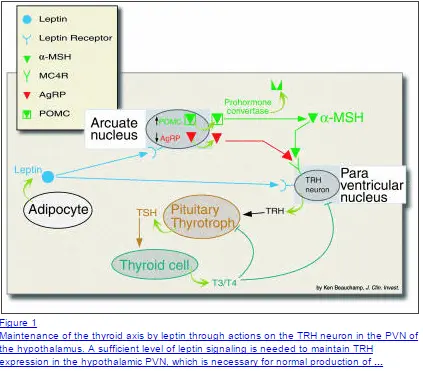
T3 has also been shown to help reduce leptin resistance (7).
This is very important because there are currently very few treatments that can help lower leptin levels.
If you aren’t aware, leptin resistance creates an environment in your body that makes weight loss almost impossible unless it is reversed.
NDT vs pure T3
What about natural desiccated thyroid hormone?
NDT is another form of thyroid hormone replacement and NDT does contain some amount of T3 in it.
1 grain of NDT contains about 38 mcg of T4 thyroid hormone and 9mcg of T3 thyroid hormone.
It also contains some other less biologically active thyroid hormones like T2.
NDT is another great thyroid hormone replacement medication but just like T4 medication, it does fall short in certain circumstances.
Because NDT is mostly T4 (about 80%) it is still subject to reverse T3 conversion and might cause issues in some patients.
In addition, certain patients may need temporary supraphysiologic doses of T3 for short periods of time to wash out the reverse T3 and reset the system.
Using higher doses of T3 during this time period or using the combination of T3 and NDT together can help overcome this issue.
It’s best to consider NDT as another potentially helpful medication, but it shouldn’t be considered the “best” thyroid medication.
SR T3 vs IR T3
T3 medication comes in two varieties:
- Immediate release T3 <— Including medications like Cytomel and Liothyronine
- Sustained released T3 <— This is a compounded medication of liothyronine (usually bound to methylcellulose)
It’s important to realize that these medications are the same in that they both contain T3 thyroid medication.
How they differ is in how quickly they are absorbed into your body.
Immediate release T3 is absorbed rapidly into the body and peaks in the serum within 2-3 hours usually.
Patients who are sensitive to T3 may develop heart palpitations or a jittery sensation around this time.
These side effects occur as a result of this rapid absorption and the sensitivity of cardiac myocytes to T3.

In your heart, T3 has a direct action on the calcium channels which causes the heart to pump harder and faster (which may lead to heart palpitations).
This is compared to other systems in the body where T3 has to directly interact with the nucleus and results in changes to genetic transcription (this process often takes weeks).
If you fall into this “sensitive” category and you are experiencing these side effects of IR T3 (heart palpitations, etc.) then in most cases simply switching from cytomel to SR T3 is enough to fix the problem.
In SR T3 formulations of T3 medication, the T3 is bound to a glue-like substance (usually methylcellulose) which delays the absorption.
This allows your body to slowly absorb T3 throughout the day and will limit the “flood” of T3 that is seen 2-3 hours after taking IR T3.
Whenever possible, my general preference is to use IR T3 over SR T3, but that isn’t always possible.
Another limiting factor that should be considered is that Cytomel and generic liothyronine both contain inactive fillers.
In some cases, patients may react to these inactive ingredients necessitating a switch from IR T3 to SR T3.
In most cases (probably approaching 70% of patients), however, patients tolerate IR formulations of T3 such as Cytomel and Liothyronine quite well.
Side effects of T3 to watch out for
The side effects of T3 come from taking too much of the medication or from inactive ingredients.
As long as you dose the medication correctly and use the proper type of T3 medication (IR vs SR T3) there are generally very few issues.
Occasionally patients may present with the following symptoms when taking T3:
- Heart palpitations
- Jittery sensation
- Increased anxiety
- Hot flashes or feelings of being warm or too hot
- Temporary increase in hair loss
- Headaches
These would be considered less serious side effects of taking T3.
If you experience any further side effects not listed here it’s best to consult with your prescribing physician.
I do want to focus on a couple of these side effects for a moment…
First is hair loss.
T3 can absolutely cause a significant but temporary increase in hair loss.
This is worth mentioning because hair IS a symptom of hypothyroidism and this side effect may be confused with worsening symptoms when in reality the opposite is true.
Remember that this hair loss is temporary and usually subsides within 2-3 months.
The next is headaches.
Unfortunately, some patients experience headaches when starting T3.
If this happens to you, the best option is to consider switching to SR T3.
Back to you
T3 thyroid medication is quite powerful and safe if used correctly.
Using T3 comes with special benefits due to how the body metabolizes and uses thyroid hormones.
In some cases, patients may require T3 in addition to their current thyroid medication (like T4 or NDT).
Most patients who stand to benefit from T3 are patients who have not felt better on other thyroid medications or patients with extreme weight loss resistance.
Use the outline above to determine if T3 might be helpful for you.
Now I want to hear from you:
Is T3 helping you with weight loss?
Have you had success with weight loss using T3 support supplements?
Is it helping you increase your body temperature or reduce the symptoms of hypothyroidism?
Why or why not?
Leave your comments below!




Hello,
How long is the treatment with T3 medication? Can it be done in cycles? I am concerned that if I take T3 hormone, my body will stop producing T4 or convert T4 to T3 on it’s own. My RT3 is 22, what would be an ideal marker to stop using T3 to lower RT3?
My TSH, Free T4 is “normal” and T3 is half of minimum nomral range. Thank you kindly, Yuliya
I have just started on T3 medication – a month this Saturday. Previously I have been on Levothyroxine since total thyroidectomy in Dec 2011.
I have noticed the palpitations, flushes. How long does it take to flush out the reverse T3 & when will I notice weight loss?
I gave my Dr links to your articles & he agreed to give me a go on the T3.
I am currently on 60mcg of Liothyronine – I started with 2omcg then went to 40mcg & now 60mcg. Is that a normal dose to be on? I read some where that T3 is 4-5 times more potent than T4 medication thus 20mcg of T3 medication = 80-100mcg of T4, is that correct?
Hi Barbara,
T3 is much more powerful than T4 but the relative power that it has both in terms of its cellular action and influence on pituitary function varies from individual to individual. With T3 it’s best to start low and titrate slow and follow both resting heart rate and labs as you do it. The amount of time it takes to improve symptoms varies from individual to individual as well. But you shouldn’t have palpitations or flushes while taking it – that’s usually an indication you may be taking too much.
Hi, Dr. Westin, I had total thyroidectomy 6 years ago and use 75 mcg Levothyroxine along with 10 mcg Liothyronine. Though the lab numbers looked good, I have suffered with chronic muscle pain ever since my thyroid was removed. When I stop doing something as simple as taking a walk, my muscles ache all over as if they are unable to rest. I have recently switched to Armour with the hope of curing this. My dose has been slowly increased to 105 mg. The muscle problem has improved dramatically since I increased the dose from 90mg to 105 mg a few weeks ago, but I feel jittery. I won’t have my blood work tested for another two months. Should I assume the dose is too high and kick the dose down and suffer through the muscle aches, or should I give it more time? I feel like I am between a rock and a hard place – too much medication, or too little. Will the jitters go away eventually? I also suffer with very low cortisol which is also being treated. I welcome any suggestions from you as I am tired of feeling miserable. Tks, Karen
Hi Karen,
In these cases you usually need to address adrenal issues to allow you to use the T3. That is likely what you are currently dealing with. With low cortisol you will probably need to use the combination of both glandulars and adaptogens.
Good afternoon, my question is where can I find a dosage chart for my physician to follow. He’s more of a mainstream doctor, but with my persistence, he’s willing to prescribe the SRT3 for me, if I can provide some resources for him to follow. I’m very appreciative of his willingness to do this, and I’m proactive in my care, I just don’t know where to find this information. Any suggestions and insight would be greatly appreciated. Thank you.
Hi Jen,
The information you are looking for doesn’t really exist because the amount that each person needs is highly variable. The dose that your body needs depends on how much inflammation is present, how well you are converting T4 to T3, the presence of other hormone imbalances, etc. Each of these will alter the amount that you may need.
Hi! I have been taking NDT for a while (self medicating) in the hope of levelling my T4 and T3. Previous to this, I was clinically prescribed 100mcg of Levo by my doctor and my T4 has been in the upper level of normal range, but my T3 has been barely in the normal range and therefore, I am not converting very well. My Dr however, states that no change in meds is needed although I have felt unwell and have been putting on weight, hence experimenting with NDT myself. I have been aiming for around 2 grains for 100mcg Levo equivalent. I reached 1 1/2 grains but have been getting increased brain fog and headaches during the day, and palpatations and increased restlessness at night. Today, I have reverted back to Levo and the restlessness and headache has subsided. Do you think it is best to add say 5mcg of T3 to my Levo to help with conversion? I don’t want to just revert back to how I was with just Levo. I am taking all the recommended supplements plus Berberine for possible yeast. I am taking action as recommended by yourself to heal possible reverse T3. I am 48 and live in the UK. I cannot access T3 from my doctor so I am trying to improve my health myself. I would be grateful if you let me know whether I would still benefit from a little T3 to improve my hypo systems. Thank you.
I was able to convince my doctor here in NZ to look at changing my medication to T3 from Levothyroxine. I had a total thyroidectomy in Nov 2011.
Initially I lost a lot of weight whilst on high doses of T4 but as the medication dosage came down the weight increased.
I started taking T3 on August 26th this year (2months). I started on 20mcg and gradually raised it to 60mcg. After my recent blood test the doctor said my T3 level as high and to go down to 50mcg.
At this stage I have not had any weight loss; My temperature is much better in my extremities. I used to get very cold fingers.
Because this is a new thing for my doctor & I, what is a good dosage for weight loss to start happening?
A year before I had the thyroidectomy I had a total hysterectomy due to cancer of the uterus & have been told of the obesity – cancer links, so I do want to lose weight for my health’s sake.
Thank you for such a great article!!! I wish I could find an endocrinologist as open-minded as you! Despite being treated with levothyroxine for over a decade with no success by multiple endo’s, no one would even consider testing for Hashimoto’s or adding T3! Finally, my psychiatrist was willing to read the research I provided supporting the use of T3 for Treatment-Resistant-Depression and prescribed it to me. It’s not a complete cure-all (although nothing has been yet), it has helped.
I purchased your program and have a few questions for you about T3 supplementation and some other tools you mention in your program.
[Background: I’m 42 yo. My leptin, insulin, reverse T3 (at 27), A1c (at 5.3%), and weight are all out of whack. But my TSH and T4 are okay. So, I have a reverse T3 issue. My resting temp is typically 97.8 +/- 0.2 degrees F] I have the following questions about Cytomel:
1. Can I take <10 mg phentermine per day while taking 25 mcg Cytomel (spread over 4 doses, 6.25 x 4)? Or is that too much for cardic system?
2. Can I do intermittent fasting while taking Cytomel? The water fasts would last between 16 and 42 hours. Or, do I need to be eating while taking Cytomel, OR is fasting not good for high rT3 people?
3. Is taking Cytomel on an empty stomach or with food best?
4. When I get my rT3 re-tested (only rT3), I assume I do NOT need to stop taking the Cytomel before the blood draw?
Thanks a ton~Alicia
Hi Alicia,
Please send us an email with this information to hello@restartmed.com so we can keep your personal information private.
Hi! I am considering switching to NDT instead of my prescribed Levothyroxine. I do not convert T3 ideally so want to add some T3. I also have increased allergies on the synthetic meds. Would you consider Porcine gland NDT superior to Borvine? I have heard that pig hormone is more equal to human. Would you agree? I’d be grateful of your thoughts on this.
I am on 50mcg of Levothyroxine and I am still have symptoms, my doctor said that my levels are in the normal range. She also said that I should be feeling better but I am not.
Hi Dr. Childs,
Can you tell me the best time(s) during the day/night to take Synthroid and Liothyronine, whether to take them together or separate; with or without water and/or food? I now need to continue to take .075 of Synthroid with a glass of water in early a.m. before breakfast. But I am confused how to include my new daily regiman of 2 and 1/2 mcg’s of Liothyronine. Also, then when do I take my multivitamin? Thank you so much!!!!
Debbie
Hi! I was on NDT (up to 2 grains) and my numbers worsened including my RT3. I was taken off the NDT and put on Levo (100mcg) and Liothyronine (5mcg). My question is about the dosing of the T3. I’ve seen higher (a lot higher like in the 100s) for the T3 yet I’m on just 5mcg. Can you explain a bit about the dosing of T3? Also, since going off the NDT, although I feel less stimulated (I was antsy on the 2 grains while my RT3 went up!), my energy has been not so great. My November labs (TSH .747, FT4 .96, RT3 14.7, FT3 2.6) Two labs back my TSH was in a better place but it’s not going to the other side. It’s been a journey trying to treat my hypo diagnosis from last February : (
Cont. I had been on the levo and lio for 12 days and my hair started falling out again in the shower and I had horrible constipation (not to mention energy level deflation and overall feeling like I couldn’t do anything). I stopped taking the Levo and asked my doc to put me back on the NDT which had stopped the hair loss, provided me a bump in energy, warmed me up, and regulated my digestion. So until I can get my Rx of NDT I’m not taking anything and I’m freezing all the time, my voice is extremely horse (I can’t clear my throat), and of course I’m a little sluggish thankfully though, I’m no longer constipated! I can’t wait to find the right combination of treatment!
Hi Dr. Childs,
Just a quick note to say THANK YOU for putting all of this valuable information out there. I read your blog posts often and they have helped tremendously as I continue on my journey back to health.
Best Wishes, Happy Holidays & Many Thanks,
Rebecca
I recently starting taking 5 mcg sustained release T3 in the morning as my T3 was at the lowest normal level 2.3. My reverse T3 is 24 so there’s obvious conversion issues. I’ve been on it 2 weeks now and I’m ok until about 1:30 then I’m exhausted the rest of the day and achy. How long does the SR T3 normally take to work or is the dose simply too low? Can I take SR twice per day? Thanks:)
Hi Dr. Childs,
I started on Liothyronine about 5 weeks ago – 12.5mcg once daily. I have asked my doctor about multi-dosing and she said to take it all in the morning one hour before anything else. Is T3 most effective when the doses are divided? Thank you for your help.
Hi Lucy,
You can learn more about split dosing in this article including when to consider doing it: https://www.restartmed.com/thyroid-medication/
This one may also be helpful: https://www.restartmed.com/liothyronine/
Dear Dr. Childs,
I’ve been on thryroid meds for 50 years. My thyroid, by ultra sound, is has shrunk to almost nothing. The last 20 years I’ve been on 100mg synthroid. Three years ago, a doctor added compounded T3, 21 am and 30 pm. I felt fine but my tsh is 0.1. And t4 high, but within range. Another doctor said I must get off the T3 or loose my bone density (they test fine), etc. I went off the morning dose. Still TSH .01. I tried going off the pm and became bloated and sluggish in 2 weeks. I know this is not an exact science, but I felt good before, even with these numbers. Only negative since taking, is that my blood pressure went from 110/60 to 110/70. Any advice helpful. I am in a dr. maze. Otherwise, vegetarian, 60 years, strong and athletic.
Hi,
I was diagnosed with fibromyalgia in 2007, which was accompanied by a 55-lb weight gain that will not shift regardless of how few calories I consume. I recently discovered information regarding the use of T3 for euthryroid fibromyalgia. I have been using it for around 5 weeks at 75 mcg daily and feel much better, with almost all of my pain and fatigue gone and weight loss of around 8 lb, and I am now in the process of withdrawing from the morphine I have been prescribed for the past 10 years! However, I have one concern – I am a bit confused as to whether I can continue using it indefinitely, as all of the studies involving use in euthyroid fibromyalgia patients seemed to be short term, and people seem to use it cyclically. Could you advise me as to whether it is safe to take this dosage indefinitely for fibromyalgia, please? With many thanks.
my t4 and t3 are low. I am taking 13mcg daily of Tirosint which is fine. I am also advised to take t3 (still fatigued, weight gain, foggy) but now that i have increased my tirosint from 13mcg Every Other Day to 13mcgs daily, i can no longer tolerate Cytomel (t3) even at 2mcgs! I tried compounded t3, SR at 5mcgs and also had chest tightness and shallow breathing. How can I increase my t3 without taking medication? my integrative medicine doc is at a loss here…..and my t3 is quite low.
I had graves disease and my thyroid was oblitarated. Ive been on synthroid for some time (12 yrs). My doctor hates it that I’ve done research on the meds and refuses to discuss any medications. One year my tests are off and she lowers my meds the next year the meds need to go up then the next lowered. How do I find a doctor to help.
Hi Linda,
I would check out this article for more information and help on how to find a good doctor: https://www.restartmed.com/thyroid-doctor/
I am a 53 year old menopausel woman and have been taking 90 MG of Armour Thyrouid for several years. I am struggling with weight gain as well as body aches and muscle stiffness on a daily basis.
My recent labs showed: TSH – .33, T4 free – .95 and T3 – 136. (My labs from two years ago showed a TSH level of 1.6.)
My doctor does not think that I need to change my dosage of Armour Thyroid. Would you agree?
Hi Dr. Childs. Thank you for all you do to educate us. Wonderful article..! At what point should a doctor stop increasing Naturethroid and start adding T3? There are doctors that go as high as 8 grains instead of just adding a T3 medication. I gained 55 lbs and I have not lost any weight on 2 grains of Naturethroid, in addition to taking progesterone pills and testosterone creams. And by taking such high doses of Naturethroid, are we not creating too much T4 and therefore, it may be converting to rt3? When someone such as myself cannot lose any weight, would you suspect that this person appears to have an issue converting T4 to T3? Thank you!
Hi Westin,
Great article! I am hoping you have some insight for me:
I have had a heck of a time getting my body straightened out! I have been on T3 only (Cytomel) for about 9 months now, I’m taking 125mcg per day, split into 5 doses, prescribed by my endocrinologist. The reason I persuaded my doctors to switch me to T3, from NDT, was because I was feeling increasingly more hypothyroid and my weight was increasing, despite my extremely physical lifestyle (I run a farm and do over 4 hours of physical labor, plus an active home life, 365 days a year). I’m very healthy, don’t eat takeout or junk, lots of whole foods; I restrict wheat and sugar – in fact, right now I’m gluten, sugar, and dairy free. I also restrict how much I eat, otherwise, I gain weight like crazy.
Anyway, I have never felt better on the T3, some days I’m actually worse (more hypothyroid). I don’t get any indication of it working. I can’t tell if I’ve missed a dose or not, I feel the exact same. I can take 50 MCG all at once and not have any racing heart or jitters – it doesn’t seem to affect me at all! What’s worse, I can’t lose weight! I’ve steadily gained almost 40 pounds over the last 3 years. I thought the T3 would help, but it hasn’t (I figured I was thyroid resistant). My only success comes from restricting my carbs completely, eating only 1000 calories, and adding an hour or 2 of intense gym sessions each day, on top of my active life! As you can imagine, this is not sustainable.
I’m completely miserable and the weight and lack of losing ability have made me depressed.
I don’t know if I should try increasing my dose or if I should try Wilson’s Temperature Protocol? Do you have any suggestions? Have you ever heard of this before?
Thank you so much!
I have Graves. Had RAI 27years ago. Doctors put me on t4 only meds. Have had chronic fatigue since
Have never felt good on t4. Feel best when TSH around .75 or.90.
Recently have seen an RT3 ratio of 7. Seem to not tolerate t3 added to t4. The first day is great, almost euphoric with depression easing and energy increasing. But have a subtly increasing and persistent neck and back tension too. By about day 3 or 4 I have to discontinue the t3 because it is too uncomfortable to continue.
I really want to take t3 alongside t4 because it drastically improves mood and energy.
Hi,
I have been hypothyroid for the last 17 years diagnosed and probably undiagnosed for a year or two. I bought some T3 myself and starting taking it alongside my T4 dose and I had slightly reduced my T4 dose to accommodate the T3, however whilst I felt really good, aches and pains had all but disappeared, good energy levels, I found after a few months on it that I had gained over 2 lbs in weight. That doesn’t sound like a lot, but I am already overweight as it is. Have you got any ideas why I would have gained yet more weight whilst taking T3 plus the T4? Since I stopped the T3, after about a week, or so, I had lost the 2 lbs.
Thanks,
Jill
If I already have anxiety, hair loss and insomnia but have low T3 levels, why would I take a drug that causes those same symptoms…please walk me through this thought process as I’m confused and don’t want to make these issues worse. My thyroid hair loss is most troublesome and I do not want to make it worse!
Hi Mel,
I think you are confusing potential side effects with absolute side effects. Hormones, if used correctly, should not cause negative side effects, but if used in excess, may lead to the symptoms I described here.
Hello,
I started taking T3 about 3 months back, and have seen great results. I was having trouble with fatigue, low temp, being able to use the restroom.
I have not increased my dosage, and as of last week I am feeling extra tired, insomnia, having trouble staying asleep, and heart palpitations. Does my body no longer need the T3? Is it healthy to stop taking it? And if I stop, will my old side effects come back?
Hi,
Thank you for providing such current information. I’ve been taking synthroid for 20 years and just started adding t3 a year ago…improvement in energy levels, initial weight loss of about 12 pounds…but now noticing a much higher body fat content, less strength, crepey type skin, back to previous fatigue level. Is this a normal side effect?
Hi Adrienne,
No, those would not be considered normal side effects of T3 medication.
Hi Dr Childs, thanks so much for your articles. Some feed back for you. I’ve been taking T3 Liothyronine for nearly 9 months now. I currently take 1 x 50 mcg tablet a day and after a low T4 blood test, I am now on 100mcg of T4 Levothyroxine medication a day.
I have not at this stage had any noticeable weight loss.
When I first had the total thyroidectomy (due to cancer), I was on a very high dose of T4 medication and initially lost a lot of weight, but due to side effects, the dose was reduced and weight started coming back on. I was hoping that I would lose weight by now having started on the T3. I walk for an hour every day, eat sensibly and yet the weight is still an issue.
Can t3 only cause weight gain? Even small amounts? I recently started t3 only and have gained 3 pounds with no diet changes at all. Is it normal to gain on t3? Is it temporary? I worked hard the past year to lose 30 lbs my main reason for going in t3 only was low free t3 normal free t4 and TSH my rt3 was only slightly high in the range. Symptoms mainly were fatigue, no libido, dry breaking hair loss, just to name a few. I’ve only been in 2.5mcg t3 about 5 days I’ve read some gain weight in t3 only is this true?
Hi Tina,
Yes, I’ve seen a small handful of people gain weight when taking T3. I’m not clear as to why it happens but I’ve seen it before.
hdxlh19961997@aol.com
Oh if you experience t3 side effects, how soon would it take for them to appear normally? Like the excessive hair loss? Would I have experienced it in just 5 days or would it take longer to happen? I know 2.5mcg is a low dose but I’m starting slowly and monitoring.
Hi Tina,
Some side effects can be experienced immediately after taking your first dose such as heart palpitations. Hair loss can take a few days to weeks to kick in in some cases.
Hi Dr. Childs, Based on what I’ve read and watched on the internet your mastery of this topic is quite superior. Question: Why is SHBG a surrogate marker for T3 getting into the cell? Best, Dr. Ippolito
Hi Dr. Ippolito,
Because SHBG only increases in the presence of estrogen and thyroid hormone. So, if estrogen is normal then you can make the assumption that changes to your thyroid may influence SHBG.
Hi Dr.Childs, I have Hashimoto’s with 3/4 of my thyroid gland removed some 24 years ago. So I have barely any thyroid gland, if any ( due to have an ultrasound soon to find out if there is any left(!) My Reverse T3 has beenfound to be very high so my doctor has suggested I take a T3 supplement. I have recently been given T3 capsules in addition to lowering my thyroxine dose from 100 mcg per day (plus 50 mcg on Tuesday and 50 mcg on Thursday) which is a total of 114mcg per week.My dr. Has instructed me to drop my thyroxine dose to 100mcg per day. I tried it for a month and was so tired I was falling asleep @5pm every day-whilst driving home from work! I have felt fine until my thyroxine dose was dropped. Now I am exhausted just about all the time. Taking T3 has made no difference to my energy levels or weight…in fact I feel no benefit at all. I am not due tosee my doctor til Dec 18 & am struggling.
What do you think I should do?
Hi Debra,
The first thing you should do is evaluate your lab tests. From there you can determine if your dose is sufficient, insufficient, or if you need a different medication. You can also try natural therapies to try and improve your energy levels as well or natural therapies to increase your free t3: https://www.restartmed.com/increase-free-t3-naturally/
Hello, I am on 25mg OD for Depression and Fatigue. I have no other side effects other than being intensely hot. It’s winter in Canada and I can still wear a T-shirt outside. My mood has improved but that could be because of my antidepressants kicking in. Can I stop the Cytomel without worsening of depressive symptoms?
Hi Natalie,
I can’t give you medical advice but it does seem as if your medication may be too high. I would get your labs rechecked to confirm before making any changes to your medication.
Hi Dr. Childs, Thank you so much for all your information and wisdom. After having an endometrial ablation, I’ve had nothing but thyroid issues and hot flashes, otherwise NEVER ANY health issues. It took me a few years to find someone to help me. A holistic dr put me on Iodoral 12.5mg 2 a day. I felt FANTASTIC by the next day, and 4 weeks later my hair stopped falling out. Now I see a dr who understands Iodine and is on board with holistic practices. He tested my ReverseT3 which was 33.5. He put me on cytomel 25mcg not mg. 2 a day. 3 weeks later hair loss and heart palps. He told me if palps started to definitely slowly lower dosage. That definitely helped but the hair loss is still bad and its been 5 months now. For 1 month I’ve been only taking 1/2 a tab. Could it be that the Iodine alone with fix my Reverse T3? I felt fantastic on Iodine only and lost a couple pounds without even trying, plus the hair loss stopped. Thank you! Laura
Hi Laura,
It’s certainly possible that iodine could help, but I’ve personally never seen it happen in that way. But it doesn’t mean that it won’t help at all.
Dr. Childs,
Does this mean that high rT3 levels can be reversed?
I am currently on a reduced dose of NDT + 25 mcg of T3. My doctor is clueless when it comes to things like rT3 dominance so I simply decided to follow your protocol while being supervised by my doctor (I requested to have rT3 levels tested and sure, they were too high according to your protocol, and I have previously been diagnosed with insulin resistance). I have put on an alarming amount of weight in the past six months and no supplements (such as berberine or cinnamon) seem to make a difference. Every time I raised my NDT, I seemed to gain another pound.
I have felt great improvement in the five weeks since adding T3 to a reduced dose of NDT, but in one way I find synthetic t3 impractical: I have to multi dose it to avoid feeling jittery, whereas I can take NDT once daily and feel fine. So synthetic T3 seems to affect me differently than the T3 in NDT in that the former seems much more potent and fast-acting.
So, even though adding T3 to NDT has made a world of difference to me, it would be great if I could go back on NDT only once I’ve cleared excess rT3.
Is it common for your patients in the same situation to be able to go back on NDT only?
Hi Catherine,
Yes, reverse T3 levels can be reversed provided you find and eliminate the cause of the high rT3, to begin with. It’s common for people to go on NDT/T4 afterward, as long as they fix that problem. If they don’t then they will just find themselves with high rT3 again.
Hi Dr. Childs,
I have hypothyroidism and Hashimoto’s disease. I was taking Synthroid but I started getting an itchy rash and stopped taking it. I am not sure what to do. What I can take. I need something but do not want to take something that will cause other issues.
Hi Liz,
There are plenty of other thyroid medications available. You might do well on something which has fewer fillers such as Tirosint.
You can learn more about thyroid medications here: https://www.restartmed.com/thyroid-medication/
Hi Dr. Childs, Thank-you so much for giving this incredibly helpful information.
As a result of reading your blogs a year or two ago, I was able to give my doctor links to your website and information about T3 medication.
My endocrinologist was not keen (old school) but my GP was willing to give it a go!
I started at 20mcg, increased to 50mcg then to 100mcg T3 Liothyronine. I also take 100mcg of Levothyroxine.
I have started to lose weight and feeling great with lots more energy. The only side effects I’ve noticed is I get warmer at night and some times when standing still for a while I get shaky legs!
My GP is happy with my blood levels and is happy for me to continue on the two dosages!
Taking T3 has helped me kick start losing weight again and has improved the quality of my life!
Do you have a good supplier of T3? Here in NZ, it costs a lot of money – $160 for a three month supply! I’d love to get it cheaper?
Hi Barb,
Thanks for sharing and glad you are feeling better! Unfortunately, I do not know any suppliers of T3 in NZ.
I don’t know that I have any problems with my thyroid…I was tested once with the standard testing and I was negative for any issues. Having said that, I’m just curious, would there be any potential ill effects to a person taking T3 who was not Hypothyroid? What if someone was overweight and having trouble shedding the pounds? Is that a viable reason to take T3? Would it cause problems with one’s thyroid, where before there was none? I know this isn’t exactly in line with the questions on here, but please answer to the best of your ability. Thank you.
Hi Jenn,
You shouldn’t use T3 if you don’t have a problem for the same reason that you shouldn’t use steroids for muscle growth. Exogenous hormones suppress your hypothalamic/pituitary function and may lead to suppression long-term depending on the use.
Hello, Dr. Westin Childs!
Thank You for Your Page!
I’m not sure, but here’s my q-n: ISN’t there a typo/mistake made on the Left lower side of the Pic., “Factors that INcrease..T4 -> T3”? Should be the “DECREASE”. Please TAKE A NEW LOOK @ it. I’m just an Associate of Med., Science, but to me – the pic., is questionalble. I don’t want other people to be mislead because of mistake/typo. THANKS!
Hi Lora,
Nope 🙂 The image is correct as it states factors that increase conversion of T4 to rT3 (note the rT3 and not T3). The other side of the image shows the factors that increase the conversion of T4 to T3 (without the r).
Dear doctor I have been taking levothyroxine for more than a year now. I was diagnosed with Hashimoto’s. I had some pretty bad side effects at first like menstruation irregularities and extreme hair loss but my body got compatible with it and all those side effects are gone now but I’m still struggling with fatigue, low energy and weight loss resistance my doctor doesn’t hear me. I want to add the T3 to my my 100 levothyroxine dose and I was wondering what dose I should begin with and when to use it. please help me
I’ve been experiencing pretty severe depression for the last few months. My thyroglobulin antibodies are in the 170s, my TSH is 13 and my T3 is around 2.3. Can low t3 levels cause depression or is my depression more a result of all of these numbers being out of whack?
Hi Mag,
Depression is a known and reversible side effect of low thyroid function which you have based on your labs. If you treat your thyroid there’s a good chance you will see improvement in your depression symptoms.
Hi Dr. Childs,
Can you please expand on this:
“In addition, certain patients may need temporary supraphysiologic doses of T3 for short periods of time to wash out the reverse T3 and reset the system.”
Is this what some are calling Dr. Wilson’s Protocol? Can you help explain it in more layman’s terms? 🙂
Thank you!
Hi Hadassah,
It could be but doesn’t have to be. You can just take higher doses of T3 without the need to cycle them.
Hi Dr Childs,
I’ve had 11 crashes now I call them. Completely in my chair no energy at all can’t stand for more than 10 min. They average around 3 months to recover my energy and get back to life. My recent blood work shows: TSH 8.41 Free T3 2.40 Free T4 1.36 TPO 212 (Down from 1300 in 2012) HS CRP 2.40 Homocysteine 7.50 Vit D 45.30 DHEA 56.20. I have not been on any thyroid meds since 2016. Am I a canidate for T3? I used to take armour, Didn’t seem to help but was on T3 SR 15MCG 3X a day back in 2016. Should I ask my dr. for it again. & What MCG would YOU prescribe for this bloodwork?
Hi LeAnn,
Unfortunately, I can’t provide medical advice but I can tell you that just about everyone is a candidate for T3 thyroid medication 🙂 You just need to give it a try and see what happens.
Hi! I had a question. My new endo prescribed me generic cytomel 5 that I take along side synthroid brand 25mcg (he reduced from 50mcg when he added in cytomel). I feel a lot better, especially after the first few days. After the 4th day I dont feel as awesome as I initially did, but still an improvement overall. My issue is that as soon as I started taking the medication I had to urinate a lot and I was very thirsty and my fingers are swollen like I am retaining water. Have you heard of this? I drink about 90oz of water daily. The overall goal is to feel better and loose weight and I’m concerned I’m retaining water. Any help you could provide would be so appreciated.
Thank you,
Danielle
Hi Danielle,
I haven’t really seen water retention with the use of T3.
Hi Dr. Childs,
I am experiencing a lot of the symptoms described above. Even though I take T4 I still have difficulty losing/inability to lose weight (in fact I was put on a higher dose of T4 and am still gaining), I have insulin resistance, my body temperature is low, I have fatigue, brain fog, and a history of bipolar disorder. My endocrinologist says that my lab results show that my thyroid is fine, but I don’t feel fine. She also said that T3 is usually prescribed to patients who have had their thyroids removed. I see my endocrinologist at a large research university. How can I approach my endocrinologist regarding what I’m experiencing?
Hi E,
It’s often best to just find a new doctor than it is to try and convince your current doctor to change how they treat. You can use the resources here to help you find one: https://www.restartmed.com/how-to-find-a-doctor-to-treat-your-thyroid/
I started T3 15mg about a year ago. My ND found low T3 levels in a blood test. I was hoping to lose stubborn weight but instead have gained 30lbs and feel unmotivated and low. I decided to reduce to 10mg about a week ago. I’m not doing great- feel depressed. My ND says I should just keep taking it, but it seems to be making my life worse. I notice a lot of folks commenting here about weight gain. I wonder if the Dr. can comment on that trend? It seems counter to what he writes.
I used to take Cytomel in addition to my Synthroid and stopped because of cost. Now that I’m trying to get back on it after being off for 2 years because I’m so tired all the time, the generic didn’t work, the insurance company, Humana Medicare Walmart plan denied the appeal to assist in payment. The second denial stated I should try the preferred drug Liothyroxine (Synthroid)!! Well, I’m already on Synthroid and explained to them the use of adding Cytomel but I kept getting the canned response.
So I’ve called Pfizer and they have no program for Cytomel and I’ve tried several drug coupons/cards and it still costs 90.00 a month.
So discouraging. I’ve been working since I was 15 and paid into the system, the drug has been around for a very long time-I’ve been taking it since 1998 or so and it costs a fortune.
Hi Rosalinde,
You may be able to get sustained release T3 cheaper from a compounding pharmacy: https://www.restartmed.com/sustained-release-t3/
Hi Dr. Childs,
I take bovine thyroid 120 mg. My T3 has been all over the map. I started on compounded T3, 5mg. After 5 weeks my T3 level dropped to 2.0. (I was surprised because I had a day with anxiety) and I never feel like that.
My doctor increased T3 to 10 mg. Had 1 episode of anxiety since the increase 2 weeks ago. I think I would like to try a more natural approach. I am considering Xymogen Medcaps T3 instead.
I also have heavy metal toxicity to lead and thallium. I start my first EDTA IV chelation treatment today.
Would there be a reason Free T3 would go DOWN after adding T3 only med? I read elsewhere that if the CAUSE of thyroid condition is not addressed (and have high inflammation, HPA axis disruption) meds won’t help. I have lyme but my thyroid levels have never been this bad and I’m now on T4, T3 and a combo (NP thyroid). Ive gained 30 lbs (and I think unbalanced hormones as I have a 21 cm fibroid too). I was thin my entire life up to 2018, when this fibroid started growing.
Thank you for this information. I was diagnosed with Graves disease and opted for radioactive iodine. For years, I took the same 50mcg of levothyroxine and still suffered symptoms of hypothyroidism. Despite years of telling my PCP of my symptoms and asking if there is anything else we can do, I kept hearing “your thyroid levels are normal”. I finally got fed up, did my own research, read what others were doing and found a new PCP who was willing to prescribe different thyroid medicines to try. Armour thyroid wasn’t for me but when I started taking cytomel, everything improved! My energy, focus, anxiety, skin and hair improved with just 5 mcg! But I didn’t know about calorie restriction and it’s effect on metabolism. Your info explains why I haven’t been losing weight despite intermittent fasting and eating only one meal a day. I am not sure if you can give any advice on losing weight, but I will keep looking for answers. Thank you!
Hi JT,
I would recommend checking out this article if you are having difficulty losing weight: https://www.restartmed.com/weight-loss-with-hypothyroidism/