
The Benefits of Liothyronine & When To Use It

The Benefits of Liothyronine & When To Use It

Key Takeaways

  • Liothyronine (T3) acts much faster than levothyroxine (T4) because it's the active form your cells use directly, so you'll notice symptom improvement within days to weeks rather than months.
  • Don't use liothyronine as your only thyroid medication because your body needs both T3 and T4. Instead, combine it with levothyroxine or use it to supplement when T4 conversion is impaired.
  • If you have poor T4 to T3 conversion (common with stress, nutrient deficiencies, or liver issues), adding liothyronine can restore energy and mental clarity even if your TSH looks normal.
  • Liothyronine has a shorter half-life than levothyroxine, so you may need to take it twice daily and monitor your dosing carefully to avoid swings in symptoms.
  • Work with a doctor experienced in thyroid optimization because liothyronine can cause heart palpitations, anxiety, and insomnia if dosed too high, especially in people with underlying heart conditions.

Liothyronine is a special type of prescription-grade thyroid hormone, it’s also the most powerful thyroid medication that exists. 

People taking liothyronine (especially over traditional medications such as levothyroxine) report significant improvements in their hypothyroid symptoms and quality of life. 

These benefits range from weight loss to reduced rates of depression and more. 

Learn who should consider using liothyronine and how to use it properly with this complete guide: 

What is Liothyronine & What are its Benefits?

Liothyronine is a T3-only thyroid medication and hormone used to treat patients who suffer from hypothyroidism, low thyroid function, or a sluggish thyroid. 

It is a hormone – pure and simple. 

It is also the generic version of the brand-name medication Cytomel (also used to treat hypothyroidism). 

Then why don’t more doctors prescribe it?

In order to understand how T3 works, we need to take a step into some very basic thyroid physiology

Liothyronine otherwise known as T3 is one of the two main thyroid hormones (1) floating around in your blood. 

Since you’re here you probably already know the importance of proper thyroid function in the body, but just in case you can read more about why it’s important to have normal thyroid function here. 

T3 is the sister hormone to T4 but they differ in one very important aspect. 

T4 is an inert or inactive hormone by itself and in order for it to become “activated”, it must be slightly altered (2).

Once it is altered it is changed into T3 – the active thyroid hormone. 
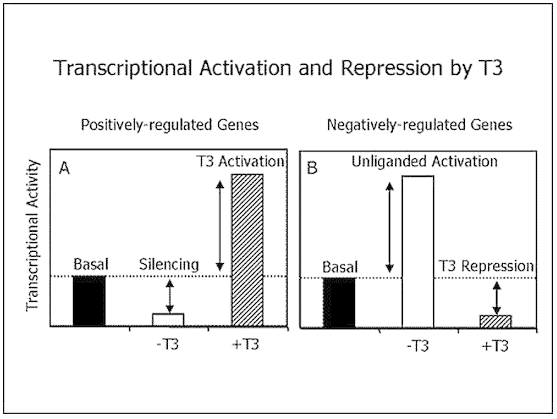
T4 can, therefore, be thought of as a reservoir hormone that your body can draw from to activate thyroid hormone as the need arises. 

The fact that T3 is ACTIVE while T4 is INACTIVE is very important and is why T3 is considered to be MUCH more powerful than T4 (3).

And this is one of the reasons that it’s not as commonly prescribed when compared to other thyroid medications

Liothyronine is felt to be “too strong”, or “too difficult to manage”, or “too dangerous” when compared to T4-only medications such as Synthroid, levothyroxine, and Tirosint

Just because T3 is stronger (about 3-4x stronger than T4 medications like Synthroid) doesn’t mean that it is dangerous. 

If used properly liothyronine can be added safely and effectively to patients with hypothyroidism and generally, they experience significant improvement. 

Need More Help? Get My Perfect Thyroid Diet Meal Plan (+ Shopping List)

Join 200,000+ thyroid patients and get the plan by email right away.

Who Should Consider Using T3 Medication

Not everyone who has thyroid disease necessarily needs to use liothyronine in order to feel better. 

Patients who tend to require T3 medications are those who suffer from more serious medical conditions such as systemic inflammation, hormone resistance syndromes such as leptin resistance and insulin resistance, and those with treatment-resistant weight gain. 

Another subset of thyroid patients who may benefit from the use of T3 is those who suffer from low T3 syndrome and other thyroid lab tests which may indicate poor peripheral thyroid conversion (4).

Other patients who are taking T4-only medications such as levothyroxine but who still remain symptomatic may also find relief with small amounts of T3 used in conjunction with their current thyroid medication. 

With these ideas in mind, I’ve compiled a list of patients who may consider the use of T3 in their treatment: 

  1. Patients with low serum levels of free T3 and total T3
  2. Patients with high levels of reverse T3
  3. People who have a “normal” TSH but still remain symptomatic despite taking thyroid medication
  4. Those who suffer from leptin resistance and insulin resistance
  5. People with treatment-resistant weight loss
  6. Patients with treatment-resistant depression and treatment-resistant bipolar disease

This is not an all-inclusive list, but it is a great starting tool. 

When it comes to feeling better starting T3 is only the beginning, more important is the dose that you use.

Liothyronine Dosage Guide

Liothyronine can be used in 2 different ways:

#1. Used in conjunction with other thyroid medications (5), especially T4-only thyroid medications like Synthroid

This is probably the most common way that liothyronine is used nowadays and luckily this sort of therapy is becoming more and more common especially as providers become more comfortable with T3 as a medication. 

Or…

#2. Used by itself.

Using T3 by itself is much less common when compared to combining T3 with other thyroid medications. 

Much of this has to do with the current “standard of care” which states that physicians should always use T4 thyroid medication over T3 alternatives. 
But just because this is the “standard” doesn’t mean it doesn’t have utility for certain patients. 

Some patients, especially those with very difficult-to-treat weight loss and hormone imbalances such as leptin resistance, may benefit tremendously from the use of T3 by itself. 

T3-only therapy can be used temporarily to try and “restart” or “kick start” the body back into action or it can be taken long-term as well. 

As long as T3 is used in the correct dosages there shouldn’t be any long-term consequences to its use. 

So what is a safe and effective “dose” for liothyronine?

The answer is not as straightforward as you might think but we can use liothyronine doses to help sort it out. 

Liothyronine comes in the following standard dosages:

  • 5mcg
  • 25mcg
  • 50mcg 

Even though there are 25 and 50mcg doses you will rarely find a provider willing to prescribe a dose that high. 

Instead, most people end up with a dose somewhere between 5 mcg and 20 mcg per day. 

Is there a specific magic dose to look for?

This is where things can get tricky. 

The answer is no. 

Your goal with using Liothyronine (or any other thyroid medication) is to find the amount that you need to reduce your symptoms without causing long term issues

This range is typically somewhere between 5mcg and 20 mcg but it may be higher for some individuals. 

Splitting the Dose Throughout the Day

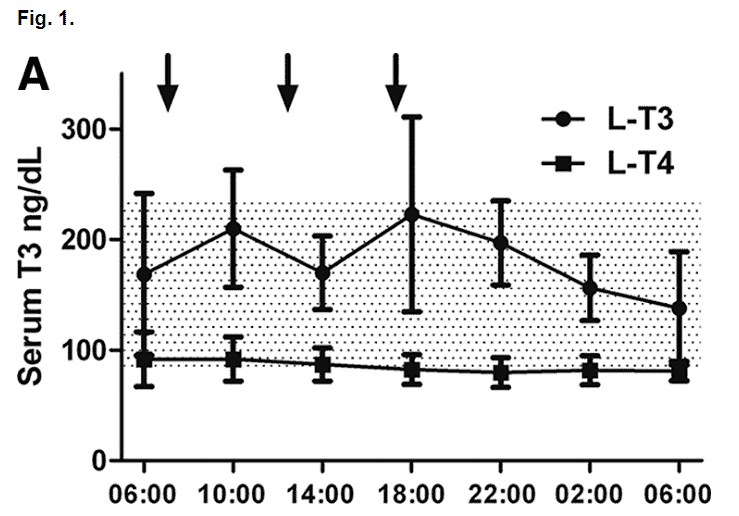
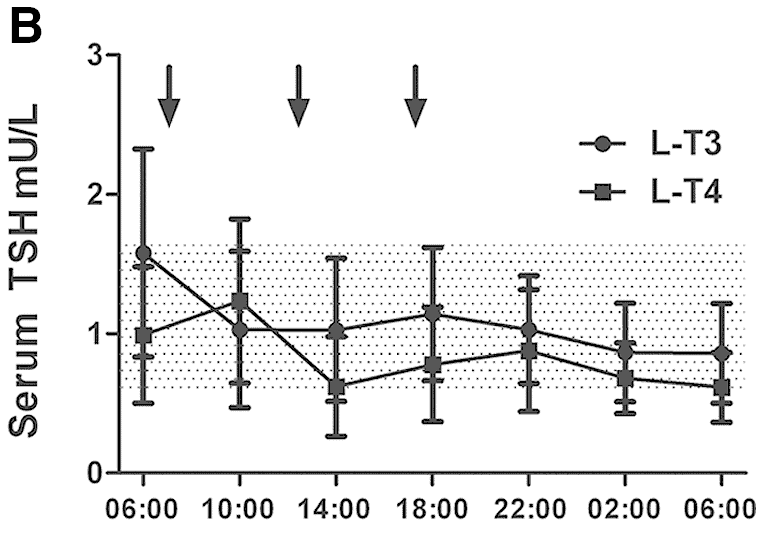
Liothyronine is different from other thyroid medications because it is active but also because it has a very short half-life. 

The half-life of a medication is a term used to describe how long it “lasts” in your bloodstream before half of the total amount is metabolized. 

Liothyronine has a half-life on the order of 24 hours (6) while levothyroxine has a half-life on the order of 5-7 days (7).

This means Liothyronine isn’t in your system longer than a few days. 

With this in mind, some patients may do better by “splitting” their dosing throughout the day. 

shop thyroid support supplements that can help you get back to feeling 100% again

For most patients, this means taking half of their dose in the morning (with their other thyroid medication) and then the other half later in the afternoon around noon. 

And this makes sense when you consider how the body normally uses hormones. 

Hormones are constantly secreted by functioning glands throughout the day based on the demands of the body. 

No matter how hard we try we will never be able to exactly replicate the dosing schedule that the body uses naturally, but we can get close by taking the hormone at several points throughout the day. 

Obviously, we don’t want to take something like 1 mcg every hour, but taking 5 mcg every 4-6 hours may be a better and more realistic approach. 

Some patients do considerably well with this approach while others may be fine taking all of their T3 in the morning. 

Using Liothyronine for Weight Loss

Liothyronine may cause weight loss but it should not be used as a weight loss medication. 

The use of liothyronine for weight loss in individuals who don’t have thyroid dysfunction may cause unwanted side effects. 

Having said that liothyronine may help with weight loss in patients who have hypothyroidism. 

Some patients taking T4-only thyroid medication may suffer from low T3 syndrome or other problems that interfere with the normal conversion of T4 to T3. 

This may lead to lower than normal serum T3 levels which show up on blood tests (8).

Patients who fall into this category generally have a normal TSH, low T3, and normal to mid-range T4 levels (9).

The addition of T3 to T4 medication such as levothyroxine may help people who fit these criteria. 

T3 may cause weight loss over T4 medications (10) because of how it interacts with fat cells and other hormones in the body. 

T3 directly influences mitochondrial energy production (11) and increases thermogenesis and fat-burning potential. 

If you have low T3 (even if your other thyroid lab studies are “within range”) you may be missing out on these important benefits of T3 in your body. 

Bottom line?

Liothyronine can help with weight loss but it should not be used as a weight loss medication. 

Using Liothyronine For Depression

Liothyronine can also be used to treat depression.

Depression is an obvious and well-known side effect of hypothyroidism – meaning low thyroid levels in the body. 

But what’s interesting is that T3 or liothyronine can be added to antidepressants even in patients with normal thyroid status and still improve mood and cognitive function. 

Unlike weight loss where you shouldn’t use T3 unless you are hypothyroid, small doses of liothyronine can be effective in helping treat depression. 

Some studies have shown that the use of T3 in combination with SSRIs (common antidepressants) enhances the effect of these antidepressants. 

The exact mechanism as to how this helps is not well established, but one of the prevailing theories is that some patients with depression may have subclinical levels (or undetected) of thyroid dysfunction that don’t show up on standard lab tests and may therefore manifest as depressive symptoms. 

The idea is that upon replacing the small deficiency of thyroid hormone the brain has sufficient thyroid hormone and the depression “lifts” or is treated.

Beyond this, T3 has also been shown to directly increase serotoninergic neurotransmission (12) by altering receptor sensitivity to serotonin and also by increasing synaptic concentrations of serotonin. 

Why is this important?

The most important factor is that SSRIs or conventional antidepressants are only successful in treating depression in about 50% of the cases. 

This leaves a huge majority of patients symptomatic even after taking certain medications. 

The concurrent use of T3 to existing SSRIs and other antidepressants may, therefore, be a viable option for many patients who are considered “treatment-resistant” (13).

But what about patients already on thyroid medication but still suffering from depression?

I’ve mentioned previously that T3 is the active thyroid hormone in the body and it seems that the total amount of T3 in brain tissue may influence depressive symptoms (as well as other factors). 

Switching from T4 thyroid medication such as levothyroxine to liothyronine, or simply adding some T3 to their existing T4 medication, has been shown to improve mood and neuropsychological function (14).

One study showed that when patients switched from taking T4 medication to T3 medication they showed an improved mood, an increase in sex hormone binding globulin (likely indicating better thyroid absorption and function), and a slightly higher pulse rate. 

Patients in this study took T4 medication for a set time period and were then converted to T3 thyroid medication, at a rate of 50mcg of T4 to 12.5mcg of T3. 

The study’s conclusion was that there may be something specific to T3 that occurs in the brain tissue which may influence mood and cognition, and this benefit may not be achieved with the use of T4 medication alone. 

Bottom line?

If you are suffering from depression, whether that is from thyroid dysfunction or not, it may be worth considering a trial of T3 therapy or liothyronine as an alternative or complementary treatment to your existing treatment. 

What to Expect When Starting T3 Medication

Because liothyronine is more powerful than levothyroxine (and other T4 medications) it’s important to talk about expectations when starting the medication. 

Some people believe that upon starting this medication they will immediately lose weight and start feeling better but this is not necessarily the case. 

While it is true that many people who take liothyronine do experience an improvement in their symptoms, in order to get to this level you need to understand some basic rules. 

For starters:

The dose necessary for optimal results will vary based on the individual and you must take some thoughtful time and consideration to get there. 

While dosing, make sure that you follow the thyroid lab tests: TSH, free t3, total t3, and SHBG (sex hormone binding globulin). 

Monitoring lab tests, in addition to your symptoms, will help you get to your optimal dosing. 

Second:

When using liothyronine remember the idea of “low and slow” as it relates to titration. 

Because this medication is powerful you always want to start a low dose and titrate up to higher doses in a slow and controlled manner. 

This means incremental increases in the medication every few weeks with periodic checks of serum lab tests. 

Along this same vein is the concept of variable sensitivity to T3 in certain patients: 

Some people tend to be very sensitive to T3 medications. These are patients who may experience jittery sensations or anxiety upon starting even a low dose. 

Sensitive patients tend to require much lower doses than those who are non-sensitive. 

Patients who tend to be sensitive usually know who they are – these are patients who tend to “react” to over-the-counter supplements and other medications. 

But it’s important to identify yourself as either a “sensitive” or a “non-sensitive” patient because of its influence on dosing. 

Non-sensitive patients tend to tolerate moderate to higher doses just fine and is much easier to obtain the correct dosing. 

Following these guidelines will help you find your optimal dose and help you on your way to feeling better. 

Beyond these guidelines, there are also other considerations that should be taken into account when starting liothyronine. 

Hair Loss

The first is the potential for hair loss

Liothyronine, as well as cytomel, may cause a temporary increase in hair loss among certain individuals. 

The good news is that this side effect is almost always temporary (except in a minority of patients) and tends to subside within 3-6 months. 

The bad news is that many patients who suffer from hypothyroidism already experience some degree of hair loss due to the condition itself (along with many other potential factors that you can read more about here). 

Extra hair loss which may be associated with starting liothyronine use may, therefore, be very disturbing to many patients, and rightfully so. 

How To Tell If It's Really Your Thyroid: Get My Hypothyroid Symptoms Checklist

Get the PDF. Check off your symptoms. Find out in 60 seconds if it's your thyroid (or something else).

If you fall into this camp it’s important to realize that this side effect is a temporary and well-known side effect of T3 use. 

Provided you can stick out the side effects for 3-6 months, your hair loss will generally stop and then begin to regrow.

It is not well understood why hair loss begins in the first place but it may be due to the influence of thyroid hormone on hair follicles themselves. 

It’s also important to realize that hair loss is a well-known side effect of nutrient deficiencies such as iron, biotin, B vitamins, and choline (15).

It’s possible that replacing thyroid hormone with T3 may temporarily exacerbate these deficiencies and lead to an increase in hair loss. 

Other Side Effects

In general, liothyronine is well tolerated provided you dose it in a “low and slow” manner. 

Side effects from this medication tend to occur only when the dose is too high for the individual or for patients who tend to be sensitive. 

With that in mind, the negative side effects of liothyronine use tend to mimic those of hyperthyroidism. 

You can see a list of side effects of using liothyronine below along with the potential cause: 

  • Jittery sensation (usually dose-dependent and from taking too much)
  • Rapid heart rate (an indication you may be taking too much)
  • Nausea (may be secondary to taking the medication on an empty stomach)
  • Hair loss (usually subsides over 3-6 months and is temporary)
  • Stomach pain (may subside when taking medication with a meal)
  • Sensitivity to heat (an indication your dose may be too high)
  • Anxiety (another indication your dose may be too high)

If you experience any of these side effects you should refer to your prescribing Doctor for further recommendations. 

Some patients are also concerned about TSH suppression with the use of liothyronine. 

This side effect is only seen when dosing tends to be on the higher side and it can be avoided by following thyroid lab testing. 

Studies have shown (16) that substituting T3 in place of T4 in pituitary-equivalent dosages (based on the TSH) results in reduced body weight and better cellular thyroid action on lipid metabolism without negative side effects. 

Final Considerations

Liothyronine is a very powerful and strong thyroid medication that is used to treat people who suffer from hypothyroidism. 

This medication differs from other thyroid medications in that it contains the active thyroid hormone T3. 

This medication, therefore, does not need to be “activated” by the body and begins working almost immediately. 

Because of these unique properties T3 can be used either by itself or in conjunction with other thyroid medications and may help treat difficult conditions such as treatment-resistant depression and treatment-resistant weight loss. 

Dosing should be titrated low and slow and dosing should be individualized while following serum thyroid lab tests. 

Side effects tend to be minimal if the medication is used correctly and if titrated in this way. 

Now I want to hear from you:

Are you using liothyronine?

Has it helped treat your thyroid disease?

What dose are you currently at?

Leave your comments below! 

Scientific References

#1. https://www.ncbi.nlm.nih.gov/books/NBK285568/

#2. https://www.ncbi.nlm.nih.gov/pubmed/809755

#3. https://www.ncbi.nlm.nih.gov/pubmed/402379

#4. https://www.ncbi.nlm.nih.gov/pubmed/6479377

#5. https://www.ncbi.nlm.nih.gov/pubmed/9971866

#6. https://www.ncbi.nlm.nih.gov/pmc/articles/PMC5167556/

#7. https://www.ncbi.nlm.nih.gov/pmc/articles/PMC6193522/

#8. https://www.ncbi.nlm.nih.gov/pmc/articles/PMC3821467/

#9. https://www.ncbi.nlm.nih.gov/pubmed/23902316

#10. https://www.ncbi.nlm.nih.gov/pubmed/28138133

#11. https://www.ncbi.nlm.nih.gov/pubmed/11174855

#12. https://jamanetwork.com/journals/jamapsychiatry/fullarticle/482318

#13. https://jamanetwork.com/journals/jamapsychiatry/fullarticle/482318

#14. https://www.ncbi.nlm.nih.gov/pubmed/9971866

#15. https://www.ncbi.nlm.nih.gov/pmc/articles/PMC3509882/

#16. https://www.ncbi.nlm.nih.gov/pmc/articles/PMC3205882/#B15

why you should take liothyronine over levothyroxine

picture of westin childs D.O. standing

About Dr. Westin Childs, D.O.

Hey! I'm Dr. Westin Childs, a former Osteopathic Physician (D.O.) who transitioned from traditional clinical practice to specialize entirely in helping people like YOU overcome thyroid problems, hormone imbalances, and weight-loss resistance. I am passionate about researching and sharing evidence-based solutions, and I formulate specialized thyroid supplements that have been trusted by over 100,000 patients over the last 10 years. You can read more about my own personal health journey and why I am so passionate about what I do.

P.S. Here are 4 ways you can get more help right now:

#1. Get my free thyroid downloads, resources, and PDFs here.

#2. Need better symptom control? Check out my thyroid supplements.

#3. Sign up to receive 20% off your first order.

#4. Follow me on Youtube, Facebook, TikTok, and Instagram for up-to-date thyroid tips, tricks, videos, and more.

208 thoughts on “The Benefits of Liothyronine & When To Use It”

  1. Dr. Child’s

    I am having a very difficult time trying to figure out the right dosage and it seems no doctor has a clue as to what to do.

    I had a parathyroidectomy (two glands removed that were overactive), and my thyroid must have been an issue before as the surgeons say that parathyroid surgery can cause what may have been hidden in the thyroid to come to surface. My t4 went VERY low after surgery, my TSH low but within clinical range and my t3 rt3 ratio was poor. I started treating with t4 first, compounded, and then added t3. Since treatment my voice has changed, but all the hypothyroid symptoms have not improved at all. My T4 is now subclinical but low, and my TSH is now super super low. My ratio of t3 and rt3 are ok now. I stopped t3 thinking its why I am not getting well, and my voice seems to be improving but I am exhausted, with worsened hair loss (already thinning badly) and mood changes. What do I do? Am I still undertreated?

  2. Great article! I just found out my reverse T3 is quite high. I’m taking 3.5 grains of compounded armour. I had what was called thyroid resistance 20 years ago or so when I discovered Dr. Lowe (SO excited to see you know all about him!) and was on Cytomel exclusively for about 5 years. I was taking 75 mcg at the time, and I’d like to go back to Cytomel to clear out this reverse T3. I see this guide doesn’t recommend anything that high really. Do you think that’s too high if that’s all I’m taking? I’m going to talk to my naturopath next week, and I bought your diet guide as well. I think my issue is adrenal fatigue which I’m treating, though I think I’ll switch to your products and recommendations.

    • Hi Colleen,

      High doses of T3 do benefit some individuals, but I find it’s best to use them only temporarily during weight loss or to fix certain issues in the body. Using supraphysiologic doses of T3 may be harmful if used for years, but short-term (6-12 months) that kind of dosing probably won’t cause long-term issues.

      • Thanks so much! I will see what she recommends then. Maybe I will try the lower dose and titer up. This explains a 15 pound weight gain I can’t seem to get rid of. I’m going to follow your excellent diet guide I purchased.

      • One more quick question. Can I follow the adrenal diet plus fast 2 successive days a week as your guide details for weight loss? Or can I not actually try to lose weight for several months?

        • Hi Colleen,

          You should be fine to go ahead with the fasting right away ๐Ÿ™‚ Most patients do it this way and they do very well. Keep us updated on your progress!

      • how harmful can this be? I am taking .25 mcg and slowly increasing it to .50 mcg. I have Hashimoto’s and low t3. Also Taking .112mcg t4. I started adding t3 with Naturethroid but it didn’t work for me my body wasn’t absorbing it. Latter on I try a compounded of synthetic t4/t3 which work at the beginning but after 2 months went back to hypothyroid. And now she wants to increase my dose slowly.

        • Hi Mariana,

          I’m not really sure I understand your question. Using thyroid medication is not harmful if it used correctly. If it is used incorrectly, it can potentially cause problems but that has more to do with the dose and type of medication and is not inherently due to any specific medication.

  3. Hello,

    I have been taking T3(compounded sublingual) for 8 yrs and used to take my full dose in the am and then if lab work was due I would wait to take my next dose after labs were done( approx. 24 hrs later). I now split my dose 1/2 am and 1/2 pm and have not any issues with questioning my lab work. I run above the FT3 range in order to be symptom-free ( around 7 pg/mL range 2.0-4.4). I recently had labs done and it had been approx. 12 hrs since my last T3 dose and my result represented none to very little T3 in my system at 0.4 pg/mL. I have been feeling symptomatic. I am now trying to determine if my latest batch of T3 was not made correctly or if I had my labs drawn at the wrong time in relation to when my last dose was taken. Long story short when should labs be drawn in relation to the last dose taken?

  4. Good morning!

    I know I’m late to the game, but after being on Armour for years and doing well on it my new doctor switched me to Levoxyl, which was a miserable experience. My numbers were “perfect,” but I was still experiencing all the symptoms – sensitivity to cold, fatigue, fogginess, hair loss, etc.

    I finally convinced her to look at other options and she said she would do both Armour and Levoxyl, but the pharmacy gave me a combination pill of levothyroxine and liothyronine and when I requested a refill she promptly called me and said she never Rx’d it and has never even heard of the combination pill before.

    I have to admit, I’m a little disappointed since for the past month while I have been on it it’s the closest to human I have felt in years – so it’s frustrating that she’s not willing to continue it due to her lack of experience with the product.

    Chris

  5. I need help sorting out my lab results. 2 years ago a doctor put me on Armour because my reverse T3 ration was 7.35 I got severe headaches from the Armour and stopped it and went to a different doctor. He put me on Liothyronine only because of lab results and symptoms. I have been on Liothyronine for a year taking 15mcg/day. My symptoms had improved but my last 2 lab results showed my T4 levels were low (4.0 and now 3.7). My doctor said I shouldn’t be concerned by that but of course, I am since I am now gaining weight again with no change in my diet and even an increase in my exercising. He didn’t do a reverse T3 test the last few times but the latest labs were T3 – 126 and TSH 1.460 and T4 3.7. My doctor is not an endocrinologist but I couldn’t find one that actually looked at Reverse T3 ratios. They look at my TSH and say I am fine but I know something is not right with my thyroid processing. Any insight you can give me would be greatly appreciated.

  6. 5/19/18 Dr. Childs: It seems to me that using T3 only is hush-hush and not discussed enough. There are Hashimoto’s and Hypo-T patients that are doing extremely well on T3 only, Dr. Childs so why are doctors not talking about this with their respective patients? I am on T3 only (was on Levothyroxine for 261/2yrs. and felt like I wanted to die the entire time) and I feel so great on T3 only, only have been on T3 only for a couple of weeks. After I initiated T3 only, I began to wake up like I have been in a coma (mentally) for over 2 decades. Why do doctors keep T3 only information away from their patients? There’s a book out – Recovering With T3 by Paul Robinson, I have this book. Drs. should read this book. Many patients are living far healthier and happier lives on T3 only, and this is one of the biggest secrets and cover-ups in our medical history. Jade.

    • Hi Jade,

      It is mostly kept hush-hush because it’s not the standard of care which means that Doctors who use it put themselves (and their license) at risk. In addition, not everyone needs T3 only, I would say only a small percentage of hypothyroid patients actually benefit from T3 only when you consider that millions of people suffer from hypothyroidism in the US.

      • Dr. Childs, The standard of care needs to be constantly evolving and keeping up with the hundreds of thousands (if not more) of patients that are utilzing T3 only and are doing very well on it. A grand majority of Hypothyroid patients, Dr. Childs are not able to convert T4 to T3, therefore are in need of T3 only. I am appalled and so very disappointed that the standard of care for those of us who simply do not convert well, are not given the option of T3 only as the standard of care for us who cannot convert. I am bewildered and so frustrated with our medical community about this. We patients need to educate one another since the medical field will not, Sir. There are several good FB groups now that are educating the masses and there is an amazing book out by Paul Robinson ‘Recovering With T3’ and again there are probably now in the low millions of people who are asking and receiving T3 only from their doctors. The medical community needs to keep up with how wonderful T3 only works for so many patients and the numbers are exponentially increasing daily. To witness this for yourself, just simply go on T3 Support on FB and see for yourself, Sir. The medical community needs to be taught in pre-med to educate their patients about the benefits of T3 only, instead of saying it will only help a small percentage, Sir. Jade.

  7. Okay so, long ago I was put on a Nortriptyline. Supposedly they checked my thyroid before prescribing it, but the Doc couldn’t remember receiving my results and assumed they were normal. After that Wellbutrin was added, then after a few more years Celexa was added. I should probably mention that each one of these meds was added by a different psychiatrist because the first shuffled me to another when she moved her practice, the second told me to my face that it was my fault that I didn’t have a man and I should be out pounding pavement to find a guy instead of sitting in her office crying. I found another, he left the city without even telling me. I finally got a different one that seems to actually care. He redid the thyroid test (because he’s actually intelligent and received and checked the results.) He’s the one that put me on Liothyronine, which I’ve been on for a couple years now. I have actually gained weight in that time. I don’t remember which, or what combo of drugs eliminated my appetite. I have to force myself to eat things and even now I eat like one meal a day. In the time I’ve been on it I’ve gained at least 20 lbs. I’m 30 yo, 5’8″ and currently weigh nearly 200 lbs.. ๐Ÿ™

  8. Hi Dr. Childs,

    What are the Optimal labs ranges when on T3 only?
    I have searched the site and can’t seem to find them.

    (I am desperately trying to find them before my doctor’s appointment on Tuesday.)

    Thank you.

    • Hi Charlotte,

      I don’t have that information posted publicly, but it’s something I’ll add to the list of potential future posts.

  9. Hi Dr. Childs, My naturopath started me on 5 mcg Liothryonine several months ago and told me to take it with a bit of fat, like cream in my coffee. So, I put a little ghee in hot lemon water. Should I stop doing this?

    Thank you!

    • Hi Jj1,

      That’s not necessarily how I use it but if it’s working for you then I don’t really see a reason to change it.

  10. Dr. Childs, thank you for this article – I found it very informative and thankfully written in layman’s language. I’ve had Hypothyroidism since 1980 after diagnosed Graves Disease-Thyrotoxicosis. 80% of my Thyroid gland was removed and I have been on Synthriod regimen since then. However, my Endocrinologist has today began Liothyronine to address non-responsiveness to Synthroid therapy. I feel hopeful that this may be the answer but the jury is still out in this regard.

    • Hi Geri,

      Glad you found it helpful! T3 is definitely a great medication but it doesn’t solve all problems. I do hope it works out for you though! Keep us updated on your progress.

  11. Hi Dr. Childโ€™s. Finding a doctor who is knowledgeable regarding all components of thyroid is extremely difficult. In April I saw a bio-identical hormone replacement doctor who prescribed me 30 mcgs of liothyronine in conjunction with T4. After doing my research I was finding that this wasnโ€™t the correct treatment for my issue. So I found a naturopathic doctor who was knowledgeable about Wilsonโ€™s Syndrome and understood the correct treatment for that. He immediately switched me to T3 only due to me improperly converting T4 to T3. Instead I converted T4 directly to reverse T3, thus causing me to be symptomatic. I stopped T4 about 21 days ago. I am now just finally feeling better, have lost some weight, have energy for the first time in forever, and have a general sense of happiness. Iโ€™m very grateful for finding the right help. This medication is truly a lifesaver. Thank you for your knowledge and for spreading the word about the benefits of this medication.
    Suzanne Smith

  12. Dr. Childs, I was on various forms of T4 for 26 1/2 yrs. and experienced extreme brain fog, weight gain, and depression, and actually wanted to die. Over a month ago, I stumbled upon a blog by Paul Robinson (who takes 60 mcg. T3 only per day (he wrote a book ‘Recovering With T3’. I ID with Paul in that he lost nearly everything before he realized his body could not convert T4 to T3 (my issue as well). Over a month ago, I started T3 only and slowly but steadily have increased my dosage to 50mcg. 25mcg. @ 5:30 a.m. and my second dose of 25mcg. @ 8:30 a.m. I feel as good as I did when I was nineteen; the brain fog, depression, and now I’m working on the weight loss issues. (T4 used to make me feel horrible and also have a ravenous appetite throughout the day, but not T3 only). My question for you is why do you state the following: “This range is typically somewhere between 5mcg and 20 mcg but it may be higher for some individuals.” Most people are on higher doses of T3 only without adverse residual affects, why do you say “most people” for your statement is misleading as I’ve researched and found that most people are on higher doses, Dr. Childs. I wish you would research this yourself and then update your T3 only article. Wishing you well. Jade.

  13. Hi Dr Childs,

    I am heterozygous for DIO2 gene (discovered through private testing). I have never felt well on T4 only. I have been hypothyroid for about 20 years, but only diagnosed 6 years ago (I know this from accessing my blood test results). I started a trial of T3 in January, initially 20mcgs daily. I tried to use it a couple of ways, splitting it into 2 doses and taking it at night with Levothyroxine 100mcgs (reduced from 150mcgs when T3 was introduced). I initially felt well for a few weeks, less tired, although no weight loss, despite eating healthily). After a few weeks the tiredness and the feeling down returned. My endo told me that I could increase my dose to 30mcgs, which I have done. This has done nothing for the tiredness but has increased my appetite and therefore my weight too. I don’t see my endo until October, so I’m unsure what to do. I’ve tried reducing back to 20mcgs with 100mcgs levo, but it has made no difference, still tired, down and overweight. Can you offer a suggestion please?

    Thank you.

  14. My TSH is low (.019) but T4 and T3 are normal; I have hypothyroidism and I am taking Levothyroxine 112 mcg (have been on for many years, starting off low) and Liothyronine 5 mcg. I have been on Liothyronine for over six months, but nothing changed; my doctor keeps my meds at the same levels. What would you suggest? Sidney

  15. Dear Dr Childs

    I have been taking 125mcg of Levothyroxine and 20mcg of Liothyronine. I had a test which showed I do not need Liothyronine anymore; but I am worried that without it, that my body will not convert T4 to T3, as I have had problems in the past. Should I continue to use the Liothyronine? I am not losing any weight, but I do have jitters.

    • Hi Pauline,

      T3 doesn’t help with T4 to T3 conversion but it does directly provide your body with T3 so it bypasses the conversion process. It is, however, not a good sign if you feel jittery while taking it and may be a sign you need to slightly reduce your dose.

  16. Iโ€™m a sensitive person and react to most medications with all the side effects. And my dadโ€™s family has depression and thyroid problems. I take 40mg Vybriid. Last winter I suffered from weight gain, dry skin, swollen legs, hair loss, all in 2-3 months. My tests were not extremely low, but I have been under a lot of stress. My dr. prescribed 5 mcg liothyronine. I lost half the weight, my skin is back to being oily, and Iโ€™m not sleeping 9 hrs a night and dozing off at work. However, I do get incredibly sweaty when dancing or doing physical activities. I rarely ever sweat before without intense prolonged physical activity. And other people have pointed out that it is excessive and gross. Is there a way to ease the one side effect I seem to have picked up?

  17. Hi,

    I’m being treated with liothyronine only, 5mcg twice a day. 10 mcg in total. The reason why is because my T3 was low at 1.7 but my TSH and T4 were okay. Even though I have been taking this medication and treating my gut (which is a lot better now) I still have brain fog, extreme fatigue and I have lost around 7lbs. I don’t need to lose weight because I m very lean and luckily my hypo state hasn’t affect my weight may be because im pretty active. Is there anything I can look into to help my symptoms? I feel like I can’t function and the interesting thing is that most of the time my heart rate is over 80 and in the afternoon I feel anxious but super tired which indicates that my dose maybe too high yet I’m still feeling all the hypo symptoms. Mornings I’m always flat lining. I hope I can get some insights from you. Thank you.

    • Hi Frances,

      You need to try and figure out if your anxiety is from the medication or from some other cause. You can get more insight by checking your labs, especially free T3 and total T3.

  18. After 30+ years of hypo symptoms, but a “normal” TSH, and low normal ft4 and ft3, and suspecting central hypothyroidism, my endo agreed to a pituitary MRI. Turns out the equipment used wasn’t sensitive enough to have detected a micro adenoma, but it did detect a huge meningioma in the left lateral ventricle that was large enough to have exerted pressure on the pituitary and hypothalamus.

    I suspect this is the result of exposure to ionizing radiation from the above ground nuclear testing done in the 1950’s, and suspect as well that the same radiation also had an impact on my entire endocrine system. I fired that endo, who had been quite snarky to me about my symptoms all along, and presented the research I had done to my primary care doc. Together we went through trying Levo alone (still super lethargic and symptomatic), Armour (better, but not consistent), and then Levo plus T3. Utimately, we have ended up with T3 only, 10mcg, 3xday. I feel the best I have ever felt. With all treatments, my TSH drops to nearly nothing which is expected with central hypo. Only with the T3 only have my ft3 numbers been above mid-range of normal.

    I want to say that I find it concerning that most medical professionals I encounter are not familiar with the connection between health issues and the exposure to ionizing radiation as it was carried over the countryside hundreds and even thousands of miles from the testing sites.

    My own endocrine and lymphatic system are wiggy, not to mention the tumor. In a custom search I did in the National Cancer Institute Data Base, my home state (Kansas) came up as 4th in the nation for incidence of brain tumors in my age demographic. I know of several in my community who have had brain tumors and thyroid cancer. I think there is a lot of non-diagnosis and incorrect diagnosis going on because we just don’t really know what effects that early exposure to radiation has had on various systems in our bodies. For data you can consult Richard L. Miller’s books on the topic of “Under the Cloud” as well as the National Cancer Institute.

    Also, there is a theory that the super precise organ removals that characterize many of the reported cattle mutilations over the years were actually studies being covertly done to assess the effects to various systems over the years and in subsequent generations. Endocrine and reproductive systems were targeted.

    Anyway, I hope this helps someone who hasn’t been able to get treatment. My docs have had difficulty getting insurance to cover some of the tests that might better let us know what exactly is going on, but they have at least been willing to work with me to find something that allows me to function on a more normal level, and for that I am grateful! For my part, I watch pulse, BP, temp, and stressers. I have learned the hard way that when I am under more physical or emotional stress, I need to add 5-10 mcg of T3.

    Thanks and good luck to all.

    Oh, one more thing—I am curious if there is any research going on to see if Adenovirus 36 impacts the endocrine system and endocrine test results.

  19. Hi Dr Childs,

    What does this statement mean “Higher baseline free T3 and free T4 levels were significantly associated with a greater weight loss”?
    How can I achieve that? What levels of Liothyronine and Levothyroxine can be taken to achieve this.
    I had a total thyroidectomy due to cancer in 2011. I am currently on 100mcg of Levothyroxine and 50mcg of Liothyronine daily – and still no weight loss.
    Just after the thyroidectomy on high doses of Levothyroxine I lost a lot of weight but when the dosage was lowered the weight came back on and I have struggled ever since. I have been on Liothyronine T3 for a year now and no or very little weight loss.

    • Hi Barbara,

      It means that weight loss appears to be easier with higher free T3 and free T4 levels based on the study that I quoted. And you can obtain higher levels by adjusting your medication, taking combination T4 + T3 medications and then checking your blood work. The dose and amount that each person needs are unique so I can’t tell you exactly what you will need just based off of the information you’ve provided.

  20. Hi Dr Child’s,
    Thanks for your help re my previous question and your blogs packed with loads of help.
    My doctor is allowing me to try a higher level of T3 Liothyronine. I will be increasing to 100mcg of T3 on Tuesday, 1st Jan 2019. In my previous email I said, I am taking both, T4 100mcg and T3 50mcg. Would it be preferable on the higher dose of T3 at 100mcg to reduce or stop the T4?
    Could it be worthwhile increasing my T3 dose even higher down in the future?
    I have increased my selenium and zinc intake, and just recently started taking alpha lipoic acid tablets 1 x daily. I also take 1 x monthly Vitamin D tablet.
    Should I try the Thyroid converter medication? I’m not sure whether it is available in NZ??
    Unfortunately here in NZ I haven’t been able to get any rT3 testings – it’s not a standard test.
    I have found it extremely difficult to get T3 Liothyronine here in NZ – do you know of any online reputable providers of T3 Liothyronine?

  21. Hi, Iโ€™ve been taking Liothyronine for about 15 years and had done well on the brand name. In October of 2018 the brand name became unavailable. I take 2 1/2, 25mcg per day. In June of 2017 I had gastric sleeve surgery. By May of 2018 I had lost about 140 pounds. Then the weight loss stopped and my thyroid began to deteriorate. My TSH is 0.09, T4 .03, my T3 is 1.3 and I feel horrible, tired, weak, depressed with passive suicidality. My hair is dry and thin, my skins looks thick and dry. I have constant severe constipation. I am 65, I thought I was just getting old. Iโ€™m wondering if the proton pump inhibitor I was put on, in July of 2017, after the bariatric surgery could be causing me to not absorb the medication. I have been taking generic form since October of 2018. I canโ€™t stop the proton pump inhibitor without inhaling stomach acid in my sleep. I saw the endocrinologist 2 weeks ago, she said split up the dosage and come back in six months. Iโ€™m not happy with that answer, I really want and need to feel better. I have a new great grandson and no energy to drive the 20 miles to go see him. Any insights would be greatly appreciated.

  22. sweidlo12@gmail.com
    Hi Dr child
    I started the T3 due to thyroid issues and lack of conversion. I am experiencing flu-like symptoms. Either flushed and feverish or chills. Also, my energy improved slightly. How long does it take before I can start to regain my energy? When will I start to lose the weight I gained due to this?

    Also my hair, when will I see improvement?

    Thank You.

    • Hi Lisa,

      If you are on the right dose of T3 then you should experience some improvement within 4-6 weeks (but it may take longer than that in some cases).

  23. Hi Dr Childs, I saw a hormone specialist because I was feeling lousy and my normal doctor was away and thought I probably needed to change the regime at the time. the specialist started me on liothyronine at 12mcg x 2 times a day before meals. But I immediately had symptoms of pain directly underneath and along and on the left side my rib cage, the pain ran around to my back to the kidney area. I had a high reverse T3 and this was the medication that was prescibed. I have Hashimotos thyroiditis. Sometimes I feel I am neither one nor the other. Sometimes weight comes on then it comes off. Like a yo-yo. The tests for my kidney and renal were all clear. I called the hormone Specialist and he said to take one only instead. But this also was producing the same symptoms. Unfortunately he was a lovely doctor and man but I did not go back to him. I would like to understand this situation regards this prescription so that he can understand what happened. This situation was last year in March 2018. When my usual Dr returned from vacation I mentioned to her the situation but now realise after reading your article (moving house always helps) I gave her the wrong prescription that the hormone specialist gave to me, I thought it was levothyroxine and not liothyronine. oops ! its June 2019 and my T3 is 1093 TSH is apparently normal and T4 is low (that could be the other way around) so now I am on a strict diet and next blood test is the 19th June. The hormone specialist also gave me progesterone which has helped alot. I am also on the supplements that you mention above. B’s, Zinc, Selenium etc. thank you for providing this comments area. It gets a little confusing at times. warm regards Louise.

  24. Hello again Dr Childs, I should have said that I was on the liothyronine for approximately 7 days before I decided not to take it any longer althogether. Even after the lower does of 1 per day at 12mcg. thanks again. Louise

  25. Iโ€™ve addressed all gut health issues, micronutrient deficiencies, indirect calorimetry to determine energy needs(which were low d/t a low T3), gluten free diet with veggies, etc… exercise daily-not intense other than distance like 30 mile easy paced cycling couple times a week. Tired, depressed all the time. I was trying different doses of synthroid to feel optimal; was 50mcg/d working up to 75mcg/d but then felt worse…assumed my RT3 levels were increasing (was not tested) but my T3 fell after increasing synthroid to 75mcg about 4 days a week. Dr agreed to start T3. I began 2.5mcg/d…and increased to 3x/d. Now advancing to 5mcg T3 and titrating up. The T3 makes a big difference immediately.
    My question is HOW DO I KNOW WHAT MY OPTIMAL DOSE OF T4 should be? 50mcg/d? (Which my number weโ€™re always slightly low for T3&T4) or 75mcg/d (which numbers went wackadoo and T3 went down, T4 was normal). I have been taking 75mcg synthroid MWF and 50 remaining days. As I increase T3 meds do I lower synthroid, keep it the same? Increase it?
    I guess my next labs will guide this. I feel like I want to do synthroid 75mcg/d – just a gut feeling for what thatโ€™s worth after monkeying around with every dose, every medication out there for 5 years.

    How do you adjust or do you adjust T4 after introducing T3?

    Does adding T3 decrease TSH?(or is that a T4 feedback loop?)

  26. Yes, adding t3 decreases TSH. My background was longstanding depression unresponsive to multiple antidepressants and morbid obesity with failure to lose wt on appropriate diet. At beginning my TSH and T4 were high normal, with low body temperature and much fatigue. On the rare occasion when I was given synthroid trial, it made me worse, not better. I have taken Armour for periods of time with minor positive results. Armour plus t3 kept me from decomping during heavy stress. I have had the best and longest success on 75 mcg compounded time release t3 at 5 am and 3 pm daily. This completely relieves my depression, and so far I have been able to lose 135 lbs.
    with intermittent fasting and keto diet.

  27. Hi Dr Childs,
    When I asked my doctor about going onto Liothyronine he asked me to mail through your articles for him to read – he then agreed and I have been on it for 18months now and have lost 11kg.
    My question – do you know a reputable supplier of Liothyronine who could provide it for me at a lower cost?
    I post my Prescription to a Compounding Lab in NZ and today I paid $266 for 3months supply!

  28. Do you recommend any of your supplements that may help with increasing Total T3 .. I’m worried about Liothyronine since I have a history of A-fib and not sure what else is available to help increase Total T3. First and foremost I’d like to do it naturally if possible. Recent thyroid panel:

    Thyroxine (T4) 7.3 ug/dL
    T3 Uptake 27
    Free Thyroxine Index 2.0
    Triiodothyronine (T3) 120 ng/dL
    Progesterone <0.1 ng/mL 03
    Insulin 14.5 uIU/mL
    Ferritin, Serum 89
    Thyroid Peroxidase (TPO) Ab 7 IU/mL
    Triiodothyronine (T3), Free 3.6 pg/mL
    Magnesium, RBC B 6.5
    Testosterone, Free+Total LC/MS
    Testosterone, Total, LC/MS A 23.3 ng/dL
    DHEA-Sulfate, Serum
    DHEA-Sulfate, LCMS 121 ug/dL
    Hemoglobin A1c 5.7 High
    Thyroxine (T4) Free, Direct, S
    T4,Free(Direct) 1.24 ng/dL
    Cortisol 5.2 ug/dL
    TSH 1.040 uIU/mL
    Zinc, RBC B 1201 ug/dL
    Reverse T3, Serum B 16.7 ng/dL
    C-Reactive Protein, Cardiac 5.78
    Estradiol, Sensitive 10.0
    LDL Cholesterol Calc 155
    Cholesterol, Total 228 High
    RBC 5.29
    Hematocrit 46.7
    Glucose 92 mg/dL
    Uric Acid 6.0 mg/dL

    • Hi Christina,

      Yes, the T3 Conversion booster is ideal if you are trying to increase your T3 naturally. You can also look at supplements which improve gut health (Gut bomb 350 Billion or functional fuel DETOX) and supplements which reduce inflammation (Omega Soothe SR).

  29. Hi,
    I was just wondering if cytamel ever causes ear pressure type feelings? I experience this daily and seems to be most noticeable after my second does of cytamel at noon. Thank you!

    • Hi Krista,

      I’ve never seen anyone experience that symptom but it’s always a possibility that it could be caused by the medication.

  30. For people with poor peripheral conversion and low TT3 does it benefit to add T3 to large amounts of Levo because in my case it seems to compound the conversion problem further by adding 5-10mcg, for example. Conversion is poor already, add T3, conversion rate slows down even further and I find myself back where I started but worse! My partial thyroidectomy took away a big source of T3 and with it my appetite. I’ve never been able to restore my appetite or singing voice with Levo and still have hypoglycemia. The only thing that helped was NDT but when I add T3 to higher amounts of Levo I have no hunger. I’ve always been very thin despite hypo so that’s not why I want T3. I suppose I have a high metabolism. So the question is for people with low TT3 levels and very poor peripheral conversion is it more therapeutic and successful to lower the T4 considerably to increase TT3?

    • Hi Debbie,

      It can be for some people but it’s not always necessary. You also need to look further than just the numbers. More important than the number is how you are feeling at any given level and whether or not other things are contributing.

  31. Dear Dr Childs,
    I’ve had total hypothyroidism and hypoparathyroidism since 1973. Last September I began losing energy to do everyday things, and by January this year I couldn’t walk in a straight line by myself. On 14th February Icouldn’t even move my limbs or open my eyes, so went to Accident & Emergency at the local hospital. The only problem in my blood test was that my TSH was very high indeed – although I’d bee taking 125 mcg Levothyroxine every morning without fail. A young doctor told me this indicated that I needed T3. He gave me a T3 IV infusion and showed me two packets of pills to ask my GP for. But my usual doctors won’t prescribe T3. How can I find a doctor that will prescribe it for me? Or can I buy it somewhere without prescription?

  32. I am a 54 yr old male. Presently prescribed 10mcg Liothyronine every 12hours.
    Approximately 4 months ago I did not respond well to Levothyroxine so my doctor put me on T3 5cg twice daily. I dont seem to be losing weight like i hoped and i am always feeling fatigued.

    • Hi Leo,

      The dose you are taking is quite small, all things considered. It may be that you just need more.

  33. yes it is working great for me my levothyeoxine alone was not doing the job. I was sad, moody and carrying an extra 20lbs. and my t3 was below normal while my t4 was within normal range. now within 2 months I am down 15lbs already and feeling so much happier! my dr. started me on 25mcg and I felt jittery so after 1 qeek I cut the dose in half and its perfect!

  34. Hi Dr. Childs. I have been on Liothyronine for about 6 weeks and have gained about 10 Lbs. It was over the holidays but I am pretty good about eating good. I was on 5mcg but raised it to 10 after listening to you today. Do you have any suggestions. I do take your Leptin resistance t3 supplement, Berberine, Iodine(not often) and Thyroid Adrenal. I haven’t taken the supplements since I stared the medication. Doing supplements didn’t up my t3 so I finally decided to try Liothyonine. My Dr. is pretty knowledgeable about the Thyroid. I really appreciate you, your knowledge and products. Thanks for answering.

    • Hi Kay,

      There isn’t much information here to go on but I can tell you that some people do gain weight when using T3. It’s rare but it does happen.

  35. Hi,
    Iโ€™ve just found out through my awesome naturopath that my T3 is low. I was experiencing all the symptoms of hypo. He put me on T3. Iโ€™m up to 20mcg split between 7am and 4pm. My appetite has increased exponentially! Iโ€™m not giving up on the med as it makes me feel better overall but Iโ€™m worried I will gain a ton of weight! Is this increase in appetite something you are aware of? Is it possible that my appetite is increased because my metabolism is increased? Iโ€™ve been slowly increasing my dose for 4 weeks and Iโ€™m due to increase another mcg next week. Do you think the increased appetite will get worse with more med?
    Thanks and much appreciation for your work.

    • Hi Emily,

      It is normal for your appetite to naturally increase as your metabolism increases so this may be what is happening here.

  36. Wow, I’m surprised to see that the typical dose of 5mcg – 20mcg, as I’ve been on 25mcg of liothyronine (only) for the past 5 years. My TSH is still “high” (>2) and my T3 and T4 are sub-optimal, and I’ve continued to experience hypothyroidism symptoms. My (functional) doctor initially told me to just take more liothyronine, which I worried would make things worse so I decided to see an endocrinologist.

    • Hi T,

      I would say that 25mcg is a fairly average dose. I would say most people need somewhere between 40 to 65mcg of T3 based on my own experience.

  37. I have been on T3 and T4 since my thyroidectomy in 2016 for cancer and my weight has skyrocketed โ€œbeyondโ€ the 10 to 20 pounds that everyone claims is normal after thyroid surgery (not true) for everyone. I did have a hysterectomy 12 years prior to the thyroidectomy and Im not sure if the combination of NO THYROID and NO FEMALE HORMONES caused my sudden massive weight gain.

    The ignorance of the medical community has this belief that gaining as much weight as I did isnโ€™t possible its has to be something Im doing to myself especially since my lab tests are always in range which to them means my meds are working(more lies)โ€ฆ. Not normal for a human to go from fit to fat almost overnight.

    I canโ€™t even function most of the time I lack energy, appetite and have on going joint and muscle pains and muscle fatigue that makes living almost impossible.

    I would like a logical explanation as to why I went from fit to fat in a blink of and eye after my thyroid was removedโ€ฆ. I see a lot of happy posts about thyroidectomy but people should be honest about the real struggles of being thyroid less and explain the ups and downs of the offered treatment and after care you receive after thyroidectomyโ€ฆIf I had known the real deal I would have opted for no surgery because the laundry list of other health issues after the thyroidectomy are just as destructive as the thyroid cancer itself.

    You also talk about Iodine but doesnโ€™t the American population get enough iodine in everyday food?

    • Hi Grace,

      The logical explanation is quite simple. Doctors believe that they can substitute for the complicated workings of your thyroid once it is removed by giving you one dose of thyroid medication every day. The reality is that this is rarely ever the case so people post thyroidectomy end up with chronic low thyroid function and the symptoms of hypothyroidism.

      Because your thyroid regulates about 60% of your metabolism, any decrease in thyroid function results in a drop in metabolism and, therefore, weight gain. This is why the average amount of weight gained post thyroidectomy/RAI is around 20 pounds (the number you quoted). The reason you won’t find answers from the standard medical community is that they believe weight is isolated to calories in and calories out. If you gained weight post thyroidectomy it’s because you ate too much. It’s a lack of understanding of how hormones impact body weight and a lack of understanding of how to replace lost thyroid hormone in those without a thyroid.

      You’ve, unfortunately, run into two big misconceptions in the medical community and they are compounding to give you your current state of symptoms.

      #1. The belief that you can manage thyroid function in any state by testing 1 number and providing 1 thyroid medication.

      And #2. That hormones aren’t a huge factor in weight gain and weight loss.

  38. Thanks to great information from you, I.’ve been on Tirosint for roughly 8 months. I loved your article on why it is a cleaner form of thyroid hormone.

    Now my holistic MD is suggesting liothyronine. I read the article above, but I don’t see anything about which version if any is additive free like the Tirosint. If I’m going to take a synthetic, I want to it to be as clean as possible.

    • Hi Amy,

      Unfortunately, there are no equally clean T3 variants like there are for T4-only thyroid medications.

  39. Is there a version of T3 that is “clean” as in, additive free? I’m on Tirosint thanks to your recommendations and looking for a T3 that is akin to that.

  40. Hi Dr. Childs,

    I have been on levo for many years and fought my way to get a RX for liothyronine, currently been on a combination for many years now. About 1 year ago a doctor recommended upping my T4 to from 88mch to 100mcg and keeping my T3 at 15mcg.
    My new doctor is concerned at the dose of T4 is suppressing my TSH because my labs for the last 6 months are:
    TSH -0.0
    FT4 – 0.9
    FT3 – 2.7
    I have Hoshimotos-
    Antithyroid Peroxidase Antibody test -8-2021 -546
    ” ” ” 5-2009 -3179
    ANA /Speckled 6-2019 – Pos
    RA 6-2019 – Pos
    SSA Autoantibody 6-2019 – Pos

    Can these all be started from my thyroid? I have improved my Thyroid antibodies but they are still high??? I have come a long way and have improved a lot over the last 10 years or so, but I’m always trying to read and learn all I can to see if I can get even better.
    I’ve moved to a completely clean organic food, removed as many household toxins that I can think of, filtered our water ad I’m currently trying to determine the foods my body may be reacting to- following the Hoshimoto Protocol by Dr. Isabella Wentz.

    What do my thyroid test results indicate to you?

  41. Hi Dr.Childs,
    I have been on 200mcg of T3 for a few years and it used to work great, but now it feels like Im taking nothing (all the symptoms returned, low free t3). Why would it just stop working? Is there anything I can do? I tried to get my pharmacy to switch me from generic to brand but they said they couldn’t get it. Do they no longer make the brand name?

    • Hi Heather,

      Generic and brand name versions are still available. They might have been suggesting that your insurance won’t cover the brand name.

      Sometimes pharmacies have difficulty in getting various types of thyroid medication for different reasons. If you call and ask them why, they should tell you if it’s a supply issue an insurance issue or some other issue.

  42. Hi Dr. Childs,
    my ft3 dropped from 3.35 (without thyroid meds) to 2.78 after taking t4-medication for 6 weeks. My doctor said i should continue with the medication as the TSH dropped from around 5 to 3. But I think I am not converting well and more reverse t3 is probably beiing built, so I want to continue with f3-medication. I have Hashimoto and are overweight despite living a very healthy lifestyle (no gluten, no cow’s milk,no suggar, IF, water fasting twice a year, etc.).What do you think? Other suggestions to support my ft3? Thank you very much for your work!!!

  43. The problem I am having with Liothyronine Sodium is the ingredients. I had found a while ago that the ingredients included ethylene glycol. Later on I had an OAT test (organic acids test) and I have elevated Oxalates and one of the causes is ethylene glycol poisoning which is anti freeze poisoning. I am wondering if there is a Liothyronine sodium without bad ingredients. I don’t convert T4 so I am at a loss right now.

  44. I was diagnosed with hypothyroidism in 2009. Put on Synthroid. That doc only monitored TSH. The next doc monitored TSH and FT4. I gained a significant amount of weight on Synthroid until I went on a high fat diet. This doc only treated numbers and blamed me for any weight gain.
    In 2017, I switched docs again, and after reading several of your articles, requested tests for Hashimoto’s. The U/S came back positive long before the bloodwork. Initial TPO antibodies > 1500 and insulin levels of 205. I asked to change to NDT and felt the best in years. I put myself on an anti-inflammatory elimination diet, yet my antibody levels continued to climb. I eventually discovered that aluminum was my primary trigger, soy products second. My TPO levels topped out close to 8,000. I’d hate to think where those levels would be today if I hadn’t done my own research and treatment plan. Acupuncture got my levels briefly to 95 but since then they’re between 150 -195, no matter what I try. At least the majority of my arthritic pain has been resolved by eliminating fluoride, dairy (especially milk kefir) and potatoes.
    I was sent to an internist because of the elevated insulin. What a total waste of my time. He told me that he would NEVER HAVE ORDERED ANY OF THE BLOOD WORK that was done, nor the CT ABD with contrast (my doc was looking for an insulinoma). He was livid that I was on NDT because he didn’t know how to dose it and wasn’t willing to learn. He would never consider Cytomel and anti-inflammatory elimination diets were useless. All he wanted to do was change every one of my Rx and add a statin, which I refused, as I reacted badly to them in the past.
    After 18/12 on NDT, I had to dc as I was reacting to the pork base. I’d just learned that pigs are fed soybeans. Unfortunately beef based NDT isn’t available in Canada. I asked my doc for Cytomel. I figured that I had leptin resistance and high levels of RT3, but despite trying to get that blood work, along with an iodine level, the chief provincial pathologist declined the request, as the testing was only done in one lab in Canada, well out of my province. So we carried on, starting my dose at 30 mcg, eventually increasing to 80 mcg/d in a split dose. I’ve been stable on that dose now for 1 1/2 years. I have been doing dermal iodine patch tests and continually come up deficient. Your articles said that Hashimoto’s shouldn’t take more than 200 mcg of iodine per day, which I had been doing since 2018.
    In Dec 2023, Ord’s thyroiditis popped up on my computer. I wasn’t searching for it. So I investigated. To my surprise, it’s autoimmune thyroiditis in an IODINE DEFICIENT person. I qualify big time as I didn’t use salt of any kind for 40 years (and am not a big fish eater), which, according to recent research, caused my sudden extreme weight gain and insulin resistance. As long as I maintain IF and a low CHO diet, I can keep my BS under control but insulin isn’t dropping. I have been slowly increasing my iodine intake weekly. I’m currently taking between 1.5 – 2.0 mg of a Lugol’s solution. Bonus is that I started to lose weight again until I discovered my FT3 was 6.3, so I reduced my dose to 75 mcg one day and 80 mcg the next, in split doses. The weight loss stopped. My newest doc treats by the numbers, doesn’t care how you feel. He doesn’t want any input from clients. I now worry that he’s going to halve my dose of Cytomel as my TSH has been < 0.3 for years without any S/S of hyperthyroidism. He's already done that to a friend. I read that that only euthyroid people were used to come up with the ranges.
    My question to you is, what's my risk of going into a myxedemic coma with a drastic dose change like that?

  45. I have hashimotos and my level of T3 reverse is high (24) all my other levels are good after taking a dose of 60 of NP thyroid. My doctor decided to add Liothyronine (5) to lower the t3 and take it with my np thyroid but at a lower dose (30). I feel tired and very hot. I have been only with this new dose for a week but Iโ€™m sweating all the time.

    • Hi Marissa,

      It sounds like you may be pushing toward hyperthyroidism, based on what you’ve shared here. You’d need to get your labs tested to confirm.

  46. Dr. Childs:

    Thank you for this excellent and very relevant article. In short, yes, I am early in the process of taking liothyronine and believe it has definitely helped me. I am using it to supplement my levothyroxine dosage.

    Here are the details:
    โ€” I am a 76 year old male with hypothyroidism and prediabetes. About 5 years ago, I started with 25 mcg levothyroxine and worked with my primary care doctor to titrate the dosage by increments of 25 mcg. Each increase provided a positive benefit.
    โ€” With my current dosage at 125 mcg my labs on 7-31-24 were: TSH 0.88; Free T4 1.5; Free T3 2.7; and reverse T3 28.
    โ€” The reverse T3 level is a concern plus I also have insulin resistance.
    โ€” So my doctor agreed with my request to start taking liothyronine at 5 mcg while continuing the levothyroxine at 125 mcg. Started this on 9-05-24.
    โ€” My energy level has improved although I sometimes have fatigue in the afternoon hours.
    โ€” My labs on 10-31-24 (roughly two months later) were: TSH 0.73; Free T4 1.4; Free T3 3.4; and reverse T3 20.
    โ€” My assessment is that the liothyronine has boosted my Free T3 and reduced my reverse T3 though not yet into the optimal range.

    I am considering asking my doctor to increase my liothyronine dosage to 10 mcg which would hopefully reduce my reverse T3 to the optimal range and allow me to take one 5 mcg dose in the morning and one 5 mcg dose in the afternoon. Would appreciate your thoughts on this.

    Thank you.

    Steve S

  47. Dr. Childs,

    Levothyroxine never managed my thyroid and Iโ€™ve been on NDT (NatureThroid, NP Thyroid) for over 20 years. However, Iโ€™ve never felt well. I have suffered with inflammatory diseases, depression, and difficulty losing weight. My doctor agreed to let my try liothyronine. I am on 10 mg/day split throughout the day.
    I just got my TSH and T4 test results: TSH is 4.67mIU/L and free T4 is 0.7NG/dL. My question is: I took my liothyronine dose at 3:00am and was tested at 8:00am. Does the timing of my test after taking a dose matter?
    Thank you!

    • Hi S,

      Yes, it matters a lot. T3 reaches its peak a few hours after ingestion and this must be taken into account when interpreting lab test results.

  48. I had 2 surgeries for a total thyroidectomy, final was Dec 2018. Over the years I’ve seen doctor after doctor trying to get a script that works for me because of allergic reactions. At one time Armour was great for me then they changed the formulation and I had a crazy skin rash from it. Long story short, through a compounding pharmacy we found a formulation that I didn’t have a negative reaction to. Now, 2 years ago I asked my NP to lower my T3 because of palpitations. Since then I’ve slowly gained another 35 pounds and nothing seems to change that. I wrote the NP today to ask to bring my script back up to it’s previous numbers but now, reading your blog on how much to prescribe of Liothyronine I’m just shaking my head.

    Firstly, I always thought I was on a desiccated thyroid compound. I think I was maybe 10-15 years ago when I was at my best but then had to change doctors which caused me to change pharmacies. Because I’m moving states (now) and need to change doctors again I was talking to my pharmacy yesterday and asked what I was taking (so I can try to do a transfer) and she told me Liothyronine and Levothyroxine. My dosage is 45mcg/150mcg but after reading your blog I’m wondering if what I’m taking is too much. And I just wrote the NP asking to move it back to 55mcg/150mcg. I am totally confused. My main sensitivity with the medications was lactose. Severe digestive issues. I went over to a compound to take out any lactose. Any suggestions for an alternative? My digestive system is never regular but better than it was on a higher does of T3

  49. Dr Childs: I have been treated with all the different forms of Thyroid Meds for over five years. I observe that I respond better to Liothyronine because it keeps my RT3 on the LOW end of range (no higher than 2 or 3 digits in lower part of range). Many physicians and even VA physicians do not tests RT3. Most only rely on FT3, FT4 and TSH. Although my TSH was out of range (LOWER), my RT3 was optimal on the low end of range and my T4 mid range optimal and T3 on the upper range (4.0 or a bit higher, however, not higher than 4.3). It is my understanding with a physically active 78 year of ‘sage’ male, functional practicing physicians do not rely so much on TSH. In my situation, when my Liothyronine is reduced my eczema on both right and left hand that has been dormant while on higher doses of Liothyronine stays dormant. AND when my Liothyronine dose if reduced, my eczema exasperates and storms back horrible sadly. I am also aware of TSW (Topical Steroid Withdrawal) and have experienced that in past. Lucky, I found ITSAN.org; after using a tiny bit of TS on my skin a little over one year and RSS (Red Skin syndrome patches all over my body where there was no skin challenges. So happy a ICD 9 Code will go into effect in 2027. Hopefully standard of care (SOC) practitioners will get the message and accept TSWS (topical steroid withdrawal syndrome). I might have to cut my VA Endocrinologist loose and return to my functional provider that does test for RT3 and not be attached to TSH being LOW. If so, the proof will be in supporting my depression and Eczema remission results. Thank you for your concern. Grateful

Comments are closed.

0