
- Levothyroxine contains only T4, and your body must convert it to the active T3 hormone, but many patients cannot make this conversion efficiently causing weight gain despite medication.
- Adding T3 (liothyronine) as approximately 20% of your total thyroid hormone dose alongside your T4 produces significantly better weight loss than T4-only therapy.
- Check your free T3 and total T3 levels rather than relying on TSH alone to determine if your levothyroxine is actually being converted to the active form your body needs.
- Combining your thyroid medication with proper diet, exercise, and at least 7-8 hours of sleep each night is essential for weight loss since thyroid hormone alone cannot overcome lifestyle factors.
Are you on levothyroxine but still gaining weight?
Believe it or not, this is a big problem for a lot of people.
But how can you be gaining weight on a medication that is supposed to increase your metabolism? Is this even possible?
Absolutely.
The truth is that levothyroxine doesn’t necessarily increase your metabolism and studies show that most people who start it typically don’t lose any weight at all.
Worse than this, some people gain weight when they take it.
Today I’m going to explain why this phenomenon happens and what you can do about it if it has already happened to you.
You Can Take Levothyroxine & Still Not Have Enough T3

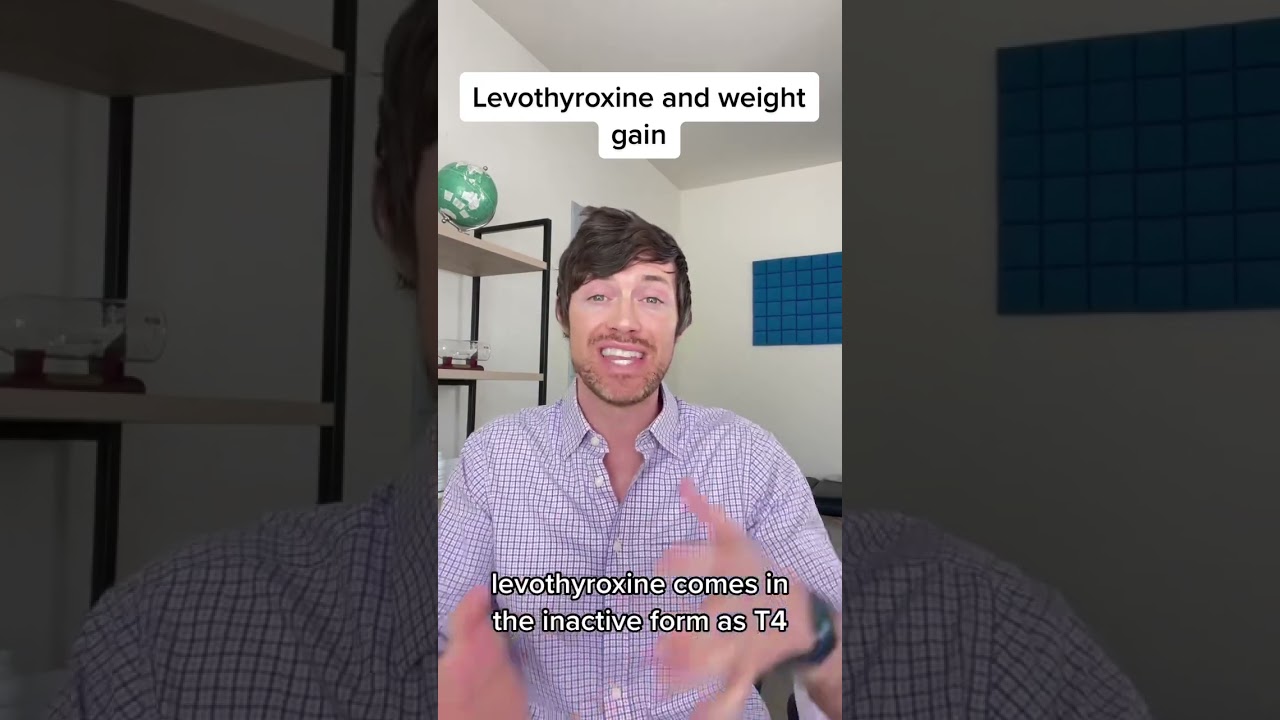
The first thing you need to understand about levothyroxine is that it contains a thyroid hormone that is considered inactive.
By itself, it doesn’t do anything except act as a reservoir for T3 and T3 is the most active thyroid hormone in your body.
When doctors prescribe levothyroxine, they are doing so with the intent that your body will be able to activate it so it can be used.
But that doesn’t always happen.
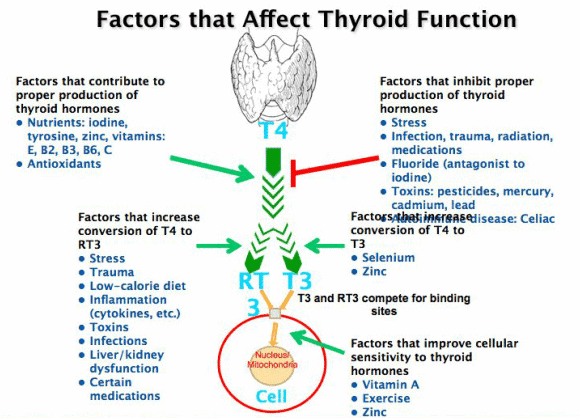
In fact, many thyroid patients are unable to activate T4 into T3 and have what we refer to as a thyroid conversion problem.
And to make matters worse, some people create the anti-thyroid metabolite reverse T3, instead.
Reverse T3 acts to block the binding of T3 at the cellular level.
The more reverse T3 you have, the less functional your thyroid is.
How Levothyroxine Causes weight gain
So how does this all relate to levothyroxine and weight gain?
We can look at some studies to help us understand:
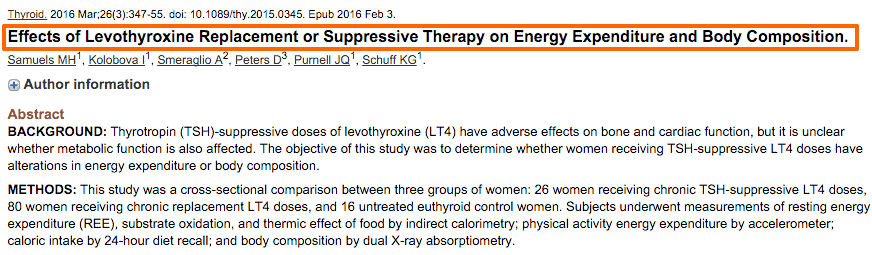
Take for instance this study.
In it, patients were given T4-only medications and treated based on their TSH, very similar to pretty much everyone reading this right now.
The researchers then tested their resting energy expenditure (in other words, their metabolism) both before they added the thyroid hormone and after they suppressed the TSH.
And do you know what they found?
They found that thyroid patients taking thyroid hormone, even with a suppressed TSH, did not see an increase in their metabolism or their body weight.
This would run counter to what you would expect, especially given that thyroid hormone is the major regulator of metabolism in the body.
Either physiologists have been wrong about thyroid hormone for centuries, or, it may have something to do with the type of medication that these patients were given.
In other words, would they have lost weight if they used a thyroid medication that contained T3 instead of T4?
That’s a more interesting question that was answered in this study:
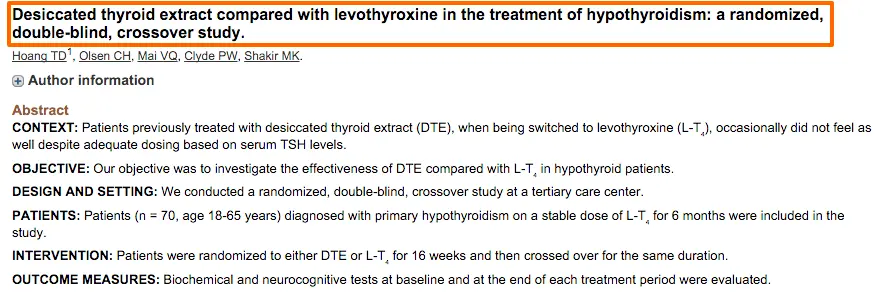
In this study, patients were given either a T4-only medication (like levothyroxine) or a Desiccated Thyroid Extract (like Armour Thyroid) and evaluated over a period of time.
They found that those patients who were taking the desiccated thyroid extract experienced “modest” weight loss to the tune of about 3 pounds compared to the T4-only group.
This may not sound like a lot of weight loss but remember, it happened without any other intervention.

These results support the idea that thyroid hormone regulates metabolism, but that T3 does a much better job than levothyroxine.
But we don’t have to stop here, there’s one more study worth mentioning:
This one compared equivalent doses of both T4 and T3 thyroid medication, based on the TSH, and then evaluated for body weight and cholesterol.
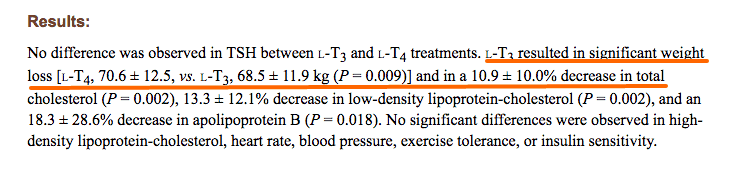
This study showed that patients who were taking T3-only medication had more weight loss and better cholesterol than patients who were taking T4-only medication.
In other words, pound-for-pound, T3 thyroid hormone is far more effective than T4 thyroid medication at managing thyroid function.
And practically speaking, this means that levothyroxine will not have any impact on weight for most people who take it.
This may be news to you, but it isn’t to most doctors. They are just afraid to prescribe T3.
Which is why it’s important to note here that the patients in this study who took T3 did not have any change in their blood pressure, heart rate, or insulin sensitivity which are the common reasons doctors give for not prescribing T3.
These three studies do not prove that levothyroxine will necessarily or automatically cause you to gain weight, but they do shed light on how it’s unlikely to help you lose weight.
When you combine this fact with the real scenario that many thyroid patients are being under-treated and not taking full advantage of lifestyle changes like diet and exercise, it’s easy to see why so many people report weight gain when taking it.
The good news is that you do not have to accept this weight gain because there are things that you can do about it:

Step #1: Check your free T3 and Total T3
The absolute best way to know if levothyroxine is working for you is by evaluating these two lab tests.
The reason it works is simple:
Remember, levothyroxine only contains T4 thyroid hormone, but in order to be used by the body, it must be turned into T3.
So if you are taking levothyroxine and you are not seeing an increase in your free T3 or total T3 afterward, then it is very likely that your body is not activating it.
And we know from the studies that I mentioned before if you are not activating it then it will not have the positive impact that you are looking for on your metabolism.
Unfortunately, many doctors are often unwilling to order these tests, usually because they don’t know how to interpret them, which is where step #2 comes into play:
Step #2: Check your basal body temperature and resting heart rate
You don’t have to do this step if you can get your free T3 and total T3 labs checked, but if you can’t, for whatever reason, or if you just want to get started right away, you can look at these two metrics.
Both your heart rate and body temperature can be used as proxy measurements of global thyroid function.
They aren’t perfect, but they are a down-and-dirty method that can give you an idea as to whether or not your body is activating your levothyroxine.
They work because as T3 increases, so too will your resting heart rate and basal body temperature as these are both correlated with basal metabolic rate.
You will know pretty quickly if levothyroxine is not doing its job because your body temperature will be less than 98.6 degrees and your resetting heart rate will be in the 50s.
Someone who has normal thyroid function and normal T3 levels should see a normal body temperature and a resting heart rate somewhere in the 70s.
Step #3: Create a more comprehensive thyroid hormone routine
As I alluded to previously, it’s actually really to solve this problem and help your levothyroxine do its job.
All you need to do is mimic the thyroid hormone production of the healthy thyroid gland.
This makes a lot of intuitive sense, but, for whatever reason, very few doctors and patients actually do it.
The healthy thyroid gland produces a combination of T4, T3, and T2 thyroid hormones.
But when you take levothyroxine, you are only giving your body one of those three important hormones.
The reality is that you can take all three and doing so helps many thyroid patients get back to feeling 100%.
For most people, it looks like this:
- 80% of your total thyroid dose should be T4 as levothyroxine or some equivalent – Practically speaking, this is usually around 80 to 100 mcg.
- 20 % of your total thyroid hormone dose should be T3 as liothyronine or some equivalent – Practically speaking, this is usually between 5-20 mcg.
- 100 to 200 mcg of T2 thyroid hormone as 3,5 diiodo-l-thyronine – T2 is the only thyroid hormone available over the counter and can be purchased in supplement form.
I’ve already done the research to come up with these ratios and doses and they are based on what the healthy thyroid gland produces and what most thyroid patients feel better on.
Some deviation may be needed, of course, but I would recommend starting here.
Does this mean that levothyroxine never works?
Does Levothyroxine Ever Cause Weight Loss?
Does this mean that levothyroxine never works?
Not at all.
There are definitely some people who get by just fine using only levothyroxine without any other thyroid hormones.
You really won’t find those people around here, though, because as a percentage of the whole, they are relatively small at around 20%.
And they don’t go around looking for advice on how to lose weight on levothyroxine because they don’t have that problem.
But the truth is that levothyroxine is fine for a small minority of people as long as they are able to activate it.
What’s key here is understanding that just because levothyroxine by itself doesn’t work for many thyroid patients, it doesn’t mean that it is a bad medication.
Unfortunately, this is the conclusion that many thyroid patients jump to.
It’s not that levothyroxine is bad; it’s that your body is unable to use it.
But this problem can be solved with the addition of other thyroid hormones.
So don’t make the mistake of thinking that you must use a certain type of thyroid medication to feel better.
After all, levothyroxine is incredibly easy to get and incredibly cheap.
In a perfect world, all thyroid patients would be taking thyroid hormone cream that includes T4, T3, and T2 or Tirosint-Sol with liothyronine and T2, but we don’t live in that world and not everyone has access to these medications.
So in the meantime, don’t be afraid to play around with levothyroxine if that’s what’s available to you.
I have seen many thyroid patients get back to feeling 100% when using it in conjunction with T3 and T2.
By the way, many thyroid patients have never heard about T2.
If that’s you, then I would recommend reading this article next.
It discusses the amazing benefits of this thyroid hormone and how it helps with weight loss.
Scientific References
#1. http://linkis.com/www.ncbi.nlm.nih.gov/0wh6l
#2. http://www.ncbi.nlm.nih.gov/pubmed/23539727
#3. https://www.ncbi.nlm.nih.gov/pmc/articles/PMC3205882/
#4. https://www.ncbi.nlm.nih.gov/pubmed/8903695
#5. http://www.ncbi.nlm.nih.gov/pmc/articles/PMC2292454/
#6. http://www.ncbi.nlm.nih.gov/pubmedhealth/PMH0072785/
#7. https://www.ncbi.nlm.nih.gov/pmc/articles/PMC3219766/
#8. https://www.ncbi.nlm.nih.gov/pmc/articles/PMC4737508/
#9. https://www.ncbi.nlm.nih.gov/pubmed/8834378
#10. https://www.ncbi.nlm.nih.gov/pmc/articles/PMC2277319/
#11. https://www.ncbi.nlm.nih.gov/pubmed/20883174
#12. https://www.ncbi.nlm.nih.gov/pubmed/20823774
#13. https://www.ncbi.nlm.nih.gov/pubmed/3630857
#14. https://www.ncbi.nlm.nih.gov/pmc/articles/PMC3520819/
#15. http://www.ncbi.nlm.nih.gov/pmc/articles/PMC3978663/
#16. https://www.ncbi.nlm.nih.gov/pmc/articles/PMC4056127/
#17. http://www.ncbi.nlm.nih.gov/pubmed/21077724
#18. http://www.ncbi.nlm.nih.gov/pubmed/25555216
#19. http://www.ncbi.nlm.nih.gov/pubmed/19190113




Every time my levothyroxine is increased I gain weight. I have taken up to 15 mcg of liothyronine with 70 mcg of levothyroxine, but still gain weight. I’m exhausted and frustrated. I used to be on Armour Thyroid but after a while it felt like it wasn’t working. I had heard that there were some issues with Armour over the last few years and that patients were no longer feeling better on it as well so I switched.
I can’t seem to stick to WW diet because I’m too hungry and ho over the weekly points. I’m exhausted and have trouble getting the energy for HIIT workouts. On days I don’t work I go on hour long walks or hikes and I have been doing 16/8 intermittent fasting for 5 weeks but I’m not losing any weight. I feel so depressed and defeated. I don’t know what to do.
Hi Cece,
You definitely want to stay away from weight watchers or any other calorie restricted diet as they all lower thyroid function and eventually lead to more weight gain. I have tons of information on my blog on how to lose weight if you have thyroid problems. I would recommend starting here: https://www.restartmed.com/thyroid-obesity-myth/
I was taking Levothyroxine 60 mcg with 5 mcg of T3. My thyroid seemed to be getting worse, horrible fatigue, brain fog that would not go away no matter how hard I tried to fix it, the highest I’ve ever weighed, sore muscles and mood swings, hair falling out, incontinence, etc. I asked my doctor if I could switch to armour thyroid & armour T3, so I’ve been on it about 4-5 weeks now and will check my levels again next week. After seeing this article I ordered the thyroid adrenal reset supplement and started taking it yesterday. I’m sure hoping this weight gain will go away soon! I hate it.
Hi Stephanie,
It sounds like you are on the right track! Just make sure that your dose of armour is optimized based on the ranges found here: https://www.restartmed.com/normal-thyroid-levels/
I don’t know if this is still active but I’ll try. These questions are all dates much earlier…
I have been on levothyroxine for two years after having been on Armour for years and then naturethroid until it was recalled due to dosage error. My doctor asks me why I want to stay on it Armour and my answer is always because it both T3 and T4…but I thought I’d try levo again. My labs weren’t too good..borderline prediabetes and borderline fatty liver disease. I thought no way..did keto/IF for 3 months and lost a little weight but those other issues were reversed. Doc didn’t say a thing about them but she did want me to start on a statin because my LDL went up. My T chol was 227 and I’m not one to believe that’s a bad level. I told her to fix my T3 before asking me to take meds. Refused saying it was my diet and lifestyle yet had never asked me what those were. Anyway my weight is prob 10-15 lbs short of where I want/need to be but it won’t budge! It fluctuates up/down 2 lbs but never lower. I prob did 20 miles of biking and 10 walking last week, ate low carb, salads etc and it didn’t budge. After reading this I’m thinking it’s the levo…I have tried a lot of different ways to move this but nothing. I just don’t understand how backwards we are with treating thyroid issues in 2022! Or any hormonal issues for that matter. I’m going to ask my doc to put me back on Armour or add a T3 med to my levo. I want to see if the weight moves then I’ll know for sure it was levothyroxine preventing any weight loss.
Hi Leslie,
It sounds like the most important thing you can do is find a better doctor. Please see this resource which includes information on how to find a competent thyroid doctor: https://www.restartmed.com/how-to-find-a-doctor-to-treat-your-thyroid/
It doesn’t make logical sense to stay with a doctor who isn’t willing to work with you or change up your medications or at least try something new.
Thank you for your helpful info for us who have thyroid issues. I have had some success with changing my diet rather drastically. I discovered that grains and sugar were contributing to inflammation for me. I have mostly eliminated sugar and all grains. I follow a low carb diet and practice time restricted eating. I only have sugar for a very special occasion which was one time in the last 3 months. I am currently taking 75mcg of Levoxyl daily. I tried NDT several years ago but was also taking bio identical hormones. I struggled more with weight gain then. I am at a fairly healthy weight now and exercise regularly. I still deal with occasional insomnia.
Hi Virginia,
It could have just been that your dosing of NDT was off which caused your symptoms. Doctors tend to underdose thyroid patients when switching from T4-only thyroid medications to NDT. It could also just be that you don’t tolerate it as well, though, which does happen as well.
I was initially diagnosed with Grave’s Disease at the age of 20, and since then I’d been placed on Levothyroxine with varying doses starting at 150 mcg. As I fast forward 18 years, I’m currently on 75 mcg and started feeling extremely sluggish. My side effects were less than desirable and I asked my doctor to revert back to 100 mcg, which he graciously agreed to.
However, I find that as a 38 year old male, my efforts of controlling weight are a little more difficult and side effects include anxiousness, jitters and pockets of irritability. I’ve always led an active lifestyle, with long-distance running being at the core of my workout regimen and maintain a healthy diet but something doesn’t add up. What should be my next steps in trying to control it? Could this be my hypochondria setting-in, or is this just considered standard operating procedure as one gets older? Any advice or recommendations would be appreciated.
Hi Nick,
There’s probably an organic problem that explains your current predicament but it will require a knowledgeable doctor to figure it out. In addition to managing your thyroid, I would also look at testosterone and the other labs mentioned here: https://www.restartmed.com/thyroid-lab-tests-men/
What do you mean by an organic problem? Could you please elaborate?
Thank you for your help and your super insightful write up.
I have been struggling with weight gain and other symptoms for over a year now and every doctor can’t seem to figure out my diagnosis. I currently have normal TSH and low free T4. I have been taking both Levothyroxine and T3 and it hasn’t been helping as I am at my highest weight. I am a Professional athlete so nutrition and fitness has been so important to me.
They want to now prescribe me Tirosint. Would love to hear your feedback as I am very lost in this process. Much appreciated!
Well, I’ve finally lost some weight! About a year ago, I convinced my witchy doctor, who is crazy smart, a bit ADHD, and willing to think outside the box, to add cytomel, despite my normal tsh levels, because I was so symptomatic. That is thanks to you, Dr Childs. I read one of your articles about rT3 and took a chance. My heart rate was in the 40s and I was severely constipated, which I have struggled with for 20 years (since diagnosis). I tried berberine recently and had an allergic reaction and essentially paralyzed my bowels. Not fun. I spent a day in bed shaking uncontrollably, dizzy, nauseated, and a little concerned that I might end up in the ER. Fortunately, Benadryl alleviated the symptoms within a few hours. The following 3 weeks were horrible. TMI alert: As a nurse, I was able to address it, but I would have sent a patient to the hospital. I went 2 weeks with nothing, despite taking softeners and stimulants, and I finally had to do a series of enemas and what amounted to a miralax bowel prep to get things going again. I’m still taking the miralax every day or two to make sure I stay regular. I’ve lost 5 pounds in the past couple of weeks, just by addressing the constipation. I haven’t made any other changes. I finally feel better. My stomach is flat again (except for the little bit of padding I still need to lose), I’m getting quality sleep, about 7 hours each night, the hot flashes have let up, and my resting heart rate is in the 55-65 range, which was normal for me pre-thyroid. So, the moral of my story is to drink enough water and address the constipation! I do take a few supplements, too, including nac, zinc, B vitamins and C. I take vitamin D every couple of days in the winter, since I’m inside so much more.
I still need to lose 15 pounds to feel really good about my weight, but I am feeling optimistic about it for the first time in years.
I’m struggling to understand what my levels should be as a thyroid cancer patient. I no longer have a thyroid, and I am taking a lot of levothyroxine to suppress TSH in my body. I want to loose about 50 pounds and I’m doing carnivore diet, and working out 5 days a week with cardio and weight lifting and the scale is going up. It’s very discouraging and confusing.
Hi Megan,
The levels outlined here apply to those with a thyroid and those without: https://www.restartmed.com/normal-thyroid-levels/
You can also find additional information on weight loss after thyroid removal here: https://www.restartmed.com/weight-loss-after-thyroid-removal/
Hi Dr,
Please talk about lipedema. It seems to correlate with Hashimoto’s.
Thank you.
Hi Mary,
Thanks for the suggestion! I will add it to the list.
Dr. Childs I have been taking Levothyroxine since 2008. I have been diagnosed with Hashimoto’s thyroiditis. If I start to take the protocols in your program should I stop taking Levothyroxine while taking the supplements you are prescribing?