
- Progesterone balances estrogen's growth effects on breast and endometrial tissue, reducing cancer risk and helping regulate fat storage in hips and thighs.
- Test your progesterone and estradiol levels before starting cream because low progesterone (estrogen dominance) causes symptoms like insomnia, bloating, mood swings, and breast tenderness.
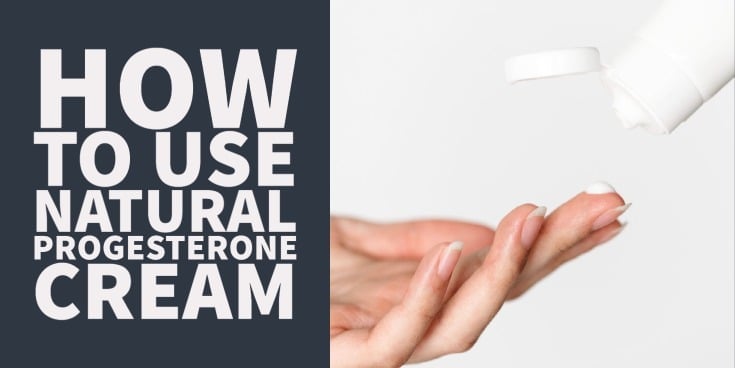
- Use progesterone cream transdermally on rotating body sites (forearms, neck, inner thighs, lower abdomen) to avoid dermal fatigue that stops the cream from being absorbed.
- For menstruating women, apply cream only during days 14-28 of your cycle to mimic natural progesterone peaks. For menopausal women, use daily with regular breaks.
- Dosing requires trial and error between 20-40mg per day, and combining progesterone with estrogen-metabolizing supplements like DIM can make it more effective.
Progesterone is an essential and critical hormone involved in many important processes in the female body.
Normal progesterone levels are required for fertility, mood, weight maintenance [1], to balance estrogen levels, and much more.
One of the benefits of progesterone is, unlike other hormones, how available it is.
Progesterone USP (bio-identical progesterone) is available for purchase over the counter in the United States.
Does that mean you should start taking it?
Well, not necessarily, but in this article, we will help you determine if it’s helpful for you.
Should you use Progesterone Cream?
Why is progesterone so important?
One of the most important reasons is that Progesterone helps to regulate and balance estradiol [2] in the female body.
Without a balance of both hormones, women may experience symptoms ranging from weight gain to depression and even infertility.
You can think of estradiol (and other estrogens) as growth hormones in the body.
They primarily act to increase the size of specific target tissues.
For example:
High estrogen activity on breast tissue will cause an enlargement [3] of the glandular tissue and increase the size of the breasts (and make your breasts tender which tends to occur around the menstrual cycle).
Estrogen also causes the endometrial tissue to grow (another important part of the menstrual cycle) and unopposed estrogen is a risk factor for the development of both breast and endometrial cancer [4].
In addition, estrogen also increases the growth rate of fat cells in the body.
Under the influence of estrogen, fat cells enlarge in specific areas of the female body – mostly the hips, thighs, and the gluteal (butt) region.
The characteristic physiologic “shape” of women who have high estrogen tends to be the “pear” shape.
So where does progesterone fit in?
Progesterone helps to perfectly balance the effects of estradiol on the tissues.
So while estrogen helps fat cells grow, progesterone helps regulate these fat cells and may help with weight loss.
Progesterone also counteracts the effects of endometrial and breast tissue growth [5].
This may sound interesting – especially if you suffer from some of the symptoms I’ve outlined above, but it doesn’t mean you should just jump into supplementation.
It’s the ratio of estrogen to progesterone that is actually important.
One of the reasons that supplementation with progesterone has become so popular is that many women in recent days have a tendency to have more estrogen relative to progesterone.

The name for this syndrome is known as estrogen dominance and it is meant to imply an improper ratio of estrogen to progesterone in the body.
There are many reasons that women suffer from low progesterone (and high estrogen) including the following:
- Exposure to endocrine disruptors that latch onto and trigger estrogen receptors [6] (EDCs are ubiquitous and they are found in plastic food ware, cosmetic products, foods, and in water bottles – you come into contact with these on a daily basis)
- Excessive fat or obesity [7] (extra fat cells increase the conversion of androgens to estrogens in a process known as aromatization)
- The use of birth control medications and other synthetic hormones
- Age (starting at around age 35 progesterone levels tend to fall more rapidly than estrogen levels)
- Other hormone disorders such as hypothyroidism which leads to low progesterone
- Menopause [8]
- Excessive stress (social, physical, or emotional stress)
- Cellular progesterone resistance syndromes [9] (commonly seen in conditions such as PCOS and endometriosis)
These conditions are actually quite common which is why many women suffer from low progesterone.
Symptoms of Low Progesterone
What kind of symptoms may be associated with low progesterone?
Luckily low progesterone is easy to identify through symptoms and can be confirmed through basic serum lab testing (discussed below).
Symptoms of low progesterone include:
- Inability to fall asleep at night
- Water retention and bloating
- Roller coaster emotions (especially unexplained irritability, depression, or anxiety)
- Changes to your menstrual cycle (missed cycles, heavy bleeding, etc.)
- A personal history of conditions such as PCOS, endometriosis, uterine fibroids, or fibrocystic breast disease
- Decreased libido (low sex drive)
- Breast tenderness (especially during your menstrual cycle)
- A known diagnosis of PMS or PMDD
- History of multiple miscarriages or issues with infertility

If you are experiencing 3+ of the symptoms listed above then your next step should be to consider assessing your serum levels of both progesterone and estradiol (I recommend doing this before supplementation).
Some of these symptoms are also associated with other hormone imbalances and other medical conditions which is why it’s important to confirm the diagnosis through testing.
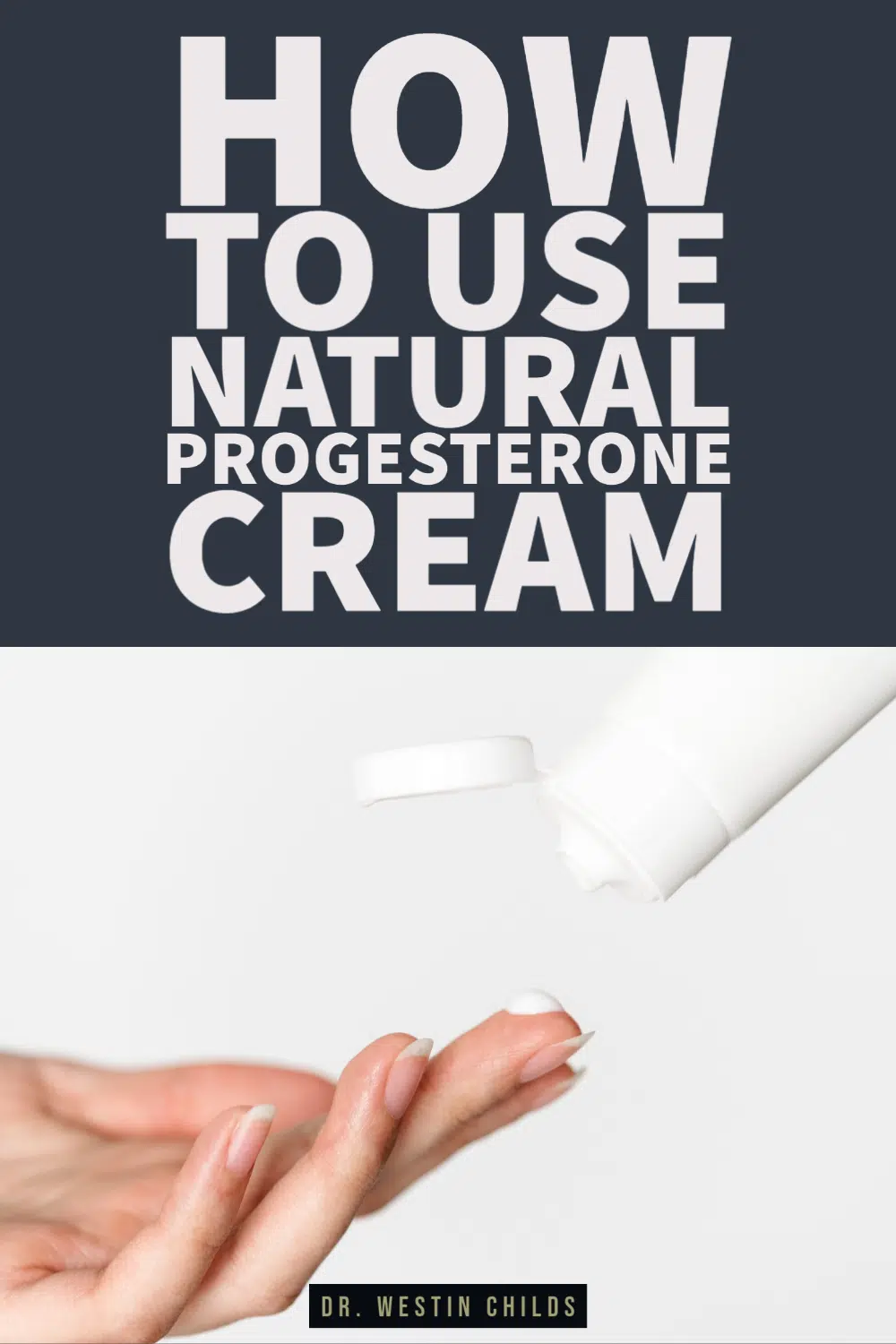
How & When to Use Progesterone Cream
If you do decide to use progesterone cream, then there are several things you need to know in order to get the best results!
First and foremost, it’s important to find a cream that contains the active ingredient of progesterone USP.
Progesterone USP is the bio-identical version [10] of progesterone and the exact same hormone that your body produces naturally.
Note: Just because your body produces it naturally doesn’t necessarily mean that it will work for you though!
Next, you need to make sure that you use it correctly.
In general, it’s best to use progesterone cream over oral pills because of the way that your body absorbs the hormone.

Under normal conditions, progesterone is secreted directly into your blood cells and then makes it to your tissues before it is metabolized by the liver.
When you consume progesterone orally you bypass this system and send it directly to the liver first.
This produces high levels of the progesterone metabolite pregnanediol and it’s not known if this metabolite is harmful long term.
Because of this, it’s best to use the transdermal (or application through the skin) first.
While there are advantages to using the transdermal route, there are also potential disadvantages.
Among those is the concept of dermal fatigue.
Dermal fatigue basically refers to a situation in which all of the adipose tissues in a specific application site have become saturated to a point that reduces further absorption.
Basically, this means that if you use the same spot to apply progesterone on your body for an extended period of time it may no longer work.
You can bypass this by simply alternating the spot where you apply progesterone on your body.
Potential application spots include the neck, the forearms of both arms, the lower abdominal area, and the inner thighs.
It’s best to alternate either daily or every other day for the best results.
In my experience, the forearms tend to be the best place for transdermal absorption due to the network of veins that are very close to the surface (and the small amount of fat tissue in the area).
The next step is to make sure you are using it at the right TIME of the month.
When to Apply Progesterone During Your Cycle
If you are menstruating (meaning you are NOT menopausal) then the time that you apply progesterone is important.
Whenever possible, and whenever we are using powerful hormones, it’s always best to try and mimic what the body does naturally.
By following this advice we see that progesterone tends to peak in the last 2 weeks or so of the traditional 28-day menstrual cycle.
Because of this, it’s best to use progesterone on days 14-28 of your cycle or during the luteal phase.
It’s not advisable to take progesterone throughout the entirety of your cycle (days 1-28) because you may interfere with the traditional hormone fluctuations associated with the menstrual cycle.
This obviously becomes more difficult if you do not have a standard menstrual cycle or if your cycle is unpredictable.
In these cases, you can try to find a midpoint of your menstrual cycle and then use the progesterone until your cycle starts.
When to Apply Progesterone After Menopause
Women who are menopausal should use progesterone differently than those who are menstruating.
Menopausal women no longer experience the cyclical changes to progesterone and estradiol that menstruating women do.
Instead, their hormones tend to reach a “steady state” with very little fluctuation in hormone levels over time.
For this reason, menopausal women can get away with near-daily dosing of progesterone (usually in lower dosages).
You can do this in 2 separate ways:
- #1. Use daily on days 1-28 of the month and take a 3-day break before restarting on the 1st of the next month.
- #2. Use 6 days and take a 1-day break every 7 days (so 4 days of “rest” each month).
There is no preference on which method you use, instead, try to find what works best for your schedule and stick to it.
Progesterone Cream Dosage
The dose of progesterone that you use each day will vary (sometimes significantly) from person to person.
I’ve found the average dose to be somewhere between 20 to 40mg per day.
Having said that some women need much more and some women need much less.
It’s worth spending some time playing around with your dose to figure out what works best for you.
You can use this list of low progesterone symptoms and high progesterone symptoms to help adjust your dose.
If you use 40mg and still experience low progesterone symptoms then you may consider increasing it.
Conversely, if you use 20mg and start to experience symptoms of high progesterone that may mean you need even less!
Just remember:
Finding your dose may take some trial and error.
Where to Apply Progesterone Cream
We went over the application sites previously, but I wanted to include a list here as well.
If possible you will find the best results by alternating the application site each day that you use progesterone.
You can alternate between the following sites:
- Left inner thigh
- Right inner thigh
- Neck area
- Left forearm
- Right forearm
- Lower abdomen
- Vaginal/Labial area
Another important point is to avoid using the same site for different hormones!
For instance:
If you are using testosterone vaginally, then you don’t want to also use progesterone vaginally.
It’s often better to break up your compounded hormones and use individual hormones rather than double or triple hormone “stacks”.
Choosing a Progesterone Cream
When purchasing progesterone cream over the counter I recommend using a product that is paraben and fragrance-free like this one.
Alternatively, you can also use compounded progesterone cream from your pharmacy if your physician is willing to prescribe it.
In my experience, I haven’t seen a huge difference in pharmaceutically compounded progesterone vs. over-the-counter progesterone cream.
Side Effects of Progesterone Cream
Will using progesterone cream have side effects?
The short answer is maybe, but not if you use it correctly.
The reason I’ve spent so much time discussing the proper way to use progesterone cream is that it matters quite a bit.
Some women may seriously benefit from using progesterone cream but due to one bad experience (from overdosing or wrongful application) may never try it again.
Most of the side effects that women experience from progesterone have to do with using too much for their bodies (which is a fairly easy fix).
Occasionally (but more rarely) women simply don’t tolerate progesterone at all.
Some of the symptoms you may experience when using progesterone cream include:
- Weight gain (stop using progesterone if you experience this side effect or dramatically lower your dose) – this weight is usually due to fluid changes and NOT fat mass but it is still concerning to women when it occurs
- Fluid retention
- Drowsiness
- Dizziness
- Groggy sensation or fatigue
- Increased irritability or feeling “tense”
- Not feeling like yourself
- Headaches
If you experience negative symptoms associated with progesterone cream use you will most likely experience them rather quickly (within 1-2 weeks).
Also, one potential pitfall of progesterone use is that some women may not tolerate progesterone cream but may still benefit from the use of progesterone pills.
If you are confused about what is causing your symptoms then you should consult with a physician to help guide you through this process.
Will Progesterone Help with Weight Loss?
One reason that many women want to use progesterone cream is that they believe it will help with weight loss.
While some women do experience weight loss while taking progesterone I don’t think you should expect it or use it for this purpose.
I’ve written extensively about how progesterone can help with weight loss in this post.
The short story is that progesterone can be used to augment weight loss if it’s also combined with existing weight-loss strategies and therapies.
But by itself, it’s not a very effective weight loss hormone or medication.
In addition, some women actually experience weight gain (if they don’t use it correctly) while taking progesterone cream.
Progesterone Cream vs. Progesterone (Prometrium) Tablets

Bio-identical progesterone cream is available over the counter from places like Amazon, but this should be differentiated from prescription progesterone tablets.
Bio-identical progesterone tablets are also available under the name Prometrium.
These should NOT be confused with synthetic progestins or progestogens [11] which are synthetic pharmaceutical versions of the progesterone compound.
Prometrium IS a bio-identical oral progesterone medication and the only difference between progesterone cream and Prometrium is that Prometrium is taken orally (as a tablet).
Some women actually tolerate progesterone tablets better than progesterone cream.

The reason likely has to do with absorption issues and the difference in each person’s ability to absorb hormones transdermally.
If you find that progesterone cream just isn’t working for you, despite changing your dose, then it may be worth considering a trial of Prometrium.
In order to get Prometrium you will need to get a prescription from a physician, however, so keep that in mind.
The average dose of Prometrium is around 50 to 100mg per day.
Progesterone Cream vs. Birth Control Medications
Progesterone cream should also be differentiated from birth control formulations.
Birth control formulations usually consist of progesterone-like compounds known as progestins or progestagens.
These compounds are NOT bio-identical which means they are not metabolized exactly the same way that progesterone is in your body.
Pharmaceutical companies can not patent biological hormones and compounds so they generally opt to produce synthetic versions of various hormones.
The idea is that these synthetic versions look similar to the naturally occurring progesterone compound and they, therefore, are metabolized in a similar way.
This isn’t entirely true and is one of the reasons that birth control medications may cause various symptoms that bio-identical progesterone does not.
The metabolism of birth control pills results in compounds that the body is not used to producing and they may have some activity on both progesterone and estrogen receptors in various tissues.
For the sake of this article, it’s important to realize that progesterone cream and birth control medications are completely different compounds and should not be considered the “same”.
Some studies suggest [12] that the use of bio-identical hormones should be the “standard” due to their safety profiles, especially when compared to synthetic hormones.
Supplements to Boost Progesterone
In many cases, women will benefit from the concurrent use of progesterone cream and certain supplements.
While low progesterone is a problem for many, this issue is often accompanied by high estrogen.

The use of progesterone cream can help “balance” out the ratio of progesterone to estrogen in the body, but it may not be the ultimate treatment for the high estrogen.
In cases such as these, you may benefit from the use of supplements designed to help clear out estrogen which can also make more effective your dose of progesterone.
Supplements that help reduce estrogen include:
- DIM or Indole 3 Carbinol – DIM is a special compound that helps increase the metabolism of estrogen in the body. This compound is found in brassica vegetables and can help alleviate the symptoms of excess estrogen. Take 100 to 300mg per day for best results.
- Calcium D glucarate – Calcium D glucarate also helps directly increase estrogen metabolism by increasing glucuronidation in the liver. It can be combined with DIM. Use up to 3,000mg per day (at least 1,000mg per day).
- Maca root – Maca root is a plant-based powder that has long been used for menstrual and sexual-related issues. Many people find great benefits while using maca even though studies show that it doesn’t alter serum levels of sex hormones. Use 1-2 tablespoons per day.
- Ashwagandha – Ashwagandha is an adrenal adaptogen that has been shown to help balance estrogen levels by down-regulating estrogen receptors. Use up to 500mg per day.
Deciding Whether Progesterone Cream Is Right for You
Progesterone cream is a safe and effective hormone that is available over the counter for use in women who suffer from low progesterone.
Progesterone cream can be used to help balance the actions of estrogen in your body and may dramatically reduce the symptoms of excess estrogen.
While many women suffer from excess estrogen and low progesterone not everyone should use progesterone cream.
In addition, the use of progesterone cream may take some trial and error as you figure out how to apply it and what dose to use.
Now I want to hear from you:
Are you using progesterone cream?
Is it working for you?
Why or why not?
Leave your comments below!
Scientific References
1. Kalkhoff RK (1982). Metabolic effects of progesterone. American journal of obstetrics and gynecology. doi:10.1016/s0002-9378(16)32480-2.
2. Conneely OM, et al. (2003). Progesterone-dependent regulation of female reproductive activity by two distinct progesterone receptor isoforms. Steroids. doi:10.1016/s0039-128x(03)00126-0.
3. Yaghjyan L, et al. (2011). Estrogens in the breast tissue: a systematic review. Cancer causes & control : CCC. doi:10.1007/s10552-011-9729-4.
4. Russo J, et al. (2006). The role of estrogen in the initiation of breast cancer. The Journal of steroid biochemistry and molecular biology. doi:10.1016/j.jsbmb.2006.09.004.
5. Lange CA, et al. (2008). Progesterone and breast cancer. Women’s health (London, England). doi:10.2217/17455057.4.2.151.
6. Maruyama K, et al. (2010). Exposure to exogenous estrogen through intake of commercial milk produced from pregnant cows. Pediatrics international : official journal of the Japan Pediatric Society. doi:10.1111/j.1442-200x.2009.02890.x.
7. Nelson LR, et al. (2001). Estrogen production and action. Journal of the American Academy of Dermatology. doi:10.1067/mjd.2001.117432.
8. Prior JC (2011). Progesterone for Symptomatic Perimenopause Treatment – Progesterone politics, physiology and potential for perimenopause. Facts, views & vision in ObGyn.
9. Patel BG, et al. (2017). Progesterone resistance in endometriosis: origins, consequences and interventions. Acta obstetricia et gynecologica Scandinavica. doi:10.1111/aogs.13156.
10. Samaras N, et al. (2014). Off-label use of hormones as an antiaging strategy: a review. Clinical interventions in aging. doi:10.2147/cia.s48918.
11. Asi N, et al. (2016). Progesterone vs. synthetic progestins and the risk of breast cancer: a systematic review and meta-analysis. Systematic reviews. doi:10.1186/s13643-016-0294-5.
12. Holtorf K (2009). The bioidentical hormone debate: are bioidentical hormones (estradiol, estriol, and progesterone) safer or more efficacious than commonly used synthetic versions in hormone replacement therapy?. Postgraduate medicine. doi:10.3810/pgm.2009.01.1949.