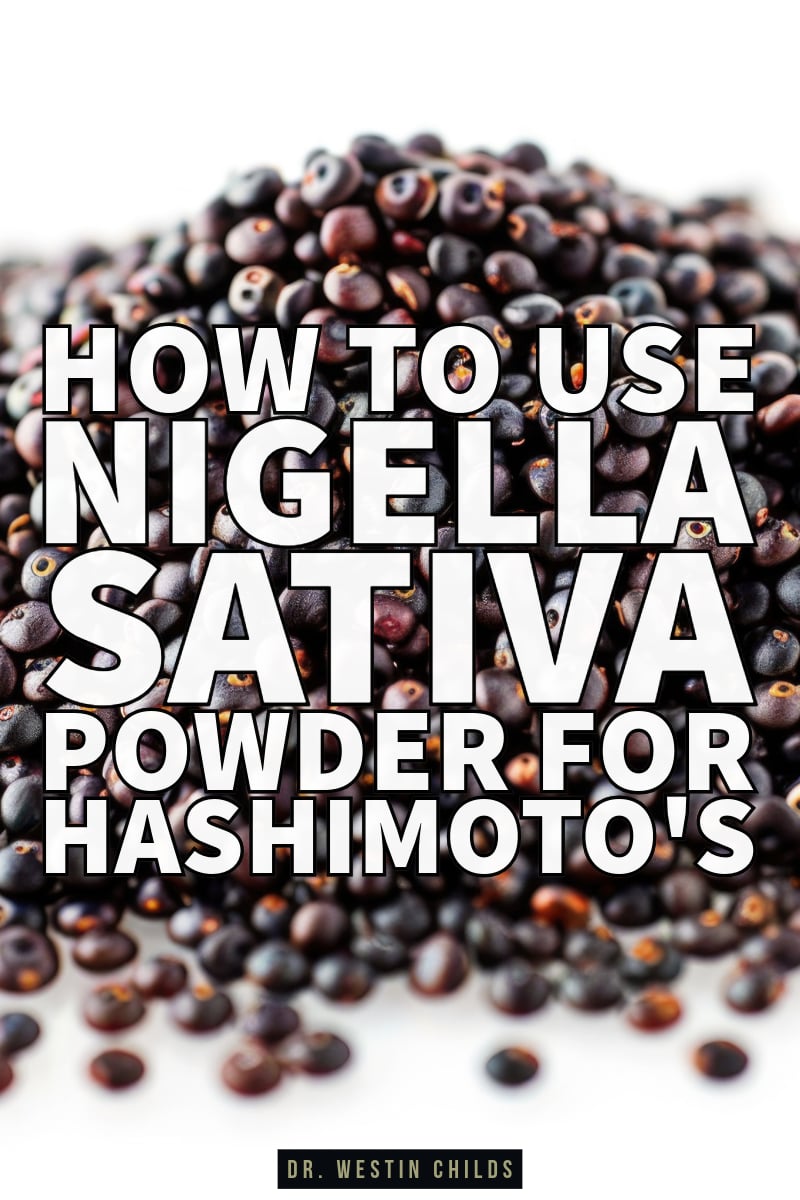


- Nigella sativa powder can reduce TPO antibodies by 30 percent within 8 weeks when taken at 2,000 mg daily, making it one of the most effective natural options for Hashimoto's.
- Take 2,000 mg daily for maintenance or 4,000 mg daily during a flare, with meals to improve absorption and minimize digestive side effects.
- The powder form contains the complete bioactive profile used in research studies, unlike black seed oil which has a different ingredient concentration.
- Benefits peak after 3-4 months of consistent use, so commit to at least this timeframe before deciding if it works for your thyroid.
Are you struggling to get your Hashimoto’s under control? If so, nigella sativa can help.
This natural herb has been used for centuries, but most thyroid patients have no idea it exists.
And that’s too bad considering that at least one double-blind placebo-controlled trial has shown that it may be able to help you put your Hashimoto’s into remission.
If you’ve never heard about this compound, here’s what you need to know:
What Is Nigella Sativa?
First things first:
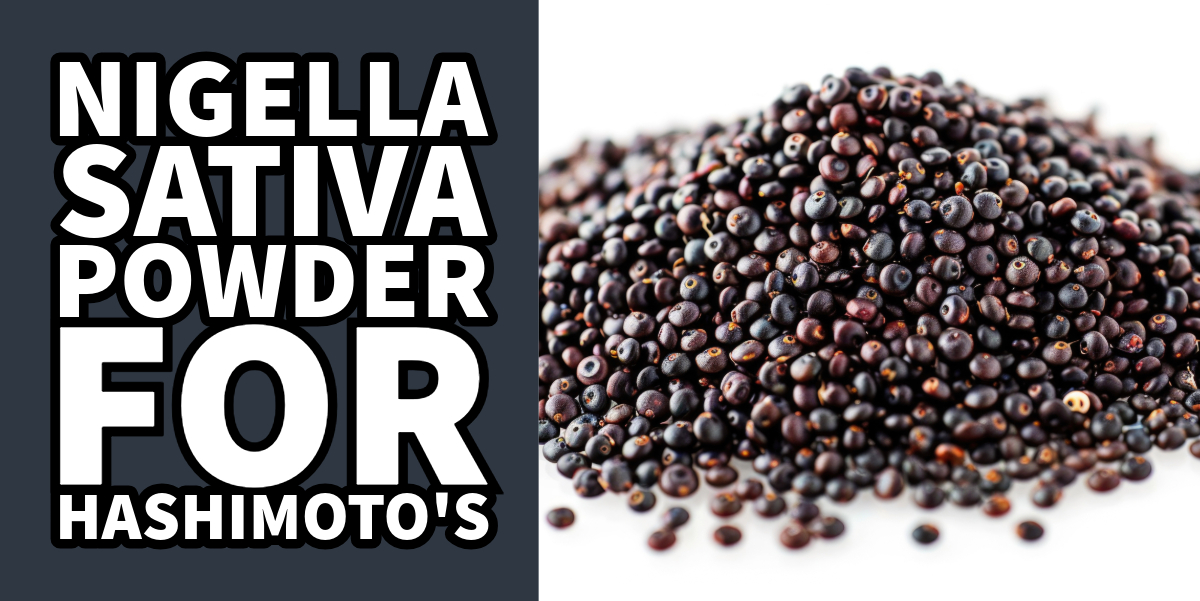
Nigella sativa is the name of the flowering plant that produces black cumin seeds.
These seeds are crushed into a fine powder to create nigella sativa powder.
And it’s this powder that you take in supplement form that provides the benefits we are about to discuss.
This herb has been used for medicinal purposes [1] in the Mediterranean and Northern African areas for centuries, but it’s relatively unknown to people who live in the West.
Its power comes from a host of bioactive compounds that have strong effects on the immune system.
Some of these include:
What makes this herb particularly valuable is its documented benefits which are much more than just marketing claims as they are backed by legitimate scientific research.
Which is why it’s one of the first things I recommend to patients who have Hashimoto’s.
But how does it work?
1. Lowers Thyroid Antibodies
One of the most important ways to assess the severity of your disease, if you have Hashimoto’s, is your antibody level.
These antibodies can be used as a metric to determine how badly your thyroid is under attack.
The more antibodies you have, the faster your own body and immune system will destroy your thyroid gland.
What’s amazing about this compound is that research shows it can help significantly reduce these antibody levels.
In one study [4], 8 weeks of supplementation with 2,000 mg of nigella sativa powder resulted in a 30% reduction in these antibodies.
In a world where the conventional medical community has little to offer for patients with Hashimoto’s, this is huge!
2. Improves T3 and T4 Levels
The autoimmune attack that occurs on your thyroid gland in Hashimoto’s limits your ability to create T4 and T3.
This decline leads to many of the symptoms of hypothyroidism that you are dealing with, namely things like weight gain, hair loss, depression, and more.
Through its effects on both the thyroid gland and the immune system, nigella sativa can help bump these values up.
And the higher your T4 and T3 levels are, the better you will feel.
It’s that simple.
Normally, you’d need thyroid medication to do this, but research shows that nigella sativa may offer another option.
3. Reduces Inflammation
At its heart, Hashimoto’s really is an inflammatory disease which is why you should do everything in your power to keep inflammation under control if you have it.
Because nigella sativa contains powerful anti-inflammatory agents, such as thymoquinone, its use can help you keep inflammation in check.
This systemic effect occurs through its impact on NF-kB pathways, which are the pathways that drive autoimmune-related inflammation [5].
They also drive other Hashimoto’s-related symptoms like joint pain, fatigue, and brain fog.
So in a roundabout way, taking it can help manage these pesky symptoms as well.
4. Improves Cholesterol & Lipids
Thyroid problems and high cholesterol go hand in hand.
Which is a big problem, because it increases your risk of deadly conditions like heart attack and stroke.
If you are someone who is struggling to get your cholesterol under control, even with the use of thyroid medication, nigella sativa may be able to help.
Research has shown that its use may help reduce total cholesterol and triglycerides and increase HDL [6].
And these benefits occur independently from the effects it has on your thyroid.
But treating and optimizing your thyroid hormones will also have a positive impact on your cholesterol.
In this way, you could double dip on this benefit.
5. Helps Regulate Weight & Fat Mass
Maybe the most interesting benefit of nigella sativa is what it can do to your weight.
Studies have shown that its use may help reduce body weight, BMI, and waist circumference.
In fact, one meta-analysis showed that 10 out of 14 studies confirmed this benefit on weight and fat loss [7].
Because it’s so difficult to lose weight if you have a thyroid problem, this is icing on the cake.
How it helps with weight loss isn’t fully understood, but probably occurs due to a combination of changes in appetite, calorie intake, and intestinal health when using it.
How to Choose a Nigella Sativa Supplement
If you want to get these results, you’ll not only need to use the right supplement but also enough of it.
The research indicates that for best results, you’ll want to use at least 2,000 mg of nigella sativa in powder form (this is important as you will soon see) daily for at least 8 weeks.
This 8-week time frame allows enough time for your physiology to change and the benefits to emerge.
Beyond this, you’ll also want to look for a product that is:
- Minimally processed (avoid any product that undergoes processing with heat as this can damage the bioactive compounds)
- Organic
- Third-party tested
- Free of artificial ingredients and flavors
You can get my recommended nigella sativa product that comes pre-dosed for thyroid patients here.
If you’re going to take it, you might as well add on Myo-inositol and selenium because they provide complementary benefits and my recommended product has all three.
How to Take Nigella Sativa for Hashimoto’s
For optimal results with Hashimoto’s, here’s what I recommend:
- For daily maintenance of Hashimoto’s: 2,000 mg per day for at least 8 weeks.
- For a Hashimoto’s flare: 2,000 mg TWICE daily (4,000 mg per day) until your flare-up is under control. At this point, reduce down to 2,000 mg per day.
- Timing: Take with meals to improve absorption and ease any impact it may have on your digestion. It’s non-stimulating so it can be taken at any time of the day. If you’re using thyroid medication, take it 30-60 minutes away (either before or after).
- Duration: Research indicates that benefits are seen after 8 weeks of daily use, but my personal experience shows that these benefits reach their peak after 3-4 months of daily use. It’s safe to use indefinitely (it’s a plant-based ingredient, after all) so there’s no need to stop or take breaks.
- Monitoring: It’s not required to track your antibodies, but if you feel so inclined, you can check them after 8-12 weeks of daily use. And if you check your antibody levels, you can also throw in your free T3 and free T4 levels as well. You should see a drop in your antibodies and a rise in your free thyroid hormone levels (this may occur with or without a change in your TSH).
Nigella Sativa vs. Black Seed Oil: What’s the Difference?
You may have seen the terms nigella sativa and black seed oil used interchangeably, but they are slightly different, and understanding this difference is important.
In a simple sense, you can think of the oil as a more concentrated version of the powder.
Instead of turning the plant into a powder, black seed oil is the product of pressing the ingredients until an oil comes out.
This oil changes the ingredient profile and the benefits slightly when compared to the powder.
For instance, the oil has higher concentrations of thymoquinone, but lower concentrations of water-soluble bioactive compounds.
It also ends up with a higher concentration of omega-6 fatty acids.
And perhaps the most significant difference, at least the difference that most people notice, is the flavor.
The flavor of black seed oil can be very off-putting, which reduces compliance significantly.
Comparatively speaking, the powder form contains the complete profile of bioactive compounds and it’s the version used in all of the research studies that we’ve discussed.
For this reason, I recommend the powder over the oil.
But that doesn’t mean you can get similar results with the oil.
At the end of the day, you’ll need to figure out what works best for you.
Your Next Steps With Nigella Sativa
Nigella sativa powder may be one of the best ingredients you’ve never heard about for lowering thyroid antibodies.
But it’s not the only supplement that can help!
If you want to see a list of other research-backed ingredients that can be used with nigella sativa, check out this article next.
Scientific References
1. Khader M, et al. (2014). Thymoquinone: an emerging natural drug with a wide range of medical applications. Iranian journal of basic medical sciences.
2. Forouzanfar F, et al. (2014). Black cumin (Nigella sativa) and its constituent (thymoquinone): a review on antimicrobial effects. Iranian journal of basic medical sciences.
3. Balahbib A, et al. (2021). Health beneficial and pharmacological properties of p-cymene. Food and chemical toxicology : an international journal published for the British Industrial Biological Research Association. doi:10.1016/j.fct.2021.112259.
4. Farhangi MA, et al. (2016). The effects of Nigella sativa on thyroid function, serum Vascular Endothelial Growth Factor (VEGF) – 1, Nesfatin-1 and anthropometric features in patients with Hashimoto’s thyroiditis: a randomized controlled trial. BMC complementary and alternative medicine. doi:10.1186/s12906-016-1432-2.
5. Ciesielska-Figlon K, et al. (2023). The Impact of Nigella sativa Essential Oil on T Cells in Women with Hashimoto’s Thyroiditis. Antioxidants (Basel, Switzerland). doi:10.3390/antiox12061246.
6. Sahebkar A, et al. (2016). Nigella sativa (black seed) effects on plasma lipid concentrations in humans: A systematic review and meta-analysis of randomized placebo-controlled trials. Pharmacological research. doi:10.1016/j.phrs.2016.02.008.
7. Al Asoom L (2022). Is Nigella sativa an Effective Bodyweight Lowering Agent and a Mitigator of Obesity Risk? A Literature Review. Vascular health and risk management. doi:10.2147/VHRM.S373702.