

- Wellbutrin (bupropion) works for weight loss by increasing norepinephrine and dopamine at the neurotransmitter level, which helps regulate appetite and boost metabolism.
- Studies show Wellbutrin helps most people lose more weight than placebo, with typical losses of 7-10% depending on dose. More importantly, that weight loss stays off for up to 48 weeks.
- Wellbutrin won't work for you if your weight gain stems from thyroid problems, leptin resistance, insulin resistance, or hormonal changes like perimenopause. It only helps if low appetite control or sluggish metabolism is your main issue.
- Some patients are 'initial responders' who lose weight quickly on Wellbutrin and maintain success long-term, while others see no benefit. Success early on predicts whether the medication will work for you.
- Before taking Wellbutrin for weight loss, identify why you gained weight in the first place. Address the root cause like metabolic dysfunction or insulin resistance rather than hoping a medication fixes the symptom.
No doubt most of you have at least heard about Wellbutrin.
Most of you are probably familiar with its use as an anti-depressant, but did you know that it can also help with weight loss?
Or that it is actually compounded with another medication (naltrexone) and is part of one of the most popular weight loss medications currently available?
The answer to that is probably not, which is why we are going to discuss using Wellbutrin for weight loss here.
Let’s dig into how Wellbutrin helps with weight loss and determine if it’s right for you (because it certainly doesn’t work for everyone)…
Does Wellbutrin Help with Weight Loss?
Just because a medication may help with weight loss doesn’t mean it actually does a good job.
When we talk about weight loss medications we always need to be asking the following questions:
1. How effective is the medication at causing weight loss?
And:
2. Will the medication work for me or does it only work for certain people?
These questions are VERY important.
We could have a medication that works 100% of the time, but only causes 1-2 pounds of weight loss.
Or we could have a medication that helps people lose 20-40 pounds but only works in 20% of the population.
But why do we have such high variability between medications?
This has to do with HOW weight gain occurs, and it’s different for each person.
Hopefully, you understand that weight gain has more to do with your metabolic and hormone function than it does with how many calories you are consuming.
Yes, calories do matter – but they take a backseat to the influence that powerful weight-altering hormones such as leptin and insulin.
Before we jump into how Wellbutrin helps with weight loss we need to discuss the basics:
First off, Wellbutrin is a medication most commonly prescribed to treat depression, anxiety, and certain eating disorders.
It’s also known as Bupropion (which is the generic version of Wellbutrin).
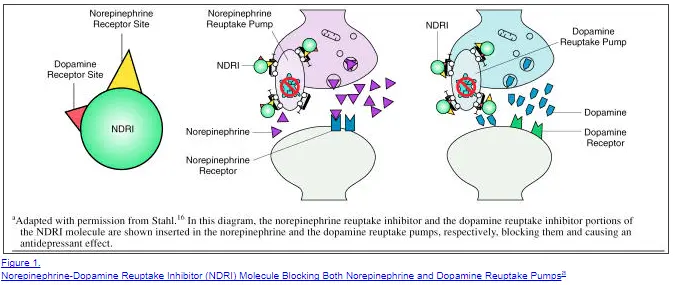
Wellbutrin exerts its influence on mood and weight by altering specific neurotransmitters and by acting as a norepinephrine and dopamine uptake inhibitor [1].
Wellbutrin basically acts to increase the amount of adrenaline (norepinephrine) at the neurotransmitter synapse and it is likely through this influence that it helps modulate appetite and increase metabolism leading to weight loss.
With that in mind let’s answer the basic questions we mentioned previously:
How effective is Wellbutrin at helping with weight loss?
Most studies have shown that Wellbutrin is superior to a placebo in helping with weight loss.
I’ve included a graph that outlines the relative effectiveness of various studies as they compare to placebo below:
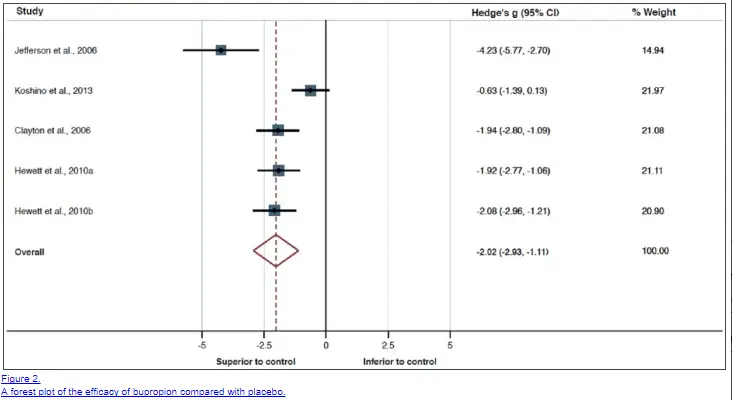
You can see that in the studies listed, 4 of the 5 led to weight loss which was superior to placebo indicating that most of the time it is effective.
Individual studies [2] also tend to agree with this assessment…
This study showed that various doses of Wellbutrin were very well tolerated and were associated with a 24-week weight loss of 7.2% and 10.1% based on dose.
What’s also important is that this weight loss was sustained for up to 48 weeks!
Another study [3] shows similar results:
This study showed that Bupropion (Wellbutrin) was more effective than placebo in achieving weight loss at 8 weeks in obese and overweight adult women.
What’s interesting in this study is that certain patients were referred to as “initial responders” and these patients had more success long-term than those who did not respond as quickly.
This concept brings us to our next question:
Will Wellbutrin help ME lose weight?
Not everyone will achieve weight loss by using Wellbutrin, in fact, there is a chance it simply won’t help you at all.
Remember:
You should do your best to identify WHY you have gained weight, to begin with.
Is your thyroid functioning properly?
Do you have leptin resistance or insulin resistance?
Is your metabolism functioning optimally?
Are you peri-menopausal or post-menopausal?
If you’ve answered YES to any of the questions listed above then Wellbutrin is probably NOT the best weight loss medication for you.
It doesn’t mean it won’t work at all, it just means that Wellbutrin is not targeting the root cause of your weight gain and isn’t likely to lead to significant weight loss over time.
With that in mind let’s talk about who SHOULD use weight loss and who will benefit the most from using this medication.
Who should use Wellbutrin for Weight Loss?
If you have any of the following conditions then Wellbutrin may help you:
- Current eating disorder or a history of an eating disorder (Anorexia/bulimia/food addiction/etc.)
- Patients with severe food cravings or the inability to resist food
- Patients with Body set point malfunction (meaning you have difficulty losing weight and keeping it off)
- Patients with obesity who also suffer from depression or anxiety
- Patients who struggle with emotional eating
You’ll notice that many of the conditions listed above have a psychological component.
This is primarily because Wellbutrin acts to influence neurotransmitter levels which are how nerves communicate with one another.
Does this mean that it won’t work for you unless you fit all of the criteria above?
Not necessarily, it just means that those who fall into those categories are more likely to respond to it.
It’s important to realize that this list is for those who use Wellbutrin by itself (which I recommend against).
You can expand the list of people who would potentially benefit from using Wellbutrin by combining Wellbutrin with other specific medications.
How Much Weight Can You Lose With Wellbutrin Alone?
If Wellbutrin is going to work for you, studies indicate that you will probably lose about 2-10% of your initial body weight [4].
That means if you are 200 pounds the best-case scenario is that Wellbutrin helps you lose 20 pounds.
If you are only 150 pounds, it’s possible that Wellbutrin may only help you lose a couple of pounds.
These numbers may not sound great at first but you have to realize that this data stems from the use of Wellbutrin as monotherapy (meaning using Wellbutrin by itself).
As with any other weight loss medication (or weight loss therapy) I highly recommend against this strategy.
It’s far better to use MULTIPLE therapies at once or to combine medications to get a synergistic effect.
For instance:
By adding a medication known as naltrexone (more information below) you can increase weight loss [5] and expand the number of people that will benefit from taking these medications.
Combining Wellbutrin with Naltrexone (LDN)
Scientists have found that many medications lead to weight loss by themselves, but they have also found that combining medications often lead to even better results.
This holds true for the combination of Wellbutrin plus naltrexone.
This combination is known as Contrave.
We already know how Wellbutrin works, so how does Naltrexone work?
Naltrexone increases the effectiveness of Wellbutrin by targeting fat-storing hormones such as insulin.
Naltrexone also helps reduce chronic pain, reduce inflammation [6], and improve thyroid function [7].
When you start adding these benefits to Wellbutrin you can see now that MANY more people may benefit from using it.
If you have any of the following conditions then you may benefit more from the combination of Wellbutrin plus Naltrexone over just Wellbutrin alone:
- ALL of the conditions listed above for Wellbutrin PLUS:
- Patients who suffer from thyroid problems (Hypothyroidism, Hashimoto’s thyroiditis, Thyroid resistance, etc.)
- Patients with chronic inflammation or chronic pain syndromes (these often lead to weight gain through the use of narcotics)
- Patients with blood sugar issues, type II diabetes, or insulin resistance
- Patients suffering from autoimmune diseases
- Patients who fall on the PCOS spectrum or who have a known diagnosis of PCOS
By adding a low dose of naltrexone the list of conditions and people that benefit from Wellbutrin increases dramatically.
I discuss how to add Naltrexone to Wellbutrin in a separate post.
*Please note that I have no affiliation or interest in the makers of Contrave or Wellbutrin. I only discuss the methods that I have used that have worked for patients and share this knowledge with you.
Wellbutrin vs. Other Antidepressants
Will other anti-depressants work just like Wellbutrin?
Actually, not really.
Wellbutrin is considered unique among anti-depressants in that it is at LEAST weight neutral and at best usually helps with weight loss somewhat.
Other anti-depressants, especially the class of selective serotonin reuptake inhibitors (SSRIs for short) are actually well known to cause weight gain [8] to the tune of 5-10 pounds (or more depending on the person).
It’s worth pointing this out because so many people take anti-depressants (usually of the SSRI class) which may be making weight loss very difficult.
For this reason, I generally recommend against the regular use of SSRIs in obese patients and instead would recommend a trial of Wellbutrin instead.
Wellbutrin & Weight Gain
It’s also worth pointing out that Wellbutrin may actually cause weight gain in some individuals.
While most people do experience weight loss by taking Wellbutrin, some unlucky people will experience weight gain.
The exact mechanism behind why this occurs is not well understood (nor is it likely the subject of future studies) however it probably relates to several factors.
First:
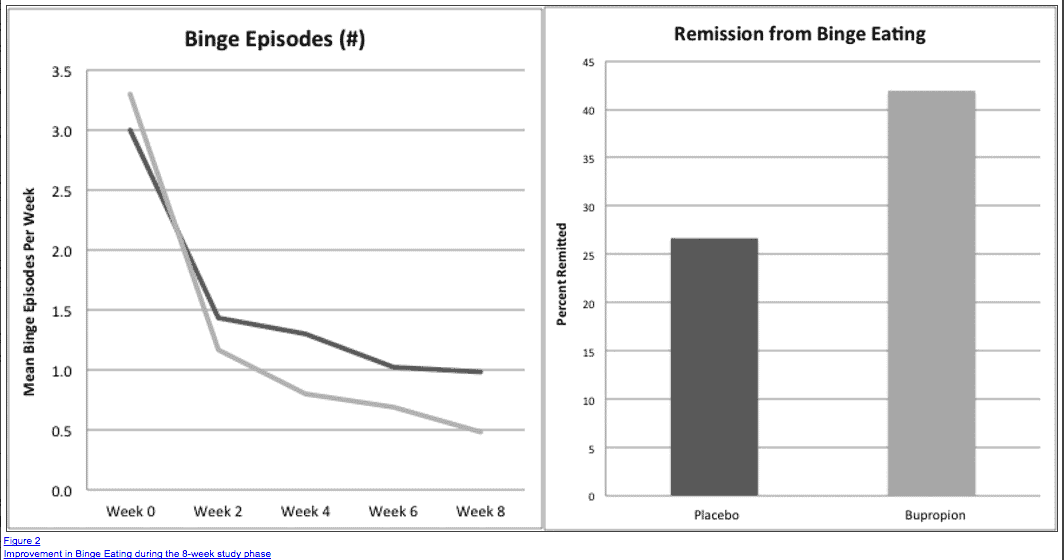
Wellbutrin has an impact on appetite and eating behavior [9].
Generally, this benefit extends to help reduce binge eating and promote normal caloric intake but it can go haywire in some individuals and increase food cravings and food intake dramatically.
If you notice an INCREASE in food cravings while taking Wellbutrin then it may not be worth continuing (if your sole purpose for using it is weight loss).
Second:
We know Wellbutrin generally promotes hormone balance but it is possible that it may promote the excessive production of a stress hormone known as cortisol.
This effect may be mediated through excessive adrenaline (norepinephrine) levels, but it’s not clear.
If you find that taking Wellbutrin is making you feel more jittery or anxious then this may be happening to you.
Third:
Wellbutrin may influence sleeping behavior and promote insomnia [4].
Lack of sleep [10] is a known cause of weight gain and you should not take this medication if it interferes with your ability to sleep.
Wellbutrin Dosage for Weight Loss
Is there a specific dose necessary for weight loss if you are using Wellbutrin?
I have found that IF Wellbutrin is going to help you lose weight you usually need to be taking around 100 to 300mg per day.
If you want to combine this with Naltrexone then that dosage ranges from 4.5 to 13.5mg per day (used in conjunction with Wellbutrin).
What about the difference between Wellbutrin IR, Wellbutrin SR, and Wellbutrin XL?
All of these are names for the same medication, but differ in how they administer the medication to your body throughout the day.
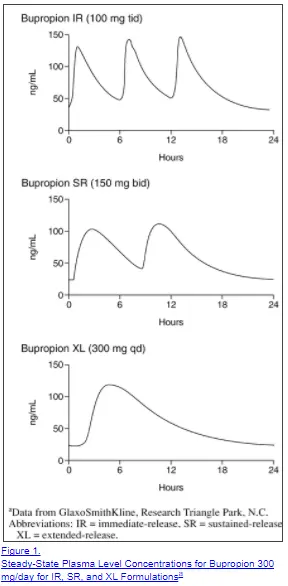
I find the most benefit for patients when using Wellbutrin or Bupropion SR or IR.
By taking the medication several times throughout the day you will allow for a more stable dose and higher concentration in your serum.
The only reason to reduce the dose or to switch to XL is if you are having issues with sleep.
In this case, you would benefit from using the XL first thing in the morning or using the IR twice per day (but skipping the final dose).
Determining the dose you need is based on how you respond to Wellbutrin and if you experience any negative reactions while taking it.
For example:
Extremely sensitive patients may only need 100mg per day.
When to Discuss Wellbutrin for Weight Management
Does this mean that you should run out and ask your doctor to prescribe you Wellbutrin?
Not necessarily.
While Wellbutrin MAY lead to weight loss it doesn’t mean that everyone should use it.
Whenever you take medication (or undergo any therapy or treatment) you always need to think about the benefits and compare them to the potential consequences or side effects.
While Wellbutrin does provide potentially significant benefits – up to 10% weight loss over several months, it doesn’t come without any side effects.
Also, Wellbutrin tends to work the best in a select subset of patients known as “responders”.
These “responders” tend to fit the criteria listed above (those with eating disorders, body set point malfunction, and/or depression).
If you aren’t an “initial responder” then you may have better luck with other medications.
My recommendation is to always target your therapies and treatments to your body and that means trying to find the root cause of your weight gain.
Side Effects to Watch out for
If you do decide to use Wellbutrin you should be aware of the potential side effects associated with this medication.
I’ve listed the most common side effects below [11]:
- Weight Gain
- Insomnia
- Anxiety
- Jittery sensation or feeling restless
- Dry mouth
- Shaking sensation
If your goal is to use Wellbutrin for weight loss then you should stop the medication immediately if you experience weight gain or insomnia as both of these side effects may blunt your progress.
Lastly, you can generally prevent many of these side effects by starting off with a low dose and titrating only when necessary.
Having said that, some people will simply not tolerate the medication and should not use it.
Considering Wellbutrin as Part of Your Treatment
Wellbutrin is an atypical anti-depressant in that it tends to help with not only depression but weight loss as well.
It is unique among anti-depressants in that almost all other anti-depressant medications tend to cause weight GAIN.
Wellbutrin works to help with weight loss by modulating appetite and by altering specific neurotransmitter levels.
Wellbutrin generally helps people lose anywhere from 2-10% of their body weight over several months.
This benefit can be increased by intelligently combining Wellbutrin with other medications such as Naltrexone and it can also be used in conjunction with appetite-suppressing supplements such as those found here.
Now it’s your turn:
Are you using Wellbutrin?
Is it working for you?
Why or why not?
Leave your comments below!
Scientific References
1. Gadde KM, et al. (2007). Bupropion for weight reduction. Expert review of neurotherapeutics. doi:10.1586/14737175.7.1.17.
2. Anderson JW, et al. (2002). Bupropion SR enhances weight loss: a 48-week double-blind, placebo- controlled trial. Obesity research. doi:10.1038/oby.2002.86.
3. Gadde KM, et al. (2001). Bupropion for weight loss: an investigation of efficacy and tolerability in overweight and obese women. Obesity research. doi:10.1038/oby.2001.71.
4. Fava M, et al. (2005). 15 years of clinical experience with bupropion HCl: from bupropion to bupropion SR to bupropion XL. Primary care companion to the Journal of clinical psychiatry. doi:10.4088/pcc.v07n0305.
5. Ornellas T, et al. (2011). Naltrexone SR/Bupropion SR (Contrave): A New Approach to Weight Loss in Obese Adults. P & T : a peer-reviewed journal for formulary management.
6. Younger J, et al. (2014). The use of low-dose naltrexone (LDN) as a novel anti-inflammatory treatment for chronic pain. Clinical rheumatology. doi:10.1007/s10067-014-2517-2.
7. Ilias I, et al. (2001). Thyroid function of former opioid addicts on naltrexone treatment. Acta medica (Hradec Kralove). doi:10.14712/18059694.2019.84.
8. Harvey BH, et al. (2000). Neuropharmacology of paradoxic weight gain with selective serotonin reuptake inhibitors. Clinical neuropharmacology. doi:10.1097/00002826-200003000-00006.
9. White MA, et al. (2013). Bupropion for overweight women with binge-eating disorder: a randomized, double-blind, placebo-controlled trial. The Journal of clinical psychiatry. doi:10.4088/jcp.12m08071.
10. Spivey A (2010). Lose sleep, gain weight: another piece of the obesity puzzle. Environmental health perspectives. doi:10.1289/ehp.118-a28.
11. Stahl SM, et al. (2004). A Review of the Neuropharmacology of Bupropion, a Dual Norepinephrine and Dopamine Reuptake Inhibitor. Primary care companion to the Journal of clinical psychiatry. doi:10.4088/pcc.v06n0403.





Thanks for the article, I’ve gained 7 pounds in less than a month and am freaking out. Should I stop?
Hi Tiffany,
Since starting Wellbutrin? I wouldn’t stop it without physician approval but I would definitely discuss that with your doctor!
Hello,
I have heard some negative interactions with both meds in Contrave and Amitriptyline. I take 10mg Amitriptyline to keep my Cyclic Vomiting Syndrome in remission. I hear that Wellbutrin increases Amitriptyline in the blood but the other drug in Contrave actually blocks Amitriptyline.
Can you point me to any studies for these interactions.
Thank you,
Erin
Hi Erin,
It’s been a while since I’ve brushed up on amitriptyline metabolism but it’s plausible that both amitriptyline and Contrave use the same liver enzymes for elimination which means they may impact serum levels of each other. Many drugs are metabolized through the cytochrome p450 family of enzymes but I don’t remember off-hand if these medications fall into that category.
Whoa, why the hell are you recommending this for people with a history of eating disorders? That’s very dangerous and a high risk for misuse, not to mention it typically comes with clear instructions to not prescribe to a patient with a history of ED. Shame on you.
Hi Sav,
This topic has been addressed in the comment section here. Please refer to those for the answer to why it is recommended in this population 🙂
I have quit taking Wellbutrin after being on it for several years. I have gained about 8 pounds since quitting. I still have my prescription but it is 300xl. Can I start back on this dose? It’s been about 4 months. Thanks
Hi Melissa,
Unfortunately, I am not able to give you medical advice regarding how you should or shouldn’t take your medications. I would recommend touching base with your current doctor to get their opinion as they are more familiar with your case and history!
I have to leave a comment….
bupropion saved me BIG. Ive been through a lot but never thought i could get depressed as i am so happy all the time. i started bupropion about November 2020. the pandemic did not help. one of the hardest debilitating condition is sever RLS (Restless leg syndrome)
When i started bupropion it not only made me feel better mentally but i lost 70lb AND this was huge it curved my RLS affects. So i had two knees to be replaced May of 2021. So i went into the knee replacement 70lb less and 75% of my RLS was gone. Just before my first knee the RLS came back and so did the food cravings. RLS was Kicking my ass and with RLS you must be walking you cant sit or laydown. Now its a year later. My RLS is back with a vengeance. There is a drug that helps with the RLS now. But my cravings to eat are crazy. Messing with my head. (Now for my question) it worked so well for 6 months then stopped. im still on 300mg of bupropion. what can i do to reset it? I just ordered Concave it will be here soon. Why did it quit working and what can i do to get it back…………..
Everyday you wake up is a beautiful day…
There are good days and there are better days. No bad days.
and
Today is a gift not promised to us. we must find good in this day
Hi Joe,
It’s usually pretty uncommon for a medication to just stop working. Instead, it’s much more likely that something else changed which renders the medication that was working less effective. In other words, instead of focusing on your medication, look for that other thing that changed in your life.
I am 50 yrs old and have been recently diagnosed with hypothyroidism. I have been taking 150mg of Bupriopion for over a few years for my anxiety. I just started taking Levothyroxine so I’m wondering if there are any contraindications and/or if I should be taking them at different times of the day? I have been taking the Bupropion first thing in the morning but now this new med must also be taken first thing in the morning. I just don’t want to decrease the efficacy of the thyroid med if at all possible.
Thank you!
Hi Kelly,
Please see this article for more information on how to take levothyroxine correctly! https://www.restartmed.com/take-levothyroxine/
I was on Wellbutrin and did lose about 20 lbs. however for personal reasons I stopped taking the medication three months ago and am back to the same weight. If I started taking it now is it likely that I will experience the same weight loss or will I have a tolerance now that I’ve taken it before?
Hi Taylor,
It’s possible that it could still help but you typically wouldn’t want to use it solely for weight loss as there are much better options available: https://www.restartmed.com/prescription-weight-loss-medications/
You mentioned that you discuss adding naltrexone to Wellbutrin in a different article, but I couldn’t find it. Did you mean the article on Contrave? Thanks!
Hi JM,
I most likely was referring to this article on Contrave: https://www.restartmed.com/contrave-weight-loss/
I believe I discuss how to individually add the medications together if you are unable to get the combination prescription.
I am on buproion xl 300mg. I started 3 weeks ago (at 150mg for 3 days) for depression and emotional eating. Within a few days I noticed an increase in motivation for every day type activities, chores and work. I have also not wanted a single sugary treat and instead have the need or urge to drink water all day. Before my water intake came from coffee, which is also something I don’t really enjoy anymore. Sleep was weird for the first two weeks and there have been some stomach upset but overall the benefit out weighs those inconveniences. I am down a few pounds but I think a lot of it is bloat from sugar.
My question:
You mention briefly that some people are “responders”. Can you explain that a little more and what signs one might see that would lean to that?
I also want to add that I take levothyroxine as prescribed in the morning. After reading your blog that you linked above on that topic I am definitely going to be talking to my doctor about switching to taking it at bedtime.
Thanks so much for the great information in this article! I was on Wellbutrin for depression many years ago. I have struggled with obesity most of my life. When I was on Wellbutrin before, it helped my depression, but didn’t help me lose weight. I do have thyroid issues, slow metabolism, PCOS and insulin resistance along with all of the things you listed above that typically respond well to Wellbutrin. My depression is typically situational, so when that situation is resolved, I usually wean myself off the antidepressant. It’s been several years since I took Wellbutrin (or any antidepressant). My doctor put me back on wellbutrin two months ago when I was having low-grade depression and severe panic attacks waking me up from us sound sleep. She also put me on trazodone to help with sleep about a month before I start Wellbutrin. I didn’t expect Wellbutrin to help me with weight loss, since it did not help me the last time. It’s possible there could be some benefit from the trazodone, helping me sleep better plus I have been practicing intermittent fasting (off and on) and trying to eat healthier and smaller portions for the past year. I was still in the same pattern this past year that I’ve always been in, I would start trying to lose weight by various different methods over the years, lose 10 to 15 pounds, then hit a plateau that never seemed to end no matter what I did. And I would give up and start eating the way I have eaten most of my life, and gain 10 to 15 pounds back and sometimes a few extra pounds. This time, I lost about 20 pounds over about nine months of that pattern of hitting a plateau giving up for a bit gaining a few back, then getting back on my program losing again. Over all of these years, I could never keep my weight under where my body had decided that my setpoint was, and I would keep hitting a plateau and giving up. I think a lot of the reason for this is because of sugar and carb addiction and I just don’t like many vegetables, so that makes it really hard to eat a healthy filling meal without carbs. I just always felt like I was fighting a losing battle against my body. Around the time I went on the Wellbutrin 2 months ago, I had hit the plateau at my setpoint again and had given up, especially with all of the depression and anxiety that I was suffering at that point too. But after being on the Wellbutrin for a couple weeks, I started feeling so much better emotionally and mentally, and my emotional eating had decreased significantly. I felt like maybe I could handle going back on intermittent fasting. From what I’ve read in the past, it seems like intermittent fasting is a good way to decrease insulin resistance. But when I had tried it before, it was really hard to fast for even 12 hours a night. I was extremely hungry and having huge cravings before I could eat the next day, so then, whenever I did eat, I was binging during my eating window of time, and eating lots of junk. So that wasn’t really healthy for me either, but again I was fighting against my body. I know that intermittent fasting really needs to be at least 14 hours and it’s better if it’s 16 hours every night, but I could only manage 14 hours maybe a couple times a week before Wellbutrin; otherwise I was fasting for 12 hours overnight most days. It did stop me from eating late at night, so I do think that’s why I was getting some weight loss from intermittent fasting in the past, but that after was not enough to get me, past my setpoint,. After being on Wellbutrin for about a month, I noticed that I didn’t seem to be as hungry or have the intense cravings as I had in the past. Then, it became a lot easier for me to fast for 14 to 16 hours every night. I’m not craving a bunch of junk at night before I go to bed now, which makes it a whole lot easier to resist that and stick to the intermittent fasting. I’m not even really getting hungry the next day until the 14 to 16 hour fasting timeframe has passed. And during my eating window, I’ve been able to stop at much smaller portions of foods, even ones that I really love. In the past, I would’ve gone for seconds are possibly thirds of that food I really love. I’ve even still been able to have some carbs and sugar during my eating window, but I’m not overeating those things anymore. I can stop myself and be satisfied, which never happened before the Wellbutrin. I had lost 20 pounds over the last nine months, then hit my same setpoint plateau I always hit, gave up, and had gained 5 pounds back right as I started the Wellbutrin. Two weeks after that, I started back on the Intermittent fasting program; I started to notice some accelerated weight loss. I will say that I got a kickstart on the weight loss from a 3 day liquid diet when I had intestinal problems. After that liquid diet for three days, I had lost 5 pounds. This happens when I go on the liquid diet due to the chronic intestinal problems that I have, but as soon as I go back to eating, I usually gain it right back. This time, I did not gain it back, and in the last month of intermittent fasting since then, I have lost 10 pounds! And I feel like it’s something I can actually sustain long-term, because I’m not having extreme cravings and continuous hungry feelings that I used to have. And the only thing that I can figure out that has done that is the combination of the true intermittent fasting I’ve been able to do since the Wellbutrin is decreasing my appetite and cravings. Neither of those things by themself have ever caused me to lose weight this fast and this easily. The only time in my life I’ve ever lost 10 pounds per month was when I went to a holistic doctor years ago, and she put me on a very strict diet: no sugar, very low carb, no dairy, and very restricted meat intake. I basically was living on salads and a few other vegetables, that I like with a little bit of meat. It was not sustainable. After three months, when I couldn’t do it anymore and went back to eating the way I normally do, the 30 pounds I had lost, I ended up finding again very quickly. This time feels sustainable with the help of Wellbutrin. I’m finally hopeful and excited that after struggling with being 75 to 100 pounds overweight for half my life(25 years), that I can actually get to a much healthier weight and be able to sustain it. I would be curious to know if there is any research about combining Wellbutrin with intermittent fasting for those who have PCOS and insulin resistance? Thx so much!
Hi Susan,
I’m unaware of any research combining the two but I haven’t looked at Wellbutrin research in a while.
hello, 2 weeks ago I started using the medication to help lose weight, bupropion 150 mg once daily for 2 weeks and after 2 pills daily along with naltrexone IR and topiramate IR and b12 (in a combination pill) also starting lower dosage and increasing and on the 3rd week we start with metformin. (i am still on week 2 so no metformin yet) I do feel a slight change in my appetite but its too early to know if it is working for me or not, the problem is how to manage its side effects. i don’t want to stop i feel that it’s too soon, but i do feel some side effects that are a bit bothering like the headache and the anxiousness i feel like i am always tense and my jaw is clinching. I also have ringing in my ear which i believe it’s from the meds as well. other side effects are manageable. any advice on how to overcome these side effects in order to give the medication chance to work. I was diagnosed with pcos i tried everything to lose weight but it impossible unless i starve myself i lose the weight and then after i start eating again i gain it back and few extra. The last time i was trying to do the same but my body is not responding, that’s why i resorted to medications to begin with.