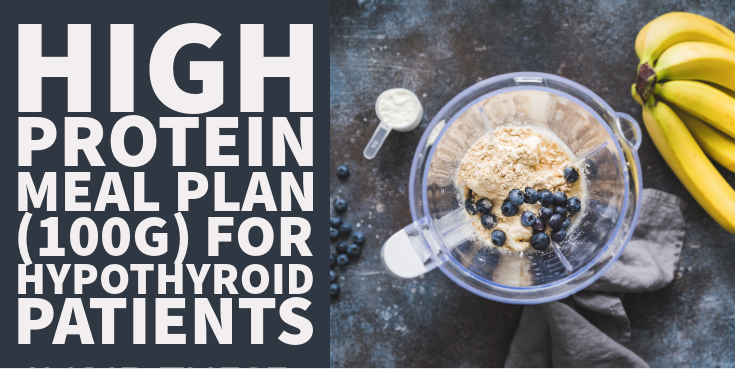

- Aim for a minimum of 100 grams of protein daily as a thyroid patient, or 0.8-1 gram per pound of ideal body weight. Your lean muscle mass drives significant portions of your resting metabolic rate, directly impacting thyroid function.
- Protein is the most neglected macronutrient among thyroid patients yet it offers unmatched satiety. Getting adequate protein keeps you full for hours, preventing the constant worry about carb and fat intake that derails your diet plan.
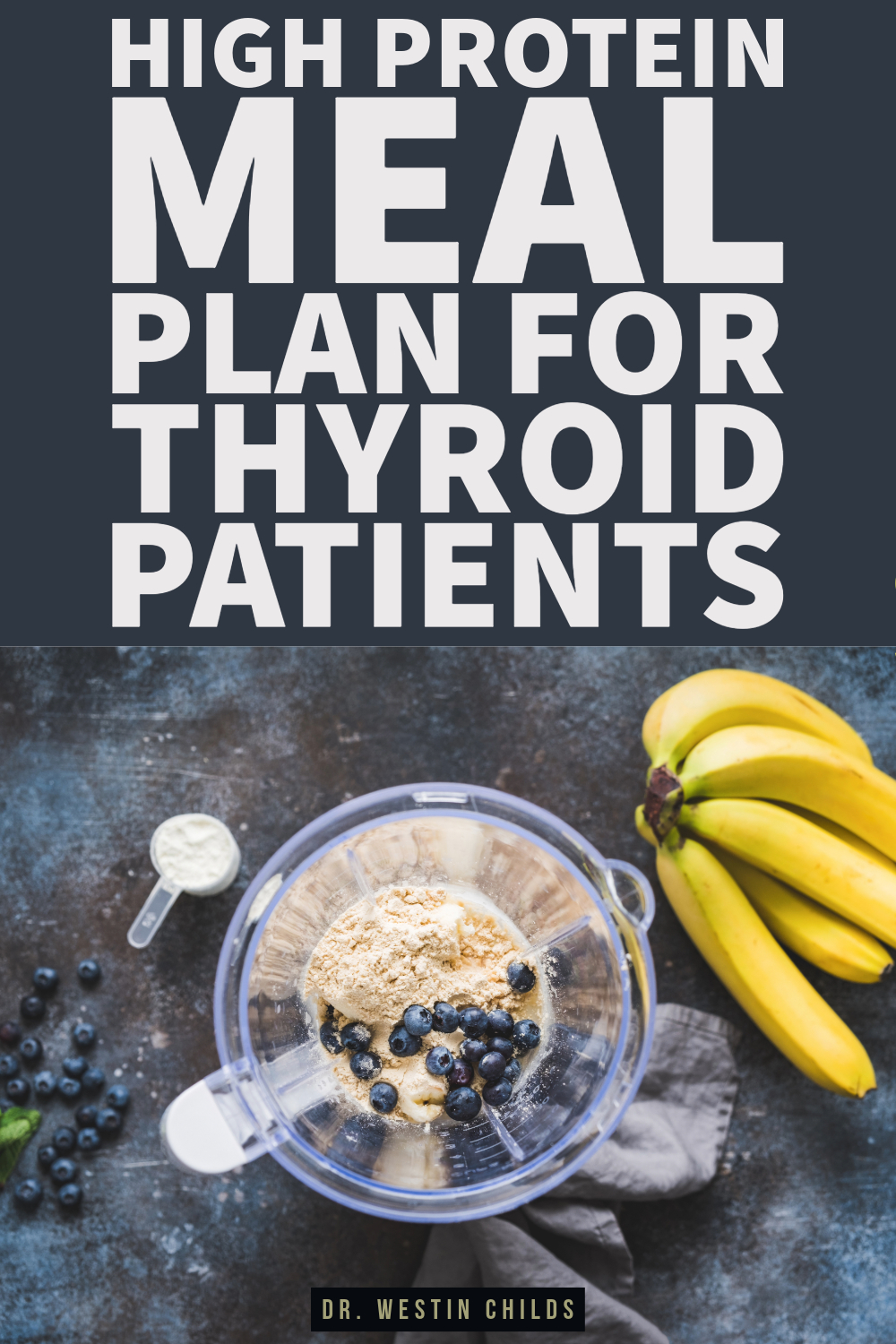
- A high-protein smoothie is your fastest way to hit protein targets at breakfast. Using protein powder with frozen fruit, spinach, and chia seeds gives you 20-25 grams of protein in 450 calories plus vegetables and fruit in one convenient drink.
- Blended fruit produces a smaller blood sugar response than whole fruit, not a larger one. Your body handles the blended nutrients more favorably than critics claim, so don't hesitate to use smoothies as a protein delivery method.
- Space your protein intake across meals throughout the day. Each meal should feature a solid protein source to maximize muscle protein synthesis and keep your metabolism elevated consistently, rather than dumping all your protein into one meal.
Protein remains the macronutrient that thyroid patients ignore the most.
And this is a huge problem!
Not only because it just so happens to be incredibly satiating [1] (meaning it keeps you full for hours and hours), it also happens to be responsible for maintaining muscle mass which promotes better thyroid function.
Trust me when I say you won’t ever be laying in bed at night worrying if you ate enough carbs or fats, but the same can’t be said for protein.
Most thyroid patients simply don’t get enough.
And because of this, their thyroid function suffers.
How much protein is enough?
At a minimum, as a patient with thyroid dysfunction, you should be shooting to consume 100 grams of quality protein per day.
And in a perfect world, you’d want to get around 80 to 100% of the calculation of 1 gram of protein per pound of ideal body weight.
Many of you will balk at the 100-gram minimum, though, so today I want to show you just how easy it is to get there.
And to do that, I’m going to share a simple meal plan:
High-Protein Breakfast
For breakfast, few things are better than a morning whole-food smoothie.
Here’s why:
- They taste delicious
- You can throw pretty much whatever you want in them (meaning you don’t need to worry too much about grocery shopping)
- They are quick and easy to make
- And they are an effective way to get large amounts of fruits, veggies, and protein all at once
The key to getting a meaningful amount of protein in your morning smoothie is by adding a protein powder to the mix, not by adding whole food sources of protein like hemp, chia, or nut butter.
Here’s a sample protein smoothie that will fill you up and provide at least 20 grams of protein:
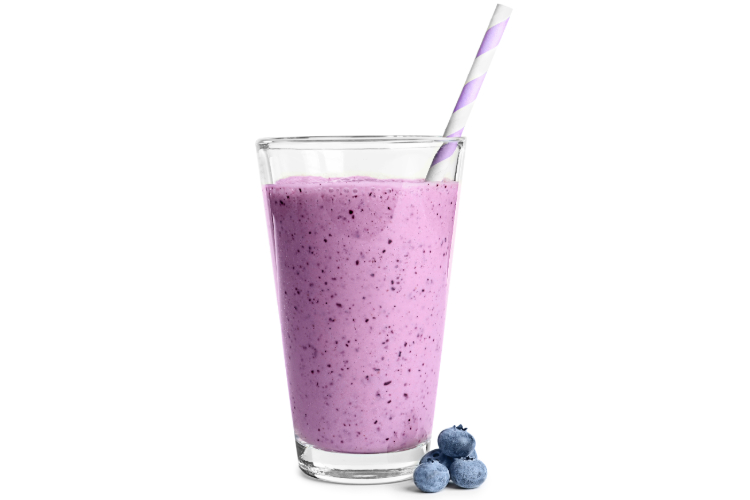
- 1 large banana (frozen, preferably) 121 calories
- 1 serving of blueberries (frozen, preferably) 80 calories
- 8-12 ounces of chilled water 0 calories
- 1-2 scoops of plant-based protein powder (at least one minimum) ~101 calories per 20 grams
- 1 cup of spinach 7 calories (negligible)
- ½ serving of chia seeds (15 grams) ~73 calories
Total calories = 382 calories
Total protein = 24.7 grams with 1 scoop of protein powder
Why it works:
- Protein powder provides a calorie-efficient way to get your protein.
- The banana and blueberries provide 2 servings of fruit.
- 1 cup of spinach provides you with vegetables that won’t really change the flavor of your smoothie.
- Chia seeds provide healthy fats and a little bit of plant-powered protein.
The naysayers will try to convince you that blending your food is somehow harmful to blood sugar and insulin but that isn’t true at all.
In fact, one study showed that blended fruit produces a smaller response in blood sugar [2] than eating the same fruit as a whole food.
So don’t buy into the hype that blending fruit is somehow dangerous or harmful to your health or waistline and keep blending those smoothies.
High-Protein Lunch
Most people need something quick and easy for lunch which is why I recommend either Greek yogurt or cottage cheese.
Both are packed with protein, take minutes to prepare, and can be taken with you on the go, making them perfect for those who work.
Here’s how to make a Greek yogurt protein bowl:
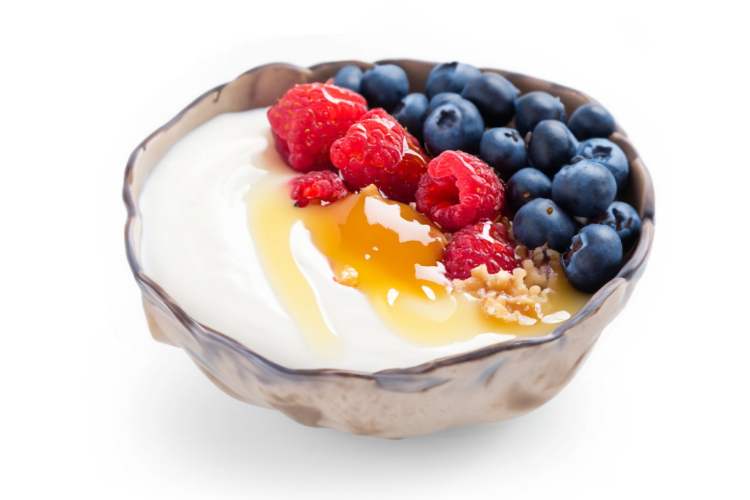
- ~240 grams of Greek yogurt (about 1.7 servings) yielding 30.6 grams of protein and 170 calories
- 1 tablespoon of honey 64 calories
- Optional toppings: homemade granola, fresh fruit (berries, strawberries, etc.), cacao nibs, chia seeds, nuts, coconut flakes
Total calories without additional toppings = 234 calories
Total protein = ~31 grams
Why it works:
- Greek yogurt is a cheap and calorie-efficient vehicle for protein. It also happens to be versatile in that you can make it sweet or savory depending on toppings.
- These protein bowls take minutes to prepare and can be taken with you to work as long as you have a place to keep them cool.
- Even though thyroid patients typically don’t tolerate dairy very well, many can tolerate fermented sources of dairy due to their lower lactose concentration compared to non-fermented and liquid-based dairy products like milk.
You can easily adjust the amount of Greek yogurt in this meal for more or less protein, depending on your preferences.
High-Protein Dinner
Up until dinner, we’ve mostly focused on quick and easy meals so, by the time you get here, you’ll probably be hungry.
And that’s good because this is where you want to have a large and balanced meal with complex carbohydrates and a meat-based source of protein.
My recommendation would be to stick to lean meats and fish which is why salmon with sweet potatoes and broccoli is on the menu:
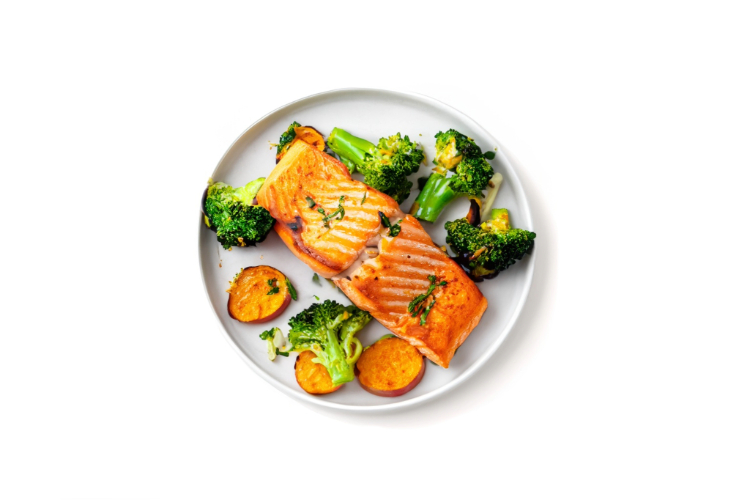
- 1 serving of baked salmon (simple recipe below) 412 calories, 40 grams of protein
- 1-2 servings of baked broccoli florets 50 calories
- 1 serving of sweet potato 114 calories, 2.1 grams of protein
- 1 tablespoon of extra virgin olive oil 120 calories
Total calories = 696 calories
Total protein = ~42.1 grams
Super simple salmon recipe:
- 1 filet/serving of wild-caught salmon (thawed if previously frozen)
- Salt, pepper, garlic, and lemon juice (to taste)
- Bake in the oven at 400°F, checking from about 10 minutes, until the thickest part reaches an internal temperature of 145°F. Cooking time will depend on the thickness of your salmon
Super simple roasted broccoli and sweet potato recipe:
- Add fresh or frozen broccoli to baking pan along with peeled and cubed sweet potato (cut into around ½ inch cubes)
- Season with salt, pepper, and 1 tablespoon of extra virgin olive oil
- Bake in a 400-degree oven for ~20-25 minutes until desired consistency is achieved
Why it works:
- Salmon is an excellent source of protein and is loaded with omega-3 fatty acids including EPA and DHA.
- Broccoli provides high amounts of sulforaphane [3] and indole-3-carbinol [4] which balance hormones and prevent oxidative damage.
- Sweet potatoes provide complex carbohydrates that digest slowly to help keep you full.
- Extra virgin olive oil provides mono-unsaturated fats and polyphenols in the form of hydroxytyrosol, oleuropein, and oleocanthal [5].
You can sub out the salmon here for another type of fish like cod or other lean meats like turkey or chicken, just try to ensure that you get around 40 grams of protein from whatever protein source you decide to use.
High-Protein Snack
If you’ve followed the plan outlined above then you’re sitting at around 98 grams of protein which means we need a little something extra to push you over the edge to 100 grams.
Since you only need a few grams of protein, you have a lot of different options that you can eat as a snack.
My recommendation would be to hard boil a few eggs and eat them throughout the day when and if you need them.
With around 6 grams of protein for 78 calories per egg, they aren’t necessarily the most efficient source of protein, but don’t let that fool you:
Eggs are incredible.
They contain a balanced amino acid profile along with enough vitamins and minerals to be considered nature’s multivitamin [6].
Adding an extra 1-2 eggs per day to your diet will get you 6-12 added grams of protein for around 78-156 calories.
Adjusting Calories in This Meal Plan
Using the calorie estimates listed above, this sample day provides about 1,390 to 1,470 calories with one scoop of protein powder and 1 to 2 eggs. Optional toppings and a second scoop add to that total. Check your product labels because portions and brands vary.
Depending on your metabolism, thyroid function, and activity level, you may need more (very few people will ever need less than this).
If that’s the case, feel free to add in extra snacks or bolster up your Greek yogurt bowl with some extra toppings to make up what you need.
I’m not going to give you an exact amount of calories to eat each day because that number will differ from person to person, but you can certainly figure it out with some trial and error and by following the right metrics.
If you’re like many thyroid patients, then you’ve probably stumbled upon this information in hopes of losing weight.
And if that’s the case, then I’d recommend checking out this article next which highlights some of the most common mistakes that thyroid patients make when trying to lose weight.
Scientific References
1. Pesta DH, et al. (2014). A high-protein diet for reducing body fat: mechanisms and possible caveats. Nutrition & metabolism. doi:10.1186/1743-7075-11-53.
2. Crummett LT, et al. (2022). Postprandial Glycemic Response to Whole Fruit versus Blended Fruit in Healthy, Young Adults. Nutrients. doi:10.3390/nu14214565.
3. Nandini DB, et al. (2020). Sulforaphane in broccoli: The green chemoprevention!! Role in cancer prevention and therapy. Journal of oral and maxillofacial pathology : JOMFP. doi:10.4103/jomfp.JOMFP_126_19.
4. Centofanti F, et al. (2023). Synthetic Methodologies and Therapeutic Potential of Indole-3-Carbinol (I3C) and Its Derivatives. Pharmaceuticals (Basel, Switzerland). doi:10.3390/ph16020240.
5. Gorzynik-Debicka M, et al. (2018). Potential Health Benefits of Olive Oil and Plant Polyphenols. International journal of molecular sciences. doi:10.3390/ijms19030686.
6. Réhault-Godbert S, et al. (2019). The Golden Egg: Nutritional Value, Bioactivities, and Emerging Benefits for Human Health. Nutrients. doi:10.3390/nu11030684.