Shop Thyroid Sleep & Insomnia Supplements
Exhausted all day, then wide awake when it’s finally time for bed? Magnesium, cortisol, and thyroid hormone all play a role in your sleep. These formulas support relaxation and a healthier sleep routine, with ingredients selected for thyroid patients.
-
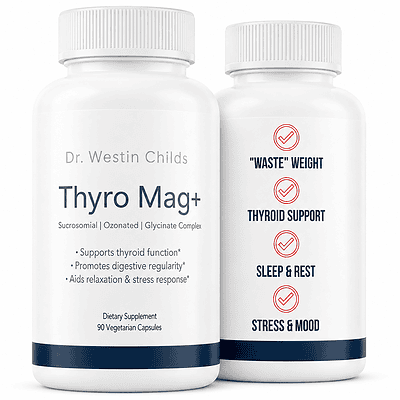
 $34.99 — or subscribe to save 10% Add to CartThyro Mag+Triple Magnesium Complex For Waste Weight, Regularity & Sleep (90 Count)800+ bought in past month
 -
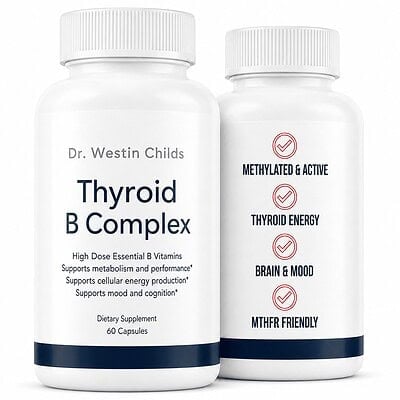
$34.99 — or subscribe to save 10% Add to CartThyroid B ComplexHigh Dose Pre-Methylated B Vitamins (60 Servings)300+ bought in past month
-
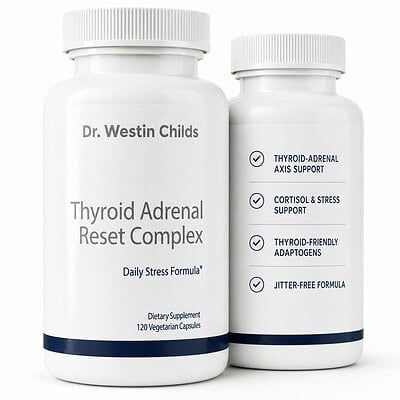
$44.99 — or subscribe to save 10% Add to CartThyroid Adrenal Reset ComplexCombination Adrenal & Thyroid Support (60 Day Supply)350+ bought in past month
-
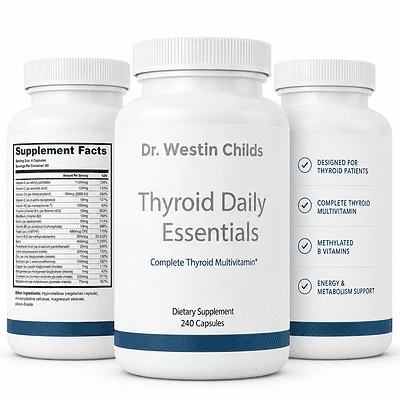
$69.99 — or subscribe to save 10% Add to CartThyroid Daily Essentials34 in 1 Complete Thyroid Multivitamin (60-Day Supply)350+ bought in past month
-
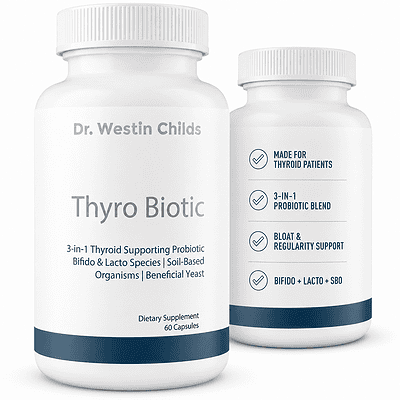
$59.99 — or subscribe to save 10% Add to CartThyro Biotic3-in-1 Thyroid Supporting Probiotic (30-Day Supply)300+ bought in past month
Benefits of thyroid sleep & insomnia supplements
Cortisol and your sleep schedule
The reason you’re wired at night and exhausted in the morning is almost always a cortisol problem. Normal cortisol should be highest in the morning and lowest at night. But when your thyroid is struggling, it puts constant stress on your adrenals, and that cortisol pattern flips. You get a cortisol spike at 10pm or 2am, and suddenly you’re wide awake. These formulas contain adaptogens that help reset your cortisol rhythm back to where it should be.
Replenish magnesium for deep, restorative sleep
Magnesium is your body’s natural relaxation mineral, and it’s critical for sleep. It activates the parasympathetic nervous system (your “rest and digest” mode), supports GABA production to quiet racing thoughts, and even helps regulate melatonin. The problem? Most thyroid patients are significantly depleted and don’t even know it. Our triple magnesium complex delivers three highly absorbable forms that help your body actually relax and stay asleep through the night.
Support natural melatonin production
I’m not a fan of taking exogenous melatonin long-term. What I AM a fan of is giving your body what it needs to make its own melatonin. Vitamin B6 is required for the conversion of serotonin into melatonin. If you’re B6 deficient (and most thyroid patients are), your body may not produce enough melatonin to initiate and maintain sleep. These formulas provide the B vitamin cofactors your body needs to support its own natural melatonin production pathway.
Usable with all thyroid medications
I designed every single one of these formulas with thyroid patients in mind. That means they are safe and effective alongside Synthroid, levothyroxine, NDT formulations like Armour and NP Thyroid, liothyronine, and any combination of T4 + T3.
Address the gut-sleep connection
Most people don’t connect their gut health to their sleep, but they should. About 90% of your body’s serotonin is made in the gut, and serotonin is the direct precursor to melatonin. If your gut is inflamed or you have dysbiosis (which is extremely common in thyroid patients), serotonin production drops, and so does your melatonin.
Calm the nervous system naturally
Thyroid patients often get stuck in a sympathetic nervous system dominant state. That’s your “fight or flight” mode, and it makes falling asleep nearly impossible. These supplements work through multiple pathways to activate your parasympathetic nervous system instead: magnesium supports GABA (the calming neurotransmitter), adaptogens help modulate your stress response, and B vitamins support the neurotransmitter balance your body needs to relax.
Daily thyroid nutrients
Poor sleep in thyroid patients is almost never caused by just one deficiency. It’s usually a combination of disrupted cortisol, depleted magnesium, low B vitamins, inadequate vitamin D, and gut dysfunction all compounding each other. That’s why I’ve included a thyroid multivitamin covering 34 nutrients. Vitamin D alone has been shown to significantly impact sleep quality, and most thyroid patients are deficient. Cover your bases so you’re not guessing.
Research-backed ingredients
These sleep supplements feature magnesium glycinate and threonate (shown to improve sleep quality in clinical studies), adaptogens like ashwagandha (proven to reduce cortisol and improve sleep onset), activated B6 for melatonin synthesis, and targeted probiotic strains that support the serotonin-melatonin pathway. These formulas provide nutrients and botanicals for sleep support.
Physician formulated
Designed specifically for the unique needs of thyroid patients
Third-party tested
Our supplements undergo third-party testing for heavy metals, microbes, and mold.
Manufactured in the USA
All of our supplements are manufactured in an NSF-certified, GMP-compliant facility in the USA.
A few common questions
Before you order
Why does hypothyroidism cause insomnia?
This confuses a lot of people because they think: “If my metabolism is slow, shouldn’t I be sleeping more?” And that would make sense, but that’s not how it actually works. Hypothyroidism disrupts your cortisol rhythm, so instead of cortisol being lowest at bedtime, you get inappropriate spikes at night that wake you up. It also depletes the nutrients your body needs to produce melatonin (especially B6 and magnesium), reduces serotonin production through gut dysfunction, and creates systemic inflammation that disrupts sleep architecture. The result is that classic pattern: exhausted all day, wide awake at night. If that sounds familiar, your thyroid is almost certainly involved.
Can I take these supplements with my thyroid medication?
Yes. Taking a sleep-supporting formula in the evening can fit well with a morning thyroid medication routine. Keep supplements 30 to 60 minutes away from your medication; calcium and iron supplements need at least 4 hours.
Should I take melatonin for thyroid-related insomnia?
I’m generally not a fan of long-term exogenous melatonin supplementation. Here’s why: when you take melatonin from an outside source, your body can downregulate its own production over time, which makes the underlying problem worse. What I prefer is giving your body the raw materials it needs to make its own melatonin naturally. That means B6 (which is required for the serotonin-to-melatonin conversion), magnesium (which supports melatonin regulation), and a healthy gut (which produces the serotonin precursor). Fix those three things and most patients find their melatonin production normalizes on its own.
How long until my sleep improves?
Magnesium tends to work the fastest for sleep. Cortisol rhythm correction with adaptogens typically takes 2-4 weeks to show meaningful effects. B vitamin repletion and gut healing are more gradual, usually showing their full impact over 4-8 weeks. Use your chosen formula consistently and follow its directions.
Which supplement should I start with if insomnia is my main symptom?
Thyro Mag+ is my first recommendation for relaxation and sleep support. Its three-form magnesium complex includes magnesium glycinate. Thyroid Adrenal Reset Complex adds support for your daytime stress response, and Thyroid B Complex supplies nutrients involved in sleep-related neurotransmitter production.
I wake up at 2-3am every night. What’s causing that?
This is one of the most common sleep complaints I hear from thyroid patients, and it’s almost always cortisol. Normal cortisol should be at its lowest point between midnight and 4am. But when your adrenals are dysregulated from chronic thyroid stress, you get an inappropriate cortisol surge in the middle of the night. Your body interprets this as a stress signal, wakes you up, and then you lie there with your mind racing. The fix is twofold: first, support your adrenals with adaptogens and glandulars to help normalize your cortisol rhythm. Second, replenish magnesium to support GABA, which helps keep you in deep sleep even if there’s a minor cortisol fluctuation. This is exactly what the Thyroid Adrenal Reset Complex and Thyro Mag+ are designed to do.
Thyro Mag+ supports relaxation at bedtime. Adrenal support addresses your stress response, while B vitamins supply nutrients used in the production of sleep-related neurotransmitters. Better sleep starts with supporting the processes that make it possible.
Shop Thyroid Sleep & Insomnia Supplements →