Thyroid Weight Gain Calculator: How Much Of Your Weight Is Your Thyroid?
The average thyroid patient gains weight from 4-5 different sources. Find out what's behind your weight gain by answering these questions:
Where have you noticed changes?
Select a spot or choose from the list. You'll see what the change can mean.
Choose your figure
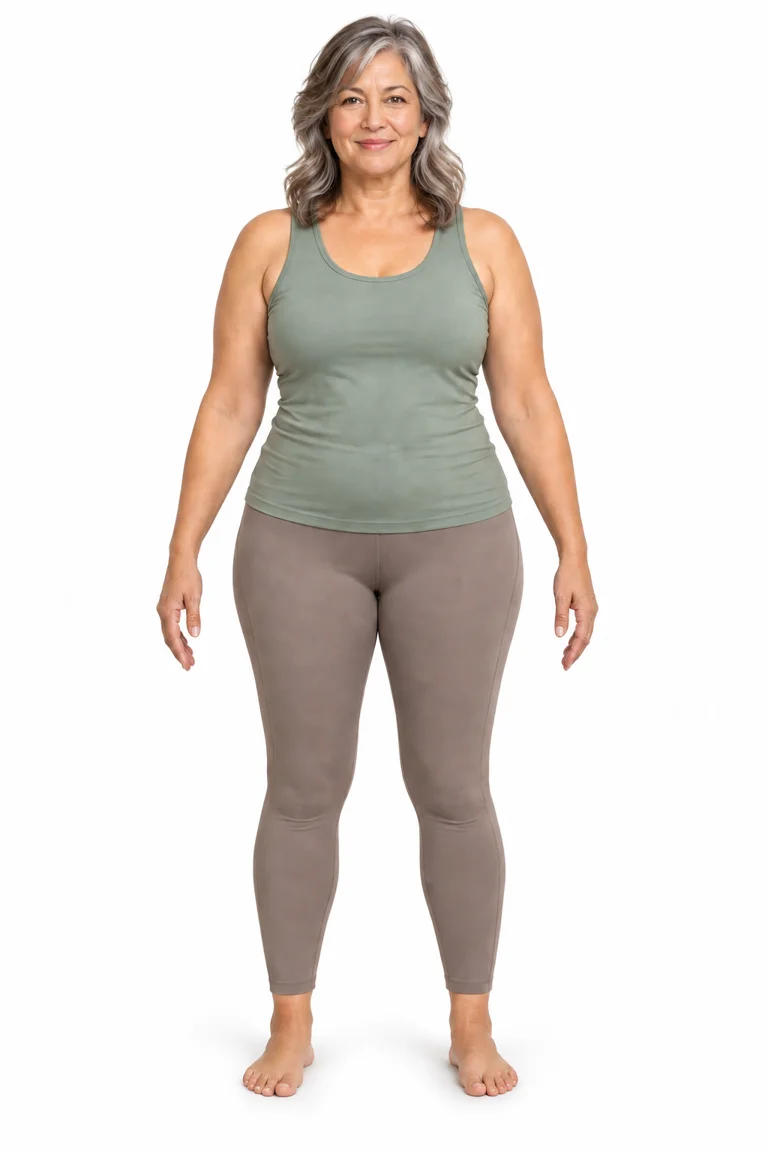
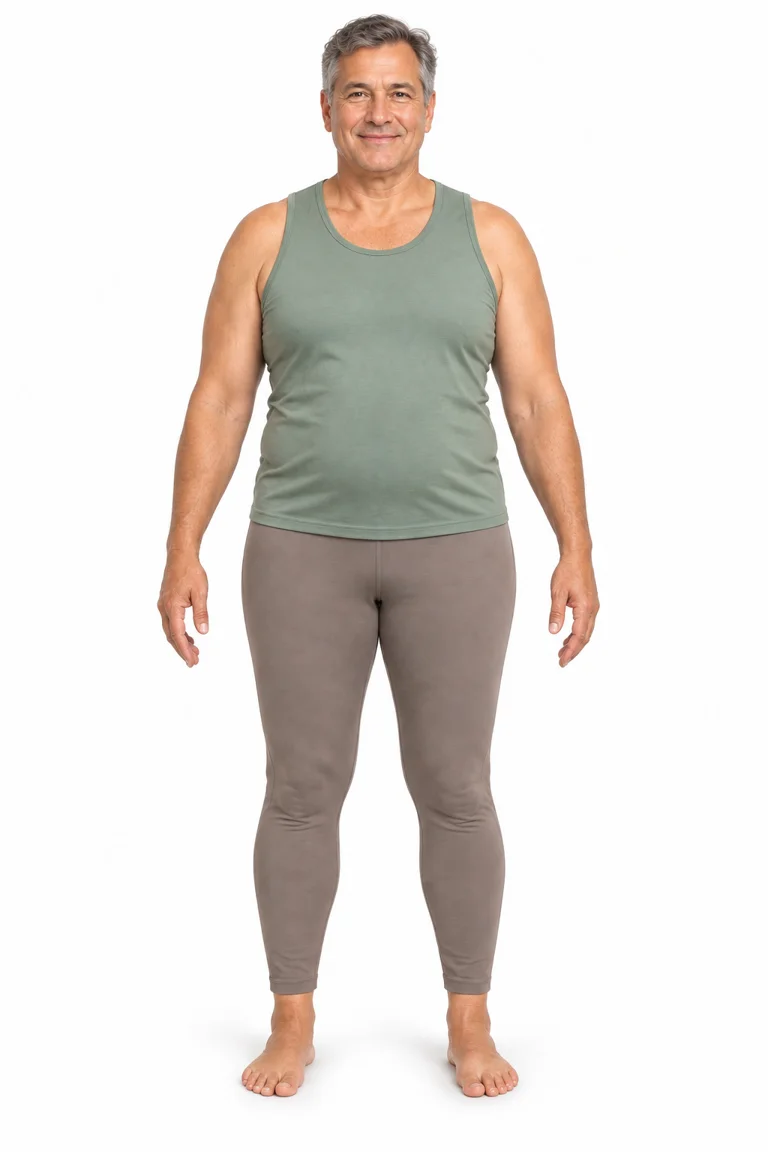
You can select more than one. Switching figures keeps your answers.
Other changes you may have noticed
Check everything that applies. This will help us narrow down how much of your weight gain is related to your thyroid and how much is related to other causes.
Written and medically reviewed by Dr. Westin Childs, D.O. Last reviewed: August 28, 2026
How To Use This Calculator:
#1. Your Height and Weight
Enter your height and your current weight. The calculator works out how much extra weight you’re carrying and uses that as the starting point.
#2. Your Thyroid
Tell it whether you’ve been diagnosed, what medication you’re on, and which symptoms you still have. This is what decides how many pounds get attributed to your thyroid.
#3. The Source Of Your Weight Gain
Check anything that’s true for you. Each answer points the leftover weight toward leptin, insulin, cortisol, estrogen, or your day-to-day habits.
#4. Your Breakdown
You’ll get your extra weight split into causes, in pounds, plus an estimate of what optimizing your thyroid alone is likely worth.
Why Your Thyroid Isn’t The Whole Story
If you have hypothyroidism and extra weight, you’ve probably been told one of two things: that it’s all your thyroid, or that it has nothing to do with your thyroid.
Both are wrong.
The weight your thyroid adds is real, but it has limits, and in my experience that limit is somewhere around 10 to 20 pounds.
So if you’re carrying 40 or 50 extra pounds, something else is responsible for the rest.
Here’s the test: if you cleaned up your diet and the scale barely moved, think leptin resistance. If your weight sits at your belly and you crave sugar, think insulin. If it showed up during the most stressful year of your life, think cortisol. And if it went straight to your hips and thighs, think estrogen.
This calculator sorts that out for you, one cause at a time, in pounds.
How Much Weight Can You Blame On Your Thyroid?
The weight that comes directly from a slow thyroid splits into two pieces.
The first is true fat. A slow thyroid lowers your metabolism, and studies show untreated hypothyroidism can lower your resting metabolic rate by 15 to 40 percent.[1] In my experience, that’s usually worth about 5 to 10 pounds of actual fat.
The second piece isn’t fat at all. Low thyroid causes water retention, swelling, and a slower gut, and that combination can add another 5 to 10 pounds of fluid and stool weight.[2]
And here’s the good news: the fluid piece responds fast. It’s often the first weight to come off once your treatment is right.
If your total extra weight is inside that 10 to 20 pound window, your thyroid may explain nearly all of it. If you’re above it, use the calculator to see where the rest is coming from.
Frequently Asked Questions
In my experience, somewhere around 10 to 20 pounds. About 5 to 10 pounds of that is true fat from a slower metabolism, and the rest is water retention, swelling, and stool weight from a slower gut. If you’re carrying more than that, your thyroid started the problem, but something else is keeping it going.
Some, and the fluid weight usually comes off in the first few weeks of proper treatment. The fat piece is slower, and it won’t happen without effort on your part.
Levothyroxine is T4 only, and your body has to convert it into the active T3 hormone before it does anything for your metabolism. If that conversion is poor, your labs can look normal while your metabolism stays slow. And if you’ve dieted for years and the scale won’t move at all, think leptin resistance on top of it. Ask for free T3 and reverse T3 at your next lab draw.
It can. A normal TSH tells you your medication dose is roughly right, and that’s all it tells you. Your free T3 can sit at the bottom of the range with a normal TSH, and the inflammation that comes with Hashimoto’s affects your weight on its own. This is exactly why I look at optimal ranges instead of standard ranges.
TSH, free T3, free T4, and reverse T3 for your thyroid, plus fasting insulin for the blood sugar side. Then put your results into my Optimal Thyroid Lab Test Calculator to see where you fall.
Related Thyroid Calculators
These cover the other side of the weight equation, from what to eat to what your labs say:
- Hypothyroid Calorie Calculator: how many calories to eat with hypothyroidism to lose weight
- Optimal Thyroid Lab Test Calculator: see if your thyroid labs are in the optimal range
- All Thyroid Calculators & Quizzes: the full set of free tools
Scientific References
- Sanyal D, Raychaudhuri M. Hypothyroidism and obesity: An intriguing link. Indian J Endocrinol Metab. 2016;20(4):554-557.
- Laurberg P, Knudsen N, Andersen S, Carlé A, Pedersen IB, Karmisholt J. Thyroid Function and Obesity. Eur Thyroid J. 2012;1(3):159-167.
- Knudsen N, Laurberg P, Rasmussen LB, et al. Small differences in thyroid function may be important for body mass index and the occurrence of obesity in the population. J Clin Endocrinol Metab. 2005;90(7):4019-4024.
- Myers MG Jr, Leibel RL, Seeley RJ, Schwartz MW. Obesity and leptin resistance: distinguishing cause from effect. Trends Endocrinol Metab. 2010;21(11):643-651.