
- Thyroid belly results from two separate problems working together: slow gut motility from reduced thyroid function causing stool, gas, and fluid buildup, plus increased belly fat from a slowed metabolism. You must address both to see real results.
- Most thyroid patients carry 3-7 pounds of 'waste weight' in their gut from stool, gas, and fluid buildup. Dieting and ab workouts can't fix this because you have to clear the underlying cause first.
- Standard constipation and bloating treatments don't work for thyroid belly because they don't address the thyroid-gut connection. Harsh laxatives and fiber supplements can actually make bloating worse.
- Magnesium is the key mineral for the thyroid-gut connection because it softens stool (ozonated form), supports thyroid function (sucrosomial form), and reduces stress-related gut tension (glycinate form). Use all three forms together for best results.
- Thyroid patients who properly address the thyroid-gut connection with targeted magnesium forms report feeling lighter, less bloated, and experiencing significant relief within just a few days.
Meet Sara:
A thyroid patient with what I call thyroid belly.
Like 50% of thyroid patients who struggle with this condition, she would wake up with a flat stomach… but by dinner time, she looked and felt swollen, puffy, and bloated.
Her scale would even fluctuate day to day by several pounds (more on this later).
She thought it was “just” extra thyroid weight.
But she was wrong.
How Hypothyroidism Slows Digestion and Causes Bloating
For thyroid patients, belly swelling and bloating often come from two separate problems that work together:
- A buildup of stool, gas, bloat, and fluid (all in the abdomen)
The thyroid plays a major role in regulating digestion. So when thyroid function slows (as in the case with hypothyroidism and Hashimoto’s), gut motility slows down as well[10].
This means food sits in the intestines longer, leading to more fermentation, more gas production, an overgrowth of bacteria, and a distended belly.
- An increase in belly fat (both visceral and subcutaneous)
Low thyroid hormones cause your metabolism to slow, making your body more likely to store fat.
Unfortunately, much of this fat gets deposited right into the belly area, resulting in belly fat.
Put these two together, and you get what I call thyroid belly.
A combination of “waste” weight and fat weight that makes the belly bulge each night (and sometimes throughout the day).
The thyroid and gut connection
Thyroid belly isn’t just fat.
Fat, retained fluid, and backed-up stool can each contribute to belly size.
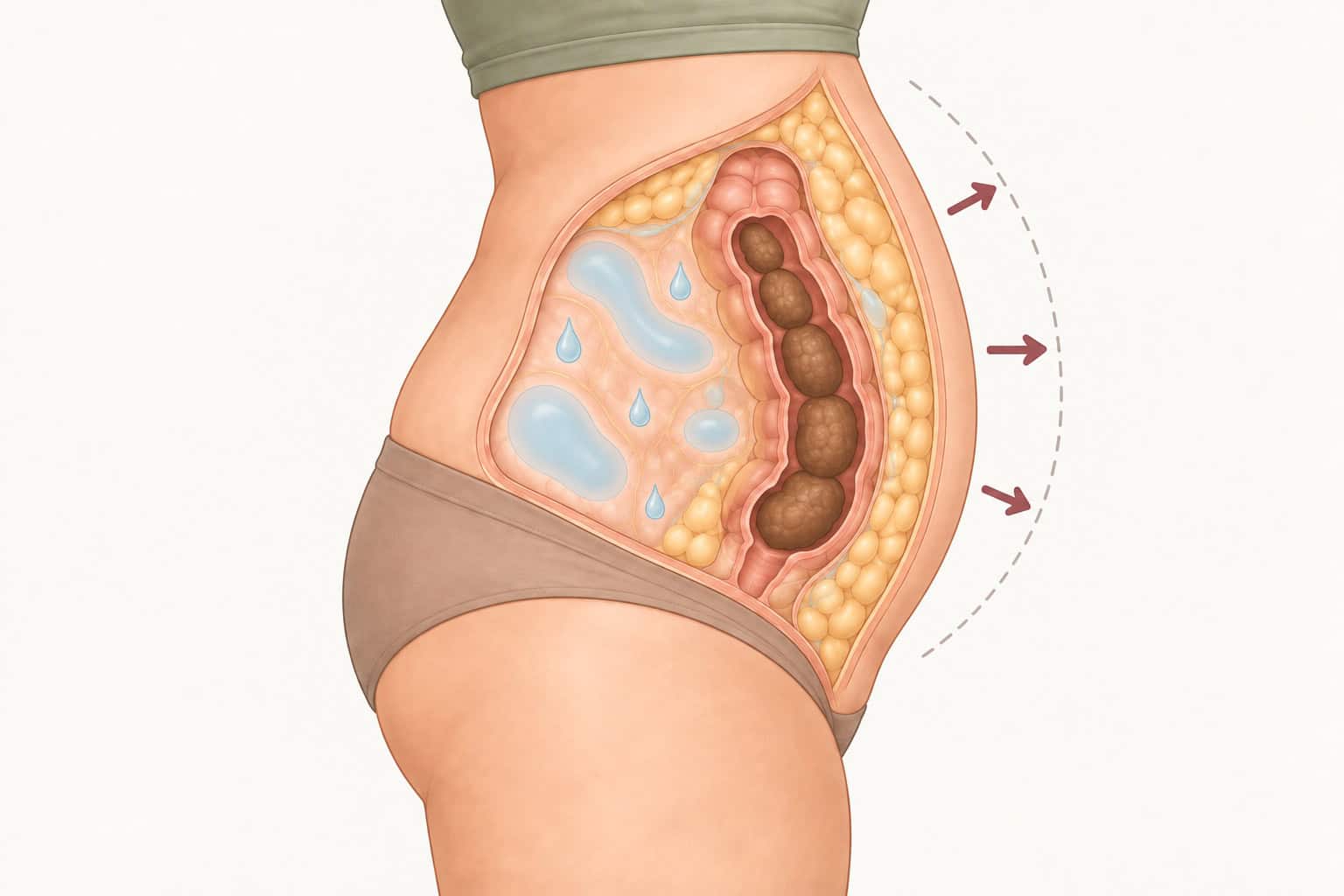
1Fat
Beneath the skin and around abdominal organs.
2Fluid
Retained in body tissues. Shown in blue.
3Constipation
Stool builds up inside the colon when bowel movements slow.
Simplified illustration. Arrows show outward swelling; blue areas represent retained tissue fluid. Contributors vary from person to person.
What researchers measured
Hypothyroidism can slow stomach emptying.
In one small study, researchers measured how long it took for half of a test meal to leave the stomach.
Average time to empty half the meal, in minutes
30 women with primary hypothyroidism and 10 healthy women. Group means, rounded to one decimal. The study measured stomach emptying, not Thyro Mag+ results.
Source: Yaylali et al., Gastroenterology Research and Practice (2009). Read the study.
Constipation and the “Waste Weight” Problem
Remember when I mentioned that Sara’s scale would fluctuate up and down several pounds per day?
It wasn’t from fat.
Like Sara, most thyroid patients with thyroid belly carry 3-7 pounds of extra weight in their gut, made up of stool, trapped gas, and fluid.
And until it’s cleared, no amount of dieting or ab workouts will flatten the stomach.
But it can be cleared, and clearing it out won’t only cause the scale to drop, it will help you feel lighter and happier.
If you want to get rid of it, you have to target the root cause.
Why Common Bloating Remedies May Fall Short
You can’t treat thyroid belly with standard treatments for things like constipation or gas.
They don’t work:
- Laxatives – These are too harsh and cause painful cramping.
- Fiber supplements – These can make bloating even worse.
- Gut cleanses – While they may help temporarily, they don’t address the underlying cause (their results are short-lived).
- Intense cardio & caloric restriction – These will only make your thyroid worse, perpetuating the problem.
The key to fixing thyroid belly is targeting the thyroid-gut connection.
Using Magnesium for Thyroid-Related Constipation
You might think that the key to fixing the gut is in probiotics or prebiotics.
But the answer is much simpler than you think.
I’ve spent years helping thyroid patients, and I’ve found that the key to treating the thyroid-gut connection can be found in a simple mineral:
Magnesium.
It’s critical for hundreds of cellular functions[2], but it also helps both your gut and your thyroid.
There is human research behind the magnesium-thyroid connection. In one small, uncontrolled study, 11 people with elevated TSH took magnesium citrate for six weeks. Their TSH fell significantly, while free T4 did not change significantly[3].
Magnesium oxide has also been studied for constipation. A placebo-controlled trial found improvements in bowel movements and stool consistency[9]. Those studies used individual forms of magnesium. The three-form approach below is my own recommendation.
But not just any form will do; you need the right thyroid-specific forms.
- Ozonated Magnesium – This unique form of magnesium has been treated with ozone, which infuses it with an additional oxygen molecule. When you take it, it deposits that oxygen into the gut where it softens stool, clears trapped waste (and gas), and naturally detoxes.
- Sucrosomial Magnesium – This is a highly bioavailable form of magnesium[6] that gets absorbed even in the face of gut problems. After absorption, it makes its way to the thyroid gland, where it supports thyroid function helping to treat the root cause of thyroid belly.
- Magnesium Glycinate Complex – This form of magnesium comes attached to the amino acid glycine. Once absorbed, the glycine is released, where it boosts GABA, resulting in better sleep and reducing stress-related gut tension.
Together, they make the perfect combination of magnesium supplements for thyroid patients who want:
- A healthier gut
- Better thyroid function
- Improved relaxation
- Relief from gas and bloating
- Relief from constipation (without diarrhea or watery stools)
- And to eliminate that extra 3-7 pounds of “waste” weight
Ozonated magnesium
The oxygen-release approach.
Thyro Mag+ contains ozonated magnesium for regularity support. The illustration below shows the proposed oxygen-release approach.
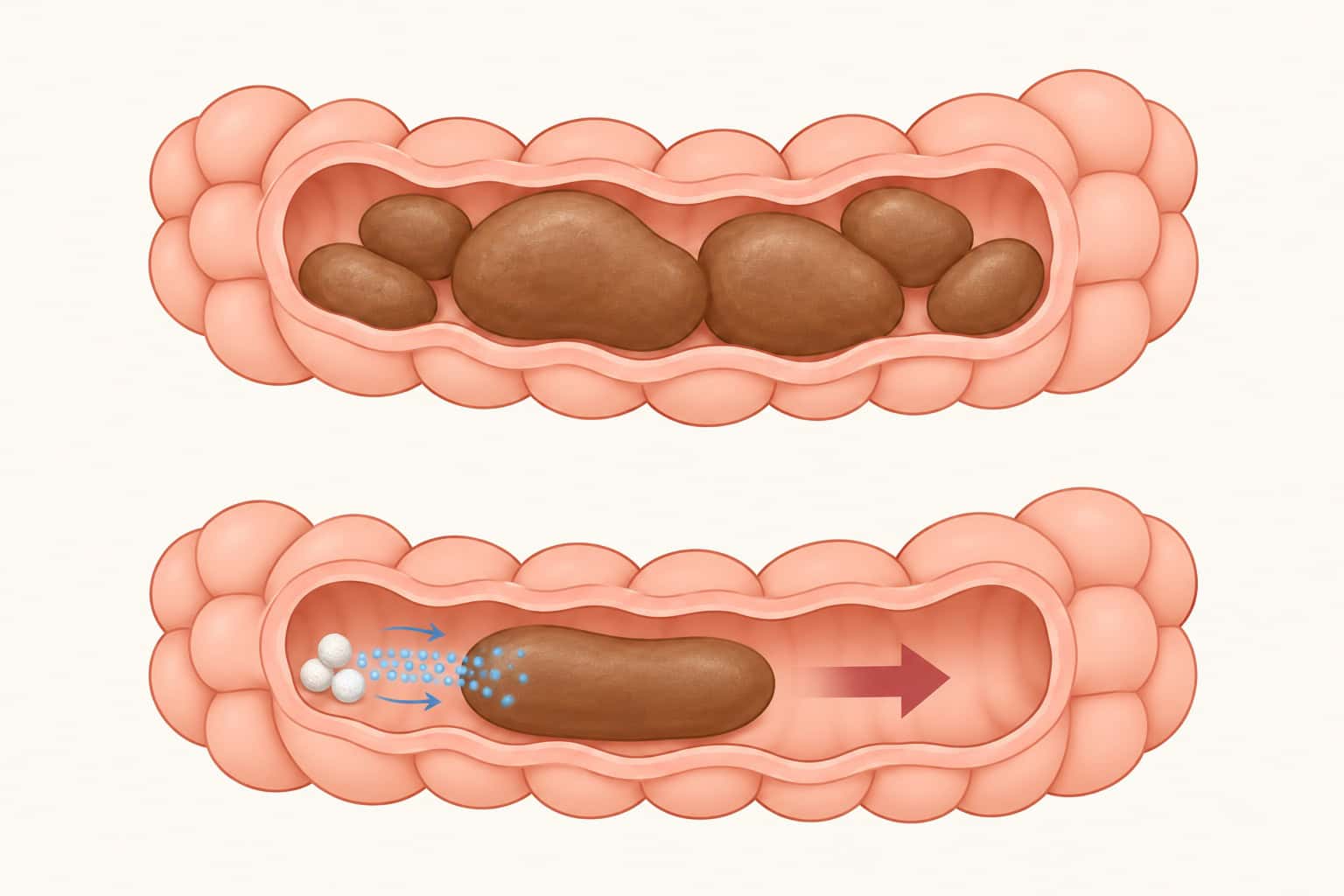 When stool backs upProposed oxygen release
1. Ozonated magnesium
The mineral component shown at the left of the lower illustration.
2. Proposed oxygen release
Blue markers depict the proposed release of oxygen.
3. Intended stool softening
The intended outcome is softer stool that is easier to pass.
Conceptual illustration, not a clinically verified depiction of oxygen entering stool.
What to Expect From Magnesium
The best part about using these forms of magnesium?
They work fast.
Most thyroid patients who take them report feeling lighter, less bloated, and comfortable within just a few days.
Sara was one of them.
Within days of taking these 3 forms of magnesium, she noticed that her constipation was almost completely gone, her stomach looked flat into the evening, and she felt more comfortable in her clothes.
Your Next Step for Thyroid Belly
Most thyroid patients live with these symptoms for years, because they don’t know they can fix them.
But that doesn’t have to be you.
I’ve combined all three of these unique forms of magnesium into a single formula made specifically for thyroid patients:
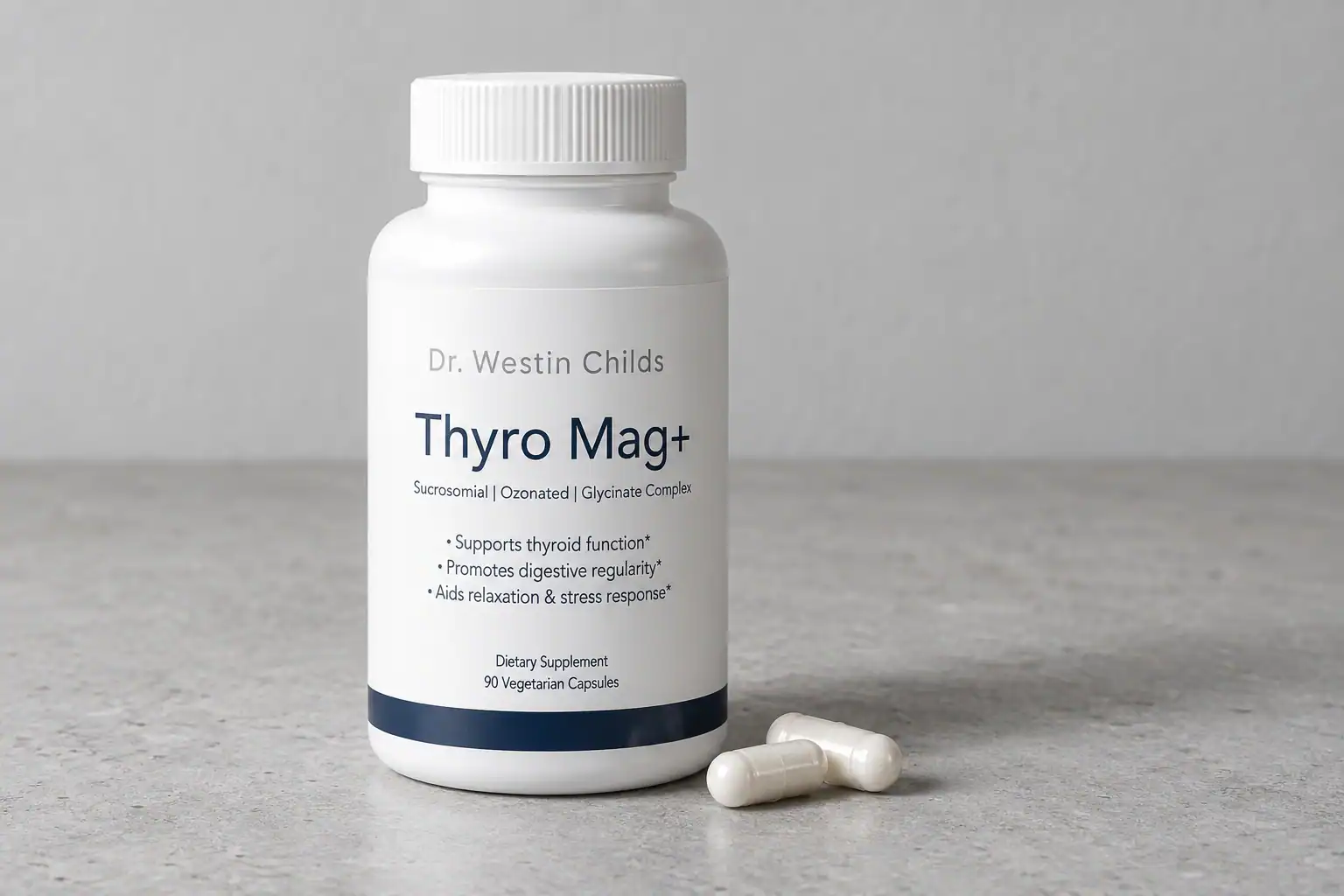
It’s called Thyro Mag+, and it’s helping thyroid patients flatten their bellies.
If you’re tired of dealing with thyroid belly, give it a try. Like all of my thyroid support supplements, it’s backed by our 100% 60-day guarantee.
You either get the results you are looking for, or you get your money back.
It’s a win-win.
What Thyro Mag+ customers are saying
“This is the best magnesium supplement that I have found for regularity.”
“It does help me fall asleep faster and I have become more regular with my waste issues.”
“I switched to this magnesium about 3 months ago… it has worked to keep the waste moving regularly.”
“Other magnesium supplements were fine, but, I’ve found this one to be much better for me!”
60-day money-back guarantee.
If Thyro Mag+ isn’t right for you, you can return it for a full refund. Start your return online in just a few clicks.
Scientific References
1. Chaudhary DP, et al. (2010). Implications of magnesium deficiency in type 2 diabetes: a review. Biological trace element research. doi:10.1007/s12011-009-8465-z.
2. Al Alawi AM, et al. (2018). Magnesium and Human Health: Perspectives and Research Directions. International journal of endocrinology. doi:10.1155/2018/9041694.
3. Moncayo R, Moncayo H. (2014). The WOMED model of benign thyroid disease: Acquired magnesium deficiency due to physical and psychological stressors relates to dysfunction of oxidative phosphorylation. BBA Clinical. doi:10.1016/j.bbacli.2014.11.002.
4. Durlach J, et al. (1998). Magnesium status and ageing: an update. Magnesium Research.
5. Coudray C, et al. (2005). Study of magnesium bioavailability from ten organic and inorganic Mg salts in Mg-depleted rats using a stable isotope approach. Magnesium research.
6. Brilli E, et al. (2018). Magnesium bioavailability after administration of sucrosomial® magnesium: results of an ex-vivo study and a comparative, double-blinded, cross-over study in healthy subjects. European Review for Medical and Pharmacological Sciences. doi:10.26355/eurrev_201803_14605.
7. DiNicolantonio JJ, et al. (2018). Subclinical magnesium deficiency: a principal driver of cardiovascular disease and a public health crisis. Open heart. doi:10.1136/openhrt-2017-000668.
8. Kirkland AE, et al. (2018). The Role of Magnesium in Neurological Disorders. Nutrients. doi:10.3390/nu10060730.
9. Mori S, et al. (2019). A Randomized Double-blind Placebo-controlled Trial on the Effect of Magnesium Oxide in Patients With Chronic Constipation. Journal of Neurogastroenterology and Motility. doi:10.5056/jnm18194.
10. Yaylali O, et al. (2009). Does hypothyroidism affect gastrointestinal motility?. Gastroenterology Research and Practice. doi:10.1155/2009/529802.