
Every thyroid patient should be taking collagen.
Why?
Because thyroid dysfunction rapidly depletes it. And when collagen is depleted, you start aging at an accelerated pace[1][2].
This is why most thyroid patients feel like they age 10 years almost overnight after their diagnosis. Wrinkles, sagging skin, a puffy face, brittle hair, joint pain. All accelerated forms of aging tied directly to what’s happening with your thyroid hormone[3].
Collagen works for thyroid patients. But only if you use the right one.
Here’s what you need to know if you have a thyroid problem and want to stop the signs of thyroid-related aging like wrinkles, sagging skin, and a puffy face.
I’ve helped over 6,800 thyroid patients use collagen daily, and here’s what they reported:
#1. Over 90% Are Highly Satisfied with Using It
This is actually exceptional compared to other supplements and ingredients.
Most ingredients average somewhere in the low 80s for patient satisfaction. Anything above 90% means we are dealing with a supplement that almost everyone tolerates and gets a benefit from.
Why is collagen different?
Two reasons.
First, collagen is largely inert. Thyroid patients are sensitive to a lot of supplements and ingredients (especially anything that interferes with thyroid medication or stimulates the immune system), but collagen is a structural protein your body already uses every day. There’s nothing for your body to react to.
Second, thyroid dysfunction directly accelerates collagen breakdown. Low thyroid hormone alters the genes that control collagen synthesis[1], which means your body literally makes less of it when your thyroid is underactive. When you supplement, you’re replacing what your thyroid is causing you to lose.
The result is a supplement that feels like it works because biologically, it’s filling a real deficit.
#2. 52% Reported Hair, Skin, Nail, or Joint Improvement
This one is huge.
Thyroid problems cause direct damage to your hair, skin, and nails. The same process is happening in your joints too, just for different reasons. The end result is the same: your body’s beauty proteins (collagen and elastin) get broken down faster than they can be replaced[3].
This is why thyroid patients wrinkle faster, develop sagging skin, see their nails crack, and feel joint pain decades earlier than they should.
1 in 2 thyroid patients taking collagen daily reported a noticeable improvement in their aesthetic appearance.
That number is consistent with what the published clinical research shows. A randomized controlled trial of specific collagen peptides in 69 women showed significant improvements in skin elasticity after just 8 weeks of daily use[4]. A separate trial showed improvements in skin hydration, elasticity, roughness, and density after 12 weeks[5].
#3. 31.9% Reported Skin Improvement
Almost 1 in 3 thyroid patients reported a specific improvement in their skin.
Hypothyroidism is one of the most common causes of skin issues you’ve never heard linked to your thyroid. Dry skin, scaly patches, rashes, slow wound healing, increased wrinkling, thickened skin around the shins (myxedema), even unexplained itching[3].
This happens because your skin is one of the most collagen-dependent tissues in your body. When thyroid hormone drops, collagen synthesis drops with it, and the skin is one of the first places it shows.
Collagen supplementation directly counters this. The clinical trials show measurable changes in skin elasticity, hydration, and density within 4 to 12 weeks[4][5].
#4. 18.5% Reported Joint Pain Relief
Joint pain is one of the most under-recognized symptoms of low thyroid function.
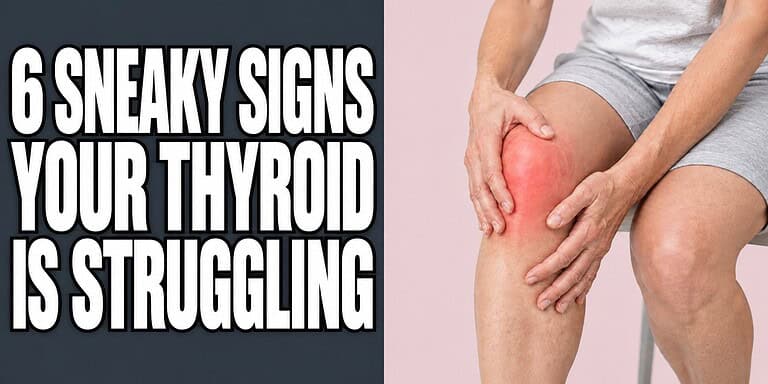
Your joints rely on collagen to cushion the bones and absorb impact. When thyroid hormone is low, the cartilage in your joints gets thinner and weaker, and the synovial fluid that lubricates the joint changes consistency[2].
This is why so many thyroid patients develop knee pain, stiff hips, sore shoulders, and unexplained aches as their thyroid declines. The underlying thyroid gland inflammation makes this worse.
Specific collagen peptides have been shown to reduce activity-related joint pain in a randomized controlled trial of 139 patients[6]. The benefit comes from the peptides delivering the exact amino acids your joint cartilage needs to rebuild.
Other Benefits of Collagen for Hypothyroidism and Hashimoto’s
Beyond hair, skin, nails, and joints, collagen also helps with three other things that matter to thyroid patients:
#1. Muscle Building
Thyroid dysfunction causes muscle loss and weakness. Collagen peptides combined with resistance training have been shown to significantly increase muscle mass and strength while reducing body fat in a randomized controlled trial of older men with sarcopenia[8].
This matters for thyroid patients because your muscle mass directly affects your metabolic rate. More muscle means more calories burned at rest, which is exactly what you need when your thyroid is making it hard to lose weight.
#2. Gut Health Repair
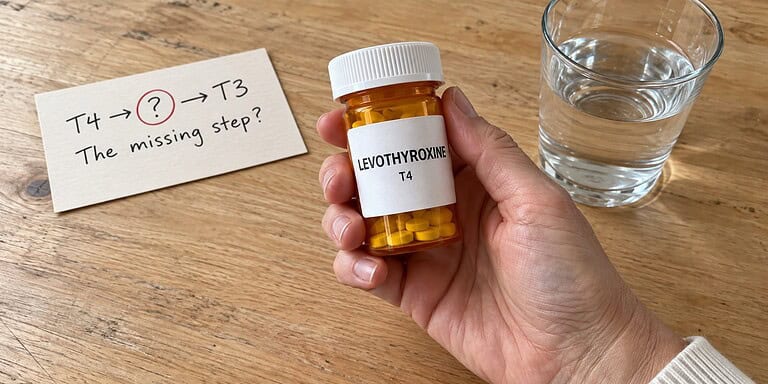
Your thyroid and your gut are deeply connected. About 20% of your T4 to T3 conversion happens in the gut, which means a damaged gut lining can lead to high reverse T3 and reduce the active thyroid hormone making it to your cells.
Collagen provides the building blocks (especially glycine and proline) that your gut lining needs to repair itself. It also helps support a healthy immune response, which matters for Hashimoto’s patients dealing with autoimmune attack on their thyroid.
#3. Bone Health
Thyroid disease, especially long-term hypothyroidism, is a known risk factor for low bone density. Specific collagen peptides have been shown to improve bone mineral density in a 12-month placebo-controlled trial in postmenopausal women[7].
This is important because most thyroid patients are women, and bone loss starts earlier than people realize.
5 Things to Look for in a Collagen Powder
Most collagen powders on the market won’t give you the results above. Here’s what to look for.
#1. Hydrolyzed Collagen Peptides
Whole collagen is too large for your gut to absorb efficiently. Hydrolyzed collagen has been broken down into smaller peptides your body can actually use. This is non-negotiable. If your collagen isn’t hydrolyzed, most of it is going straight through you.
#2. Patented Peptides with Clinical Research Behind Them
Not all collagen peptides do the same thing. Specific patented peptides have been studied in randomized controlled trials for specific outcomes:
- VERISOL for skin elasticity, wrinkle reduction, and hair[4]
- FORTIBONE for bone mineral density[7]
- FORTIGEL for joint pain and cartilage[6]
These are the peptides with actual human clinical trial data. A generic collagen powder doesn’t have any of this behind it. You’re hoping it works.
#3. Grass-Fed Sourcing
Collagen comes from animal connective tissue, which means the quality of the animals matters. Grass-fed, pasture-raised sourcing means lower contaminant load, better amino acid profile, and no exposure to the hormones and antibiotics that are common in industrial farming.
#4. Tryptophan-Free and Iodine-Free
This is the criterion most generic collagens fail. Most don’t even check.
Tryptophan can interfere with thyroid hormone production at high doses, and iodine can flare antibodies in Hashimoto’s patients. The published research on Hashimoto’s specifically warns against unnecessary iodine intake for autoimmune thyroid patients[9].
A collagen formulated for thyroid patients should be specifically tested for both.
#5. Real Cofactors for Absorption
Collagen synthesis in your body requires vitamin C and other cofactors. The clinical trials showing the strongest skin results used collagen combined with vitamin C and other absorption enhancers[5].
A collagen powder without these cofactors is leaving results on the table.
How to Take Collagen for Thyroid-Related Symptoms
Here’s the protocol I recommend.
Dose: 10 to 20 grams of total hydrolyzed collagen peptides daily. Most generic collagens deliver 2 to 5 grams per serving, which is well below the clinically effective dose.
Timing: In the morning, 30 to 60 minutes after your thyroid medication. Some patients prefer it in coffee, others in a smoothie, others just stirred into water. The best time is the time you’ll actually be consistent with.
What to expect:
- Skin changes in 3 to 4 weeks
- Hair improvement in 6 to 8 weeks
- Joint pain relief in 8 to 12 weeks
- Gut and digestive benefits within 2 to 4 weeks
Stack with: vitamin D, selenium, and your existing thyroid medication. Adequate dietary protein overall. Collagen works best when you’re also doing the rest of the work on your thyroid.
Can You Take Collagen With Thyroid Medication?
Yes.
There are no known interactions between collagen and any thyroid medication, including levothyroxine, Synthroid, Tirosint, NP Thyroid, Armour, or Cytomel[9].
The only thing to be aware of is timing. Collagen is a protein, and any protein consumed at the same time as your thyroid medication can slightly reduce absorption of that medication. The fix is simple: take your thyroid medication first thing in the morning on an empty stomach, then wait 30 to 60 minutes before having your collagen.
That’s it. No real concern, just basic absorption courtesy.
Choosing a Collagen Supplement
If you have a thyroid problem and you’re not taking collagen, you’re letting your body age faster than it has to. The mechanism is real, the clinical research backs it up, and the patient data on a properly formulated collagen for thyroid patients is strong.
The collagen I recommend for thyroid patients is the one I designed specifically for them: Thyroid Collagen Complex. It uses VERISOL, FORTIBONE, and FORTIGEL together, is tryptophan-free and iodine-free, grass-fed sourced, and includes vitamin C and hyaluronic acid as cofactors.
Over 6,800 thyroid patients have used it. You can read the full Patient Outcomes report on it, including the methodology behind the data above and all 270 verified reviews.
Whatever you choose, make sure it checks the 5 boxes above. Otherwise you’re spending money on a fancy protein powder that won’t move the needle on your thyroid symptoms.
Now I want to hear from you:
Are you currently taking collagen? Did you notice a difference in your hair, skin, or joints? What collagen worked best for you?
Leave a comment below.
Scientific References
1. Chen WJ, et al. (2000). Molecular characterization of myocardial fibrosis during hypothyroidism: evidence for negative regulation of the pro-alpha1(I) collagen gene expression by thyroid hormone receptor. Molecular and cellular endocrinology. doi:10.1016/s0303-7207(00)00203-3.
2. Saha S, et al. (2007). Localization and thyroid hormone influenced expression of collagen II in ovarian tissue. Cellular physiology and biochemistry : international journal of experimental cellular physiology, biochemistry, and pharmacology. doi:10.1159/000099193.
3. Lause M, et al. (2017). Dermatologic manifestations of endocrine disorders. Translational pediatrics. doi:10.21037/tp.2017.09.08.
4. Proksch E, et al. (2014). Oral supplementation of specific collagen peptides has beneficial effects on human skin physiology: a double-blind, placebo-controlled study. Skin pharmacology and physiology. doi:10.1159/000351376.
5. Bolke L, et al. (2019). A Collagen Supplement Improves Skin Hydration, Elasticity, Roughness, and Density: Results of a Randomized, Placebo-Controlled, Blind Study. Nutrients. doi:10.3390/nu11102494.
6. Zdzieblik D, et al. (2017). Improvement of activity-related knee joint discomfort following supplementation of specific collagen peptides. Applied physiology, nutrition, and metabolism = Physiologie appliquee, nutrition et metabolisme. doi:10.1139/apnm-2016-0390.
7. König D, et al. (2018). Specific Collagen Peptides Improve Bone Mineral Density and Bone Markers in Postmenopausal Women-A Randomized Controlled Study. Nutrients. doi:10.3390/nu10010097.
8. Zdzieblik D, et al. (2015). Collagen peptide supplementation in combination with resistance training improves body composition and increases muscle strength in elderly sarcopenic men: a randomised controlled trial. The British journal of nutrition. doi:10.1017/s0007114515002810.
9. Mikulska AA, et al. (2022). Metabolic Characteristics of Hashimoto’s Thyroiditis Patients and the Role of Microelements and Diet in the Disease Management-An Overview. International journal of molecular sciences. doi:10.3390/ijms23126580.