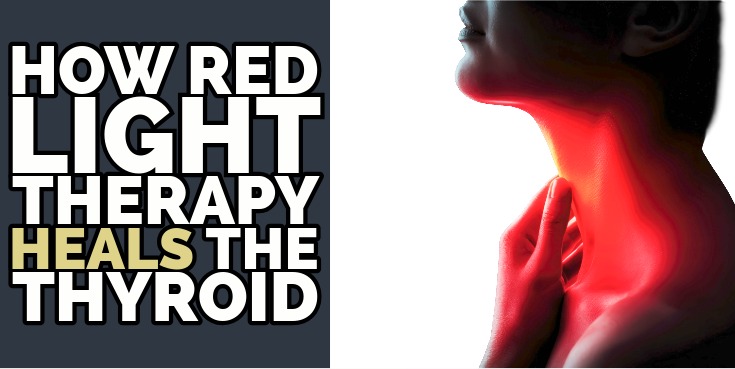

Red doesn’t just boost your thyroid, it rejuvenates it.
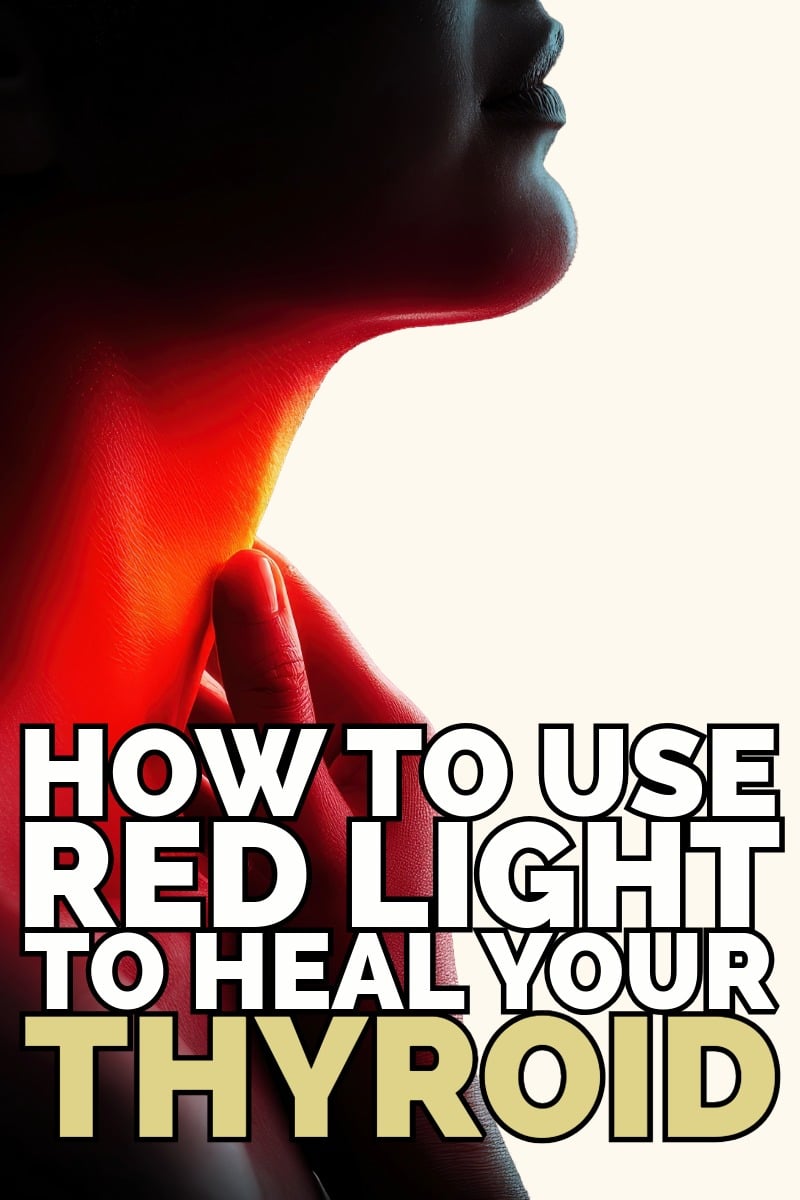
Because of where the thyroid sits on your body, you can easily bathe it in red light (1), which penetrates deep into thyroid gland tissues, providing a restorative effect.
The result? You can improve thyroid function in an all-natural way that is unlike any other therapy available.
Here’s how it works:
#1. 630 nm (red) light enhances blood flow and circulation.
It may not seem like much, but this matters a lot.
Blood flow to the thyroid gland is absolutely critical for 100% function.
Blood brings the nutrients that your thyroid gland needs to create thyroid hormone (2), and blood flow out of the gland takes thyroid hormone that has just been created to the tissues that need it.
This wavelength enhances all other treatments you’re currently using for your thyroid.
#2. 660 nm (red) light increases mitochondrial function.
At this wavelength, light activates your mitochondria, which function as the battery for your thyroid gland.
Your thyroid has a huge demand for energy because it’s creating one of the most important hormones in your body.
Light in the 660 nm range acts as a natural stimulant to your mitochondria (3), which means your thyroid has energy to:
- Create more thyroid hormone
- Protect itself by creating glutathione
- And repair damaged thyroid tissue
Both 630 and 660 are great, but the real magic happens with these next two wavelengths…
#3. 830 nm (near infrared) light penetrates deep into thyroid gland tissue.
This wavelength starts to penetrate into the thyroid gland itself, where it stimulates the tissue itself (4).
The net effect is a reduction in inflammation and a restoration of tissues that have been damaged.
This effect is huge for thyroid patients because the majority of thyroid disease is caused by direct damage to the thyroid gland itself.
When you start to repair or fix that damage, you get true root cause healing and a reduced need for thyroid medication.
The final wavelength is 850nm.
#4. 850 nm (near infrared) light maximizes tissue repair and hormone production.
This wavelength is considered near infrared, and it maximizes tissue repair and thyroid hormone production.
The result? Your thyroid becomes more efficient at producing T4 and T3 thyroid hormones directly from your gland.
In addition, it’s at this wavelength that you start to see changes to your immune system, which helps to lower thyroid antibodies.
Each of these wavelengths is important on its own, but when used together, they start to provide true thyroid gland healing and rejuvenation.
Red Light Benefits on The Thyroid Gland
And this isn’t some theoretical concept, either.
These are research-backed benefits.
One randomized controlled study of 43 women (5) with Hashimoto’s who underwent red light therapy was able to obtain the following results:
- 47% reduced their dose of thyroid medication by over 25% so that’s a one quarter drop in their medication need.
- 13% were able to stop their medication entirely, representing about 1 in 8 patients.
- And, these benefits were sustained at a 6 year follow up. Which means, they had a lasting impact.
What’s interesting is that in this study, these women only used one wavelength twice per week for 5 weeks.
This is significantly less than what I recommend to thyroid patients, which suggests to me they probably could have had much better results if they used multiple wavelengths with more sessions per week and for a longer period of time.
The bottom line is that red light has been proven to:
- Lower thyroid antibodies
- Increase T4 and T3 levels naturally
- Reduce the need for thyroid medication
- Reduce inflammation in the thyroid gland
- Repair damaged thyroid gland tissue
Getting these results is not as hard as you think, but it does require using the right type of device, which is what I want to talk about next.
The Best Red Light Device for Thyroid Patients
The first thing you need to know is that for your thyroid, you want a red light device to come into direct contact with your skin.
This concentrates the power of the red light straight into your thyroid gland and prevents the diffusion of light that occurs when it’s farther away.
So don’t bother using high powered red light stands or devices that aren’t in contact with your skin.
The next step is to use the right wavelengths. We already discussed what those are, but I’ll remind you here as well. They are 630, 660, 830, and 850.
Preferably, you will use all of them together as they each do something different.
Next up is the power output of the device, also referred to as irradiance.
For your thyroid, you want an irradiance of 50 milliwatts per centimeter squared. If a device doesn’t mention its power output, you can safely assume it’s of low quality.
And finally, you want something that will cover your entire thyroid gland, something that wraps around the base of your neck, the sides, and goes all the way up to your chin.
Put this all together, and you have the perfect device for your thyroid.
How to use Red Light Therapy for Your Thyroid
Next up is how to use it. And this part couldn’t be simpler.
For best results, use your device 3-5x per week for 20-minute sessions.
You’ll want to do this daily for at least 8 weeks straight.
From there, you can swap to a maintenance dose of just 1-2 sessions per week or more as needed (for instance, if you are in a flare up).
That’s it. Follow these instructions and you’ll be well on your way to healing your thyroid gland.
By the way, I have created a red light device specifically for thyroid patients, which meets all of these specs. If you’re tired of generic red lights not designed for thyroid patients, then this is perfect for you.
If not, just make sure you find something that matches all of the criteria I mentioned in this video, because that’s what will work best.
And if you want more tips on how to heal your thyroid gland and replace your thyroid medication, check out this article next.
Scientific References
#1. https://pmc.ncbi.nlm.nih.gov/articles/PMC7374595/
#2. https://pmc.ncbi.nlm.nih.gov/articles/PMC8073506/
#3. https://pmc.ncbi.nlm.nih.gov/articles/PMC9841386/
#4. https://pmc.ncbi.nlm.nih.gov/articles/PMC4751092/
#5. https://pubmed.ncbi.nlm.nih.gov/30532779/