Shop Thyroid Joint Pain Supplements
Achy joints and morning stiffness can make it hard to stay active when you have a thyroid condition. Collagen peptides and vitamins A, D, and K support the cartilage, bones, and connective tissue your joints depend on, while thyroid-supporting nutrients address your thyroid needs.
-
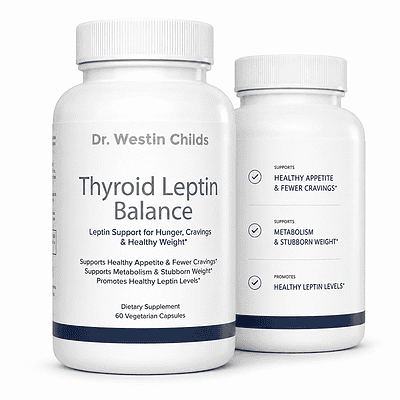 $49.99 — or subscribe to save 10% Add to CartThyroid Leptin BalanceLeptin Sensitizer with ORALVISC & GAGs for Metabolic Support (60 Count)150+ bought in past month
 -
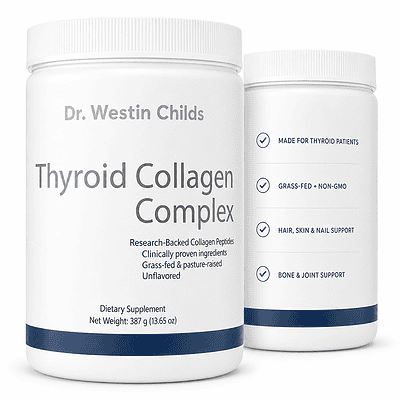
 $59.99 — or subscribe to save 10% Add to CartThyroid Collagen ComplexPatented Collagen Peptides & Collagen Precursors (30 Servings)200+ bought in past month
 -
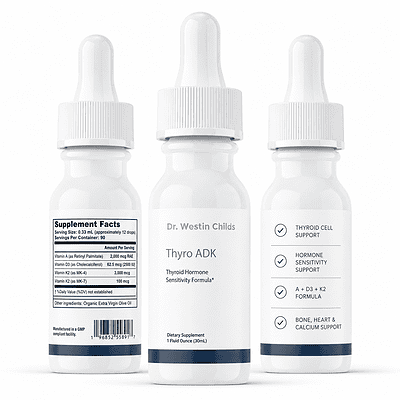
$24.99 — or subscribe to save 10% Add to CartThyro ADKThyroid Hormone Sensitivity Formula With Vitamin A, D & K2 in Organic Olive Oil Base (90 Servings)150+ bought in past month
-
$39.99 — or subscribe to save 10% Add to CartThyroid Nodule RxSupport Thyroid Nodule Reduction100+ bought in past month

Benefits of thyroid joint pain supplements
Rebuild joint tissue with thyroid-specific collagen
Hypothyroidism accelerates collagen breakdown throughout your entire body, and your joints are one of the first places you’ll feel it.
Read more
Without adequate thyroid hormones, your body can’t maintain the collagen matrix that cushions and protects your joints. Thyroid Collagen Complex provides bioavailable collagen peptides specifically selected to support cartilage repair, joint cushioning, and connective tissue integrity.
Vitamin K2 and calcium
One of the most overlooked causes of joint pain in thyroid patients is calcium mismanagement. When you don’t have enough vitamin K2, calcium deposits in your soft tissues and joints instead of going to your bones where it belongs.
Read more
This creates painful calcification that mimics arthritis and makes every movement uncomfortable. Thyro ADK provides vitamin K2 alongside vitamins A and D in an organic olive oil base for maximum absorption. K2 activates the proteins that direct calcium into your bones and out of your joints and arteries.
Leptin and joint discomfort
If you have thyroid-related joint pain that seems to get worse the more weight you carry, leptin resistance is very likely part of the problem.
Read more
When your cells stop responding to leptin, your fat tissue pumps out inflammatory cytokines like IL-6 and TNF-alpha that go straight to your joints. These are the same cytokines elevated in rheumatoid arthritis. Thyroid Leptin Balance contains ORALVISC and GAGs specifically designed to restore leptin sensitivity and support leptin sensitivity and inflammation.
Usable with all thyroid medications
I designed every single one of these formulas with thyroid patients in mind. That means they are safe and effective alongside Synthroid, levothyroxine, NDT formulations like Armour and NP Thyroid, liothyronine, and any combination of T4 + T3.
Calm autoimmune joint inflammation with nigella sativa
About 90% of hypothyroidism is caused by Hashimoto’s, and that autoimmune inflammation doesn’t just attack your thyroid. It attacks your joints too.
Read more
Many Hashimoto’s patients have elevated inflammatory markers that directly contribute to joint pain, swelling, and stiffness. Thyroid Nodule Rx delivers a therapeutic dose of nigella sativa (black seed), which has been clinically shown to reduce thyroid antibodies and modulate the overactive immune response that contributes to autoimmune joint inflammation.
Support bone density and cartilage health
Thyroid hormones play a critical role in bone remodeling and cartilage maintenance. When those hormones are low, your bones lose density and your cartilage breaks down faster than it can repair itself.
Read more
The combination of vitamins A, D, and K2 in Thyro ADK works together to support healthy bone mineral density while collagen peptides from Thyroid Collagen Complex provide the nutrients your cartilage needs to actually rebuild. Most joint supplements only address one side of this equation. This combination covers both.
Address the thyroid-joint pain connection
Thyroid-related joint pain is related to multiple mechanisms happening simultaneously: autoimmune inflammation attacking the joints, calcium depositing in soft tissues instead of bones, collagen degradation from low thyroid hormones, and leptin-related inflammatory cytokines bathing your joints in inflammatory compounds.
Read more
Treating just one of these mechanisms rarely gets the job done. This supplement lineup addresses all four mechanisms at once.
Research-backed ingredients
These joint pain supplements feature bioavailable collagen peptides (clinically shown to support cartilage repair and reduce joint stiffness), vitamin K2 as MK-7 (the most bioactive form, with published research on calcium metabolism and soft tissue calcification), nigella sativa (clinical trials showing thyroid antibody reduction), and ORALVISC (patented glycosaminoglycan complex for leptin sensitization).
Physician formulated
Designed specifically for the unique needs of thyroid patients
Third-party tested
Our supplements undergo third-party testing for heavy metals, microbes, and mold.
Manufactured in the USA
All of our supplements are manufactured in an NSF-certified, GMP-compliant facility in the USA.
A few common questions
Before you order
Why does hypothyroidism cause joint pain?
Hypothyroidism causes joint pain through several overlapping mechanisms. First, low thyroid hormones slow down collagen synthesis, which means the cartilage that cushions your joints breaks down faster than it can rebuild. Second, about 90% of hypothyroidism is caused by Hashimoto’s, and that autoimmune process generates inflammatory cytokines that directly attack joint tissue. Third, hypothyroidism promotes leptin resistance, and leptin-resistant fat cells produce the same inflammatory compounds (IL-6, TNF-alpha) found in rheumatoid arthritis. Fourth, poor vitamin K2 status (extremely common in thyroid patients) causes calcium to deposit in joints and soft tissues instead of bones, creating painful calcification.
Can I take these supplements with my thyroid medication?
Yes. These formulas are designed for thyroid patients and can be used alongside thyroid medication. Supplements are generally taken 30 to 60 minutes away from your dose. Calcium and iron supplements need at least 4 hours of separation from levothyroxine.
Is my joint pain from my thyroid or something else like arthritis?
This is one of the most common questions I get. The tricky part is that thyroid-related joint pain often looks and feels exactly like early-stage arthritis, which is why so many thyroid patients end up being told they have osteoarthritis or fibromyalgia when thyroid function may also be contributing. Some clues that your joint pain is thyroid-related: it started or worsened around the time of your thyroid diagnosis, it affects multiple joints symmetrically, it’s worst in the morning and improves with movement, and it doesn’t respond well to typical anti-inflammatory medications. Having Hashimoto’s also puts you at higher risk for other autoimmune conditions that affect the joints. The good news is that addressing the thyroid-specific mechanisms behind your joint pain often provides relief regardless of whether there’s a concurrent arthritis component.
How long until I notice improvement in my joint pain?
The timeline depends on which mechanisms are contributing to your pain. The anti-inflammatory benefits from nigella sativa typically start becoming noticeable within 2-4 weeks. Vitamin K2’s effects on calcium routing take a bit longer, usually 4-8 weeks to see meaningful changes. Collagen supplementation generally requires 8-12 weeks of consistent use to significantly impact joint tissue integrity, as cartilage turnover is a slow process. Leptin sensitization via ORALVISC typically takes 4-6 weeks. Commit to at least 90 days before making a judgment call, but most people notice meaningful improvement in morning stiffness and overall joint comfort well before that point.
Which supplement should I start with for joint pain?
If your joint pain is accompanied by elevated thyroid antibodies, start with Thyroid Nodule Rx to address the autoimmune inflammation that’s likely contributing to much of your pain. If your joints feel stiff and creaky (especially in the morning), Thyro ADK with its vitamin K2 is often the most impactful first step, since calcium mismanagement is one of the most common and most overlooked causes of thyroid-related joint discomfort. If your pain is more generalized and your joints feel “worn down,” Thyroid Collagen Complex provides the nutrients for cartilage repair. For the best results, I recommend combining at least two of these to address multiple mechanisms simultaneously.
I already take glucosamine and chondroitin. Do I still need these?
Glucosamine and chondroitin address joint cartilage from one angle, but they do nothing for the thyroid-specific mechanisms contributing to your joint pain. They won’t address the autoimmune inflammation, the calcium mismanagement, the leptin-related inflammatory cytokines, or the accelerated collagen breakdown caused by low thyroid hormones. These supplements are designed to target the causes that generic joint supplements completely miss. You can absolutely take them alongside glucosamine and chondroitin if you want, but most patients find they get significantly better results by addressing the thyroid-specific mechanisms directly.
Thyroid Collagen Complex provides peptides for joint and connective tissue support. Thyro ADK supplies fat-soluble vitamins involved in bone health and calcium regulation, supporting the structures that help you stay active.
Shop Thyroid Joint Pain Supplements →